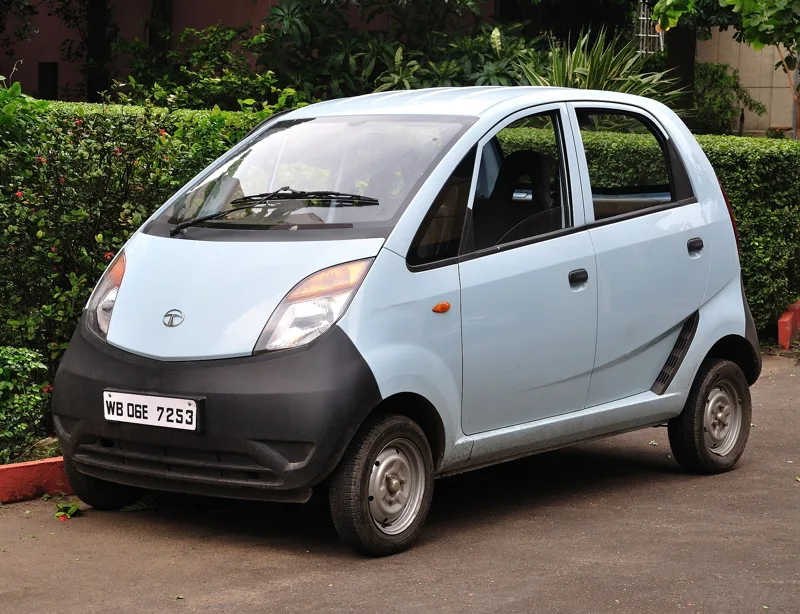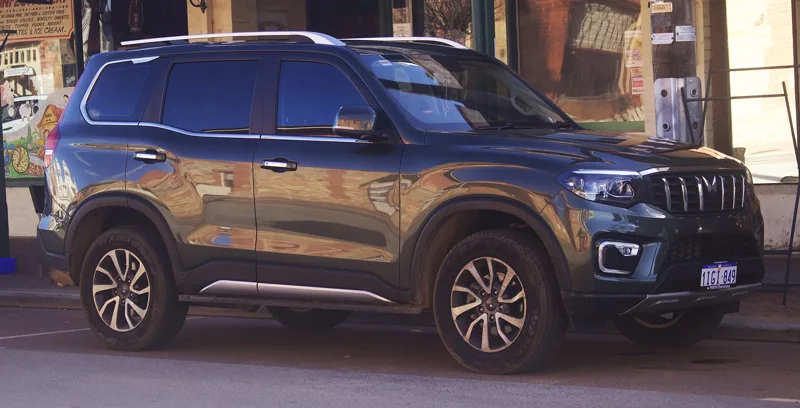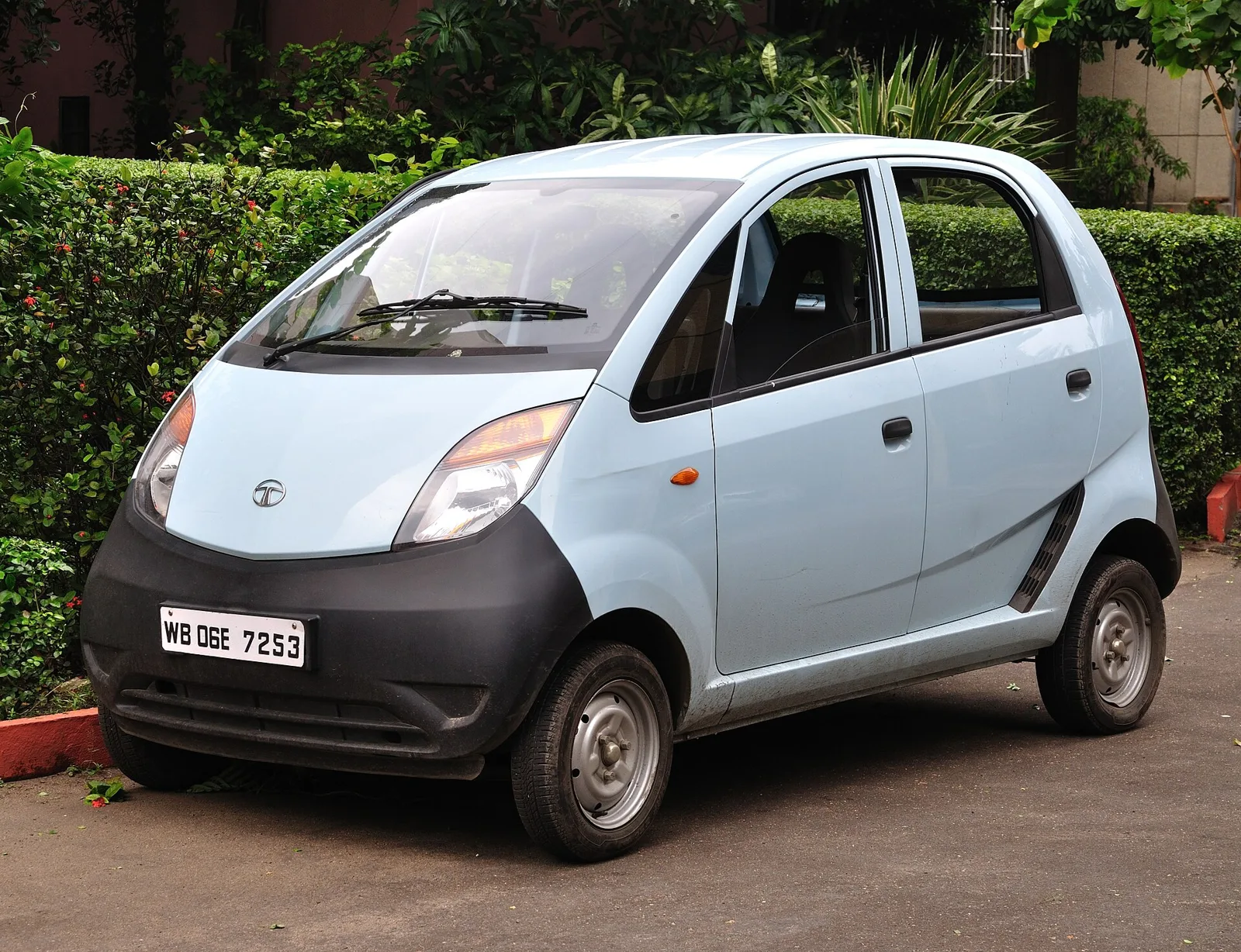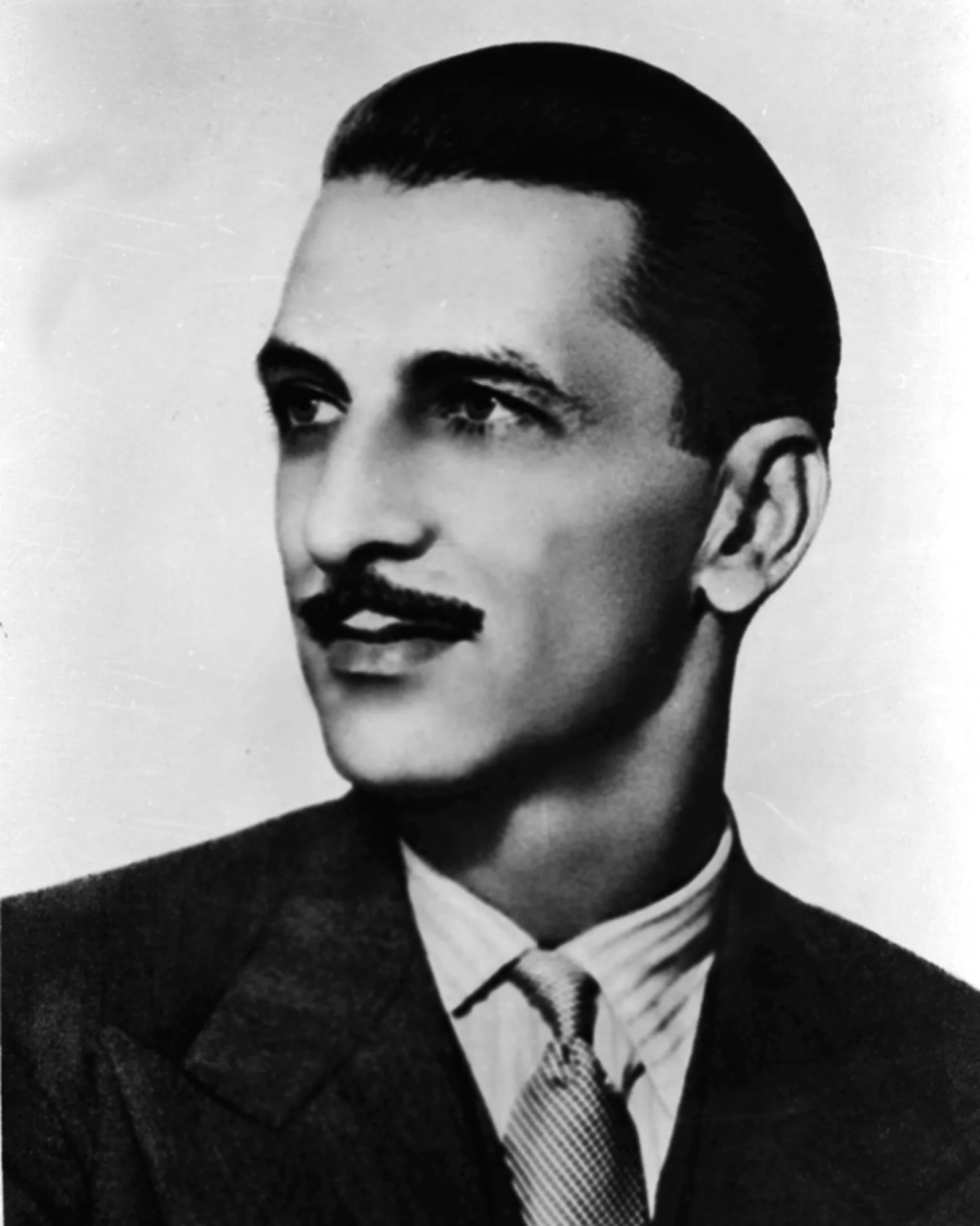
A pilot who ran the Tata Group for decades, a software executive who became its first professional chairman, and the Harvard-trained head of Mahindra.
JRD Tata chaired Tata Sons from 1938 and founded Tata Motors in 1945. N. Chandrasekaran, the first non-Parsi professional to head the Tata Group, is due to step down in February 2027. Anand Mahindra has chaired the Mahindra Group, now a US$19 billion organisation, since August 2012.
When JRD Tata was elected chairman of Tata Sons in 1938, at the age of 34, he led 14 enterprises. By 26 July 1988 the group had grown to 95 enterprises that it either started or controlled, and its assets had risen from US$100 million to more than US$5 billion.
Three men sit at the centre of how two of India's best-known industrial houses were run: JRD Tata and N. Chandrasekaran at the Tata Group, and Anand Mahindra at the Mahindra Group. Both groups have a stake in the car business, Tata through Tata Motors and Mahindra through Mahindra & Mahindra, a producer of off-road vehicles and agricultural tractors.
JRD Tata, the Tata Group chairman from 1938
Jehangir Ratanji Dadabhoy Tata was born in Paris on 29 July 1904 to a Parsi father and a French mother, and French was his first language. His father, Ratanji Dadabhoy Tata, was a first cousin of Jamsetji Tata. The boy was schooled in Paris, where a teacher mistook him for an Egyptian and nicknamed him L'Egyptien, and later in Bombay. He then spent two years in Yokohama from 1917 and was sent to England in October 1923 for higher studies. Because he was a French citizen, he first had to serve in the French Army for at least a year. A colonel discovered that he could read, write and type, and made him a secretary. His father then pulled him back to India, and he joined the Tata company instead of returning to Cambridge.
He started as an unpaid apprentice at Tata Sons in 1925. In 1929 he renounced his French citizenship and became an Indian citizen. A car story sits in his private life too: in 1930 he married Thelma Vicaji, the niece of Jack Vicaji, a colourful lawyer he had hired to defend him against a charge of driving his Bugatti too fast along Bombay's Marine Drive. In 1938 he succeeded his second cousin Nowroji Saklatwala as chairman. For decades he directed a group whose interests spanned steel, power, chemicals and hotels, and he was known for turning down bribes to politicians and the black market. The industries he is best known for founding include Tata Consultancy Services, Tata Motors, Titan, Tata Salt, Voltas and Tata Airlines.
He remained chairman of Tata Sons until 1991.
He was famous for succeeding in business while refusing to bribe politicians or use the black market.
The aviator who founded Tata Motors
Tata caught the flying bug from Louis Bleriot, the aviation pioneer who was first across the English Channel by air and whose son was his friend. On 10 February 1929 he obtained the first pilot licence issued in India. In 1932 he founded Tata Airlines, the forerunner of Air India, and on 15 October that year he flew the first scheduled commercial service, from Karachi to Madras, in a Puss Moth. He worked on the airline alongside Nevill Vintcent. The company became Air India in 1946, and Air India International launched in 1948 as India's first international airline.
Jawaharlal Nehru's government nationalised Air India in 1953 and named Tata its first chairman. He held the post for 25 years, until Morarji Desai removed him in 1978. For his aviation work he was named Honorary Air Commodore of India, and he rose through Indian Air Force ranks from group captain in 1948 to air vice marshal on 1 April 1974.
On the ground, he founded Tata Motors in 1945. Other creations include Tata Consultancy Services, which began in 1968 as the Tata Computer Centre, and Titan Industries in 1987. For more than fifty years from 1932 he served as a trustee of the Sir Dorabji Tata Trust, which established the Tata Memorial Centre for Cancer, Asia's first cancer facility, in Bombay in 1941. He also founded the Tata Institute of Social Sciences in 1936 and the Tata Institute of Fundamental Research in 1945, and was a founding member of the governing body of NCAER, India's first independent economic policy institute, established in 1956. Jamshedpur, home of Tata Steel, was chosen as a UN Global Compact City for its quality of life, sanitation, roads and welfare.
Workers' welfare was a consistent thread. In 1956 he started a programme of closer employee association with management. He backed an eight-hour working day, free medical aid, a provident scheme and accident compensation, all of which were later adopted as statutory requirements in India. In 1979 Tata Steel adopted a rule treating a worker as at work from the moment he leaves home until he returns, making the company liable for mishaps on the journey.
He received the Padma Vibhushan in 1955 and the Bharat Ratna in 1992, along with the French Legion of Honour. He died in Geneva on 29 November 1993, aged 89, and the Indian Parliament adjourned in his memory, an honour not usually given to people outside parliament. In a 2012 Outlook poll he ranked sixth as The Greatest Indian.
N. Chandrasekaran, the first professional to head the Tata Group
Natarajan Chandrasekaran, born on 2 June 1963, is the chairman of Tata Sons and Tata Group, and he is the first non-Parsi and the first professional executive to hold that job. Born into a Tamil Brahmin family in Mohanur, near Namakkal in Tamil Nadu, and now living in Mumbai, he went to a Tamil-medium government school in the town, took a degree in applied sciences at the Coimbatore Institute of Technology, and earned a Master of Computer Applications in 1986 at the Regional Engineering College in Tiruchirappalli.
He joined Tata Consultancy Services in 1987 and became its chief executive on 6 October 2009, having served as chief operating officer and executive director. Along the way he chaired Tata Motors and Tata Global Beverages, and in April 2015 he was nominated chairman of the IT industry body NASSCOM. In 2016 he became a board director of the Reserve Bank of India, and in 2023 he led the business agenda as chair of B20 India during India's G20 presidency.
His rise to the top came with a legal fight. The Tata Sons board voted to remove Cyrus Mistry as chairman on 24 October 2016. In July 2018 the National Company Law Tribunal ruled in favour of Tata Sons on Mistry's charges of mismanagement, and Mistry said he would appeal. In December 2019 the appellate tribunal NCLAT reinstated Mistry for the rest of his term and declared that Chandrasekaran's appointment as executive chairman was illegal. Tata Sons took the matter to the Supreme Court in January 2020, and a three-judge bench led by Chief Justice Sharad Arvind Bobde stayed the NCLAT order on 10 January 2020, saying there were lacunae in its judicial orders. Chandrasekaran has also been accused of ignoring the rights of majority shareholders and of attempting a hostile takeover of Tata Sons.
Recognition has come from several countries. India gave him the Padma Bhushan in March 2022, France made him a Knight of the Legion of Honour on 16 May 2023, Amsterdam awarded him the Frans Banninck Cocq Medal, and in March 2026 the British government gave him an honorary knighthood for strengthening India-UK business relations. India Today put him on its 2017 list of India's 50 Most Powerful People. Earlier, Institutional Investor ranked him among the best chief executives in its All-Asia team every year from 2010 to 2015, CNN-News18 named him Indian of the Year in business in 2014, and he holds honorary doctorates from Nyenrode Business Universiteit, Jawaharlal Nehru Technological University in Hyderabad, the National Institute of Technology in Tiruchirappalli and Aligarh Muslim University, among others. EY gave him its Special Jury Award in February 2024, in the 2023 Entrepreneur of the Year programme for India.
Anand Mahindra and the Mahindra Group
Anand Mahindra, born in Bombay on 1 May 1955 to the industrialist Harish Mahindra and Indira Mahindra, comes from the family behind Mahindra & Mahindra: his grandfather, Jagdish Chandra Mahindra, was a co-founder. After early schooling at Lawrence School, Lovedale, he studied film making and architecture at Harvard, graduating magna cum laude in 1977, and took an MBA at Harvard Business School in 1981. That same year he joined Mahindra Ugine Steel Company as executive assistant to the finance director.
The climb was steady. He became president and deputy managing director of the steel company in 1989, and drove the group's diversification into real estate and hospitality. On 4 April 1991 he became deputy managing director of Mahindra & Mahindra, then managing director in April 1997 and vice chairman in 2001. In August 2012 he took over from his uncle, Keshub Mahindra, as head of the board and managing director of the group, and in November 2016 he was re-designated executive chairman of Mahindra & Mahindra while remaining group chairman.
Today the Mahindra Group is described as a US$19 billion business and one of the ten leading industrial houses in India. Its businesses range from farm machinery and defence to aerospace, insurance, hospitality and retail. The Economist has tagged Mahindra the face of Indian capitalism, and Forbes India named him Entrepreneur of the Year for 2013. Fortune listed him among the World's 50 Greatest Leaders in 2014.
Outside the group, he launched the Pro Kabaddi League in 2014 with his brother-in-law Charu Sharma, and co-founded the television channel EPIC the same year, becoming sole owner in 2016. He was World Economic Forum co-chairman in 2009, president of the Confederation of Indian Industry in 2003 and a contributor to Reimagining India, a book published by McKinsey & Company. He was also a co-promoter of Kotak Mahindra Bank, stepping back in 2013 to stay on as a non-executive director. In 1996 he set up Nanhi Kali, which supports education for underprivileged girls and had supported 130,000 girls as of September 2017.
His wealth estimates move with the date. Forbes put his net worth at $2.1 billion in 2023, and its list of India's 100 richest, dated 9 October 2024, ranked him 80th with $3.97 billion. His honours include France's National Order of Merit in 2004, the Order of the Star of Italy in January 2013, the Legion of Honour in 2016 and the Padma Bhushan in January 2020.
Three leaders side by side
| Leader | Born | Group | Route to the top | Notable dates |
|---|---|---|---|---|
| JRD Tata | 1904 | Tata Group | Unpaid apprentice at Tata Sons in 1925 | Chairman from 1938; founded Tata Motors in 1945 |
| N. Chandrasekaran | 1963 | Tata Group | Joined TCS in 1987, chief executive in 2009 | First non-Parsi professional to head the group |
| Anand Mahindra | 1955 | Mahindra Group | Joined Mahindra Ugine Steel in 1981 | Chairman from August 2012 |
What happens at Tata Sons in 2027?
Chandrasekaran said in August 2026 that he will leave the Tata Sons chair when his second term ends in February 2027, and that he is not seeking reappointment. Tata Sons has set up a selection committee to choose the next chairman.