Esso is the sound of S.O. for Standard Oil, Amoco came back after a merger and ARCO lived on under a new owner: four fuel brands and the stations that still carry them.
Mobil, Amoco, ARCO and Esso are fuel brands that changed hands. Esso and Mobil belong to ExxonMobil, which merged in 1999. Amoco went to BP in 1998 and was reintroduced in 2017. BP bought ARCO in 2000 and sold the brand in 2012, and Marathon Petroleum owns it today.
Esso is simply how the initials S.O., for Standard Oil, sound when you say them aloud. For decades a 1937 federal court order stopped the company using that name in some American states, and it was only in February 2016 that ExxonMobil persuaded a court to lift it. Esso, Mobil, Amoco and ARCO are four fuel brands that have changed owners and names, and each still has a gas pump to its name.
Esso petrol stations: S.O., a court order and a tiger
Standard Oil of New Jersey began selling under the Esso name in 1926, after the 1911 breakup of the original Standard Oil. The trouble was geography. The breakup handed each successor company the right to use the Standard name in particular states, so Jersey Standard could trade as Standard in New Jersey and a string of southern and mid-Atlantic states, and by 1941 had added Louisiana, Tennessee, Arkansas, Delaware and Pennsylvania. It also used Esso in New York and New England, where Socony held the rights and did not object. Elsewhere other Standard companies did, and a 1937 federal court injunction forced the company to sell under other labels, mostly Enco, short for Energy Company, and in a few places Humble. The complaints came mainly from Sohio and, in the 1960s, from California Standard, today's Chevron.
In 1972 the company chose Exxon to unify its identity, and it renamed itself Exxon Corporation the next year. Even so, it kept the Standard and Esso trademarks alive in states where it held them by selling Esso Diesel at stations that stocked diesel, which stopped the marks being declared abandoned. Puerto Rico and the US Virgin Islands kept the Esso name until 2008, when the stations there went to TotalEnergies.
The 2016 court ruling changed the picture. By then most of the Standard companies that had objected had been bought by BP, and ExxonMobil cited trademark surveys showing no remaining confusion over the Esso name, more than seven decades after the injunction. Neither BP nor Chevron objected. Esso did return to minor signage at Exxon and Mobil stations, though ExxonMobil did not say whether it would open new stations under the name. Today Exxon is used only in the United States, while the Esso trademark remains in wide use in Latin America, Asia, Canada and Europe.
The brand's advertising left a mark. In 1959 Emery Smith came up with "Put a Tiger in Your Tank", and in the 1960s Esso poured hundreds of millions of dollars into a brand-awareness push built on that theme. In England, drivers tied fake tiger tails with pink ribbons around their petrol caps. Tiger imagery can still be seen on pumps. For heating, Esso Blue paraffin had a long-running television campaign built around Joe, a bowler-hatted animated dealer who famously tripped over his own words. Esso franchises were also a place to pick up The Negro Motorist Green Book in the segregation era, a travel guide for Black motorists.
Esso is simply how the initials S.O., for Standard Oil, sound when spoken.
Esso around the world: Tesco, Axion and Euro Garages
In Britain, the Esso story includes a supermarket. In August 1998 Tesco announced a partnership under which Tesco Express stores opened on Esso forecourts, and by February 2000 the two were opening a new store a month and creating 4,000 jobs. Esso's own operated sites, known as ROC, were all sold by 2015 to firms including Rontec and Euro Garages, so Esso no longer runs any forecourts directly in the UK. Euro Garages bought 45 forecourts from Esso in 2013, still trading as Esso, and plans to replace their Esso shops with partner brands such as Starbucks and Spar. In Northern Ireland, Esso left in the early 2000s, and its forecourts became Maxol and Texaco.
Elsewhere the brand has been sold, rebranded or kept under licence. In Canada, Esso stations are supplied by Imperial Oil, which ExxonMobil owns 69.8 percent of, and run by retailers including Couche-Tard and 7-Eleven. In 2011 the consortium Bridas bought the rights to the Esso name in Argentina, Paraguay and Uruguay, and all of the stations became Axion Energy; at the time Esso had 520 stations in Argentina, 450 of them franchised, and a 12 percent share that made it the third largest in the country behind YPF and Shell. In 2014 Sol Petroleum took over Esso operations in the Bahamas, Barbados, Bermuda, the Cayman Islands, the Dominican Republic, Guadeloupe and Martinique, with the right to keep using the Esso name. In Japan, Esso and Mobil began to be phased out in 2019 in favour of Eneos EneJet. In 2025 the French business, Esso S.A.F., passed to North Atlantic and became North Atlantic Energies.
Mobil gas stations: from Socony to Pegasus
Mobil grew out of the Standard Oil Company of New York, shortened to Socony. In 1931 it merged with Vacuum Oil, from which the Mobil name came, and the combined firm was called Socony-Vacuum. It became Socony Mobil in 1955 and the Mobil Oil Corporation in 1966. Mobil credits itself with being first to make aviation fuel, first to offer payment at the pump and first with a mobile payment device, Speedpass.
The merger with Exxon was announced in 1998 and completed on 30 November 1999, with Exxon buying Mobil and Mobil shareholders being paid in Exxon stock. The Mobil name lives on in the company, and its red winged horse, Pegasus, has been a trademark since the firm's link with Magnolia Petroleum in the 1930s.
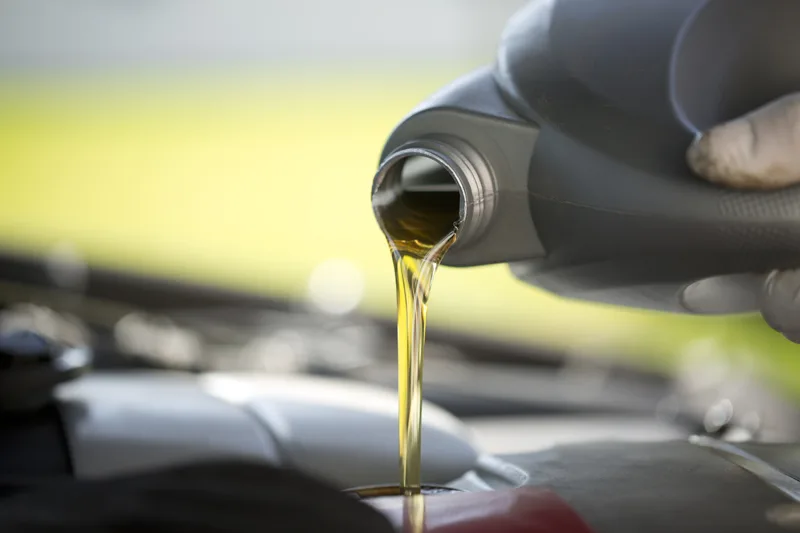
Mobil leads ExxonMobil's retail petrol range in the Midwest, the Great Lakes region, New England, New York, Florida and California. Mobil petrol is also sold in Mexico, New Zealand, Nigeria, Australia, Guam, Colombia and Egypt, in Canada since 2017, in Puerto Rico since 2022 and in Guyana since 2024. Elsewhere it mostly means oil: Mobil 1, introduced in 1974 as the successor to Mobiloil, is a synthetic motor oil, and the range includes Mobil Delvac for heavy-duty commercial vehicles and Mobil Industrial lubricants.
Retail has come and gone. Mobil's On the Run convenience stores were largely sold off, with 450 stores going to Couche-Tard, which operates Circle K, in 2009, some to 7-Eleven in 2011 and the Canadian franchise to Parkland in 2016. After the 1970s oil crisis it converted stations into discount brands called Hi-Val, Reelo and Sello, which offered do-it-yourself repair bays, and dropped them in the 1980s. The Mobil Travel Guide, a book rating hotels and restaurants from one to five stars from 1958, was licensed to Forbes in October 2009.
The brand's history differs by country. In Britain, Vacuum Oil built a European marketing organisation in Liverpool in 1885, and Mobil opened its first service stations in the early 1950s. By 1965 it was the seventh-largest petrol brand, with 1,990 outlets. In 1996 its European fuels operations went into a joint venture 70 percent owned by BP and the Mobil name vanished from forecourts. BP took the retail assets and the Coryton refinery at the start of 2000, so Mobil became purely a lubricants brand in Europe and the premium oil sold at Esso stations. In Australia, Vacuum Oil began in 1895, the Flying Red Horse appeared in 1939, and in 1990 Mobil bought Esso Australia's service station and refining network. 7-Eleven bought Mobil's 295 Australian stations in 2010 and Mobil kept supplying the fuel, and as of October 2022 Mobil also operated 229 stations of its own. In New Zealand, where it is the oldest oil company, Mobil owns 17.2 percent of the refinery at Marsden Point, supplies roughly 20 percent of the country's fuel and has more than 150 locations.
Amoco gas stations: the brand BP brought back
Amoco began as Standard Oil of Indiana, formed in 1889 around the Whiting refinery on Lake Michigan. It became independent in 1911, the year it sold 88 percent of the gasoline and kerosene in the Midwest, and opened its first service station, in Minneapolis, in 1912. The Amoco name came from a separate firm, the American Oil Company, which Louis Blaustein and his son Jacob founded in Baltimore in 1910. Standard of Indiana took it over in 1925, and the company later used both the Standard and American names with a shared torch-and-oval logo in red, white and blue. It adopted the name Amoco Corporation in 1985.
Among its firsts were the petrol tanker lorry and the drive-through filling station. Its scientist William Burton pioneered thermal cracking, which let the industry produce more oil from the same crude, and the process was licensed to 14 companies between 1914 and 1919. It also took a stand on lead. While most oil companies moved to leaded petrol in the late 1920s, American Oil kept selling a premium grade, Amoco-Gas and later Amoco Super-Premium, that raised octane with aromatics rather than tetraethyllead. In November 1986 Amoco was the first big oil company to announce it would end retail sales of leaded petrol.
By 1971 every division bore the Amoco name. In 1989 it ranked fifth among American gasoline sellers, operating over 14,000 stations across 30 states. Then came the end of the independent company: it joined British Petroleum in December 1998, creating BP Amoco, which was renamed BP in 2001. The Amoco label survived on the highest, 93 octane, blends. After the 2010 Deepwater Horizon spill tarnished the BP brand in America, BP announced in October 2017 that Amoco stations would return in chosen US markets, and by 2026 about 1,000 were open, mainly in the east, Midwest and south of the country.
ARCO gas stations: the cash-only brand now owned by Marathon
ARCO was created in 1966, when Atlantic Petroleum, whose heritage goes back to 1866, merged with the Richfield Oil Corporation of California. The name is an acronym of the Atlantic Richfield Company. Robert Orville Anderson was its first chief executive, and its red diamond logo, the ARCO Spark, was designed by the Bauhaus artist Herbert Bayer. ARCO and Exxon discovered the Prudhoe Bay Oil Field in Alaska on 12 March 1968, and its first ampm convenience store opened in 1978 in Southern California.
It was a brand that did things differently at the pump. In 1982 ARCO dropped its own credit card and stopped accepting bank cards such as Visa and MasterCard to save on processing costs, passing the savings to dealers, which made it the only major gasoline retailer to take only cash. In 1986 it began accepting bank cards used at cash machines, later debit cards, adding a fee that started at 10 cents while keeping the cash-only price lower.
Ownership then moved around. BP bought ARCO on 18 April 2000 for $26.8 billion. In 2012 BP sold the Carson refinery, the brand itself and 800 stations across California, Arizona and Nevada to Tesoro for $2.5 billion, while paying for an exclusive licence to keep using the name in northern California, Oregon and Washington. ARCO is now a Marathon Petroleum brand, with Marathon holding the rights everywhere else in the US and in Mexico.
The ARCO name left other legacies. It was a sponsor of the 1984 Summer Olympics in Los Angeles, and had naming rights for the Sacramento Kings' ARCO Arena from 1985. Its solar business, ARCO Solar, built the first photovoltaic power station to supply a utility in 1982, a 1-megawatt facility near Hesperia, and was sold to Siemens in 1990 for $36 million. The purchase of Anaconda Copper in 1977 also left it responsible for the largest US Superfund site, and in 2008 ARCO agreed to pay $187 million for natural resource restoration.
| Brand | Roots | Owner today | Where it survives |
|---|---|---|---|
| Esso | Standard Oil of New Jersey, 1926 | ExxonMobil | Europe, Canada, Asia and Latin America; minor signage in the United States |
| Mobil | Socony and Vacuum Oil, merged in 1931 | ExxonMobil | the Midwest, Great Lakes, New England, New York, Florida and California, plus several countries |
| Amoco | Standard Oil of Indiana and American Oil, 1889 and 1910 | BP | About 1,000 stations in the east, Midwest and south of the US |
| ARCO | Atlantic and Richfield, merged in 1966 | Marathon Petroleum | United States and Mexico; BP licence in northern California, Oregon and Washington |
What these brands mean at the pump
The sign above a station does not always tell you who owns it or who supplies the fuel. Esso, Exxon and Mobil are all ExxonMobil brands, and they are the recommended gasoline of several carmakers, among them Bentley, Porsche, the Toyota Group and General Motors. Amoco is a BP brand that was brought back deliberately. In northern California, Oregon and Washington ARCO fuel is supplied by BP, while elsewhere the same name belongs to Marathon.
For travellers, the lesson is that the brand name may outlast the company behind it. A 7-Eleven in Australia can advertise Mobil as its fuel supplier, an Esso in Britain may sit next to a Tesco Express, and an Esso forecourt in Argentina became an Axion.
Recent moves by each brand
The clearest moves are small ones. Euro Garages plans to roll out Starbucks and Spar in place of Esso shops at the 45 forecourts it bought. BP has reintroduced Amoco to selected US markets. ExxonMobil has put Esso back on minor signage at its American stations after the 2016 court ruling, without saying whether it will open new stations under the name.