How subsidies, short commutes and small cars built the world's biggest plug-in market, and what the Wuling Mini EV and BYD Seal show about it.
China built the world's largest plug-in car market through subsidies, local incentives and a focus on small cars; sales hit 7.4 million in 2023. The Wuling Hongguang Mini EV from US$4,162 and the BYD Seal sedan with up to 700 km range show its two ends.
In 2020 the cheapest electric car in China cost from US$4,162 and seated four people. By 2022 BYD was delivering a battery sedan with 390 kW from two motors, a claimed 3.8 seconds from 0 to 100 km/h and a range of up to 700 km. Both are made in China, and they sit at opposite ends of one enormous market.
The Wuling Hongguang Mini EV and the BYD Seal explain how plug-in cars took off in China. One shows what a government-backed push for small, cheap electric cars can produce. The other shows what a carmaker can do once the market has grown.
How big is the China electric car market?
China is the largest plug-in car market in the world. About 20.41 million plug-in cars were in use there at the end of 2023, and 2023 sales totalled 7.4 million units, 30.2 per cent of new car registrations, the biggest volume anywhere that year.
For nine straight years, from 2015 to 2023, no other country sold more plug-in passenger cars. Annual sales rose from more than 207,000 in 2015 to 579,000 in 2017 and to just over 7 million in 2023. Domestic cars make up 96 per cent of sales. A particular feature is the dominance of small, cheap models: in 2015 they made up 87 per cent of pure electric car sales, and 96 per cent of plug-in hybrid sales were compacts. China also leads in electric buses, with over 500,000 on the road in 2019, 98 per cent of the global total.
In 2020 China's cheapest electric car started at US$4,162 and seated four.
Why did China push plug-in cars?
The government has four goals: to build a world-leading industry that creates jobs and exports; to reduce dependence on Middle Eastern oil; to cut urban air pollution; and to reduce carbon emissions. It adopted its new energy vehicle programme in 2009 as a plan to leapfrog existing automotive technology.
Some of the benefits are debated. A McKinsey study found that swapping a petrol car for a similar electric one would cut greenhouse gas emissions by only 19 per cent, because coal supplies 75 per cent of China's electricity.
Money followed the plan. In June 2010 trial incentives of up to 60,000 yuan for a battery car and 50,000 yuan for a plug-in hybrid began in five cities: Shanghai, Shenzhen, Hangzhou, Hefei and Changchun. The cheques went to automakers, in the hope that they would pass the savings on. In June 2012 the State Council set targets of 500,000 vehicles by 2015 and 5 million by 2020, at a time when electric cars made up less than 0.01 per cent of new car sales. When sales lagged, a central subsidy of up to US$9,800 for an electric passenger car arrived in September 2013.
Growth then came in leaps. Sales of new energy vehicles reached 74,763 in 2014, up 324 per cent, and 331,092 in 2015, up 343 per cent. The 2016 expectation was cut after penalties on several carmakers for defrauding the subsidy scheme of almost 10 billion yuan, and only 289,000 had been sold in the first nine months. In 2015 a plan called for a charging network able to serve 5 million vehicles by 2020, with at least one public station for every 2,000 vehicles and 10 per cent of spaces in public car parks equipped with chargers.
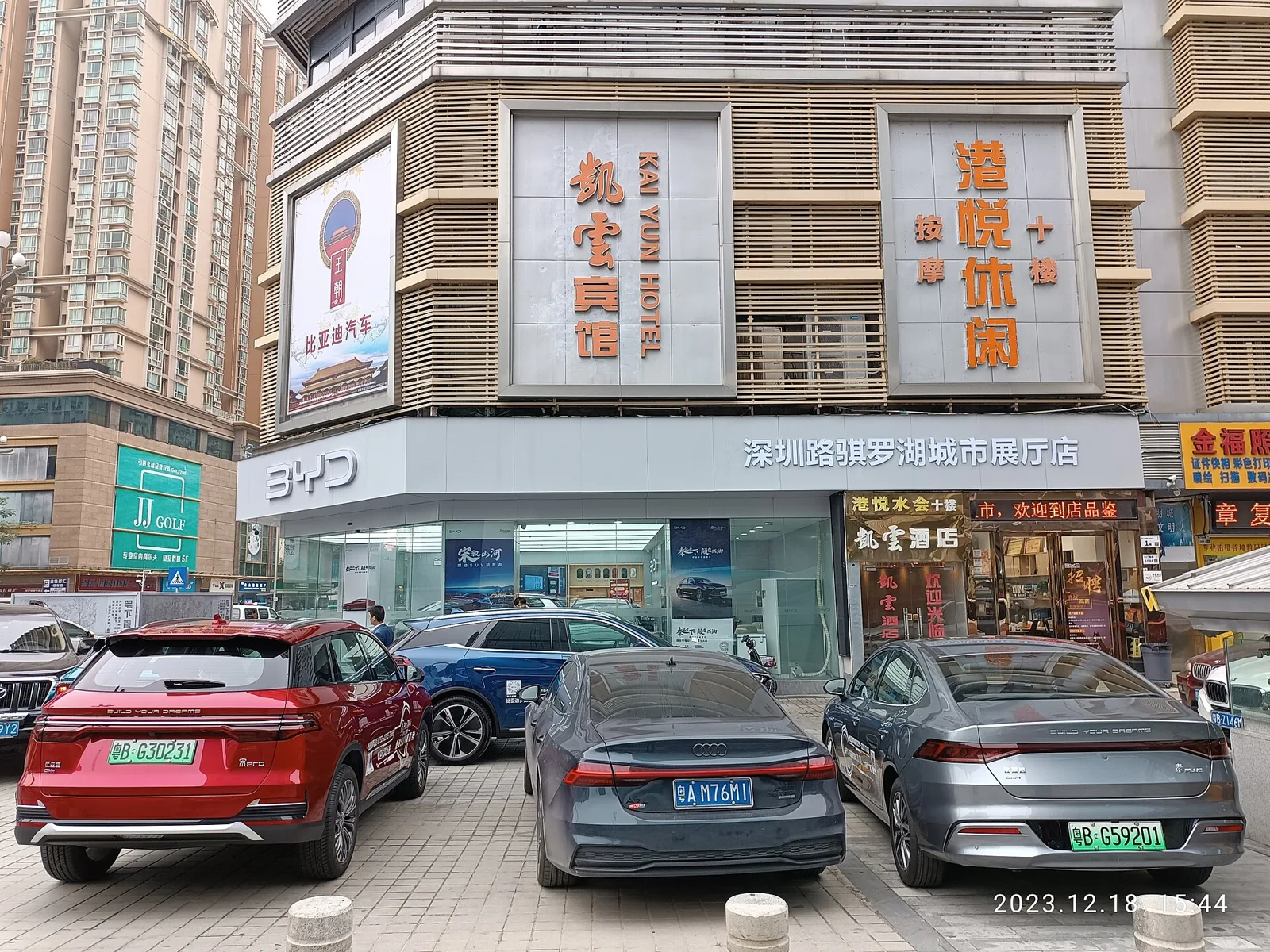
City rules did the rest. Green licence plates were introduced in April 2016. Central Beijing bans conventional cars one day a week but exempts electric ones, and it awards licences through a lottery in which electric cars have much better odds. Subsidy standards were cut by 20 per cent in 2018. The same conditions suit the technology: intercity driving is rare in China, commutes are short and slow because of traffic, and a car that tops out at 100 km/h and goes about 200 km (120 mi) on a charge is workable for many buyers.
What is the Wuling Hongguang Mini EV?
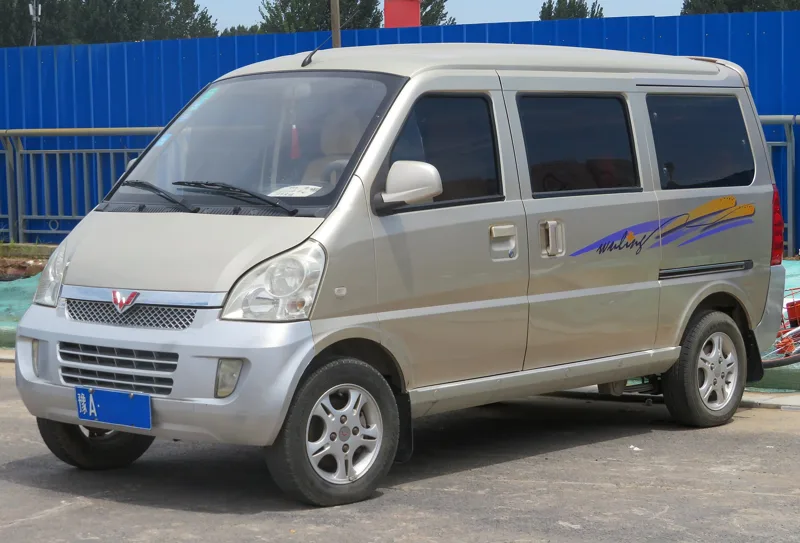
The Wuling Hongguang Mini EV is a four-seat battery city car made by SAIC-GM-Wuling since 2020, with retail deliveries beginning in China in July 2020. By February 2023 global sales had passed 1.1 million, making it the best-selling electric car in China.
The specification is modest. A motor driving the rear wheels makes a peak of 20 kW (27 hp) and 85 N-m (63 lb-ft), good for a quoted top speed of 100 km/h (62 mph). Buyers chose between a 9.2 kWh battery with a NEDC range of 120 km (75 mi) and a larger pack good for 170 km (110 mi). Equipment included air conditioning, power windows, a stereo, anti-lock brakes, tyre pressure sensors and rear parking sensors, although early cars lacked a driver airbag.
The price was the story. In 2020 the Mini EV started at US$4,162 and reached US$5,607 for a fully loaded car, making it China's cheapest electric car. It sold 119,255 units in 2020 in only six months on the market, and ranked second among the world's plug-in cars behind the Tesla Model 3. The China Passenger Car Association's January 2021 figures put it on top of all new energy vehicles with 25,778 units, ahead of the Model 3's 13,843, and it was also the world's leading plug-in that month.
Why did the Mini EV become a cult car?
It became a cult car because it was cheap enough to treat as a toy. Owners frequently modify their cars, and the car's popularity in China has been compared with that of kei cars in Japan. Rivals followed fast: Chery's QQ Ice Cream, the Dongfeng Fengguang Mini EV, Geely's Panda Mini EV and the BAW S3.
Wuling kept the formula fresh. The Macaron variant of April 2021 added a reverse camera, radars and a driver airbag, and came in three Pantone-developed shades, Lemon Yellow, Avocado Green and White Peach Pink. The GameBoy Edition arrived in March 2022 with a restyled, larger body and a more powerful 30 kW (40 hp) motor option. A Cabrio with a folding soft top, first shown as a concept at the 2021 Shanghai show, reached production in September 2022. A late-2023 Macaron added a passenger airbag, a CLTC range of 215 km and a charge from 30 to 80 per cent in 35 minutes.
The second generation was shown in December 2024 and reached showrooms on 22 February 2025, and a facelift followed in February 2026, available with three or five doors. The car has travelled. In Indonesia the five-door model is sold as the Aira EV, introduced on 11 July 2026 and assembled locally at Cikarang, with a Toy Story edition limited to 300 units, and in Vietnam it appeared as the Macaron on 15 July 2026. Rebadged copies also appeared in Lithuania as the FreZe Nikrob in 2021 and in Turkey as the Rainwoll RW10 in 2023.
What is the BYD Seal?
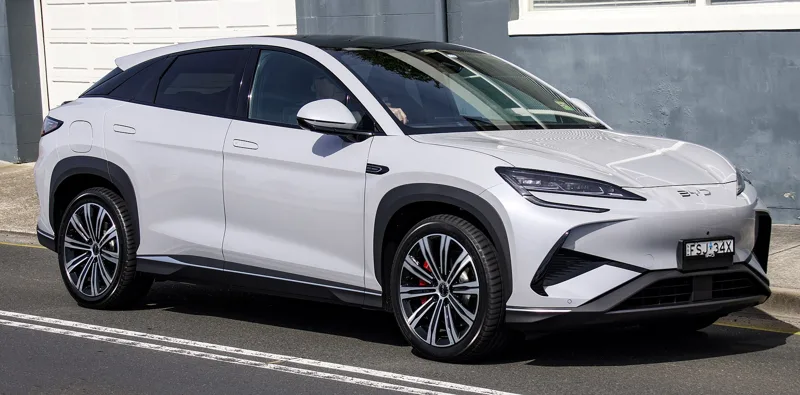
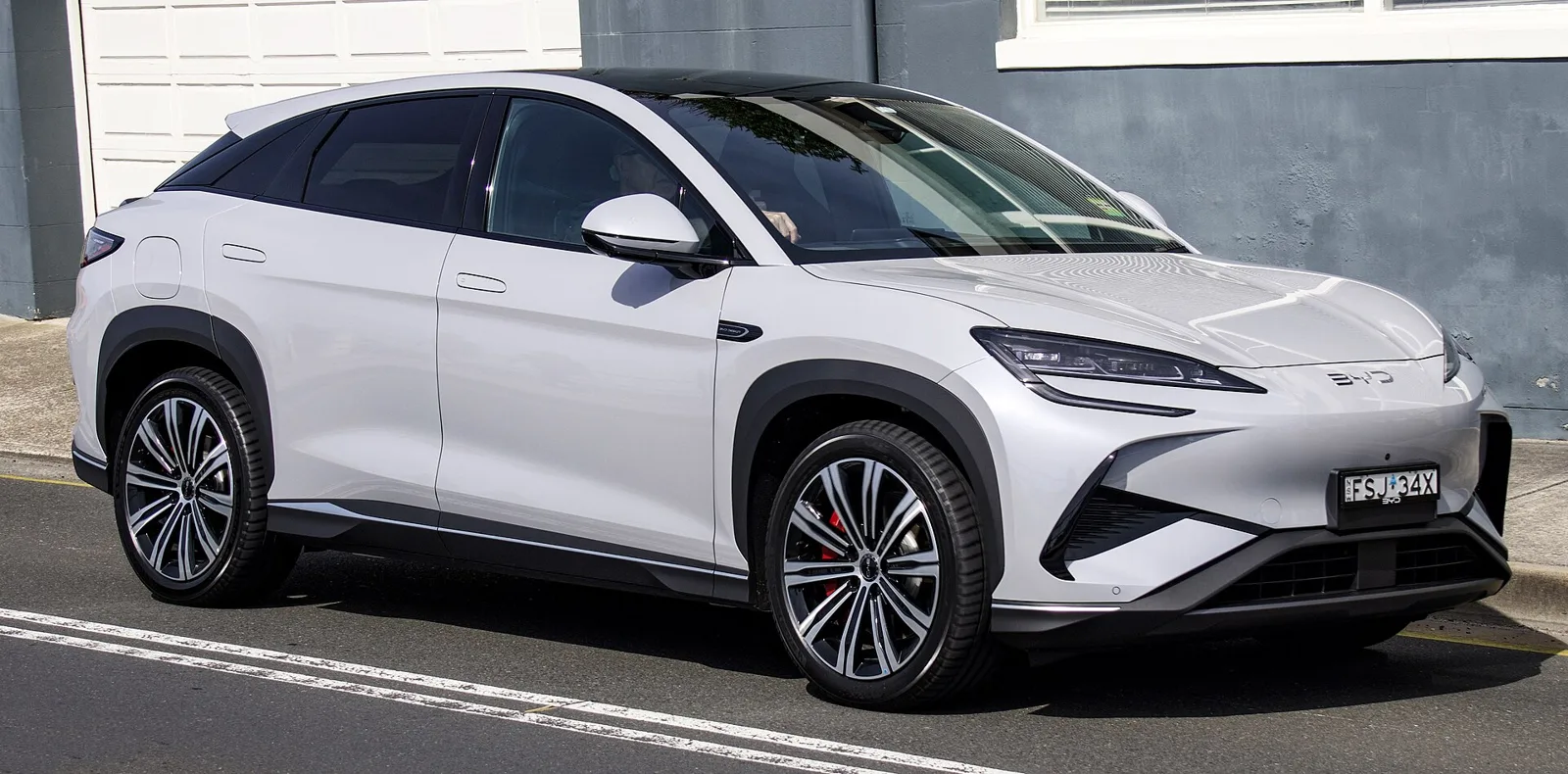
The BYD Seal is a battery electric mid-size sedan from BYD Auto, the second car in its Ocean Series after the smaller Dolphin hatchback. It was announced in May 2022, went on sale in China that July with deliveries in August, and rides on BYD's e-Platform 3.0 with an 800-volt electrical system.
Its design was previewed as the Ocean-X concept in September 2021, and it borrows ocean imagery: a low bonnet, pop-out door handles, a long tail-lamp and wavy dashboard air vents. The battery is part of the structure, which BYD says makes the body far stiffer, at 40,500 Nm per degree against an industry average of around 25,000, and lowers the floor. Drag coefficient is a claimed 0.219. Inside are a rotating 15.6-inch screen, a 12-speaker audio system, a panoramic roof and a 53-litre front boot.
How quick is the BYD Seal and how far does it go?
BYD claims 0 to 100 km/h in about 7.5 seconds for standard Seals and 3.8 seconds for the dual-motor AWD Performance model, which makes 390 kW (530 PS). Top speed is limited to 180 km/h (112 mph), and CLTC range runs from 550 to 700 km (340 to 430 mi).
Two LFP blade battery packs are offered, of 61.4 kWh and 82.5 kWh. A DC fast charger of 110 or 150 kW, depending on the model, can reportedly take the battery from 30 to 80 per cent in 30 minutes, and the car can power external devices. In China, four versions were offered: the Elite with a single 150 kW rear motor, the Prestige with 170 kW, the Performance with 230 kW and the 4WD Performance with 390 kW. BYD claims 12.7 kWh/100 km for the AWD model. Ranges for the Seal use the CLTC cycle and the Mini's earlier ones use NEDC, so the figures are not like for like.
The line has been updated steadily. A Champion Edition in May 2023 lowered prices and added a 700 km Prestige trim, and a Honor Edition in March 2024 cut the price by a further 5 per cent. A refresh in August 2024 brought a roof-mounted LiDAR sensor made by RoboSense. BYD had planned to rename the car Seal 07 EV but dropped the idea after consumer feedback.
Where is the BYD Seal sold?
The Seal is sold in China, Europe, Latin America, Southeast Asia, South Africa and Australia. It arrived in Brazil in August 2023, Europe, Thailand and Singapore in September 2023, Hong Kong in October 2023 and Mexico on 29 November 2023. Indonesia, Malaysia, Brunei, Vietnam, South Africa and the Philippines followed during 2024. In South Africa, from 4 October 2024, it was the cheapest battery electric sedan on sale.
Recognition has followed. The Seal finished in the top three for 2024 World Car of the Year, became the first Chinese-built car on the Japan Car of the Year top-ten list in December 2024, and won Japan EV of the Year 2024 in March 2025.
Two ends of the market compared
| Wuling Hongguang Mini EV | BYD Seal | |
|---|---|---|
| Type | Four-seat city car | Mid-size sedan |
| On sale in China | July 2020 | July 2022 |
| Power | 20 kW peak | 150 to 390 kW |
| Battery | 9.2 kWh or a larger pack | 61.4 or 82.5 kWh LFP |
| Range | 120 or 170 km, NEDC | 550 to 700 km, CLTC |
| Top speed | 100 km/h | 180 km/h |
| Headline fact | From US$4,162 in 2020 | 0-100 km/h in 3.8 s, AWD |
Where this goes next
The consulting firm PwC estimated that sales of new energy vehicles in China would climb to 1.4 million by 2020 and about 3.75 million by 2025. The 2023 totals above came in higher than either figure.
On policy, the State Council decided in 2020 that, if the new energy vehicle subsidy expired at the end of that year, the purchase tax exemption would be extended for two years. For the two cars, the Mini EV has the more concrete near-term news: a facelifted second generation unveiled in February 2026 and new markets in Indonesia and Vietnam in July 2026.