How car dependency formed, who pays the external costs of driving, and what ownership costs a household, from Donald Shoup's parking figures to RAC and AAA cost estimates.
Car dependency is a pattern in which cities are built so that driving becomes the default. Externalities are the costs of driving that fall on other people, such as pollution, noise and crashes. The economics of car use compares those public costs with what owners pay and gain.
A typical American family car is on the move for about 73 minutes a day and sits parked for roughly 95 per cent of its life, according to the transport researcher Donald Shoup. A study of 84 global cities found a mean idle rate of 95.8 per cent. The owner still pays for every hour of it, and in other ways so does everyone else.
Planners have a name for a city built so thoroughly around the automobile that other ways of getting about stop working: car dependency. Economists have a name for the damage that driving does to people who never chose to be involved: externalities. The argument over how to balance the two, and what a car really costs its owner, shapes most debates about cars in society.
What car dependency is and how the spiral works
Car dependency, sometimes called car dependence, describes urban planning that tilts infrastructure towards automobiles and away from public transport, bicycles and walking. Transport systems built this way are associated with higher pollution than ones that treat every mode equally.
Governments often fund the roads from general taxation, not from fuel duty. Many cities require developers to provide a minimum number of parking spaces with new housing, which in practice makes them subsidise drivers. Some places keep bicycles and rickshaws off the road altogether, and pedestrians have been criminalised in many jurisdictions through jaywalking laws since the early twentieth century. The road lobby plays a part in keeping the pattern going, which argues that building for cars helps the economy grow.
The process feeds itself. Congestion creates demand for bigger roads and for removing anything that slows traffic, whether pedestrians, signalised crossings, trams or even houses and parks. Wider roads induce more traffic. Buildings give way to car parks, open shopping streets to enclosed malls, and walk-in banks to drive-through versions. Town centres with a mix of uses are replaced by single-purpose business parks and retail boxes ringed by parking. Those places can only be reached by car, which adds traffic, and the cycle repeats. Public transit loses viability and social standing until it becomes a minority form of travel.
Zoning, parking and street width
New York City introduced the first zoning ordinance in 1916 to keep heavy industry away from housing. Over the following century zoning produced areas of similar land use, and in suburbs around the edge of cities strict codes allow nothing but detached single-family homes. When housing, work, school and recreation are kept apart, reaching them without a car becomes nearly impossible. One response is a movement to amend old codes to allow mixed-use zones, the idea behind the so-called 15-minute city.
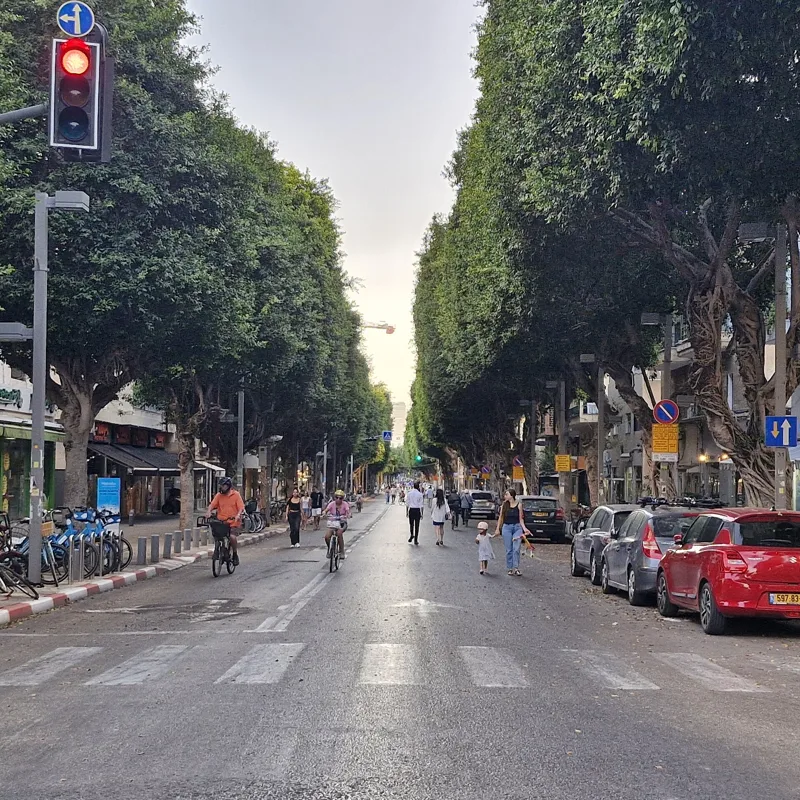
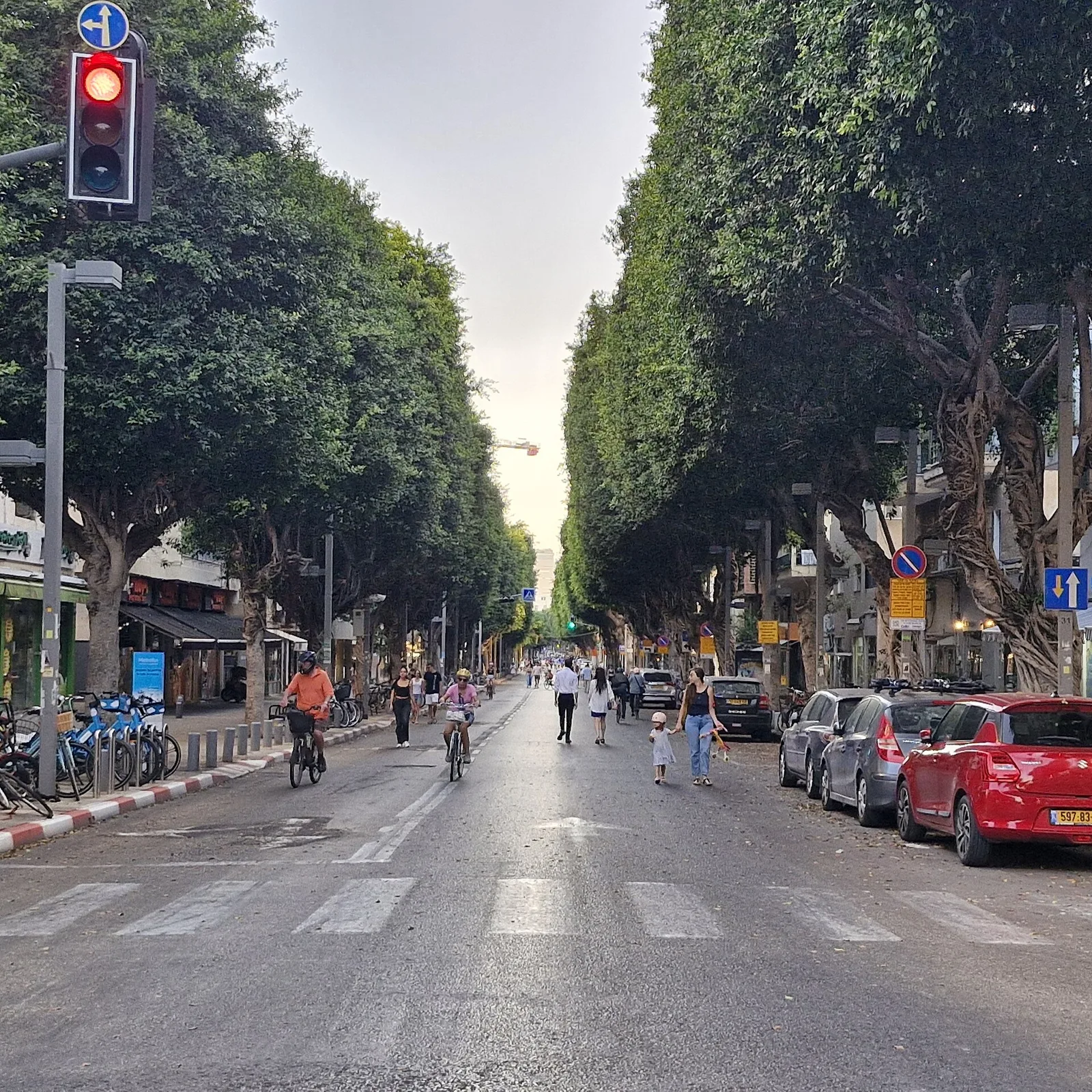
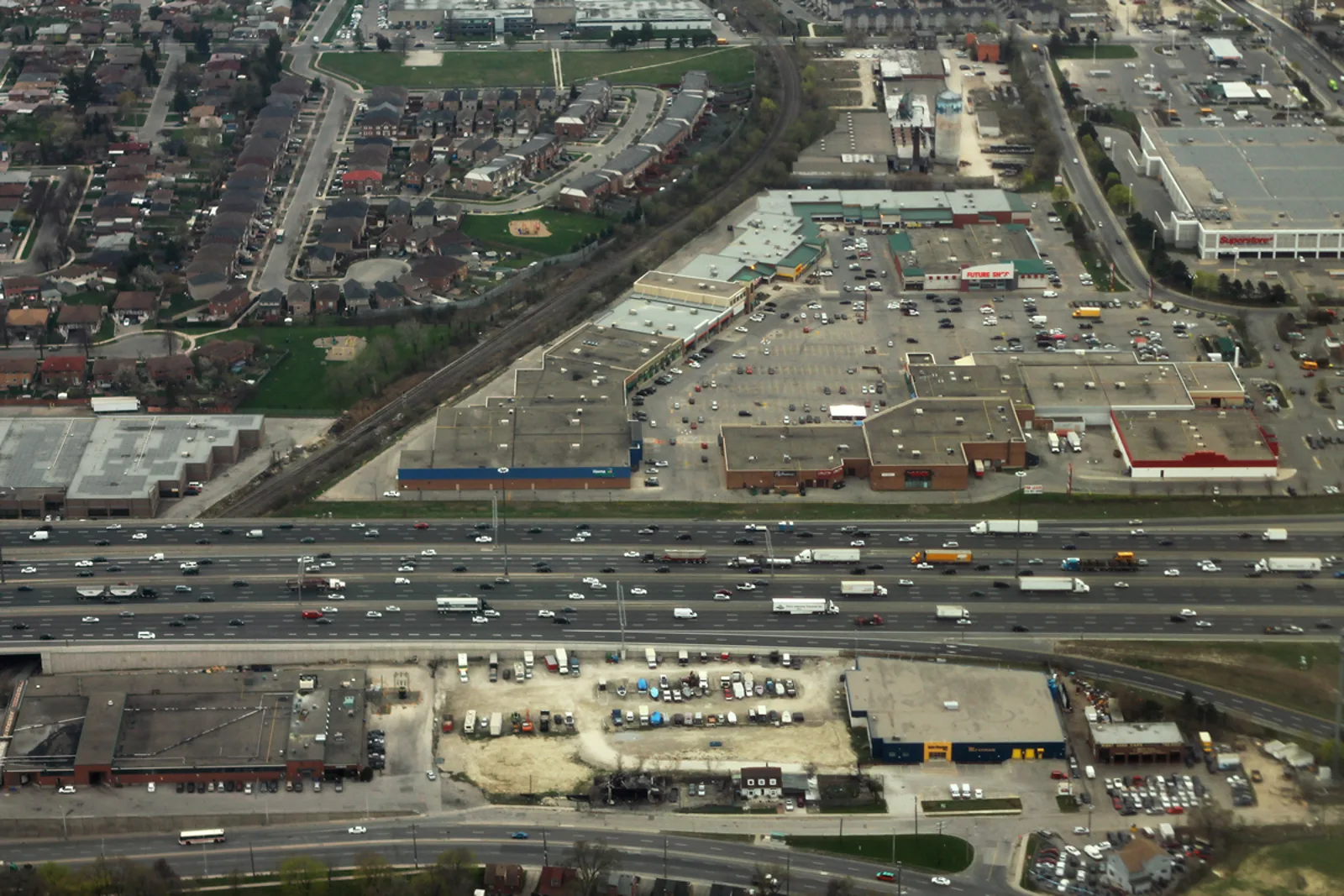
Parking minimums add to the effect. They are often set to match the greatest possible need at any moment, which has left America with almost eight parking spaces per car, and car parks up to three times as big as the businesses they serve. With so much free space, driving becomes the default even where alternatives exist. Street design works in the same direction. Wide roads make driving faster and easier but less safe for pedestrians and cyclists, and on-street parking uses space that could hold protected bike lanes or bus lanes.
A car moves for about 73 minutes a day, and its owner pays for every other hour too.
How the societal effects of cars built up
The roots are in the early twentieth century. Registered vehicles in the United States rose from 8,000 in 1900 to more than 20 million in 1927, and annual car production climbed from 45,000 in 1907 to 3,971,000 in 1935. American cities began tearing out tram systems in the 1920s, and by 1941 some 88 per cent of US households owned a car. Roads built for traffic became the default response from engineers and administrators.
After the war the Federal-Aid Highway Act of 1956, cheap mortgages under the G.I. Bill and the Interstate Highway System helped to foster suburbs. In 1956 the Highway Trust Fund began reinvesting gasoline taxes in car-based infrastructure. Sales grew from 6,000,000 units a year to 10,000,000 across the 1950s and 1960s and peaked in 1973 at 14.6 million, the year of the oil embargo.
Critics arrived quickly. W.S. Gilbert wrote a sarcastic letter to The Times on 3 June 1903 backing a proposal that pedestrians be allowed to fire shotguns at dangerous motorists. In 1971 Kenneth R. Schneider's Autokind vs Mankind called the car a destroyer of cities, and in 1972 Vance Packard blamed the mobility it enabled for loneliness. In 1973 the British architect Martin Pawley took the opposite view, expecting the car's dominance in North America to continue.
The benefits were real too. Cars gave easier access to remote places, widened social and economic contacts and created jobs and tax revenue. As of 2009 the US motor vehicle manufacturing industry employed 880,000 workers, about 6.5 per cent of the American manufacturing workforce. Some countries went another way: Denmark adopted cycling policies as a direct result of the 1973 oil crisis, the Netherlands began its bike advocacy with a campaign against traffic deaths, and both now combine high cycling shares with high car ownership.
Why drivers stay attached to the car
In the twentieth century the car came to stand for modernity, progress and freedom. Advertising in the 1940s leaned on patriotism and optimism, and after the war moved to fantasy and escapism. The car has traditionally signified masculinity but also women's liberation, and high-end vehicles are objects of conspicuous consumption. A 2024 study in Brazil found that vehicle ownership raised subjects' "mating value" and social dominance, for both men and women, and more so when the car was seen as luxurious.
Emotion matters as well. US research suggests that a moderate degree of car dependency can lift how satisfied people say they are with life, with the built environment and feelings of independence both playing a role. Drivers tend to overlook the downsides of car-centric places because they enjoy driving, and many value the personal space and apparent safety a car offers. That feeds a vicious circle: car-centred streets make walking, cycling and transit riskier, which pushes more people into cars.
The externalities of cars: costs paid by other people
An externality is a cost imposed on someone other than the traveller making the journey. The driver does not weigh the effect of exhaust on third parties when deciding to drive. The Delft University handbook, the main European Union reference for assessing the external costs of cars, lists congestion and scarcity, collisions, air pollution, noise, climate change, nature and landscape, water pollution, soil pollution and energy dependency. Harvard University names a shorter set: local and global pollution, oil dependence, congestion and collisions.
Collisions come first in scale. In many countries cars cause more fatal collisions than anything else, and they are the top killer of young people and children. In 2010, US crashes killed 32,999 people and carried a projected $871 billion price tag for society, about 6 per cent of the country's GDP. Another estimate puts deaths linked to cars at 1,670,000 a year worldwide, or 1 in 34 deaths, many from air pollution rather than crashes.
Exhausts release nitrogen oxides, particulate matter and, indirectly, ground-level ozone, and worn tyres shed particles into the air. Health costs, from cardiovascular and respiratory disease, are the most common external cost. On noise, tyres rather than engines dominate above 30-50 km/h (20-30 mph) for passenger vehicles. Persistent noise above 40 dB(A) disrupts sleep and above 55 dB(A) raises cardiovascular risk. In Germany, 2.9 per cent of heart attack cases are attributed to road traffic noise.
About 16 per cent of manmade carbon dioxide comes from road transport, mostly passenger vehicles, and a petrol car with fewer than two occupants emits more carbon dioxide per passenger kilometre than any other kind of land travel. Beyond that lie the land taken by motorways and car parks, fuels and lubricants leaking into groundwater, road salt damaging soil and vegetation, and dependence on petroleum supplies. Some research also links sprawl with obesity.
Whether drivers cover these costs is disputed. Road taxes in the Netherlands are relatively high and pay for maintenance, but in most western nations external costs are not fully covered by taxes or limits on use. Positive externalities are contested. Many authors say jobs, tax payments and time savings do not count, though some point to accessibility and land value, and to the way clustering in cities pools labour and spreads knowledge.
The economics of car use: what owning one costs
Measured per person per kilometre, a car costs more than most other popular ways to travel. Its advantages are on-demand, door-to-door travel and comfort in an acclimatised, protected interior, and public transport that is less available or does not run at certain hours cannot always replace that.
| Place | Annual cost quoted | Comparison |
|---|---|---|
| United Kingdom (RAC) | About GBP 5,000 (US$9,000) | Roughly 1/3 of the average net wage |
| Australia (RACV) | Roughly AUD 10,000 | Median income AUD 26,000 for adults, AUD 66,000 for households |
| United States (AAA, new vehicle, 2025) | $11,577 | Depreciation $4,334, insurance $1,694, maintenance $1,656, finance $1,131, about 83% of the total |
For the average owner, depreciation accounts for around half of what a car costs to run, and a survey by the RAC found that motorists commonly underestimate that standing charge badly or overlook it. Of annual running costs, 70-75 per cent are fixed with respect to distance, so a 10 per cent rise or fall in use should change annual costs by only 2.5-3 per cent. In the UK, the Department for Transport says the real cost of motoring fell by 9 per cent between 1980 and 2007, helped by cheaper manufacturing and more fuel-efficient engines.
Several features keep the price high. A typical private car is idle for most of its life, cars lack the economies of scale of buses or trains, and in most of the world they carry fewer than 1.5 people on average. A study of costs in Germany put the total lifetime cost of a car between 0.6 and 1.0 million euros, with society bearing between 29 and 41 per cent of it, and found that policies favouring private car transport are regressive, hitting lower and middle income households hardest.
Car rental, car sharing and the fixed-cost problem
The high share of fixed costs and low use have raised interest in rental, car sharing and subscription models. The RAC Foundation found the typical British car makes 18 trips a week averaging 20 minutes each, which means 96.5 per cent idle time. In a rental model the fixed costs are absorbed by the operator and spread across many users, lowering the cost per use for people who do not need a car every day.
An analysis for the United Arab Emirates found that when a vehicle is needed on fewer than 15 to 18 days a month, renting was typically cheaper than owning once depreciation was counted, because first-year depreciation of 20 to 30 per cent is driven by the climate and heavy market turnover. Research in the United States has shown that car-sharing services reduced demand by about 500,000 cars. The global rental market was valued at about US$130 billion in 2024, with growth to US$300 billion projected by 2033. In a 2024 US survey, 54 per cent of Generation Z respondents rated owning a car as important, compared with 69 per cent of baby boomers.
Fixing the bill: taxes, pricing, rules and redesign
Economists favour Pigovian taxes, which raise the cost of driving towards an economically optimal level while raising revenue. Fuel and carbon taxes are criticised as regressive, and Canada has used part of its carbon tax revenue to rebate lower-income households. Congestion pricing, a peak-hour toll for entering city centres, has been introduced in London and Stockholm, with monitoring technology allowing prices to adapt to traffic.
Many governments subsidise electric vehicles through tax credits, rebates and exemptions, though critics say this favours the wealthy and suggest subsidising e-bikes and charging stations would be fairer. Regulation works from the other side: the European Union aimed for fleet emissions of 95 g of CO2 per kilometre by 2021, with heavier cars allowed higher limits and manufacturers charged for each gram over the target.
On planning, schools of thought including New Urbanism, smart growth and transit-oriented development concentrate on urban design, density and zoning. Paul Mees took a different line, holding that strong investment in transit, public-sector control and sound policy priorities count for more than urban form. Removing minimum parking requirements can free space for housing, though extra policies are needed to manage the spill into other forms of parking. Some argue against details of these cases, particularly the link between density and transit viability, and whether alternatives can match a car's flexibility and speed.
What this means for someone buying or driving a car
The fixed-cost figures matter most to people who drive little. If 70-75 per cent of running costs do not depend on distance, extra kilometres are comparatively cheap but standing costs are paid either way, and depreciation is about half the bill. Drivers in London and Stockholm city centres may face congestion tolls, and buyers in the European Union face carbon targets that shape what manufacturers sell. Anyone who needs a vehicle on fewer than 15 to 18 days a month may find, as in the UAE analysis, that renting costs less than owning.
Proposals and open questions
A few directions are on the table. Planners are working to amend older zoning ordinances so that housing and commercial uses can share a building or sit within walking distance, the 15-minute city idea. Researchers are looking at the future of automobility itself, including shared usage, smaller vehicles, road-space management and more sustainable fuels. Forecasts for the rental market, up to US$300 billion by 2033, rest on rising ownership costs, online booking platforms and shifting preferences among younger people. All of these remain proposals and projections rather than settled outcomes.