The last naturally aspirated BMW six, the first mass-produced turbo petrol, and the single-turbo engine that replaced it, with the figures and the fuel pump saga.
The N52 is BMW's last naturally aspirated straight-six, built 2004 to 2015. The N54 added two small turbochargers and direct injection from 2006, and the N55 replaced it in 2009 with one twin-scroll turbo and Valvetronic. All three share a 3.0-litre class layout but differ in aspiration, block and injectors.
The BMW N54 was the company's first mass-produced turbocharged petrol engine, it won six straight International Engine of the Year awards, and it also led to a class action, a recall of 130,000 cars and a 10-year warranty on its fuel pump. Few engines have been admired and argued over to the same degree.
It sits between two very different relatives. Before it came the naturally aspirated N52, the last of BMW's smooth, unblown straight-sixes, and after it came the N55, which kept most of the numbers but swapped two turbochargers for one. In the space of a decade BMW changed its idea of a six-cylinder engine twice.
BMW N52: the last naturally aspirated six
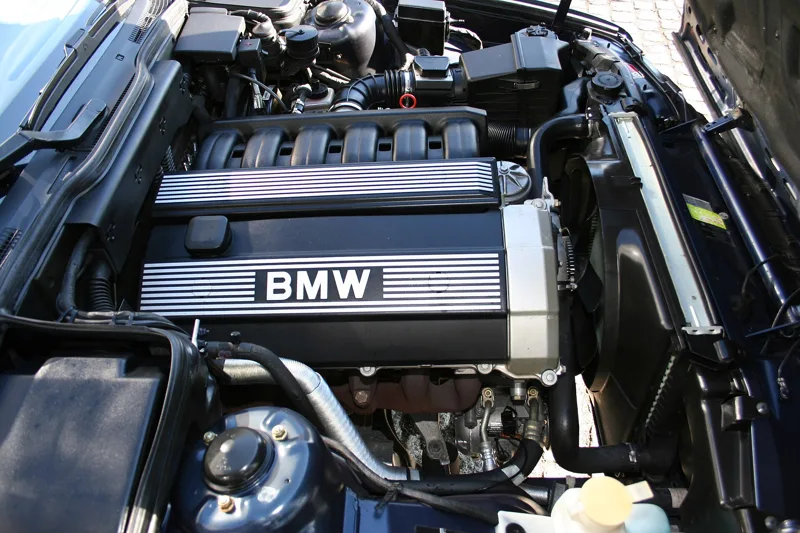
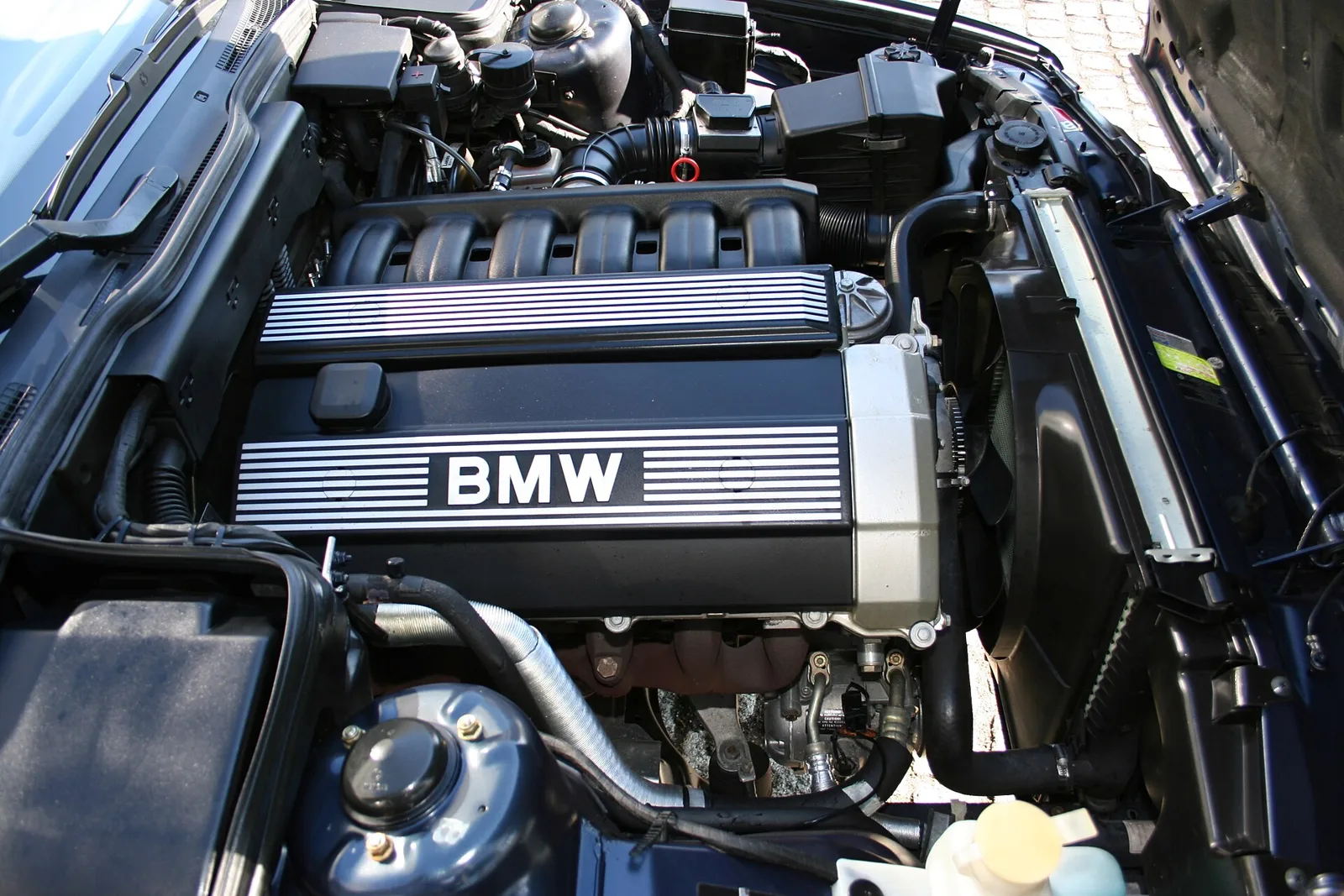
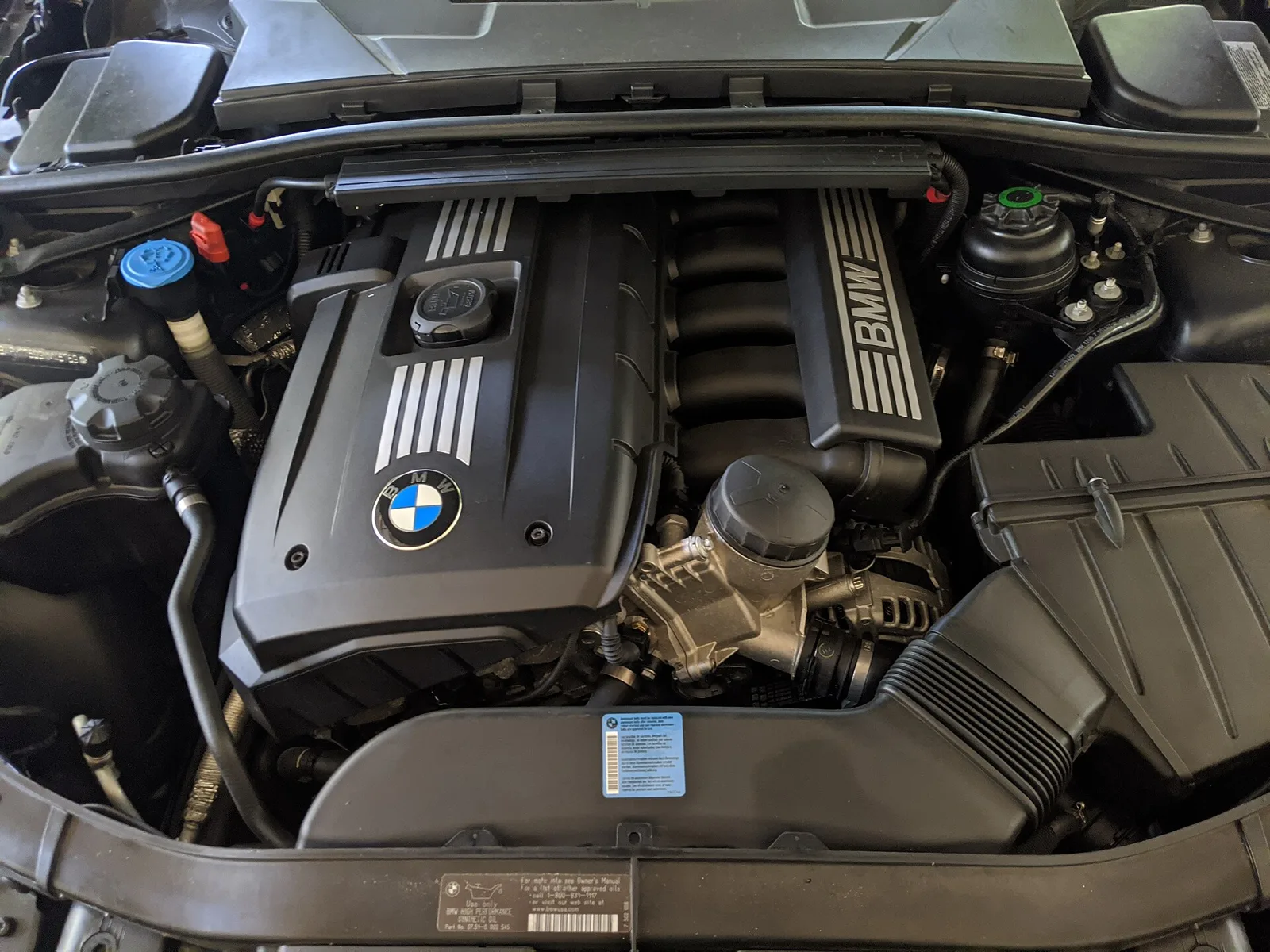
The N52 is a naturally aspirated straight-six petrol engine built from 2004 to 2015. It replaced the M54 and debuted in the E9x 3 Series and the E6x 5 and 7 Series. It was named on Ward's 10 Best Engines list in 2006 and 2007, and it was the first water-cooled engine with a block made from a magnesium and aluminium composite.
Together with the direct-injection N53, the N52 closed a line of continuous straight-six production that started with the M30 in 1968; no later naturally aspirated six from BMW followed. Production of the N52 ended in 2015, and from 2011 the N20 turbocharged four-cylinder began to replace it. There was no M version, unlike the engines before it.
Markets differed on the replacement. In Europe the N52 gave way from 2007 to the N53, the same engine with direct injection. In the United States, Canada, Australia and Malaysia, the N52 stayed, because the N53 was judged unsuitable for the high sulphur content of local fuel.
In the space of a decade BMW changed its idea of a six-cylinder engine twice.
What makes the N52 different from the M54?
Against the M54 it replaced, the N52 added Valvetronic variable valve lift, a lighter block, an electric water pump in place of the belt-driven one, and a variable-output oil pump. Redline rose from 6,500 rpm to 7,000 rpm, apart from the 130 kW N52B25. Like the M54 it kept electronic throttle control and double-VANOS variable valve timing, and higher-output versions added a three-stage variable-length intake manifold that BMW calls DISA. The head has twin overhead cams and 24 valves.
The block is the clever part. Magnesium weighs less than aluminium but risks corrosion from water and can creep under load at high temperature, so ordinary magnesium alloys cannot cope with the stresses inside an engine block. BMW's answer was a magnesium alloy for the crankcase shell wrapped around an aluminium inner block, with Alusil cylinder liners. Mid-production the camshafts changed too: the engine began with solid cast cams, hollow hydroformed ones were phased in to save weight, and some engines left the factory with one of each without any effect on performance.
N52 versions and power
The 2.5L N52B25 came in three outputs: 130 kW (174 bhp) in cars such as the 2006 E90 323i and the E60 523i, 150 kW (201 bhp) in later 323i and 523i models, and 160 kW (215 bhp) in the 325i and 525i sold outside the United States and Canada.
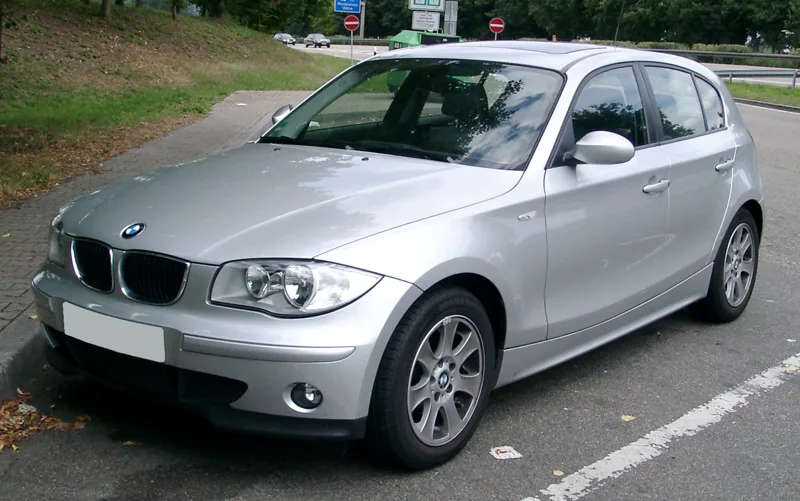
The 3.0-litre N52B30 has an 85 mm (3.35 in) bore, an 88 mm (3.46 in) stroke and a 10.7:1 compression ratio, and its outputs range from 160 kW (215 bhp) up to 200 kW (268 bhp). The differences between versions came largely from intake manifolds and engine management software. The 190 kW (255 bhp) version powered cars such as the 330i, 530i, 730i, Z4 sDrive30i, X1 xDrive28i and 130i, while the 200 kW (268 bhp) version went into the X3 3.0si and X5 3.0si.
The N51 was a SULEV-compliant variant for parts of the United States with that legislation. It had a three-stage DISA manifold, a compression ratio lowered from 10.7:1 to 10.0:1 and a secondary air pump the ULEV N52 did not carry.
BMW N54: the twin-turbo that changed the plan
The N54 is a twin-turbocharged straight-six built from 2006 to 2016. It debuted at the 2006 Geneva Motor Show in the E90 335i, and it was BMW's first mass-produced turbo petrol engine and its first turbo petrol of any kind since the limited-production M106 ended in 1986. The N55 started replacing it in 2009, and the last N54 car was the E89 Z4 roadster, which ran until 2016.
The trophies piled up: the International Engine of the Year title six years running, and a place on Ward's list three years running. Car and Driver noted that the N54 had minimal turbo lag and could pass for naturally aspirated in feel and sound. Comparing a N54-powered E60 535i with the 550i and its 4.8-litre naturally aspirated V8, one reviewer found the V8 stronger on torque but barely faster, with its extra weight obvious on twisty mountain roads.
How the N54 works
The N54 was built alongside the naturally aspirated N53, and the pair share direct injection, double-VANOS, an open-deck block and an electric water pump. Where the N53 used a magnesium alloy, the N54 has an aluminium block, a displacement of 2,979 cc (181.8 cu in) and no Valvetronic.
Turbocharging is the big change from earlier BMW sixes. Instead of one large turbocharger, the N54 uses two small low-pressure ones to minimise turbo lag, running 8 psi (0.55 bar) of boost through an air-to-air intercooler. BMW sold the arrangement as TwinPower Turbo, a name since used for engines with a single twin-scroll turbocharger. Compared with the N52 that it displaced as BMW's top six-cylinder, the N54 made an extra 34 kW (45 bhp) and 108 N.m (80 lb ft).
The direct injection system, which BMW calls High Precision Injection, uses piezo injectors. Every version has the same internals: 84.0 mm (3.31 in) across the bore, 89.6 mm (3.53 in) of stroke, a 10.2:1 compression ratio and a 7000 rpm redline.
N54 power levels
The first version is officially rated at 225 kW (302 bhp) and 400 N.m, but the figures are considered under-rated, and independent testing produced estimates of 232 kW (311 bhp) and 422 N.m (311 lb ft). It powered the 335i, 535i, 135i, X6 xDrive35i and Z4 sDrive35i.
A 240 kW variant with higher peak power and torque went into the 740i and the E92 335is. The most powerful BMW version, 250 kW, appears in the 1 Series M Coupe and the Z4 sDrive35is. Alpina built its own biturbo versions on the N54B30 with a revised engine control unit, oil cooler and pistons, starting with 265 kW (355 bhp) in the E90 B3, then 294 kW in the B3 S and 300 kW in the B3 GT3.
The N54 fuel pump problem
Some N54 engines in the United States suffered high-pressure fuel pump (HPFP) failures. A failed pump can stop the engine without warning, and several near-misses on highways were reported. BMW knew about the problem, and internal bulletins described the symptoms as driveability problems.
A class action was filed in April 2009 and settled in June 2010. On 26 October 2010, after an ABC News report, BMW announced a recall covering 2007 to 2010 model years. It applied to 130,000 cars and resulted in the pump being replaced in about 40,000. In some cars the pump was replaced several times without curing the problem, which could potentially entitle the owner to a refund under Lemon Laws in certain states.
BMW North America extended the HPFP warranty to 10 years or 120,000 mi (190,000 km) and gave the injectors the same cover, with an updated injector design. After rattling wastegates caused by premature bushing wear, wastegate cover was extended to 8 years or 82,000 mi (132,000 km). All the extensions apply only in the United States.
BMW N55: one turbo instead of two
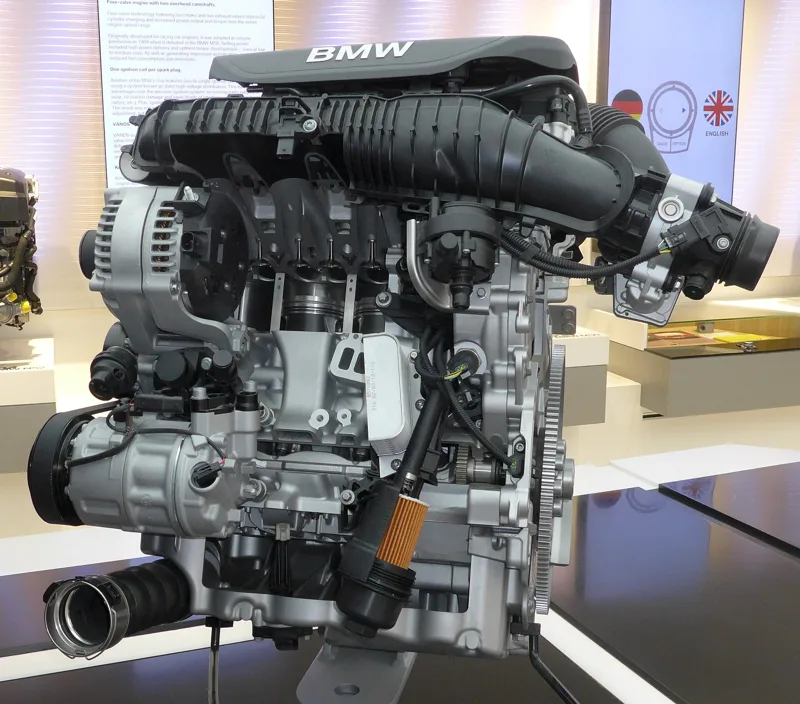
The N55 is a turbocharged straight-six that began production in 2009 and replaced the N54. It first appeared in the F07 5 Series Gran Turismo and picked up Ward's 10 Best Engines honours in each of 2011, 2012 and 2013. It was BMW's first straight-six with a twin-scroll turbocharger, and it began to be phased out after the B58 arrived in 2015.
Three things separate the N55 from the N54. It uses a single twin-scroll turbo instead of two turbos, it adds Valvetronic, and its direct injection uses solenoid injectors in place of piezo ones. BMW's reasoning on the injectors was that the piezo type cost more and, outside Europe, could not deliver the lean-burn benefits that would justify it. BMW claims Valvetronic sharpens throttle response, adds low-rev torque, lowers emissions and cuts fuel consumption by 15%.
The twin-scroll design uses two sets of exhaust ducts, one serving cylinders 1 to 3 and the other 4 to 6, to spin a single turbine wheel. The exhaust manifold, which BMW calls the Cylinder-bank Comprehensive Manifold, aims to reduce pressure fluctuations and with them throttle lag and back-pressure. Compression ratio, bore, stroke and displacement all carry over unchanged from the N54. Recommended fuel is a minimum of 95 RON, and the engine accepts 91 to 98.
N52, N54 and N55 compared
| Feature | N52 | N54 | N55 |
|---|---|---|---|
| Production | 2004 to 2015 | 2006 to 2016 | From 2009 |
| Aspiration | Naturally aspirated | Twin turbo | Single twin-scroll turbo |
| Valvetronic | Yes | No | Yes |
| Compression ratio | 10.7:1 | 10.2:1 | 10.2:1 |
| Replaced by | N20 turbo four, from 2011 | N55, from 2009 | B58, from 2015 |
N55 versions and the S55
The standard N55B30M0 covers a long list of cars, from the F10 535i and F30 335i to the F32 435i, the X3 xDrive35i and the X5 xDrive35i. The 640i, the 740i and the M135i use other N55 variants, and the hybrid 3 and 5 Series ActiveHybrids use the N55HP. The N55B30T0, with parts adapted from the S55 such as pistons, forged rods, bearings and oil management plus a forged crankshaft and cast-iron liners, delivers 272 kW (365 bhp) in the F87 M2 and 265 kW (355 bhp) in the X4 M40i.
Alpina's first N55, the 301 kW (404 bhp) N55R20A, uses the N54's twin turbo system in place of the twin-scroll one, and Alpina later reached 324 kW and 332 kW.
The S55 is the M-developed version, introduced in the F80 M3 and F82 M4 to replace the naturally aspirated S65 V8 and later used in the M2 Competition and CS. It brings a closed-deck block, a lightweight crankshaft, different bearings, strengthened pistons and rods, twin turbos, twin fuel pumps, active exhaust and revised cooling. It makes 317 kW (425 bhp) in the base M3 and M4, 331 kW (444 bhp) with the Competition package and 338 kW (453 bhp) in the CS. The M4 GTS version reaches 368 kW (493 hp) and 600 N.m (443 lb ft) thanks to water injection, which lets boost rise from 17.2 psi (1.19 bar) to 21.6 psi (1.49 bar).
Recalls on the N52
The N52 had its own recall history. In 2017 BMW recalled 740,000 six-cylinder cars because the heater for the crankcase ventilation valve could short-circuit and cause a fire. In 2023 a recall covered 155,627 vehicles whose VANOS bolts might work loose or snap with age.
Where this goes next
The three engines each have a successor. BMW began replacing the N52 with the N20 turbocharged four-cylinder in 2011, the N54 with the N55 in 2009, and the N55 with the B58 from 2015. The N55's high-performance relative, the S55, replaced the S65 V8 in the M3 and M4.