How the systems that protect drivers grew from seat belts and crash barriers to stability control, automatic braking, blind spot alerts and vehicle-to-vehicle links.
Vehicle safety technology covers the devices that protect cars and occupants, from seat belts and crash testing to stability control, automatic braking and blind spot alerts. Most systems respond to the fact that human error causes most crashes.
Vehicle safety technology, usually shortened to VST, is the set of devices and systems designed to protect a car and the people inside it. The term covers an umbrella of projects, from theft deterrence and damage mitigation to vehicle-to-vehicle communication. Most of today's systems began as responses to legislators who wanted fewer road accidents, and they have grown steadily more sophisticated since the first crash tests of the 1930s.
What is vehicle safety technology?
VST describes special technology developed to ensure the safety and security of automobiles and their occupants. Examples in the field run from geo-fencing and theft deterrence to damage mitigation and vehicle-to-vehicle links, alongside GPS-based tracking that connects the car to a computer. Some systems act before a crash, others limit the damage once one has begun, and some protect the vehicle against theft.
The field is wider than any single device. Its aim is to reduce crashes by helping drivers avoid them, and to reduce injuries when crashes do happen. That combination explains why the technology spans electronics, sensors, software and the basic structure of the car itself.
Most of today's safety systems were built as answers to the same problem: the crash that human reactions alone cannot prevent.
How did vehicle safety technology begin?
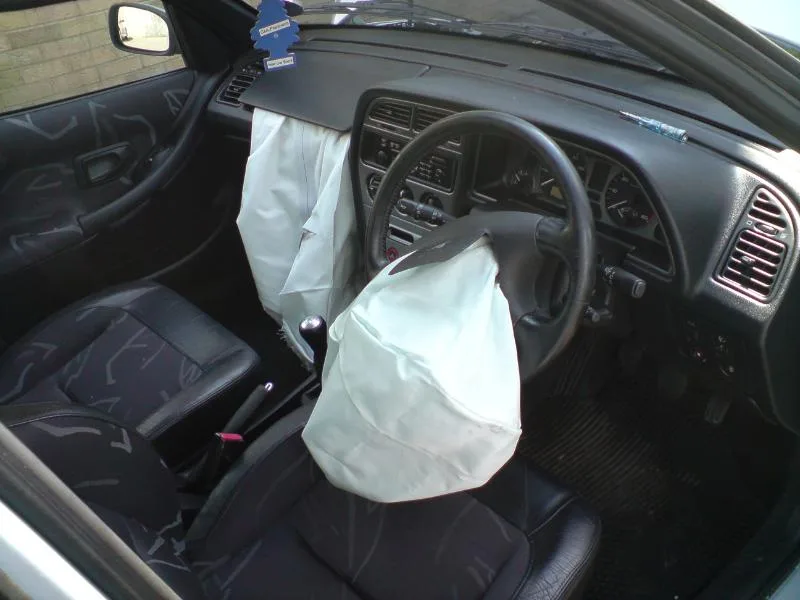
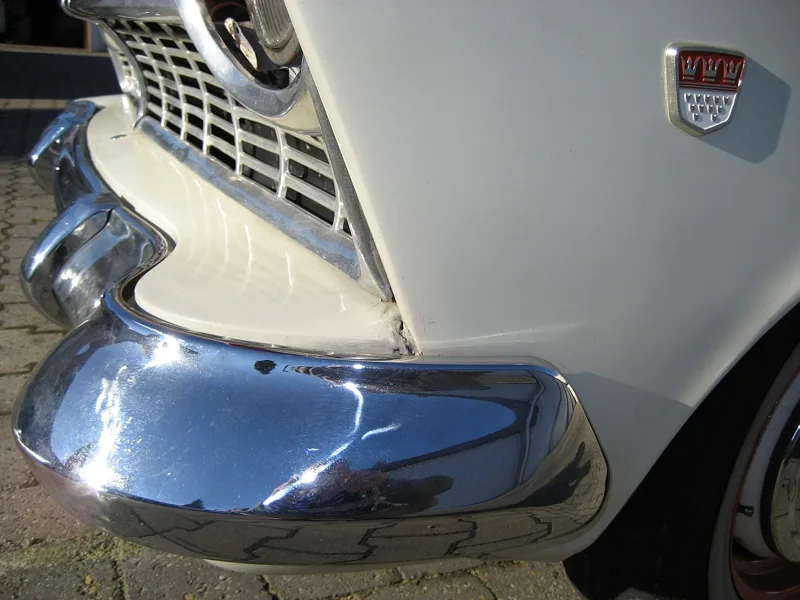
Vehicle safety technology began in the 20th century, when the automobile industry introduced devices in response to legislators' efforts to cut accidents. Early examples included safety glass, four-wheel hydraulic brakes, seat belts and padded dashboards. Those features were simple by today's standards, but they established the principle that a car should protect its occupants.
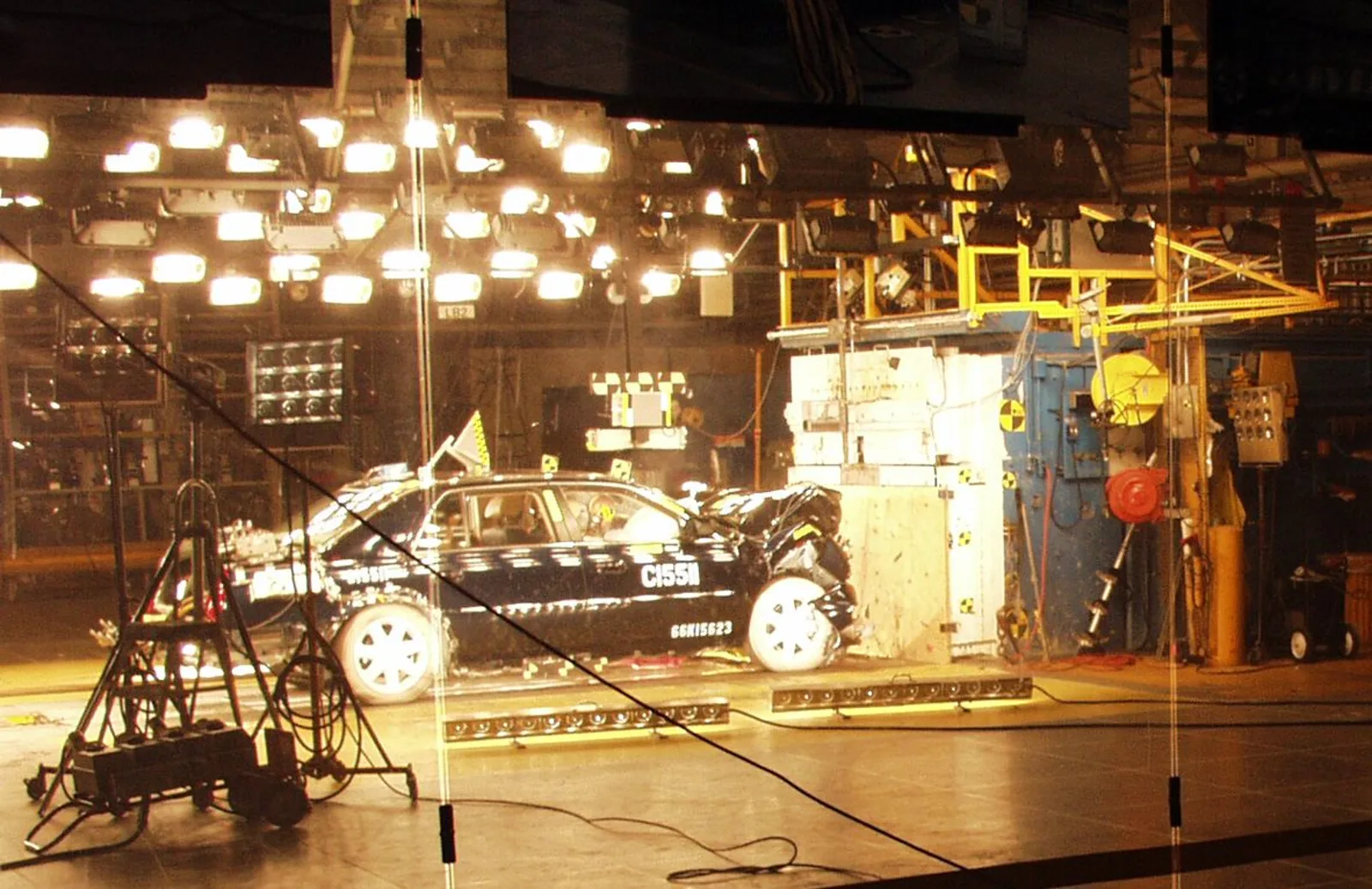
In 1934 General Motors started a more scientific approach by conducting the first crash barrier test. Over the following decades, existing systems were stabilised, and disc brakes and anti-lock braking systems were introduced. The first high-tech safety system arrived in 1995 with electronic stability control, followed by lane departure warnings in 1999 and radar-assisted adaptive cruise control in 2005.
| Year | Milestone |
|---|---|
| 20th century | Safety glass, four-wheel hydraulic brakes, seat belts and padded dashboards |
| 1934 | General Motors runs the first crash barrier test |
| 1995 | Electronic Stability Control (ESC) arrives |
| 1999 | Lane departure warning systems introduced |
| 2005 | Radar-assisted adaptive cruise control introduced |
| 2006 | Automatic braking systems on a wide range of vehicles |
These technologies are not standard on every vehicle, which is why buyers must check what a particular model includes. Options and packages differ by market, and some systems are fitted only to higher trims.
Why is the government pushing vehicle safety technology?
Road deaths are the central reason. In 2017 there were 37,133 fatalities in vehicle accidents in the United States, and 3,166 of those came from distraction-related crashes. Research has shown that most crashes are due to human error, which is why systems that compensate for it have become a policy priority.
The National Highway Traffic Safety Administration, known as NHTSA, recommends that consumers look for VST features when buying a vehicle. The agency takes part in research, development and implementation of technologies including forward collision warning, automatic emergency braking, pedestrian braking and adaptive lighting. The US Department of Transportation is also looking for new methods against the annual toll of over 30,000 deaths.
Public money supports the effort. A government investment of 3.9 billion US dollars over a ten-year period has funded VST research. NHTSA also issues regulations and exemptions to encourage innovation, and it publishes guidelines so that systems work across different environments. Its stated goal is uniform regulation across the country, linking state and federal policy.
How do drowsiness technologies work?
Many companies have researched technologies that either detect drowsiness and protect the driver, or keep the driver awake. One approach uses blue light, which can strain the eyes and make it harder to fall asleep. Blue light may be found in interior lights, touchscreens, clocks and the lights that illuminate the speedometer and fuel gauge.
A second approach detects drowsiness from driving behaviour. It uses data from lane departure sensors to spot jerky steering or swerving between lanes. When it does, a coffee symbol lights on the dashboard or a voice tells the driver to take a break. The driver's seat can also vibrate to startle a drowsy driver. Both approaches are imperfect and are often faulty at detecting drowsiness, so developers are working on further options.
Some firms focus on preventing incidents by analysing how drivers behave. SafeMode, for example, tracks safety events such as hard acceleration or braking, and drivers who record fewer events month after month earn incentives. The aim is to change habits before a crash occurs.
What does electronic stability control do?
Electronic stability control, also known as roll over protection, helps keep the vehicle balanced. In harsh weather or on rough roads, where steering can become extreme, it allows drivers to regain control and avoid crashes, roll-overs and fishtails. It is also the system that helps a driver leave a hydroplane safely.
ESC controls each wheel individually. It applies braking to single wheels, slowing each one to match the speed of the rest, so that the driver can steer in the intended direction. ESC does not add traction; it provides balance and momentary steering control. Combined with automatic emergency braking, it helps the car keep its line when the road is unpredictable.
How do automatic braking systems work?
There are four different automatic and emergency braking technologies. Automatic Emergency Braking (AEB), Crash Imminent Braking, Dynamic Brake Support and Pedestrian Emergency Braking all detect vehicles in front of the car and brake automatically when a crash is detected. Each serves a slightly different purpose, and they can work together in a single vehicle.
AEB systems warn the driver of a suspected crash before acting. If the driver does not respond to the alert, the system applies the brakes to avoid the crash or reduce its severity. Dynamic Brake Support adds to the driver's braking when the pedal force is not strong enough. Crash Imminent Braking applies the brakes without any driver action, and it engages even if the driver does not touch the pedal.
Pedestrian Emergency Braking senses people in front of or near the car and brakes if the driver makes no move. It relies on front-facing radar and cameras. Such systems have been available on a wide range of vehicles since 2006. Their popularity has pushed the price of fitting them down, and they are inexpensive to install, although repairs can be expensive because of the quality of the cameras and sensors.
How does blind spot monitoring work?
The vehicle blind spot is an area beside or behind the car that the driver cannot see from the driving seat, and it differs from person to person. Blind spot monitoring uses radar sensors and cameras positioned around the exterior to detect other vehicles and warn of their presence. It can tell which side a vehicle is approaching from.
The alert can take the form of sounds, seat vibration or illuminated symbols, usually on the outside of the side mirror on the side where the other vehicle is. A noise may also sound if the driver uses the turn signal while a vehicle is in the blind spot. The systems are common on most luxury vehicles and many recent models, and packages can be added at the time of purchase.
The limitation is that many systems struggle to detect fast-moving cars, motorcycles and low-riding vehicles. Drivers should treat the alert as an aid rather than a substitute for a shoulder check.
What do lane departure warnings do?
Lane departure warning systems use cameras mounted under the car and in the wheel wells to detect when a wheel has unintentionally crossed a lane line. They were created to prevent lane swerving and the accidents that can follow driver drowsiness. The alert can be a seat vibration, a warning light or a sound, which may be a small tone or a spoken message.
The system does not warn if the turn signal is in use, because the lane change is then intended. Its purpose is to reduce the number of unsignalled lane changes. Drivers can disable the alert, but a dealer is recommended for the change, to avoid damaging the system.
How does speed monitoring work?
Speed warning systems alert the driver when the car is over the limit. GPS is used to pin down the vehicle's location, and a record of local speed limits is combined with the car's own speed sensors. If the list is updated, the system can also pick up school and work-zone limits that a driver might otherwise miss.
When the driver goes too fast, the response may be a small ding, a red speed reading on a digital odometer, a lit icon with a ding, or a spoken warning to slow down. A more advanced idea called intelligent speed adaptation is being tested in the US and Europe. It would assess the car's speed and, with the driver's permission, slow it to the legal limit. Drivers could override the system or switch it off entirely. Such systems aim to keep drivers safe from distractions that might otherwise lead to a speeding ticket or a crash.
What is coming next for vehicle safety?
Vehicle-to-vehicle communication is one of the main future developments. It would let cars on busy highways and small country roads communicate wirelessly, sharing speed and position so that each driver has 360-degree awareness. It is being developed to prevent more crashes and ease congestion, but its benefits depend on every vehicle taking part.
Cyber security is the other major area. Modern cars carry many electronics, and thieves can reach GPS locations and recently visited places through them. Phone data connected over Bluetooth can also be exposed, and many electric vehicle systems can be hacked. The NHTSA is working with engineers on protection for drivers' data and vehicle technology, while cameras that track eye movement may one day spot drowsiness from a lack of movement.