The tread, rubber and symbols that separate winter tyres from all-season designs, why studs still divide opinion, and how the rules differ from Japan to Quebec.
A snow tyre has a deep, open tread and a compound that stays supple in cold weather, so packed snow inside the grooves helps it grip. Symbols such as M+S, 3PMSF and the Ice Grip Symbol show which conditions a tyre has been tested for.
A snow tyre, also called a winter tyre, is designed for driving on snow and ice. Its tread has wider and deeper gaps than a summer or all-season tyre, and its rubber is formulated to stay supple in the cold. Many snow tyres are optimised for temperatures below 7 C (45 F), which is where they outperform conventional rubber. Their sidewall symbols and studs, where permitted, tell drivers what the tyre is built to do.
What makes a snow tyre different from an all-season tyre?
An all-season tyre has tread gaps that are smaller than a snow tyre's but larger than a conventional summer tyre. It is quieter than a winter tyre on clear roads, yet it is less capable on snow or ice. Snow tyres trade some road quietness for the extra bite needed on slippery surfaces, which is why drivers in cold regions often swap sets for the season.
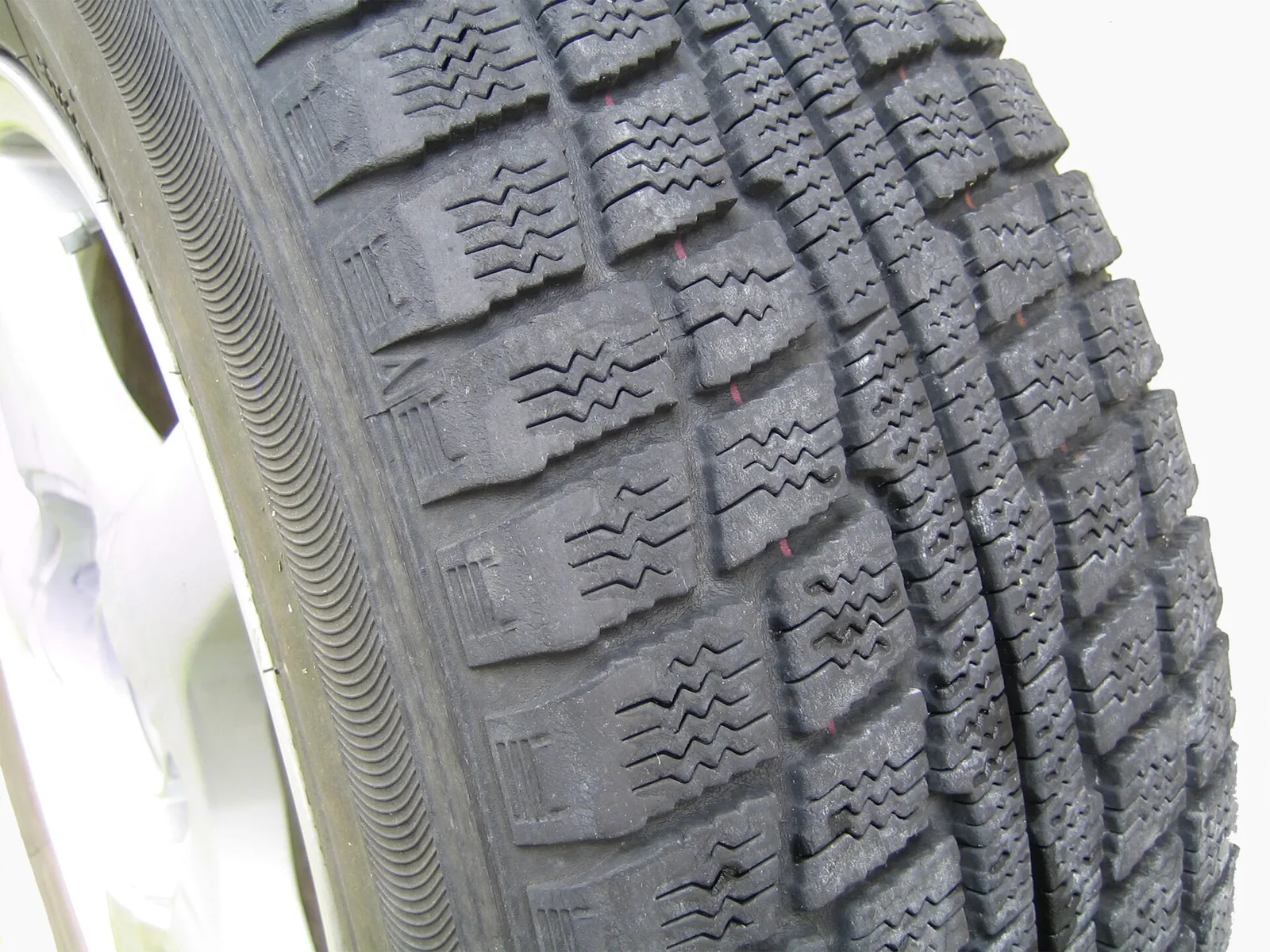
Snow tyres also carry a different set of compounds and tread features. The open, deep tread has a high ratio of void space to solid rubber, shoulder blocks grip snow at the tyre's edge, and the sidewall profile is narrower. Each choice improves the tyre's behaviour in conditions where the summer design would struggle.
A winter tyre works by packing snow into its tread, and the packed snow then grips the road more firmly than rubber alone could.
How do snow tyres grip snow and ice?
A snow tyre grips by pushing snow into its treads. The packed snow inside the grooves develops strength against slipping along a shear plane that runs parallel to the contact area. The tread must expel that snow before it compacts a fresh layer on the next turn, and the process works for acceleration, braking and cornering alike.
Deeper snow adds resistance. The tyre compacts the snow in front of it and pushes some to either side, which makes climbing a hill harder. On a steep uphill the resistance can exceed the grip the tread achieves on the snow, and the driven wheels begin to spin. The same plowing effect does help braking, because it adds rolling resistance.
Surface conditions change the picture. Snow strength depends on temperature and moisture, and wetter, warmer snow compacts more readily than dry, cold snow, up to the point where it becomes so wet that it lubricates the tyre. Below about -7 C (20 F), snow crystals are harder and generate more friction. Above about -2 C (28 F), free water builds up and reduces the friction that the tyre can achieve.
Snow and ice reduce the friction available for braking and cornering compared with dry pavement. The friction that snow provides depends on its temperature, which is why the same road can behave differently from one day to the next.
What do the tread features of a snow tyre do?
Several features set winter tyres apart. An open, deep tread with a high void ratio gives snow somewhere to go. Shoulder blocks at the edge increase contact with snow. A narrower ratio of tyre width to diameter reduces the plowing effect in deep snow, and hydrophilic rubber compounds improve friction on wet surfaces. Fine siping, the thin slits cut into the rubber, adds biting edges for wet or icy roads.
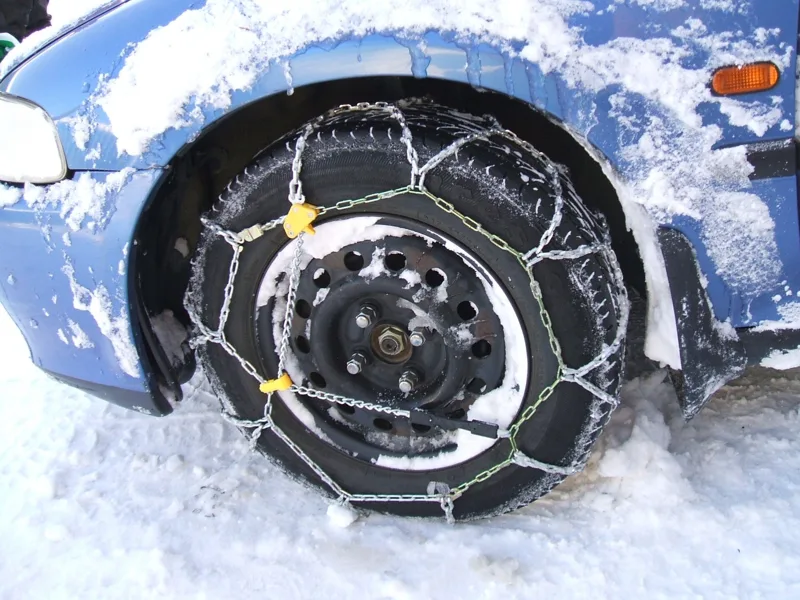
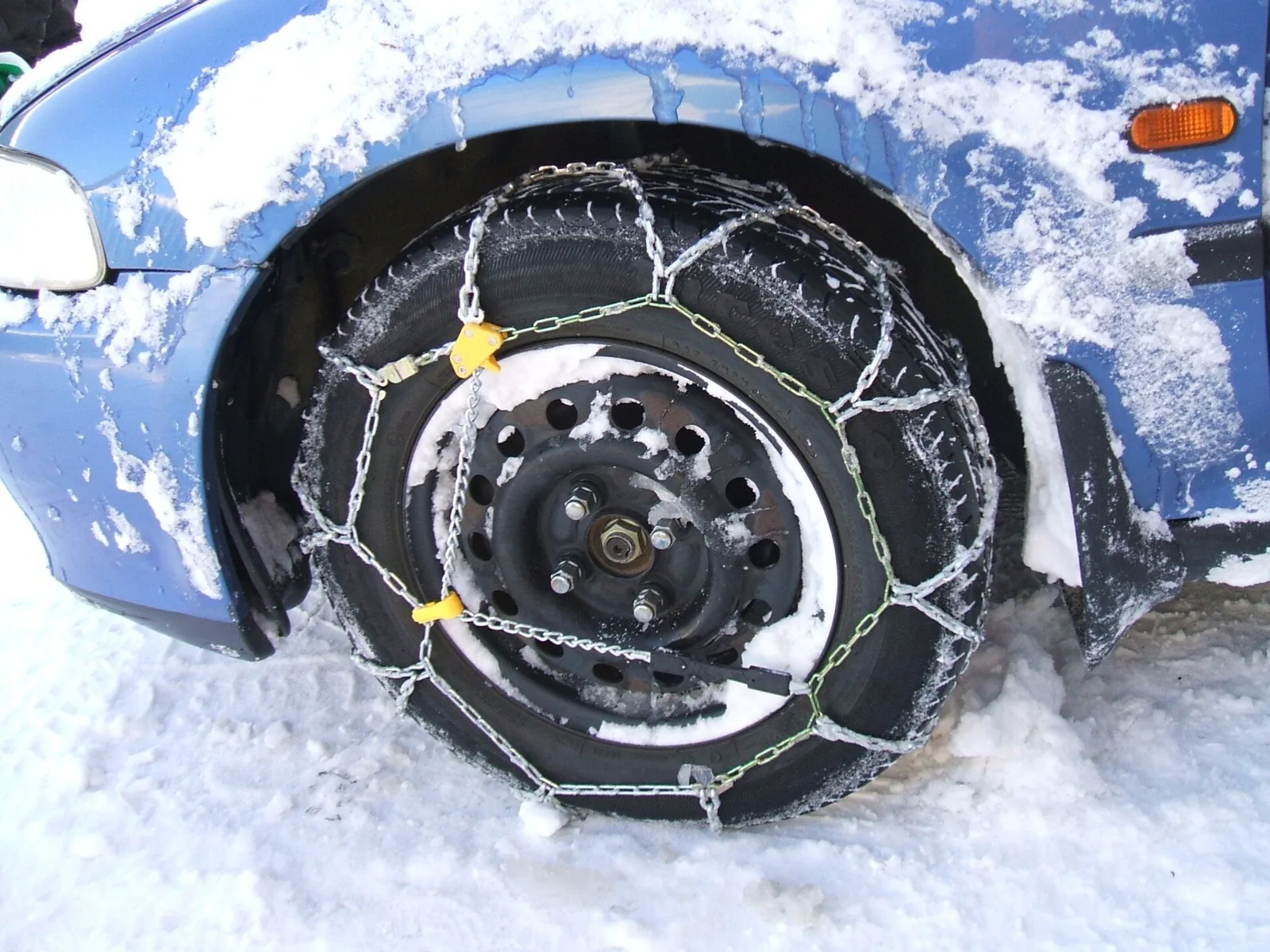
Some conditions still defeat even the best winter tread. Wet films on hard-packed snow or ice call for studs or chains, which are the only reliable answer in those cases.
Tread depth matters as well. Regional authorities may set a minimum legal tread depth for winter driving, such as 6/32 or 3/16 inch (about 4.75mm) in the US or 4 mm (about 5/32 inch) in Europe. Chains and close road access can also be required in freezing conditions, whatever the tyre design.
Are studded snow tyres worth fitting?
Studded tyres have metal or ceramic pins that protrude from the tread to improve grip on packed snow or ice. The pins are usually made of tungsten carbide, a very hard material set in a softer base that anchors it in the rubber. As the tyre wears, the base wears down to the rubber's level while the hard pin keeps standing proud. The pin should protrude at least 1 mm (0.04 in) for the tyre to work as intended.
Studs have a cost. They abrade dry pavement, produce dust and create wear in the wheel path, which is why many jurisdictions limit them to the cold months or ban them outright. Studded tyres do not eliminate skidding on ice and snow, but they greatly reduce the risks, and that trade-off explains why some drivers still choose them.
Studdable tyres come with molded holes in the tread, typically 80 to 100 per tyre. A special tool spreads each hole so a stud jacket can seat in it, and the stud must be fitted before the tyre has been driven on, because the holes match the tread depth at that point. A correctly fitted stud sits flush with the surface, with only the pin protruding.
Which symbols appear on a winter tyre?
Several markings tell buyers what a tyre has been tested to do. The table summarises the main symbols and their meaning.
| Symbol | What it indicates | Origin or standard |
|---|---|---|
| M+S | Better than a normal tyre in mud and snow | Code that arose in the 1970s |
| 3PMSF | Severe snow use, with a set traction advantage over a reference tyre | Standardised in 1999 |
| Ice Grip Symbol | Ice conditions, with at least 18 percent better straight-line braking | Standardised in 2021 |
| Sha with STUDDED | Studded tyre meeting severe snow requirements | Standardised in 2022 |
The M+S code is distinct from M+T, which stands for mud and terrain. Under the US tyre association's rules, M+S tread must include recesses at least 1/2 inch from the edge toward the centre, with a minimum cross-section of 1/16 inch, angled between 35 and 90 degrees to the direction of travel.
The ISO standards use their own definitions. A snow tyre and a mud and snow tyre are both defined as performing better than a normal tyre at starting or keeping a vehicle moving on their respective surfaces. ISO 18106 sets the test method for severe snow use, measuring braking on snow for passenger car and commercial tyres and acceleration on snow for truck and bus tyres.
The Alpine Symbol, or Three-Peak Mountain Snow Flake, shows a mountain profile with three peaks and a six-sided snowflake. A tyre carrying it must perform 10 to 12 percent better than a standard reference tyre in a traction test. For a 14-inch tyre the snow grip index must reach 1.10, and for a 16-inch tyre 1.12. Snow tyres should be fitted to all wheels, because fitting them only at the front can cause poor handling.
The Ice Grip Symbol, which shows three icicles with the middle one longest, identifies tyres for ice conditions. It requires at least 18 percent better straight-line braking than a reference tyre and must be fitted alongside the 3PMSF and M+S marks. In the US the matching ice grip index must reach 1.18 against a 16-inch reference tyre, measured with a test standard published in 2021.
How do international standards treat snow tyres?
The United Nations regulations set minimum performance levels for winter tyres. UN Regulation No. 117 requires passenger car tyres to reach a brake test index of 1.07 and a traction test index of 1.10 for severe snow use. Light commercial vehicles have a lower brake test figure of 1.02, while heavy-duty vehicles are judged on an acceleration test with a figure of 1.25. Some 68 countries have signed up to UN tyre regulations, with the United States and Canada as notable exceptions that use their own rules.
UN Regulation No. 117 also defines an ice grip tyre as a 3PMSF-rated passenger tyre with an ice grip index of 1.18 or more, measured with the same procedures used in the US.
A second UN rule, Regulation No. 164, was adopted in late 2022 to apply severe snow standards to studded tyres, which were beyond the scope of UN R117. The following year it was amended to let studded tyres that meet the ice grip requirement carry the Ice Grip Symbol as well.
Retreaded tyres need care too. UN Regulation No. 172 requires a retreaded tyre's sidewall to display both the 3PMSF and M+S marks when the tyre qualifies for them.
What are the winter tyre rules around the world?
Rules vary widely. Every Japanese prefecture except Okinawa requires motorised vehicles to carry winter tyres or chains when roads are icy or snowy, and tyres must be replaced once their grooves wear beyond half their original depth in many prefectures. Nationwide restrictions on studded tyres for passenger vehicles began in April 1991, and trucks followed in 1993. Studded tyres remain legal in Japan, but using them on dry asphalt or concrete is a criminal offence.
Enforcement is active. Checkpoints operate on major Japanese highways, and drivers who fail to meet the snow tyre or chain requirements can be fined.
In Europe, the picture is patchwork. Several countries make snow tyres mandatory between set dates or whenever roads are snowy or icy, and others restrict studded tyres to certain seasons. A separate group bans studded tyres outright. In North America, the US national and Canadian federal authorities allow the 3PMSF symbol on tyres that meet the industry test, and winter tyres made up 3.6 percent of the US market in 2016, compared with 35 percent in Canada. Quebec is the only jurisdiction that requires 3PMSF or studded tyres from December 1 to March 15 regardless of the weather.
Some US states, particularly those with snowy or mountainous regions, require approved winter tyres or traction devices such as chains on designated roads in winter. Where studded tyres are allowed, they are usually limited to particular months to protect road surfaces.