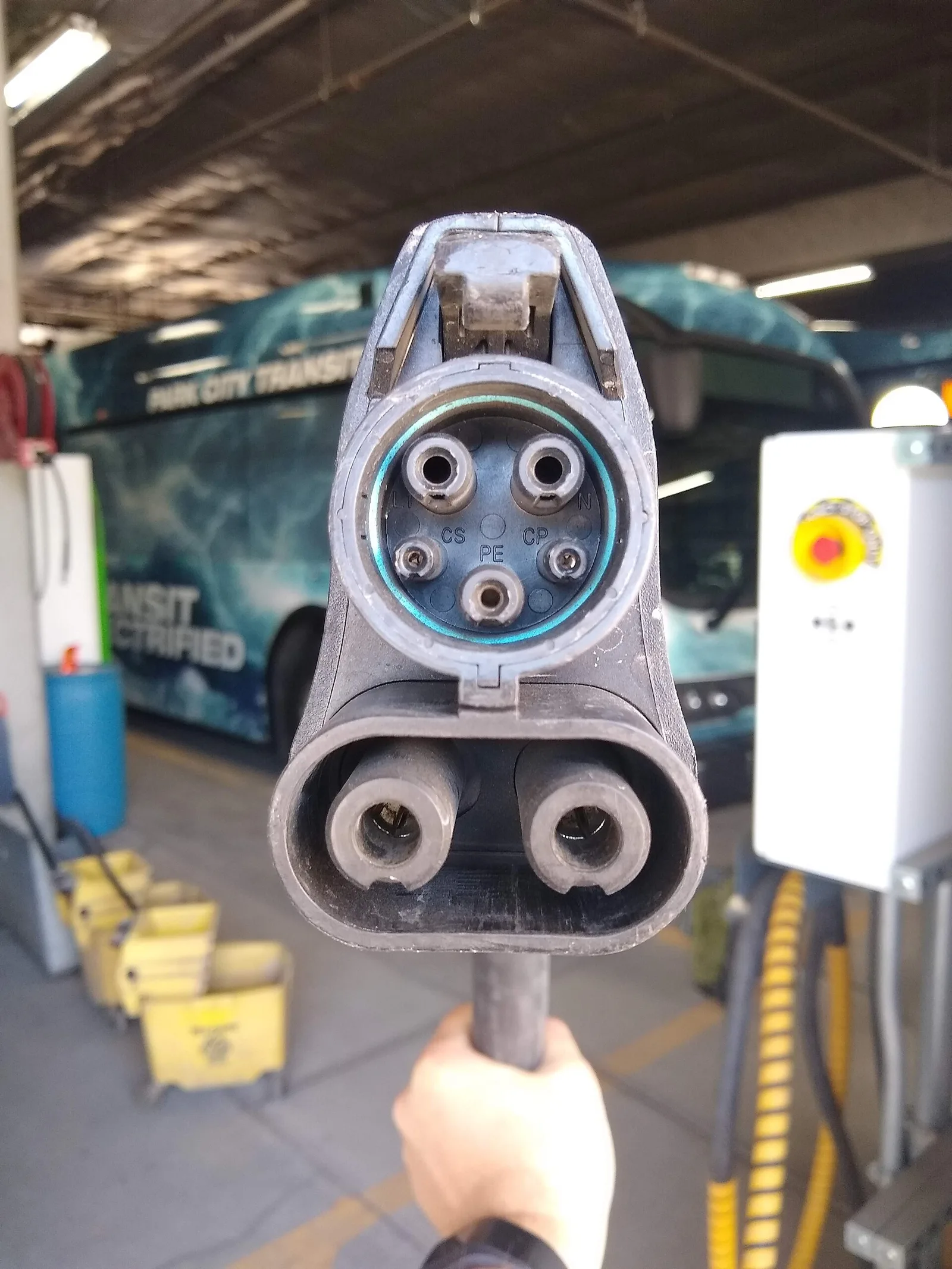
One compact plug for AC and fast DC charging, opened by Tesla in 2022 and now the connector most North American automakers plan to use.
The North American Charging Standard, or NACS, is an electric vehicle connector that handles both AC and fast DC charging through one compact plug. Tesla developed it and opened it to other makers in 2022, and SAE International later standardised it as SAE J3400. Most major automakers selling in North America have since pledged to adopt it.
Tesla's charging plug began as a proprietary design for its own cars, yet within a few years most of the North American car industry had committed to it. Its story runs through engineering, federal funding and a fight over the right to call a connector a standard.
What is NACS?
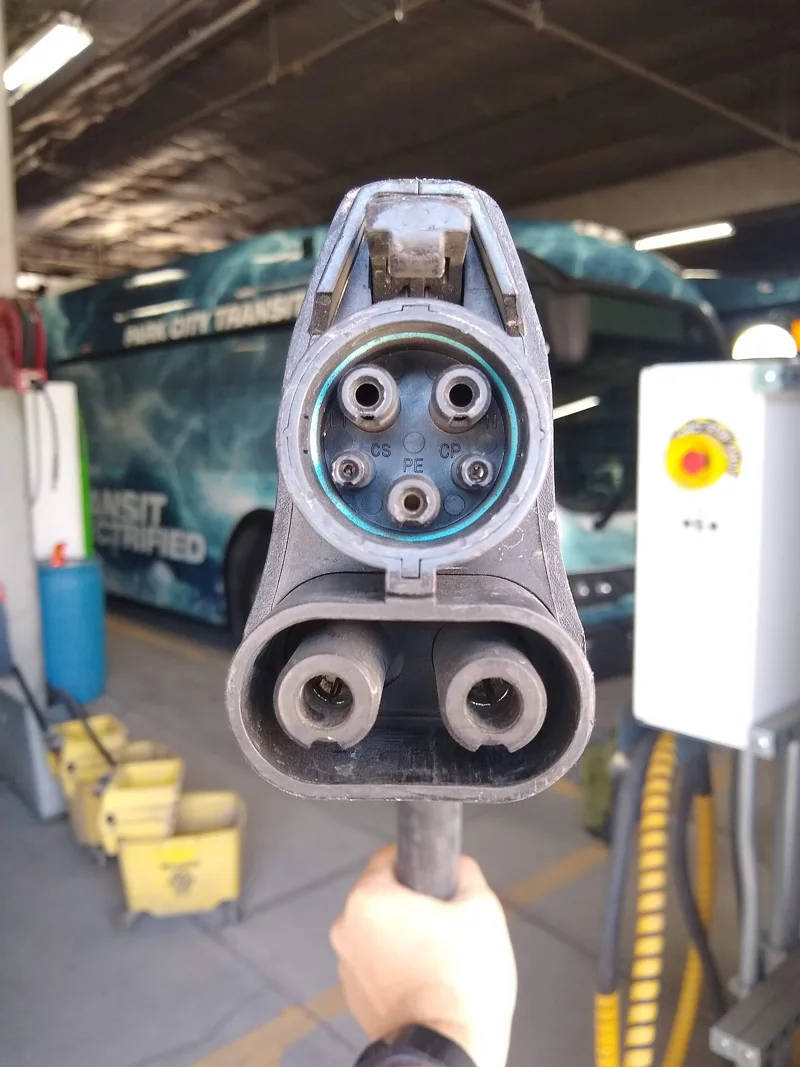
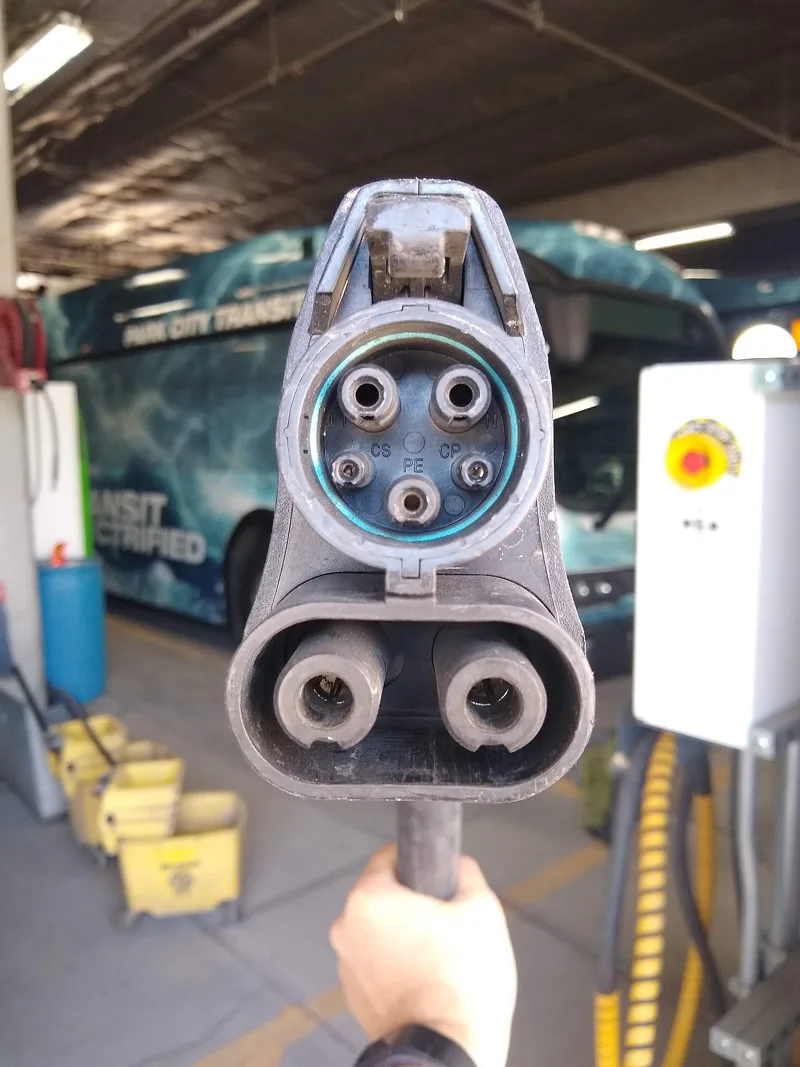
NACS is one connector for AC and fast DC charging, with pins shared between the two modes. Other systems need different or larger connectors for DC, while NACS keeps the plug compact. The connector has a button on its top centre that releases the latch when it is pressed.
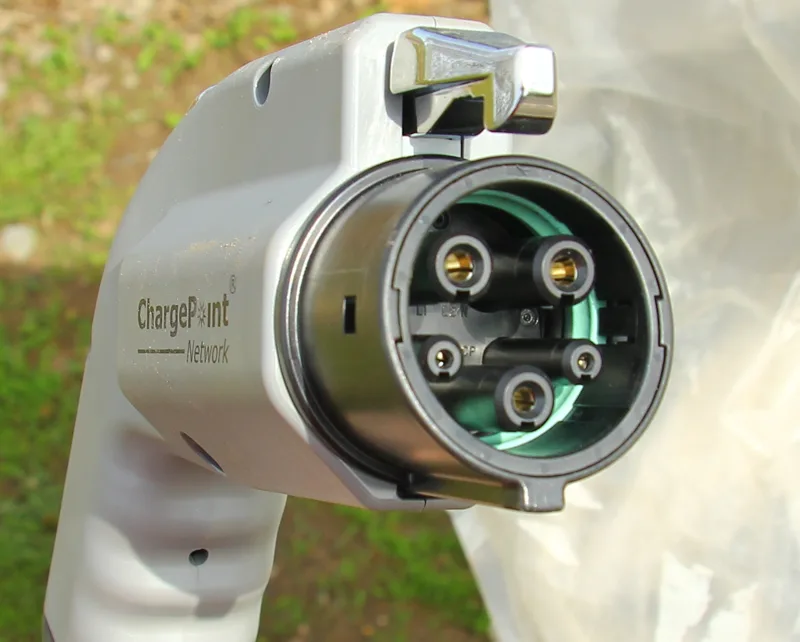
The design uses a five-pin layout. Two primary pins serve as the positive and negative DC link in fast charging, or as line pins in AC mode. A ground pin connects the earth to the chassis, and two pilot pins handle communication and connector status.
The AC pin layout matches SAE J1772, so simple pass-through adapters can join the two systems.
A connector that began as one company's plug now sits at the centre of a North American rethink of how cars charge.
How did Tesla's connector become an open standard?
Tesla introduced the physical connector with the Model S in 2012. Its vehicles gained the expanded communications protocol in 2021, and the design was opened to other manufacturers in November 2022 under the name North American Charging Standard. SAE then standardised it in 2023 as SAE J3400.
NACS swapped the older CAN bus messaging for ISO 15118, the same protocol that CCS1 relies on. That shared protocol means adapters can bridge the two systems in both directions. Tesla vehicles built before 2021 need an ECU retrofit to charge at CCS1 stations.
Superchargers can still serve the older connector as well as NACS. The formal steps followed in stages: SAE published a technical information report in December 2023, and a recommended practice in September 2024, when the name was redefined as the North American Charging System.
Why did automakers switch so quickly?
Automakers moved quickly because Tesla's Supercharger network was widely regarded as among the most reliable and extensive. Federal funding for charging also required access for several EV brands, which made a shared plug more valuable. Ford announced its switch in May 2023, and most major automakers followed within the next year.
Tesla's pitch leaned on the size of its own network. Its vehicles outnumbered CCS1-equipped vehicles by two to one, and its Supercharger network had 60 percent more stalls than all CCS1 networks combined. Some commentators saw the move as a desperate bid to protect Tesla's connector, since federal money was flowing into CCS1 networks.
The federal government backed the change in December 2023. The Federal Highway Administration said it would add the SAE NACS plug to the eligibility rules for federal charging funds, which gave the standard official weight.
What power can a NACS connector deliver?
A NACS connector can carry DC at up to 500 volts or 1,000 volts, and the design sets no fixed current limit beyond a 105 C ceiling at the interface. The Tesla V4 Supercharger delivers up to 500 kW, although that peak can only be held briefly. Typical residential AC charging gives 11.5 kW.
| Rating | Figure |
|---|---|
| DC configurations | Up to 500 V, and up to 1000 V in the higher version |
| Current limit | None specified; the interface must stay below 105 C |
| Continuous current reported by Tesla | Up to 900 A |
| V4 Supercharger DC power | Up to 500 kW, sustained for only a few minutes |
| AC, commercial three-phase supply | 80 A at 277 V, 22.16 kW |
| AC, typical residential supply | 48 A at 240 V, 11.5 kW |
| Cable limits from equipment makers | 375 A without cooling, 650 A with liquid cooling |
Thermal throttling means the 500 kW figure is a peak rather than a steady output, since the unit slows down once it heats up. The connector can carry large currents without special contacts, but heat remains the limiting factor in practice.
Operation is simple. Pressing the button on the handle emits a UHF signal, and when the connector is locked in place the signal makes the vehicle retract its latch. If the plug is not secured, the signal instead tells the car to open its inlet door.
How did Magic Dock and retrofits help other EVs?
Tesla began testing a dual-connector called Magic Dock in March 2023. It lets an EV use either a NACS or a CCS1 plug, which would open Tesla's network to nearly every battery electric car. By February 2025, 92 V3 and 44 V4 Superchargers supported the adapter.
On 29 February 2024, Tesla made more than 15,000 Supercharger stalls available to Ford drivers. Many of those stalls were retrofitted with updated electronics that support both CAN bus and ISO 15118, so CCS1 cars could charge there. Ford had also begun offering an adapter in February 2024, which worked on most of Tesla's V3 and V4 chargers.
Tesla indicated that the retrofit work would continue across its network.
Which networks and suppliers have adopted NACS?
Charging networks and equipment makers have followed the automakers. EVgo, FLO, Electrify America and ChargePoint have announced NACS support, while ABB, BTC Power, Tritium and Wallbox have planned NACS-equipped products. Hilton also agreed to install 20,000 connectors across 2,000 properties by 2025.
Some networks moved earlier. Before the connector became open in 2022, ONroute in Ontario fitted a Tesla adapter permanently to a CHAdeMO cord, and REVEL briefly opened a charger in Brooklyn after it was denied a licence to run a Tesla ride-hailing fleet. EVgo, for its part, added optional Tesla adapters to CHAdeMO cords and later said it would add NACS support to more of its chargers.
Those commitments show how far the connector has moved from one company's product, since networks, equipment makers and hotel operators are all now building around it.
FLO, a Quebec-based operator with more than 90,000 chargers, also planned NACS support. FreeWire intended to fit NACS plugs to its battery-integrated Boost Chargers by mid-2024,.
How does NACS compare with rival standards?
CCS1 is the common DC standard in North America and South Korea, while CCS2 is legally mandated in Europe and Oceania. CHAdeMO is used for fast charging in Japan, and GB/T is the legal DC standard in China. Tesla vehicles sold in Europe since May 2019 use CCS2, and those sold in Japan carry NACS.
Tesla sells a CCS1-to-NACS adapter, and some Supercharger stations carry a NACS to CCS1 adapter on their Magic Dock. At November 2021 the Supercharger system was the biggest fast-charging network in the United States.
Tesla cars have long come with an SAE J1772 adapter, which let owners use the many slower Level 2 AC stations fitted with J1772 plugs.
Why did CharIN object to the name?
CharIN, the association behind the rival CCS standard, criticised the naming in June 2023. Its argument was that a standard should be developed collaboratively and recognised by a standards body before it takes the name. The association later accepted that NACS uses the same communication protocols as CCS.
Its later position was narrower. The physical plugs differ, but the signalling is the same as CCS. SAE's later standardisation largely answered the objection to the name.