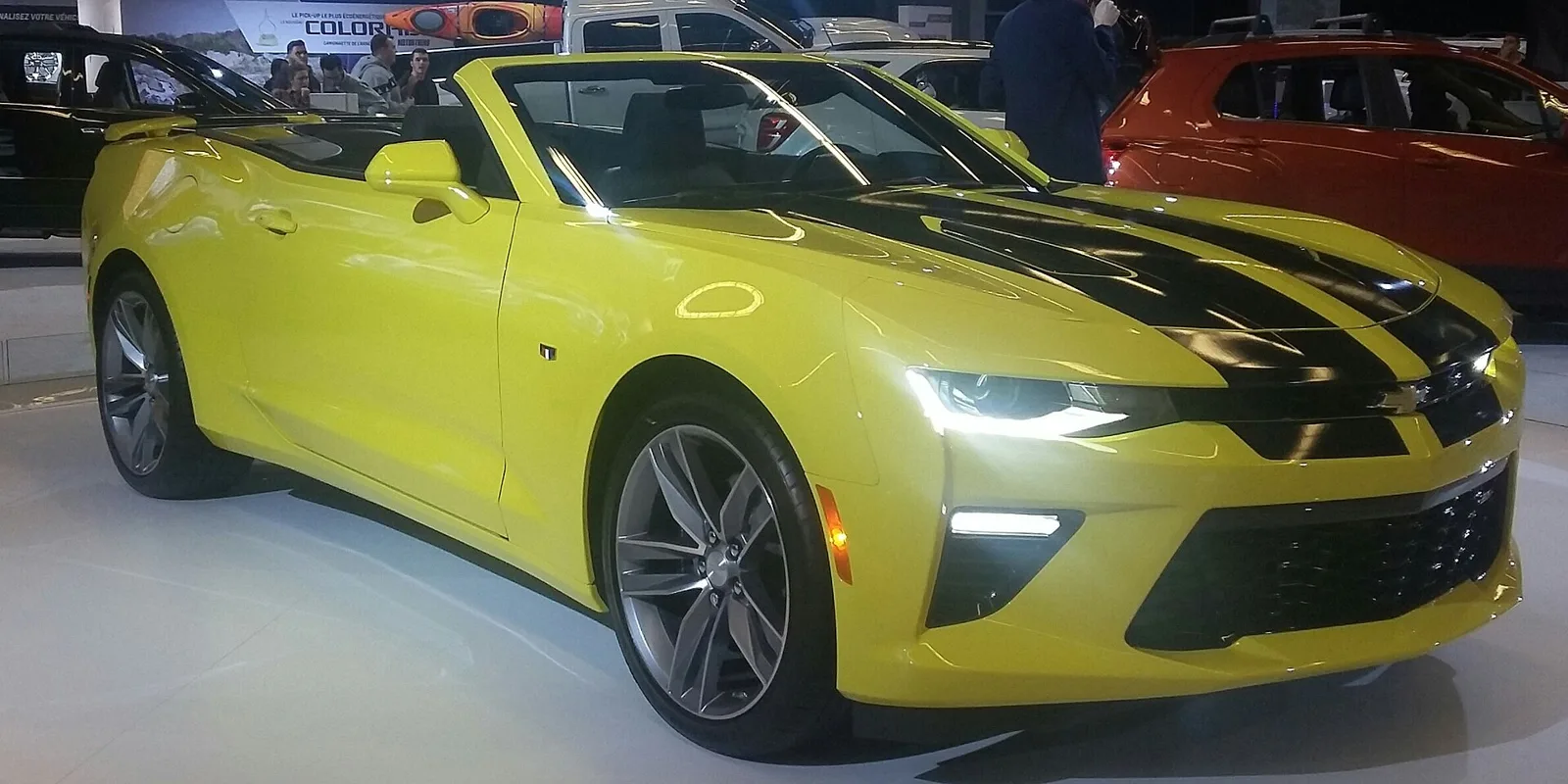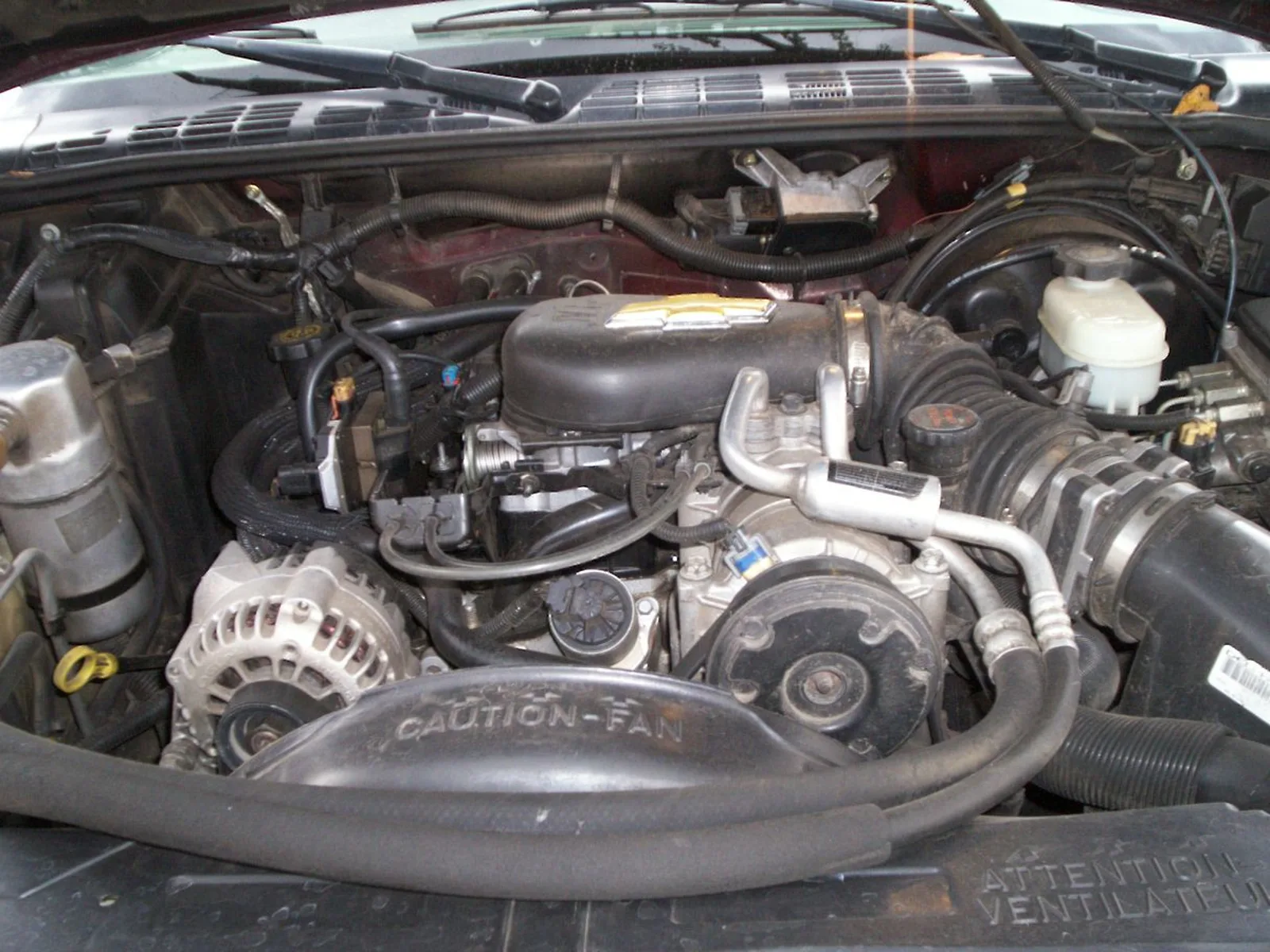
Chevrolet's 90-degree V6 family began with a 200 cu in engine in the 1978 Malibu and ended with the 4.3-litre in trucks and vans, closing a small-block lineage that dated to 1955.
The Chevrolet 90-degree V6 was built from 1978 to early 2014. It began with a 200 cu in engine in the Malibu, peaked as the 4.3 L (262 cu in) V6, and ended with the aluminium LV3 in trucks, closing a small-block lineage that dated to 1955.
The Chevrolet 90-degree V6 family began in 1978 and ended in early 2014, when the last cast-iron example of the design left the production line. It was built around the small-block V8, and its best-known member was the 4.3 L (262 cu in) V6. Together its engines closed a lineage of Chevrolet small-block designs that stretched back to the 1955 model year.
What was the Chevrolet 90-degree V6?
The Gen I V6 had 12 valves operated by pushrods, with cast-iron blocks and cylinder heads. Chevrolet made it by removing cylinders 3 and 6 from the small-block V8, so the two engines shared bore spacing, deck height, valvetrain components and many other parts. The V6 used the same bellhousing pattern as the small block and a 1-6-5-4-3-2 firing order.
Every engine in the family was a longitudinal design, used in rear-wheel-drive cars and trucks as well as in industrial and marine applications. The V6 was built at the GM Powertrain Division plant in Romulus, Michigan, for most of its life, and the family stayed in production for decades, which made it one of the longest-running Chevrolet designs of its era.
A V6 cut from a small-block V8 that outlived several GM engine programmes and ended with the aluminium 4.3-litre LV3.
Why was the 200 cu in V6 built?
The 200 cu in (3.3 L) replaced the 250 cu in six as the base engine for Chevrolet's new downsized intermediate line in 1978. Its bore was 3.5 in (88.9 mm) and its stroke 3.48 in (88.4 mm), matching the stroke of the 305 and 350 small-block V8s, and it used 2.45 in main bearings and 2.1 in rod bearings like the V8 family.
A 90-degree V6 normally runs roughly, so Chevrolet offset each pair of connecting rod throws by 18 degrees. That needed narrower rod ends, a thrust bearing between each pair of rods and a semi-even firing sequence. The 200 was sold only with a two-barrel carburettor, a Rochester 2GC in 1978 and a Rochester Dualjet in 1979, and the smaller Dualjet cost a little power. It was dropped after the 1979 model year.
How did the 229 V6 replace the 200?
The 229 cu in (3.8 L) V6 arrived for 1980 as the base six-cylinder engine in full-size Chevrolets and Camaros. It replaced the 250 six in those cars, and it also took over from the 200 and the Buick 231 V6 in the intermediate Malibu and Monte Carlo. Checker Motors used the 229 in its 1980 A11 Taxi and A12 Marathon sedans.
The 229 measured 3.736 in (94.9 mm) across the bore and 3.48 in (88.4 mm) along the stroke, the same bore as the 305 V8. It kept the 18-degree crankshaft throws of the 200 and used 1.84 in intake valves with 1 1/2 in exhaust valves. Output was rated between 110 and 115 hp (86 kW), and the carburettor moved to an electronic Dualjet with GM's CCC control system from 1981 to 1984.
Which vehicles used the 90-degree V6?
The V6 went into an unusually wide range of Chevrolet vehicles. The 200 was the base engine of the 1978 Malibu, while the 229 served the full-size Chevrolet, the Camaro and the Monte Carlo. The 4.3 went on to power the El Camino, the Caprice, the Astro and Safari vans, the S-10 and Sonoma pickups and the Blazer and Jimmy sport utilities, along with the C/K trucks that carried the Silverado and Sierra names.
Commercial users were just as important. The 4.3 replaced the 250 six in the full-size vans in 1985, and from 1990 it took over from the 292 six in the Step-Vans. Police and taxi Caprices used the Gen I engine until 1990, and Checker's taxi and Marathon models relied on the 229 in 1980. Mercury Marine also built a marine version, the Mercruiser, which used the same architecture with a 3.6 in stroke and produced 200 or 250 hp.
What did the 4.3 share with the small-block V8?
The 4.3 had much in common with the V8 it was cut from. Its bore spacing and deck height matched the small block, and the timing components, many bearings and most external accessories were interchangeable with the V8. That shared heritage kept development and tooling costs down, and it meant that improvements to the V8 often passed straight into the V6.
The 4.3 also followed the V8's development path. The 1996 Vortec cylinder heads, with improved airflow and combustion efficiency, were a version of the heads that the small block had already adopted. Later the 2002 quiet cam and the 2007 distributorless system followed the same steps that the V8 family had taken, which is why the V6 stayed competitive for so long.
What made the 4.3 L the family's best seller?
The 4.3 L (262 cu in) V6 arrived in 1985, replacing the 229 in the full-size Chevrolet, the El Camino and the Monte Carlo. It also took over from the 250 six in Chevrolet and GMC full-size trucks and vans, and from 1990 it replaced the 292 six in the Step-Vans. It became the most successful engine in the family by a wide margin.
The bore of 4 in (101.6 mm) and the 3.48 in (88.4 mm) stroke matched the 350 V8. To make a true even-fire V6, Chevrolet used a crankshaft with 30-degree offsets between the rod pins, which needed larger 2 1/4 in rod journals. The intake valves measured 1.94 in and the exhaust 1 1/2 in, the same exhaust as the 350. Later changes brought a one-piece rear main seal in 1986 and hydraulic roller lifters in 1987.
A balance shaft joined the block for the 1992 model year. It ran above the camshaft through the lifter valley and was gear-driven from the cam sprocket, which required a new timing cover. Distributorless coil-on-plug ignition arrived for the 2007 model year, using a 58x crankshaft sensor like the GEN IV LSx engines.
| Engine | Introduced | Displacement | Peak output | Notable use |
|---|---|---|---|---|
| 229 (3.8 L) | 1980 | 229 cu in (3.8 L) | 110 to 115 hp (86 kW) | Full-size Chevrolet and Camaro |
| 4.3 L LB4 (throttle-body injection) | 1985 | 262 cu in (4.3 L) | 130 hp (97 kW) in cars | Caprice and Monte Carlo |
| 4.3 L L35 | 1992 | 262 cu in (4.3 L) | 200 hp (149 kW) and 260 lb ft (353 N m) | S-10 and Astro |
| 4.3 L LU3 | 2002 | 262 cu in (4.3 L) | 190 to 200 hp (142 to 149 kW) | Full-size trucks and vans |
| 4.3 L LV3 | 2014 | 262.5 cu in (4.3 L) | 285 hp (213 kW) | Silverado and Sierra 1500 |
What did the 4.3 L produce in its later years?
The LB1 Quadrajet version made 155 hp (116 kW) in pickups and vans, while the LB4 throttle-body engine made 130 hp (97 kW) in the Caprice, Monte Carlo and El Camino. Passenger cars gained 140 hp (104 kW) in 1986, and the LB4 pickups reached 160 hp (119 kW) from 1987, with full-size vans rated at 150 hp (112 kW).
The L35 central port injection engine appeared in 1992 and was rated at 200 hp (149 kW), with 260 lb ft (353 N m) of torque. It used one central injector feeding six hoses to the intake ports, and it was fitted to S-10 pickups, Blazers and Astro vans. The 1996 Vortec heads improved airflow, and the L35 and LF6 versions were rated 180 to 200 hp and 175 to 180 hp respectively.
What was the turbo 4.3 in the Syclone and Typhoon?
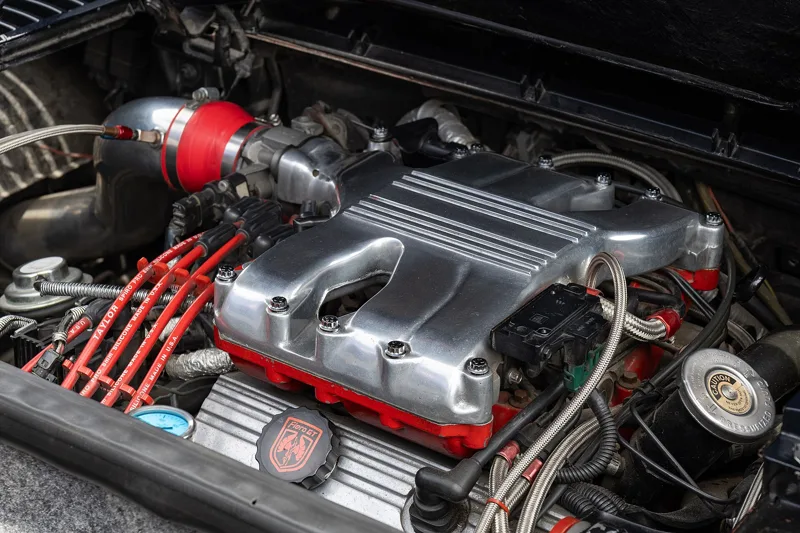
GMC introduced a turbocharged 4.3 L V6 in its Syclone limited-edition truck in 1991. It used a Mitsubishi TD06-17C turbocharger, a Garrett water-to-air intercooler and electronic multi-point fuel injection. Although GM altered the engine considerably, it kept the LB4 designation, with the vehicles also carrying the ZR9 code.
Compression was lowered to 8.35:1 with hypereutectic pistons, and a new intake manifold used a 48 mm twin-bore throttle body taken from the 5.7 L TPI Corvette engine. The last turbo 4.3 went into the GMC Typhoon for 1993, where its output was 280 hp (209 kW) at 4400 rpm, with torque peaking at 360 lb ft (488 N m) at 3600 rpm.
What changed in the LU3 and LG3 engines?
For 2002, California-market Astro, Safari, Silverado and Sierra trucks received the updated LU3. The biggest change was the fuel-injection system, which used six Multec II injectors mounted at each intake port in place of the poppet-valve spider. The LU3 also gained a quiet cam, reprofiled so the lifters stayed in full contact with the lobes as the cam ramped down.
The LG3 served only the 2003 S-10 and Sonoma pickups, where it made 180 hp (134 kW) and 245 lb ft (332 N m) of torque. The LU3 replaced the L35 in all other applications in 2003, and from 2004 to 2014 it was the only 4.3 L in production. For the 2007 to 2013 Silverado and Sierra 1500 trucks, the LU3 switched to a distributorless system with a 58x reluctor wheel.
How did the Generation V 4.3 L differ?
The Generation V 4.3 L was a new engine announced at the end of 2012. Chevrolet kept the displacement, two-valve pushrod layout, 90-degree angle and 4.4 in bore centres, but the block and heads were aluminium and the engine used direct injection, piston cooling jets and active fuel management. On regular unleaded fuel the engine delivered 285 hp (213 kW) and 305 lb ft (414 N m), at 5300 rpm and 3900 rpm respectively.
Fuel choice moves the numbers too: on E85 the same engine reaches 297 hp (221 kW), and its torque rises to 330 lb ft (447 N m). It launched in the 2014 Silverado and Sierra 1500, and the 2021 model year was its last in those trucks. The Express and Savana vans used the LV1, which lacked active fuel management and arrived in the 2018 model year. Marine and industrial versions were also sold, built in Tonawanda, New York, and Ramos, Mexico.
Why did the original V6 family come to an end?
The original cast-iron design ended in early 2014, when its last use in the 4.3 L truck and van engines finished the production run. Its phaseout closed an era of small-block designs that dated back to 1955, and the new aluminium LV3 replaced the cast-iron engine as GM moved to its Gen V architecture.
Looking back, the family lasted for decades because each change built on the same bore spacing and bellhousing pattern. That continuity let Chevrolet keep improving the V6 without starting over, which is why the 4.3 became one of the most widely used Chevrolet engines of its era.