Francis Ford Coppola's 1988 biopic of Preston Tucker, the fight with the Big Three and the film's effect on the value of the Tucker 48.
Tucker: The Man and His Dream is a 1988 biographical film directed by Francis Ford Coppola and starring Jeff Bridges as the automobile inventor Preston Tucker. It tells how Tucker tried to build the Tucker 48 and faced opposition from the major carmakers and US regulators. The film was a commercial disappointment but became a cult favourite.
Tucker: The Man and His Dream tells the story of Preston Tucker, a Detroit engineer who tried to build a safety-minded car in the years after the Second World War. Francis Ford Coppola directed it for Paramount, and the project took years to reach the cinema. It is still watched as a portrait of an automotive dream that ran into powerful opposition.
Who was Preston Tucker?
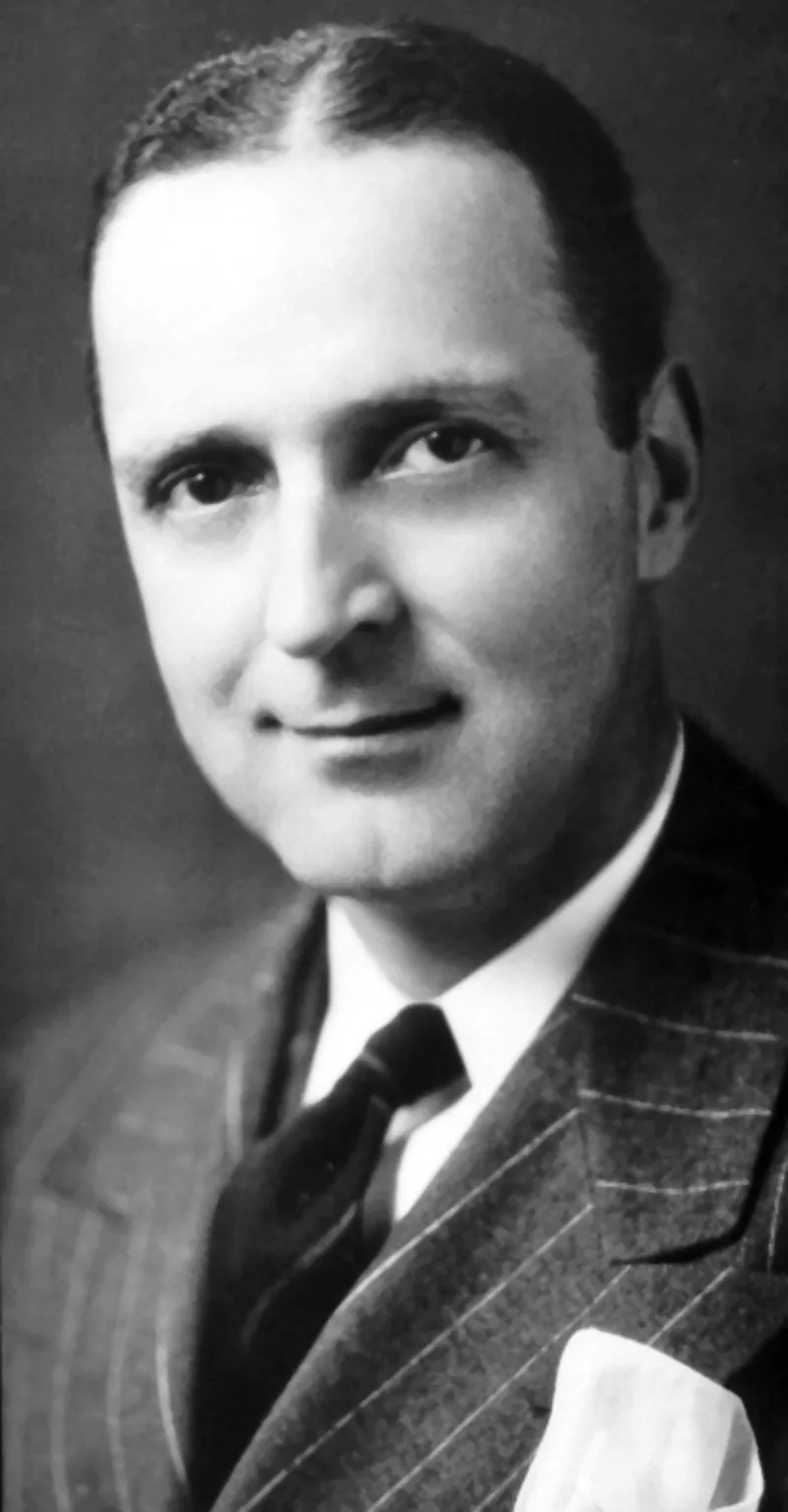
Preston Tucker was an American engineer and car builder from Detroit who had been fascinated by cars since childhood. During the Second World War he designed an armoured vehicle for the military and made gun turrets for aircraft. He then set out to build a new kind of car after the war.
Tucker ran his wartime business from a small shop beside his home in Ypsilanti, Michigan. The film shows him backed by relatives, among them his spouse Vera, two sons named Preston Jr. and Noble, and a daughter, Marilyn Lee. His ambitions were far larger than the workshop, and the story is built around the distance between the two.
The idea grew into a car the film calls the Tucker Torpedo. Tucker brought in the young designer Alex Tremulis to shape the car, and he turned to the New York financier Abe Karatz to arrange the money. Their partnership gives the film its central relationship, since one man provides vision and the other provides the financial plan.
A safety-minded car, a company that could not survive its rivals, and a film that made the Tucker 48 valuable again.
How did the film come to be made?
Coppola began planning a film about Tucker in 1973 and first approached Marlon Brando for the lead. Development stalled, then restarted in 1986 with George Lucas as executive producer. The production finally reached cinemas in 1988 after years of changing plans and financing trouble.
In 1976 Coppola bought the rights from the Tucker Estate, and he considered several actors for the lead, including Jack Nicholson and Burt Reynolds. His first concept was a dark musical, with music by Leonard Bernstein and lyrics by Betty Comden and Adolph Green. The musical would have followed Tucker alongside other figures from American industry, but the plan fell apart when Coppola's company American Zoetrope ran into financial trouble.
American Zoetrope had suffered box office failures with One from the Heart in 1982 and The Cotton Club in 1984, and its bankruptcy ended the musical version. In 1986 Lucas encouraged Coppola to revive the project and agreed to serve as executive producer. Coppola then dropped the musical idea in favour of a homage to Capra's work, above all Mr. Smith Goes to Washington from 1939.
Coppola first intended to write the script himself, but his commitment to another production led him to hire Arnold Schulman. David Seidler had been attached to the project earlier and was given a co-writing credit by the Writers Guild of America, a decision that angered Schulman and that Coppola also disliked. The filmmakers set a budget of $24 million, but four studios asked for $15 million. Lucas decided to cover the full $24 million himself.
Who starred in the film?
Jeff Bridges plays Preston Tucker in the title role, and Martin Landau plays Abe Karatz, the financier who raised money for the company. Joan Allen plays Vera Tucker, and Christian Slater and Elias Koteas play the eldest son and Alex Tremulis. Landau was nominated for an Academy Award and won a Golden Globe for Best Supporting Actor.
Bridges prepared for the role by studying home movies of Tucker to capture his mannerisms and movements. Tucker's descendants also let him wear the family's black pearl ring and cuff links on set.
Landau accepted the part of Karatz partly to avoid being typecast. Family values were central to the Tuckers' life, and Coppola picked Joan Allen to play Vera, the devoted spouse of Tucker.
What was the Tucker 48 meant to be?
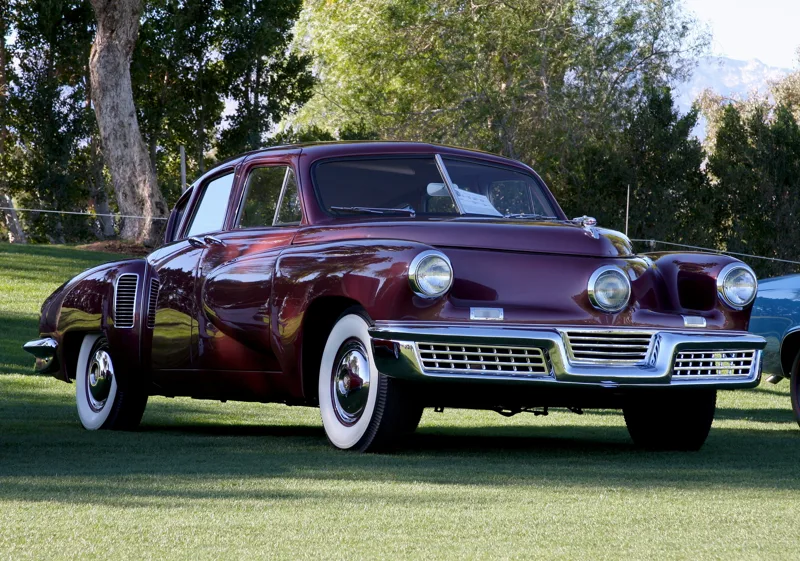
The Tucker 48 was presented as a car of the future, with disc brakes, seatbelts, a pop-out windshield and headlights that swivelled with the steering. In the film, Tucker plans these safety features for a car he calls the Torpedo. Ultimately the board changed the design, and the safety advances were removed from the plan. The film returns to this promise again and again, because it shows how far the finished car fell short of the original idea.
Karatz helped raise money through a stock issue, and that money allowed Tucker and Karatz to acquire the Dodge Chicago Plant for manufacturing. The purchase turned a workshop idea into a plan for mass production, and it is the moment when the venture becomes large enough to attract serious opposition.
Why did the Tucker company run into trouble in the film?
In the film the company launches its car to enthusiasm from shareholders and the public, but the board sends Tucker on a publicity tour and tries to take control. The Big Three automakers and a Michigan senator's investigation add pressure, and an SEC inquiry into stock fraud drives the courtroom battle that dominates the final act.
While Tucker is away, the board and Robert Bennington change the design to a more conventional form. Tucker returns to find that he has little power left in the company and that the engine he planned is no longer viable. The board's choice removes the very features that had made the car newsworthy.
Tucker then receives a call from Howard Hughes, who advises him to buy the Aircooled Motors Company. That firm could supply the steel he needed and a small helicopter engine that might replace his original power plant. Tucker modifies the new engine and tests it in a prototype car made in secret in his backyard tool-and-die shop, and the prototype proves durable and passes crash testing.
Senator Homer S. Ferguson's investigation, working with the SEC, causes Karatz to resign, since his earlier bank fraud conviction could prejudice the hearings. Yellow journalism damages Tucker's public image, and the courtroom fight turns on proof of production. Tucker parades his production run of fifty cars before the court, showing that the company had reached production status.
Tucker gives a speech to the jurors about how large corporations harm small entrepreneurs like himself. He is acquitted on all charges, yet the Tucker Corporation still falls into bankruptcy. The closing shot shows the production line of fifty cars being driven through the streets of downtown Chicago, with onlookers admiring them as they pass.
How was the film shot?
Principal photography began on April 13, 1987, with the first unit filming at a Ford assembly plant in Richmond, California, which stood in for the Dodge Chicago Plant. Most outdoor scenes were shot in Marin County and the production wrapped on July 17, 1987.
Other locations included Oakland, Novato and San Francisco, and the production made wide use of genuine cars. The production history records 51 original Tucker 48s, and forty-seven of them still exist. Twenty-one cars came from owners in the club of Tucker enthusiasts and served as set dressing and in starring roles.
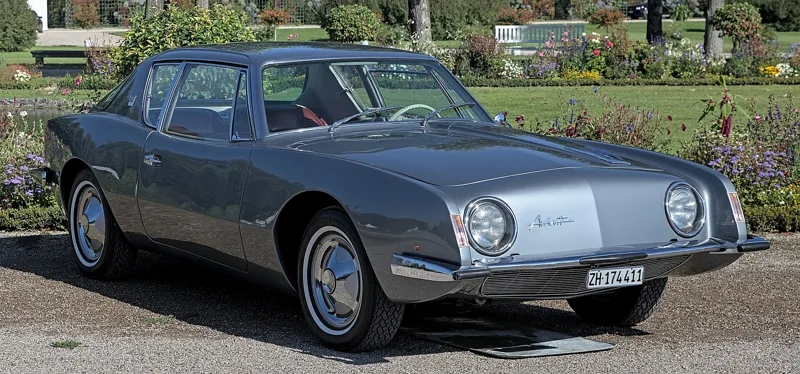
Three cars were used for the crash scene. One was a before-crash fibreglass body, a Studebaker modified to look like a Tucker performed the rollover, and an after-crash fibreglass body sat on a Ford LTD chassis. The rollover car now sits in a privately owned museum in Tallahassee, Florida.
The production was the first film to have its audio mixing done at Skywalker Ranch. Lucas persuaded Paramount to distribute the film in 1987, and the studio was also distributing Indiana Jones and the Last Crusade. Before final editing, the studio insisted on a more expansive title, Tucker: The Man and His Dream.
Coppola's family was undergoing a stressful time during production, and he dedicated the film to his eldest son, Gio, who had died before filming began.
Film at a glance
| Item | Detail |
|---|---|
| Release | 12 August 1988, Paramount Pictures |
| Director | Francis Ford Coppola |
| Lead | Jeff Bridges as Preston Tucker |
| Production budget | $24 million |
| Opening weekend | $3,709,562 from 720 theatres |
| US gross | $19.65 million |
| Rotten Tomatoes | 82% from 49 reviews, average 7.2/10 |
| Metacritic | 74 out of 100 from 13 critics |
| Tucker 48 production | 50 built; forty-seven of the 51 originals survive |
How accurate is the story?
The film is based on real events, but it compresses the timeline and reshapes characters for dramatic effect. It covers one year where the real events took place over four years, and it shows an assembly line that Tucker never had. The filmmakers knew the history well, yet they adjusted it to suit a story with clear heroes and villains.
Coppola's librarian, Anahid Nazarian, gathered research for the production from about 350 articles, books, family interviews and home movies. The Tucker Automobile Club of America was also consulted, and its members were treated as the arbiters of the car's legend.
The film simplifies the family as well. Tucker had five children, while the film shows four. Alex Tremulis is depicted as the chief designer of the Torpedo, and the film ignores the involvement of the designer Philip Egan.
Tucker's company president is portrayed as a villain for dramatic reasons, although the production's own account describes him as a decent man. Coppola and Lucas both intended the portrayal of Tucker to be entirely sympathetic, so the film favours the inventor over the institutions that opposed him.
The personal link is also important. The director's father, Carmine Coppola, put money into the company's stock early on and later bought one of the cars as it left production. Coppola and Lucas each owned two Tuckers, and Lucas sold one of his cars in September 2005 for $385,500.
How did critics and audiences respond?
Critics gave the film largely positive reviews, with 82% approval on Rotten Tomatoes from 49 reviews and a Metacritic score of 74. Audiences gave it an A on CinemaScore, but the film was a commercial disappointment. Its US gross was $19.65 million against a budget of $24 million.
Richard Schickel of Time praised the film's exaggerated kitsch style and argued that Jeff Bridges gave his best performance in the role of Preston Tucker. Janet Maslin of The New York Times found that Coppola, known for darker films, had made a feel-good picture with real range.
Desson Thomson of The Washington Post praised the cinematography of Vittorio Storaro and called the film a satisfying commercial breakthrough for Coppola. Roger Ebert gave a mixed review, arguing that the film never really confronts the real odds against Tucker and so drifts from a saga into whimsy.
Coppola was philosophical about the reception. He described the film as eccentric and a little wacky, like the car itself, but he said it was not the film he would have made at the height of his power. He also insisted that it would be his last Hollywood project.
The film opened in the United States on 12 August 1988, taking $3,709,562 from 720 theatres in its first weekend. Because it did not recoup its $24 million budget, it was declared a box office bomb, despite the positive reviews, but it became a cult favourite in the years that followed.
Did the film change the value of the Tucker 48?
Yes. The film revived interest in the Tucker automobile and pushed up prices for surviving examples. At a 2008 auction, a low-mileage Tucker 48 topped the $1 million mark, and the film's release helped create that renewed appreciation for the marque.
Of the 50 Tucker 48s produced, 46 remained roadworthy and in use as of 1988. That survival rate kept real examples in circulation, so the film could point audiences to actual cars rather than only to a story.
Preston Tucker died of lung cancer six years after the trial. Many of his ideas later spread through the industry. Aerodynamic styling, padded dashboards, windows that pop out, seatbelts, fuel injection and disc brakes were taken up by larger automakers and now feature in almost all modern cars.
What home releases are available?
Paramount Home Video released the film on DVD in October 2000. The disc added a commentary by Coppola and a promotional film from 1948 about the car itself, plus a making-of featurette called Under the Hood: Making Tucker.
Pocket Books published a novelisation by Robert Tine to coincide with the film's release. The story was therefore available in print as well as on screen, which gave readers another way into the story of the Tucker company.
Disney acquired the rights through its acquisition of Lucasfilm in 2012. Lionsgate Home Entertainment issued a high-definition Blu-ray remaster in 2018, timed to mark the film's 30th anniversary and made under licence from Disney.