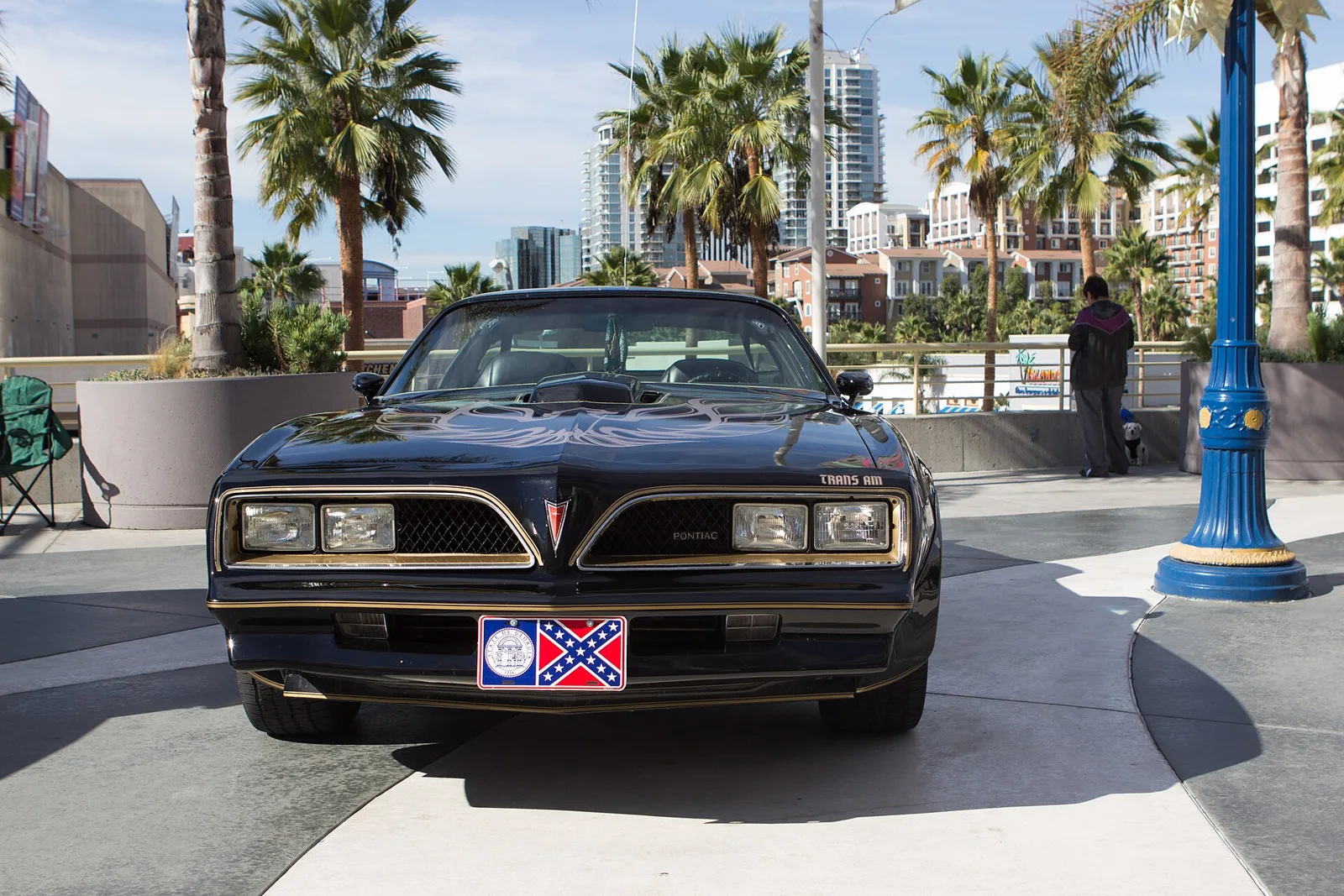
Burt Reynolds and Jerry Reed's 1977 road comedy, the Pontiac Trans Am that became a legend, the CB radio craze it fed and the franchise it spawned.
Smokey and the Bandit is a 1977 Burt Reynolds comedy about a beer run from Texas to Atlanta, pursued by a determined sheriff. It was directed by stuntman Hal Needham, featured the Pontiac Trans Am, and grossed $126,737,428 in North America.
Smokey and the Bandit is a 1977 road comedy starring Burt Reynolds and Jerry Reed as bootleggers hauling a truckload of beer across the South. Hal Needham, a stuntman, made his directing debut with the film, which became one of the year's biggest hits. It grossed $126,737,428 in North America and made the Pontiac Trans Am a star in its own right.
What is Smokey and the Bandit about?
Big Enos Burdette bets that no trucker can haul 400 cases of Coors beer from Texarkana to Atlanta in 28 hours. Bo 'Bandit' Darville accepts the wager for $80,000, with Cledus 'Snowman' Snow driving the truck while the Bandit runs ahead in a black Trans Am as a blocker to draw attention away from the cargo.
The plan goes wrong when the Bandit collects Carrie, a runaway bride who has just left the wedding of Sheriff Buford T. Justice's son, Junior. The sheriff and Junior pursue the Bandit across Dixie to recover Carrie, and the outlaws have no idea that the chase is about the bride rather than the beer. The misunderstanding gives the film its comic engine.
The run becomes a race across several states, with CB radio chatter from helpful drivers keeping the bootleggers one step ahead. Cledus smashes through a roadblock at the fairgrounds with ten minutes to spare. Rather than take the prize, the Bandit and Carrie accept a double-or-nothing offer from Little Enos to bring back clam chowder from Boston in 18 hours.
A beer run that turned into a car-chase comedy and gave a Pontiac its legend.
Which cars and trucks made the film?
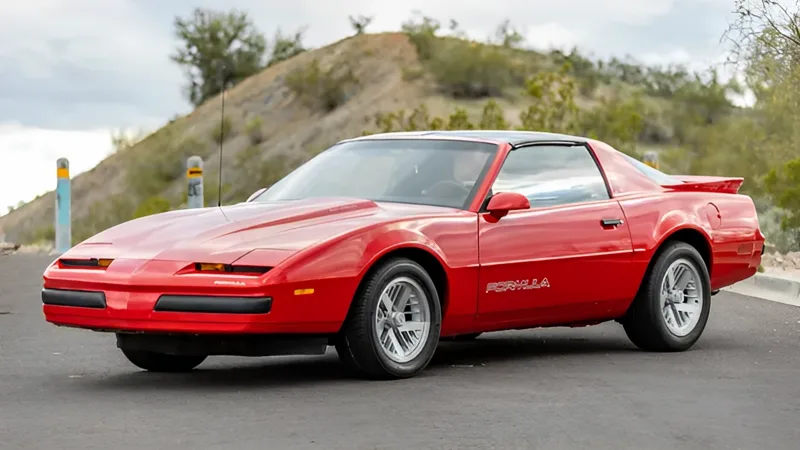
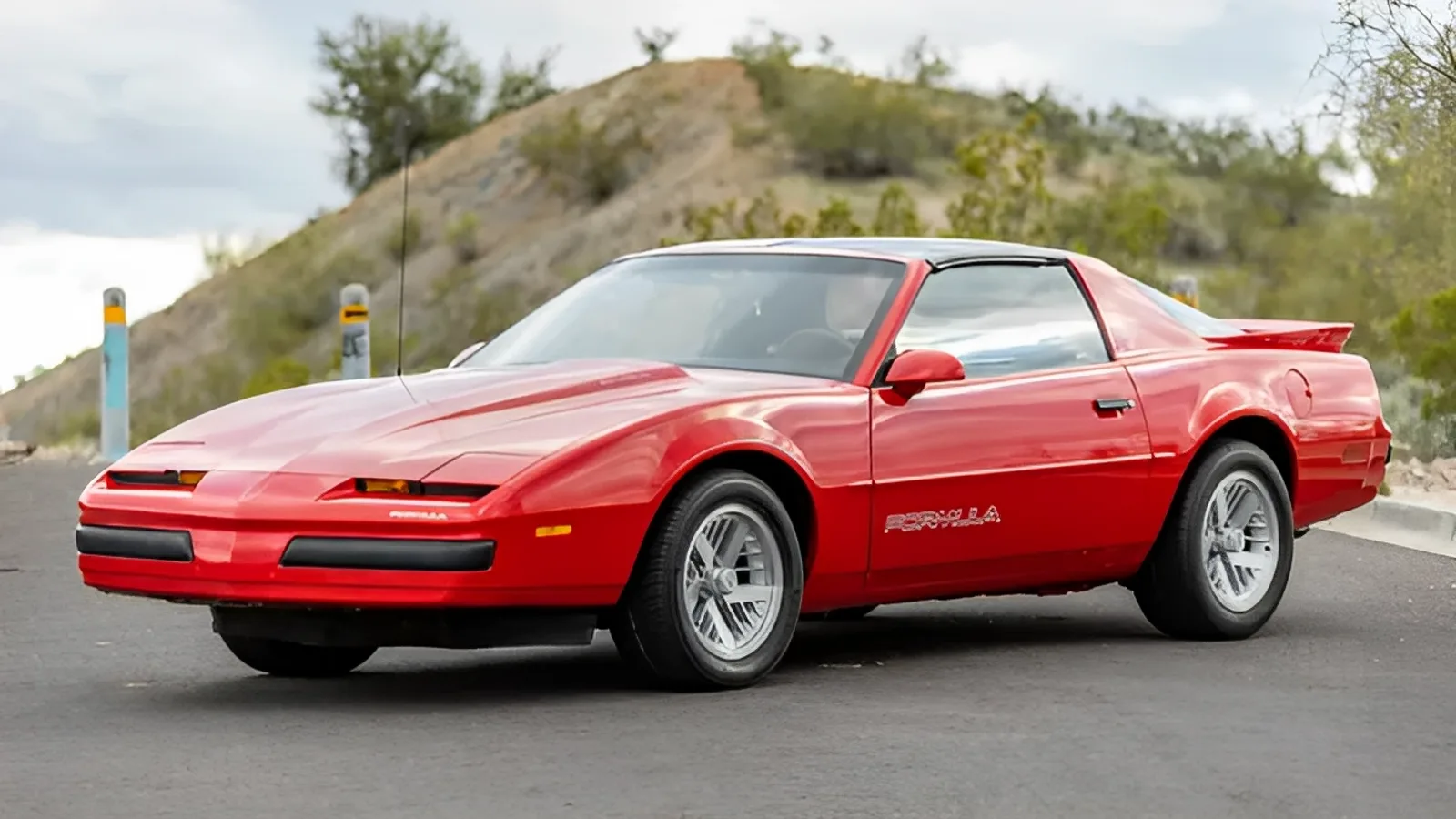
The Trans Am is the star of the film, and Needham saw the advertising for the new 1977 model and knew at once that it would make a perfect character. Pontiac agreed to provide four Trans Ams and two LeMans sedans. The Trans Ams were actually 1976 models with 1977 front ends, and their engines were 455 cu in units, the last year those engines were offered for sale.
| Vehicle | Detail | Role in the film |
|---|---|---|
| Black 1977 Pontiac Trans Am | Built from 1976 models with 1977 front ends | The Bandit's blocker car, nicknamed Trigger |
| 1974 Cadillac Eldorado convertible | Candy Red paint scheme | The Burdettes' car, used in the escape at the end |
| Three Kenworth W900 A semi trucks | Coffee brown with gold trim, 38-inch sleepers | The beer truck driven by Reed |
| Sheriff Justice's cruiser | Police car that is damaged as the chase goes on | Increasingly battered pursuit car |
The cars took a beating during production. All four Trans Ams were badly damaged, and one was nearly destroyed during the jump over the dismantled Mulberry bridge. Needham drove the stunt in place of Reynolds, while a stunt double took Sally Field's place in the same car. By the end of the shoot, only one Trans Am and one LeMans were still running, and the others had been stripped for parts.
The Trans Am's fame grew after the film. Sales almost doubled within two years of the release, and the car outsold the Chevrolet Camaro for the first time. Reynolds received a 1977 Trans Am as a gift after the promotion, although the car itself never appeared on screen, and in 2014 it went to auction for $450,000. Pontiac's president, Alex Mair, promised Reynolds a Trans Am each year because of the film's success.
How was the film developed and cast?
Needham first planned the film as a low-budget B movie with a budget of $1 million, with Jerry Reed as the Bandit. Studios were reluctant to back a project from a stuntman, but Reynolds read the script and agreed to play the Bandit, which moved the film towards a mainstream release. Reed took the role of Cledus, and Reynolds was at the top of the box-office charts.
Universal Studios bankrolled the film for $5.3 million, but two days before production began the budget was trimmed by $1 million. With Reynolds' salary of $1 million in the budget, Needham had only $4.3 million to make the film. The dialogue was largely improvised, and Needham and assistant director David Hamburger rebuilt the shooting schedule in a long session.
Jackie Gleason was given free rein to ad-lib. He suggested that Junior, played by Mike Henry, should stay beside him throughout, and he helped shape the sheriff's most memorable lines. Buford T. Justice was named after a real Florida Highway Patrolman, and Reynolds' father, a police chief, inspired the film's favourite word.
Sally Field was reluctant at first, and Universal executives doubted she was attractive enough for the part. Reynolds and Field began dating during the shoot, a detail that gave the production an unusually close bond on and off screen. Reynolds insisted on her involvement, and she accepted the role after her agent advised her that she needed a big movie role. Field later said the film was virtually all improvised.
Where was Smokey and the Bandit filmed?
Principal photography began on August 30, 1976, and the film was shot mainly in Georgia, in McDonough, Jonesboro and Lithonia.
Not every location was in the South. The Shell station scene was shot in Ojai, California, far from the Georgia locations. The racetrack scenes were shot at Lakewood Speedway, on the old Lakewood Fairgrounds in Atlanta, while the roller coaster in the film was the Greyhound, which was repainted for the production.
A Hot Pants Hilliard scene also had to be reshot. The original footage was lost in transit from Atlanta to Los Angeles, so the replacement was filmed in the San Fernando Valley at a drive-in restaurant. The restaurant later appeared in another film, which shows how small location details can outlast a production.
How did the film perform at the box office?
Smokey and the Bandit was a sleeper hit, and its path to success was unusual. It premiered at Radio City Music Hall in New York, where it performed poorly, but it then opened in the South over Memorial Day weekend, earning $2,689,851 in 386 theatres. By the end of June it had reached major Southern markets, and it grossed $11.9 million by then.
Its success helped push Reynolds to the top rank of box-office stars, and the film became one of his most fondly remembered projects. The film went on to earn $126,737,428 in North America, making it the second-highest-grossing movie of 1977, behind Star Wars. Reynolds later said in 2015 that he enjoyed making the film more than any other project in his career.
How did critics react to the film?
Critics were mixed. Rotten Tomatoes recorded 71% approval from 38 reviews, with a consensus that praised its wrecks and infectious fun, and Metacritic gave the film a score of 50 from six critics. Leonard Maltin awarded three stars out of four, describing it as a classic compared with the sequels that followed.
Gene Siskel gave the film two stars and complained that the film did not make clear when the clock started on the beer run. Hannemann and Ross, the film's editors, earned a nomination for editing at the 50th Academy Awards, a sign that the film's technical work was noticed. Abroad the reception was also warm, and the film was released in the United Kingdom on August 28 to strong returns. The AFI put the film on its lists for 100 Laughs, and it named the Bandit and Buford as a hero and a villain.
Why did the film matter culturally?
The film arrived during the 1970s CB radio craze and added to it. The Dukes of Hazzard, created by Gy Waldron, was inspired by the film's success and aired on CBS from 1979 to 1985. Sally Field's costume in the film was notably similar to the shorts worn by Daisy Duke, and Reynolds later played Boss Hogg in a 2005 film adaptation of that show.
The film also left its mark on everyday language. Buford's word 'sumbitch' was replaced with 'scum bum' when the film was shown on network television in 1979, and a 2007 Hot Wheels release of the 1970 Firebird Trans Am carried that phrase. The Bandit Run, which began in 2007 as a Trans Am road trip, keeps the film's route alive.
A documentary, The Bandit, looked at the making of the film in 2016. Directed by Jesse Moss, it features interviews with Reynolds and the crew, and it explores the relationship between Reynolds and Needham.
How was the film changed for television?
When the film first aired on American network television in early 1979, censors had to tone down its raw language. They overdubbed dialogue they considered offensive, which was common practice at the time. The most noted change was the replacement of Buford's catchphrase 'sumbitch' with 'scum bum', a phrase that became popular with children.
Almost all of the original actors redubbed their lines for the television version, except Gleason. Henry Corden, the voice of Fred Flintstone, replaced much of Sheriff Justice's dialogue. In the United Kingdom the heavily dubbed version was shown for years, and more recent broadcasts have used the original version with stronger language edited out.
The theatrical release also contains a few deleted lines. In one scene Sheriff Justice swears at a state trooper, but the expletive is obscured by the horn of a passing big rig. The moment became a comic gag as much as a way to avoid a restrictive rating, which shows how the filmmakers turned constraint into humour.
A 2006 DVD re-release came with a remastered soundtrack in 5.1 surround. Many original sound effects were replaced in that version, including the diesel start-up in the opening sequence, which means that the sounds no longer match the engines on screen. Earlier releases kept the original soundtrack intact.
What happened to the franchise?
Two sequels followed in quick succession. Smokey and the Bandit II arrived in 1980 and earned $66.1 million against a $17 million budget, while Smokey and the Bandit Part 3 came in 1983 without Needham or Field, and earned only $7 million against a $9 million budget.
Television has returned to the story more than once. A 1994 standalone series starred Brian Bloom as the son of the Bandit, and in October 2020 a new series was revealed to be in development. Universal and Netflix began filming a prequel with Sean Bailey as Sheriff Buford T. Justice on July 5, 2026.