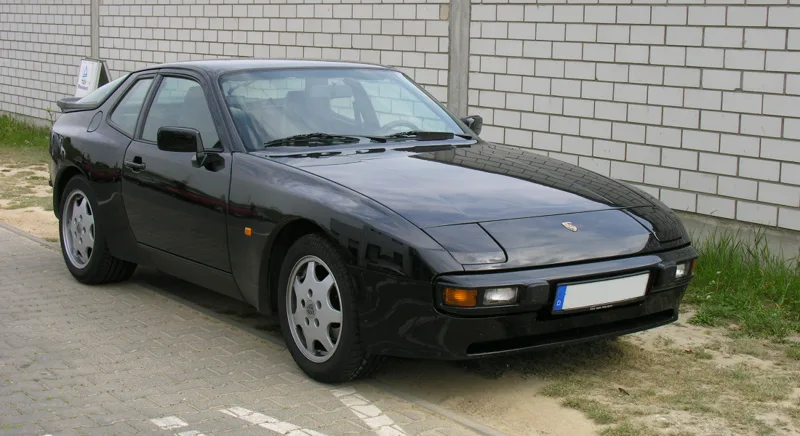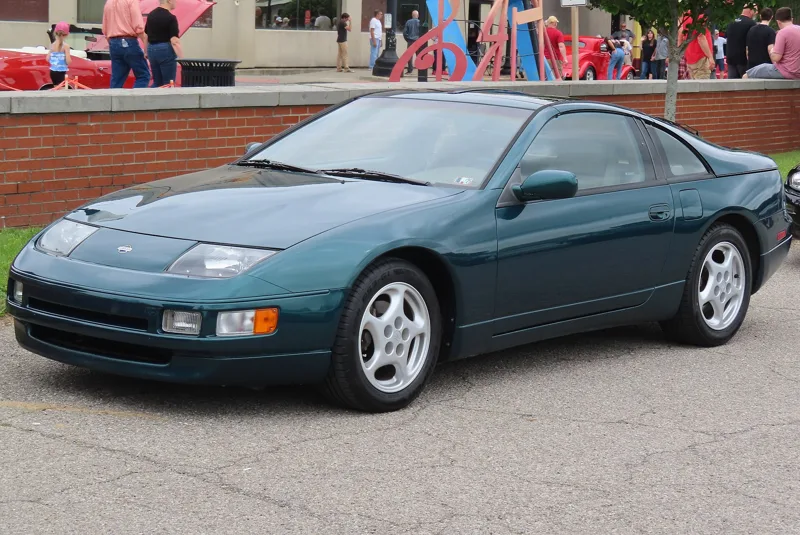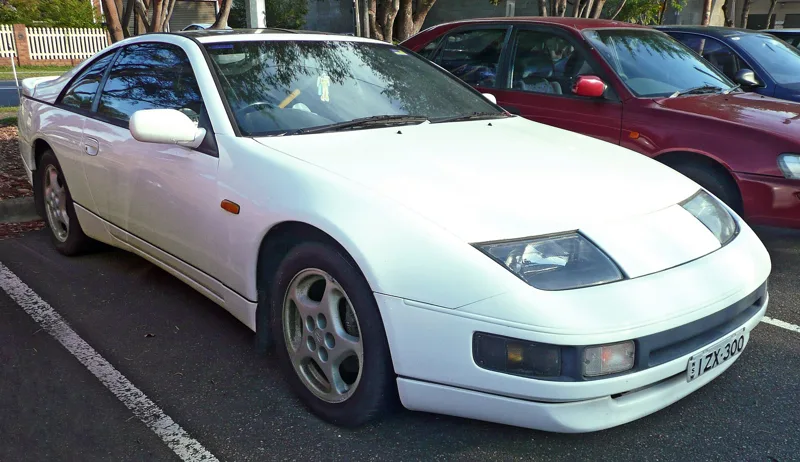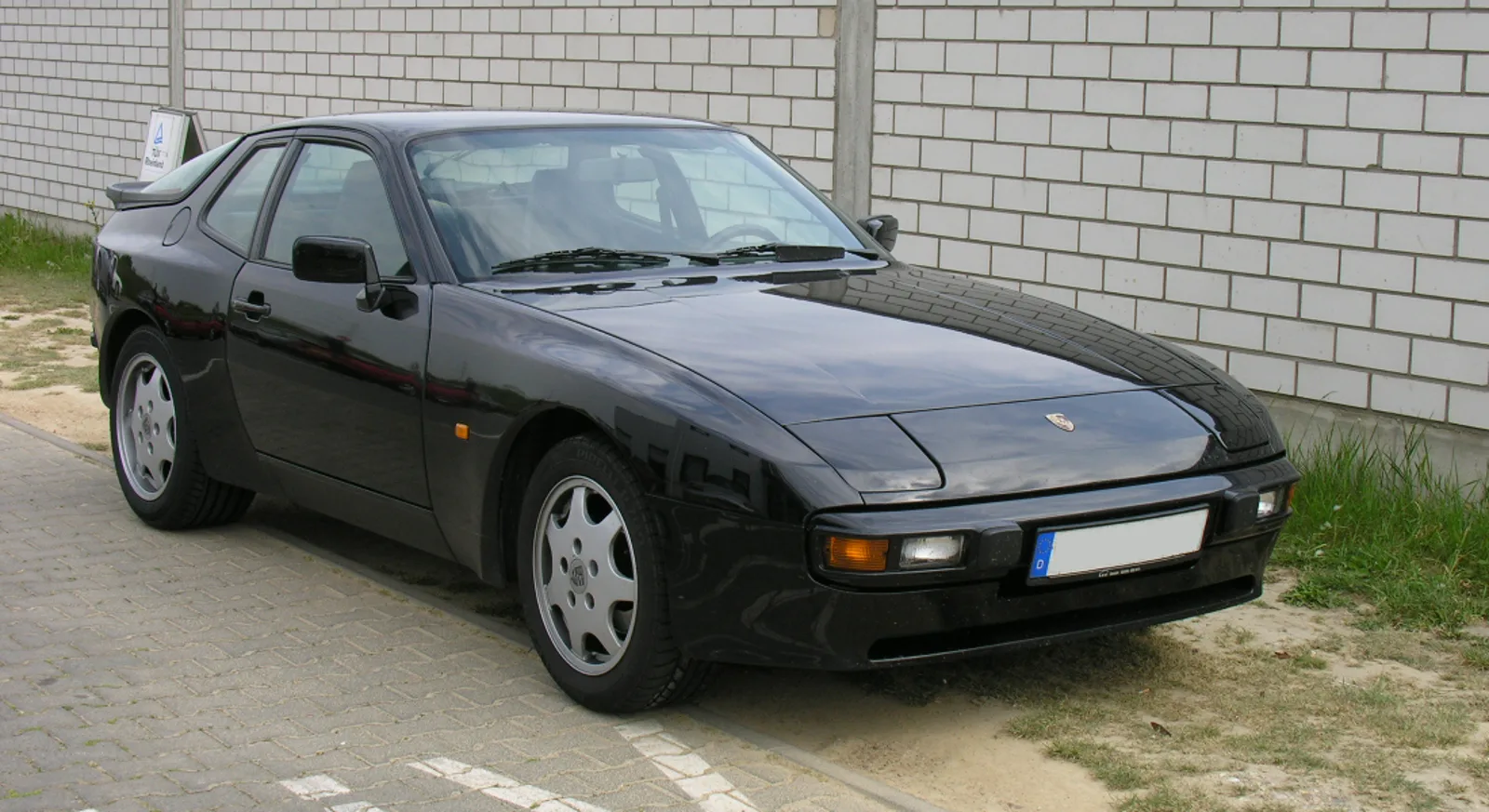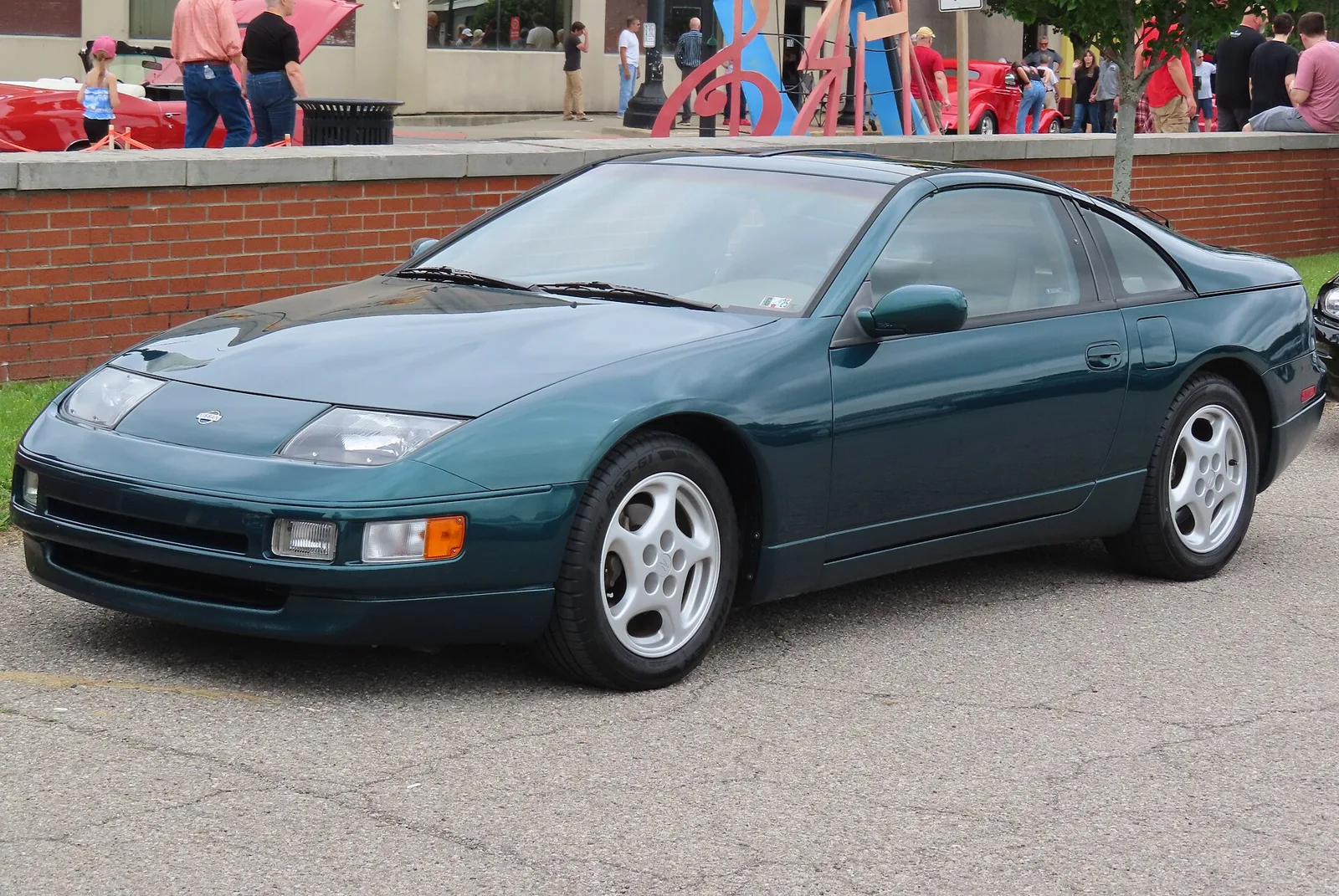
Two rear-drive sports cars from the early 1980s, one from the Z-car family with a V6 and the other a Porsche with a balance-shaft four-cylinder.
The Nissan 300ZX Z31 used a 3.0-litre V6 with optional turbo power and sold from 1983 to 1989 as the highest-volume Z-car. The Porsche 944 used a 2.5-litre four with balance shafts, was built from 1982 to 1991, and grew from a race-bred road car into a turbo family.
The Nissan 300ZX Z31 and the Porsche 944 were both rear-drive sports cars from the early 1980s. The 300ZX leaned on a 3.0-litre V6 and a long Z-car heritage, while the 944 used a 2.5-litre four with balance shafts and a racing pedigree. Which one suits depends on whether a buyer values six cylinders and Z-car history or Porsche engineering.
Where did each car come from?
In Japan the car was sold as the Fairlady Z, as every Z-car was. Nissan built it for Japan until 2000 and for the United States until 1996, with low-volume Japanese sales running into 2001. The X in the name carried over from the 280ZX and signalled more luxury and comfort.
The first-generation Z31 arrived in Japan on 16 September 1983 and was designed by Kazumasu Takagi and his team. It became the highest-volume Z-car Nissan had built to that point, and it stayed on sale until 1989.
The 944 began life in Volkswagen-Porsche's shared project. Volkswagen cancelled the EX-425 replacement for the 914 in 1974, and Porsche bought the design and a development mule from it. The result was the 924, which critics liked but which enthusiasts faulted for its Audi-sourced 2.0-litre engine.
Porsche then turned the 924 into a mid-level model with a racing twist. A prototype called the 924 GTP LeMans ran at Le Mans in 1981, and the road-going 944 followed in 1982, carrying over many race technologies with the power toned down for safety.
A V6 with a Z-car heritage against a balance-shaft four with Le Mans roots.
How did the chassis and layout differ?
The Z31 chassis was based on the 280ZX and shared its wheelbase, but it handled and accelerated better than the car it replaced. Suspension was MacPherson struts at the front and a semi-trailing arm arrangement at the rear. A drag coefficient of 0.30 showed how much attention went into the body.
The 944 was a front-engined, rear-drive car with its rear transaxle balancing the engine up front. That gave it an almost even weight split, with 50.7% on the front axle and 49.3% on the rear, and it offered better handling and stopping power than the 924.
Turbocharged Z31s used three-way electronically adjustable dampers, apart from a few trims. The car was offered in left and right-hand drive, and every example had a T-top roof.
Which engine made more power?
In North America the Z31 offered a naturally aspirated VG30E 3.0-litre V6 at 160 hp and a turbocharged VG30ET at 200 hp. From 1988 to 1989 the figures rose to 165 hp naturally aspirated and 205 hp with turbo, thanks to a larger turbocharger and higher compression.
The 944's US engine was a 2,479 cc inline-four rated at 150 hp (112 kW; 152 PS) in its American specification. Porsche then pushed the turbo version to 217 hp (162 kW) in the US for the 1986 Turbo, a figure that was well ahead of the standard car's output.
The Japanese market had its own picture. The Z31 turbo there came with 230 PS (169 kW) JIS gross from its VG30ET, and the two-litre 200ZR used an RB20DET turbo inline-six, the last inline-six in the Z-car family.
How fast were they?
Porsche's factory claim for the standard 944 was a 0-97 km/h (60 mph) time of less than 9 seconds, and a Porsche guide put the figure at 8.3 seconds. Car and Driver later timed the 944 Turbo at 5.9 seconds to 97 km/h in 1987.
The Z31 figures are harder to pin down in a single line, because the Shiro Special of 1988 is the reference point. Motor Trend tested it at 153 mph (246 km/h) with the electronic speed limiter disabled, which made it the fastest car to leave Japan at the time.
Porsche's 944 Turbo S of 1988 raised output to 250 PS (184 kW) at 6,000 rpm and 350 Nm of torque at 4,000 rpm. Car and Driver recorded 5.5 seconds to 97 km/h and a quarter-mile of 13.9 seconds at 163 km/h (101 mph).
Specifications side by side
| Feature | Nissan 300ZX (Z31) | Porsche 944 |
|---|---|---|
| Build years | Z31 1983 to 1989; 300ZX sold in Japan 1983 to 2000 | 1982 to 1991 |
| Layout | Rear-wheel drive | Front-engine, rear-wheel drive with rear transaxle |
| Engine | 3.0-litre V6, VG30 family | 2.5-litre inline-four, later 2.7-litre |
| Naturally aspirated power (US) | 160 hp (1984 to 1987); 165 hp (1988 to 1989) | 150 hp, factory-rated |
| Turbo power (US) | 200 hp (1984 to 1987); 205 hp (1988 to 1989) | 217 hp (162 kW) on the 1986 Turbo |
| Acceleration to 97 km/h | No figure | Under 9 seconds claimed; 5.9 seconds for the 1987 Turbo |
| Top speed (reported) | 153 mph (246 km/h), Shiro Special | 165 mph (266 km/h), Callaway 944 |
| Transmission | Five-speed manual or four-speed automatic | No figure |
| Units sold or built | Over 70,000 in North America in 1985 | Over 163,000 cars |
| Special editions | 50th Anniversary Edition, 5,148 US units; Shiro Special, 1,002 US units | Callaway 944, 20 cars; 944 Turbo S |
| Successor | 350Z (2003) | 968 (1992) |
What did the turbo and special versions add?
The 300ZX's turbo models were the performance flagships of the Z31 range, and the Shiro Special of 1988 was the most extreme. It came in pearl white with stiffer springs, heavy-duty anti-sway bars, Recaro seats and a viscous limited-slip differential, and no options were offered.
The 944 Turbo arrived in 1986 under the internal code 951 with a turbocharged and intercooled version of the four. Porsche added ceramic port liners, forged pistons and external oil coolers for the engine and gearbox, and the car came with 16-inch wheels as standard.
Callaway Cars, an American tuner, offered a turbo package for the US 944 from 1983. Its engineers milled the combustion chambers to suit forced induction and fitted a Microfueler unit, which cut the compression ratio to 8.0 to 1. The result was 284 hp (212 kW) at 6,000 rpm and 312 Nm of torque, but only 20 cars were made, and the package was costly.
How did the Z31 change during its life?
The Z31 changed most in 1986 and 1987. The 1986 update added side skirts, flared fenders and 16-inch wheels on turbo models, and the hood scoop was removed. The 1987 makeover brought more aerodynamic bumpers, fog lamps in the front air dam and 9004 bulb headlamps in place of the old sealed beam units.
The 1986 model year also made the base two-seater available without T-bars, creating a lower-cost entry point into the range. Many black plastic trim pieces were painted to match the body colour at the same time.
The 1987 model year is credited with the first LED central brake light in a car, a part made by Stanley Electric. The rear lettering was revised as well, and a narrow tail light ran the full width of the car.
Enthusiasts divide the car into eras. Cars built from 1984 to 1985 are called Zenki, those from 1987 to 1989 are Kouki, and the 1986 models sit between them, usually grouped with the Zenki because of their head and tail lights.
How practical were the two cars?
The Z31 offered a Body Sonic audio system, which sent bass through amplifiers and speakers in the front seats so that occupants could feel it. Analog gauges were standard, and buyers could add a digital gauge cluster or a fully digital climate control system.
Nissan's Voice Warning System spoke up when a door was ajar, the lights were left on or the fuel was low. It was dropped for the 1987 model year, and the Z31 gained a final makeover that year with more aerodynamic bumpers and fog lamps in the front air dam.
The 944 gained optional heated and powered seats, a Porsche HiFi system and a flush-mounted windscreen in its mid-1985 update. From 1987 ABS and driver and passenger airbags arrived, and on the Turbo they came as standard, the first production car in the world to fit both as standard equipment.
How did the 944 balance shafts work?
The 944's 2.5-litre four used two counter-rotating balance shafts running at twice engine speed to cancel the vibration that usually troubles inline fours. Porsche paid licence fees for the Mitsubishi system because it could not improve on it.
Balance shafts carry eccentric weights that create forces to offset the unbalanced secondary forces of an inline four, which leaves the engine feeling close to a six. Frederick Lanchester, a British engineer, invented the idea in 1904. Mitsubishi Motors developed and patented its version in 1975, and Porsche tried to build a rival arrangement before accepting the licence instead.
The engine itself was a new all-alloy unit with a 100 mm bore and a 78.9 mm stroke. It was roughly half of the later 928's 5.0-litre V8, although few parts could be swapped between them. Porsche chose four cylinders for efficiency and size, because the engine had to go in from underneath on the Neckarsulm assembly line.
Did either car go racing?
The 944's racing story begins with the 924 GTP LeMans, which ran at Le Mans in 1981 with a 2.5-litre turbocharged engine producing 420 PS (309 kW; 414 hp) at 6,800 rpm. It finished seventh overall behind the race-winning 936 and took a class win in the GTP+ 3.0 category before retirement.
The Z31's sporting case rests on its turbo versions. The 200ZR's RB20DET was the last inline-six in a Z-car, and the Z32 that followed was named to Car and Driver's Ten Best list in each of seven consecutive model years.
How did sales and reception compare?
The Z31 was a sales success, with over 70,000 North American units in 1985 alone, and it became the highest-volume Z-car in Nissan's history to that point. Its successor, the Z32, was pushed up-market and priced higher each model year, so sales dwindled and Nissan halted US sales after 1996.
Over 163,000 of the 944 were built, which made it Porsche's best-selling sports car until the Boxster and 997 Carrera appeared. Porsche retired the name in 1992 when a major redesign arrived as the 968.
Recognition for the 300ZX came from the press. Motor Trend named the Z32 1990 Import Car of the Year, and Car and Driver put it on its Ten Best list for seven consecutive years.
Which buyer should choose which?
A buyer who wants a V6 with a Z-car lineage, a choice between naturally aspirated and turbo power, and a collectable special edition will find the 300ZX more appealing. The Shiro Special and the 50th Anniversary Edition are the names to look for.
A buyer who prefers an even weight split, a four-cylinder with balance shafts and a Le Mans-linked engineering story will find the 944 closer to their tastes. Its turbo variants, especially the Turbo S, add straight-line speed on top of that.
Neither car can be crowned the overall winner on these facts. The 300ZX suited buyers who valued the Z-car name and V6 power, while the 944 suited those who valued Porsche engineering and a race-bred chassis.