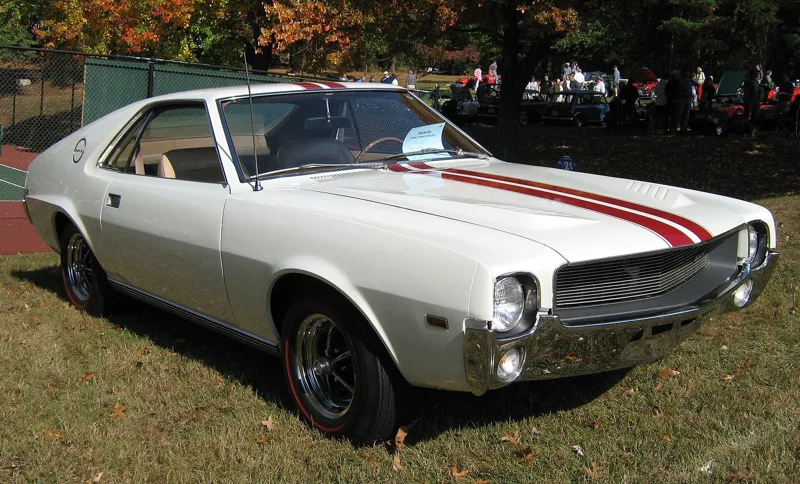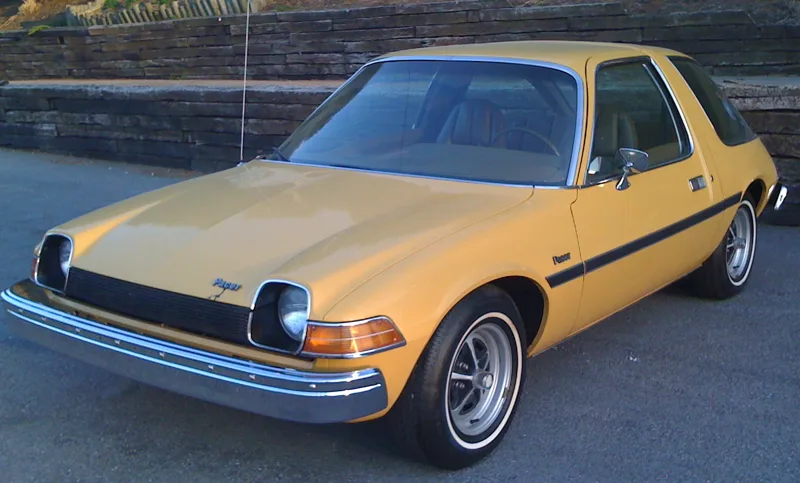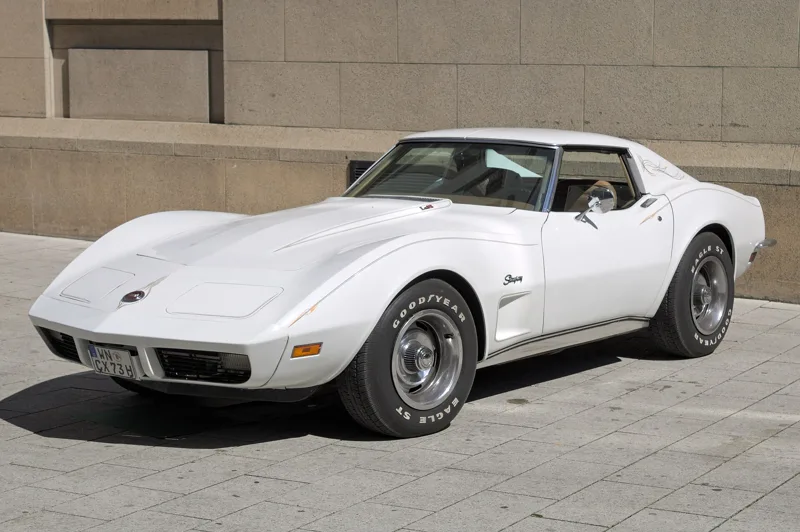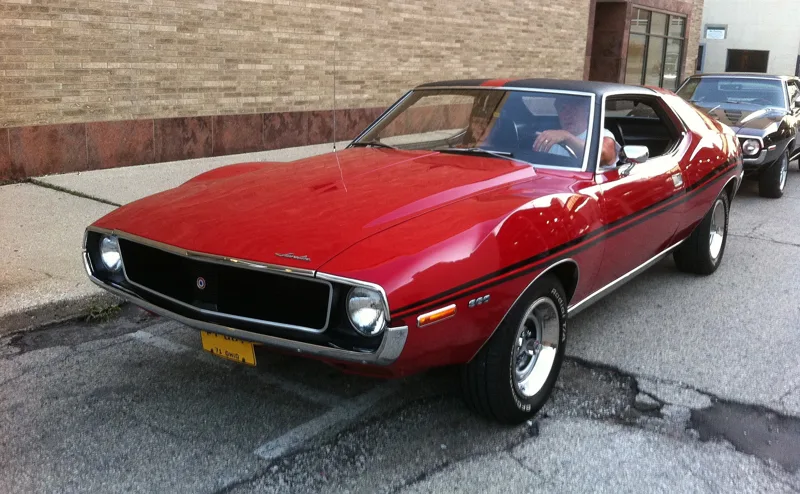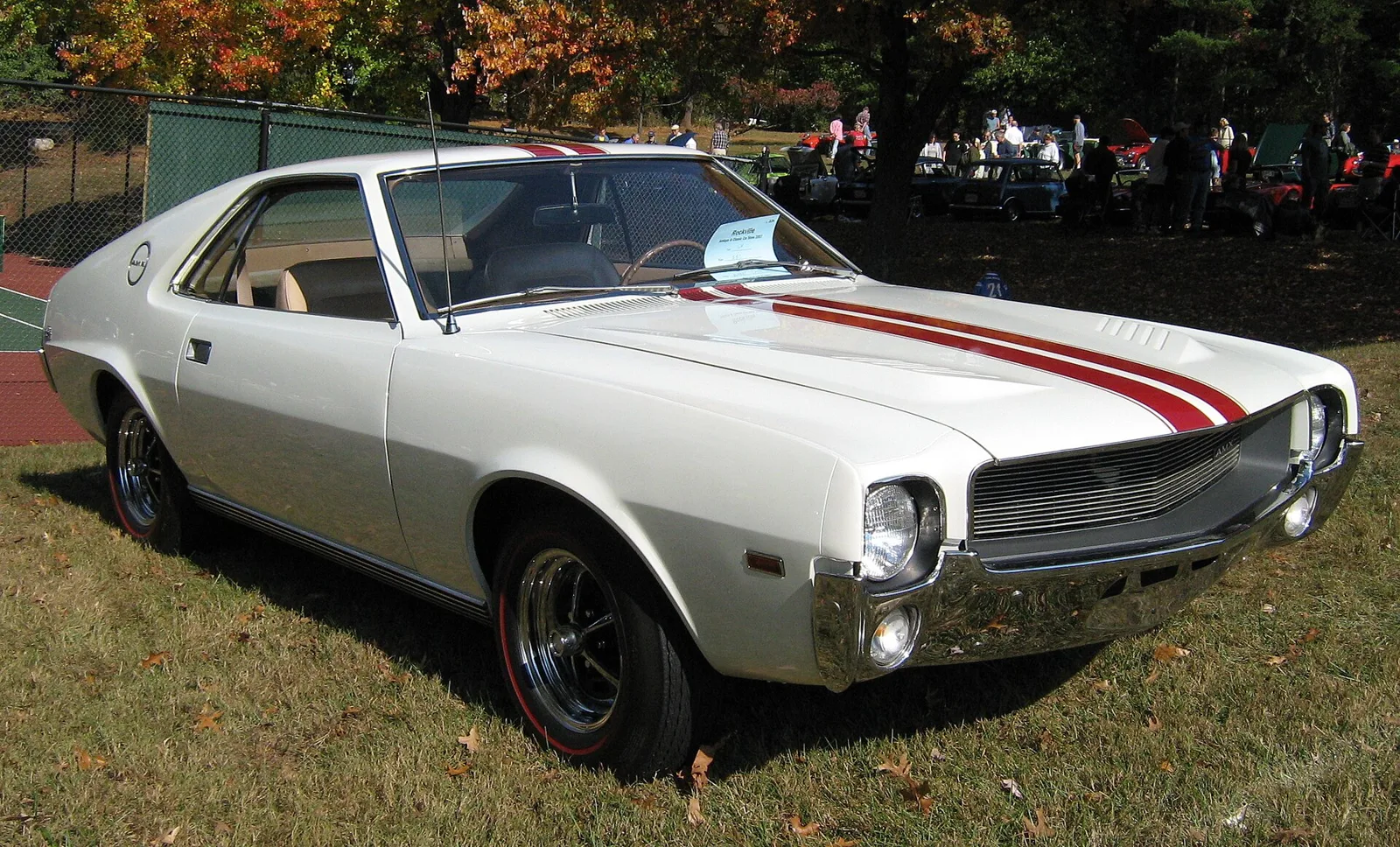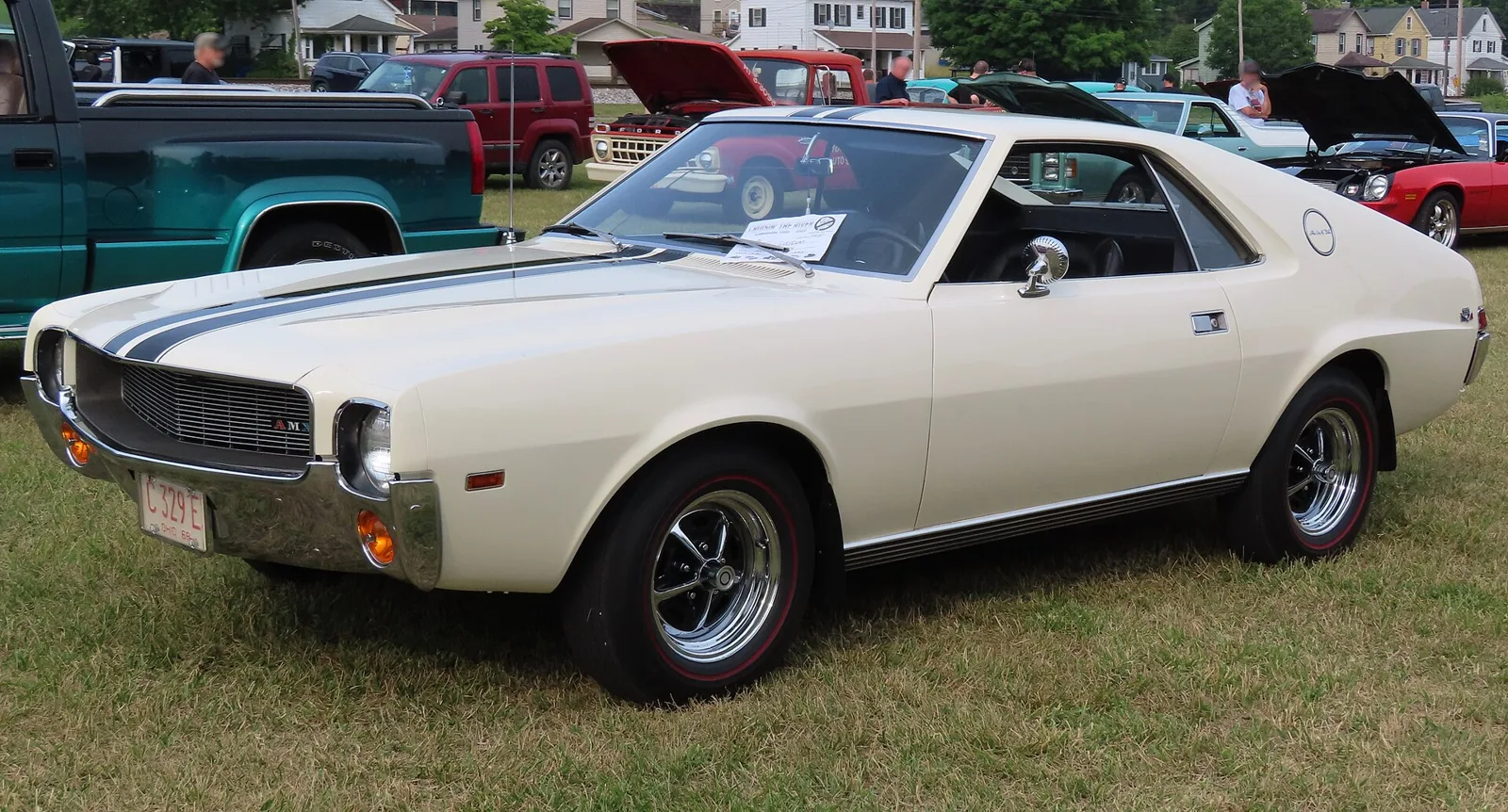
American Motors built a two-seat coupe on Javelin running gear to undercut the Corvette, and the Corvette's third generation kept getting faster and more varied while the AMX came and went.
Built from 1968 to 1970, the AMC AMX was a two-seater meant to challenge the Chevrolet Corvette head on, priced nearly 25 percent below it. The Corvette C3 ran from 1967 to 1982 and offered V8s from 300 hp to 430 hp, with the Stingray name for part of its run.
The AMC AMX was a two-seat coupe that American Motors built to take on the Chevrolet Corvette directly. It was produced from 1968 to 1970 at a lower price, while the Corvette C3 carried on until 1982 with a run of V8s that climbed from 300 hp to 430 hp.
It was one of two American-built two-seaters of its era, and the pairing is one of the clearest rivalries in this part of the market. The AMX offered the Corvette's basic promise, a fast two-seater, for less money and with a shorter wheelbase.
Were the AMX and the Corvette direct rivals?
The AMX was built to compete with the Corvette, the only mass-produced domestic two-seater it shared the market with. Its manufacturer's suggested retail price was US$3,245, nearly 25% below the Corvette and more than $1,000 cheaper. That gap was the car's central pitch, and it gave buyers a two-seater for substantially less money.
The Corvette was the longer car by a small margin, with a wheelbase of 98 in (2,489 mm) against the AMX's 97 in (2,464 mm). The AMX was based on the Javelin but used a shorter wheelbase and dropped the rear seat, and its rear quarter windows stayed fixed, which made it a coupe.
A cheaper American two-seater aimed straight at the Corvette, with a shorter wheelbase and a lower price.
How did the AMX come to be?
The AMX began as an experimental code on a concept vehicle and two prototypes shown on American Motors' Project IV tour in 1966. The prototypes were a fiberglass two-seat AMX and a four-seat AMX II. Full-scale models had been developed in 1965 by Charles Mashigan's advanced styling studios.
Robert B. Evans asked for a car like the AMX to go into production quickly. Two development programmes competed, and AMC chose a modified Javelin, because it could use the company's existing technology and unibody expertise at low cost.
Steel bodies could be produced in large numbers, so AMC rejected plastic or fiberglass bodies, which suited only low-production models. The two-seat prototype's rumble seat, which opened from the rear decklid, was dropped from the production car.
What did the AMX's engines offer?
The 1968 AMX came with four-barrel small-block V8s: a 290 cu in (4.8 L) rated at 225 hp (168 kW), a 343 cu in (5.6 L) at 290 hp (220 kW), and the 6.4-litre 390 at 315 hp (235 kW). The 390 was the AMX's flagship engine, with 425 lb ft (576 N m) of torque.
The engines were derived from the same external block, but the 390 used a forged steel crankshaft and connecting rods, while the smaller engines had a cast nodular iron crankshaft. A BorgWarner T-10 four-speed manual was standard, and a Shift-Command three-speed automatic was optional.
Specifications side by side
| Specification | AMC AMX | Chevrolet Corvette (C3) |
|---|---|---|
| Production | 1968 to 1970 (two-seat coupe) | 1967 to 1982; model years 1968 to 1982 |
| Wheelbase | 97 in (2,464 mm) | 98 in (2,489 mm) |
| Launch price | US$3,245 MSRP (1968) | Over $1,000 more than the AMX |
| Base engine | 290 cu in (4.8 L) V8, 225 hp (168 kW) | 327 cu in (5.4 L) V8, 300 hp (224 kW), L30 |
| Performance engine | 390 cu in (6.4 L) V8, 315 hp (235 kW) | L88 427 cu in (7.0 L) V8, 430 hp (321 kW) |
| Torque | 576 Nm (425 lb ft) with the 390 | Up to 624 Nm (460 lb ft) with the L71 |
| Transmission | BorgWarner T-10 four-speed manual; Shift-Command three-speed automatic | Three-speed Turbo Hydramatic automatic from 1968; four-speed manuals |
| Body | Two-seat coupe, fixed rear quarter windows | Coupe with removable roof panels; convertible with soft top |
| Speed records | Two cars set 106 world speed and endurance records in January 1968 | No figure given |
| Bonneville | 189 mph (304 km/h) in a USAC sanctioned run | No figure given |
| Output and notable sales | About 50 Breedlove Replica cars estimated | 53,807 for the 1979 model year, a sales record |
| Ending | Discontinued after three model years | Production ran to 1982 |
How quick was the AMX on track?
Two specially prepared AMX cars took 106 world speed and endurance records in January 1968, on Goodyear's circuit in Texas. The team was led by Craig Breedlove, with his wife Lee and Ron Dykes, and the pair was due at the Chicago Auto Show that February.
Engine work took the 290 to 5.0 litres and the 390 to 6.5 litres, with 140 litres (37 US gal) safety fuel cells and magnesium racing wheels fitted. Engine and chassis parts were X-rayed and Magnafluxed to check for cracks before the runs. Breedlove also ran the car at Bonneville at 304 km/h (189 mph) in a USAC sanctioned run, and an unofficial run passed 322 km/h (200 mph).
Did AMC really sell Breedlove Replica AMXs?
The Standard Catalog of American Muscle Cars estimates about 50 Breedlove AMXs were sold, painted red, white and blue with a standard 290 V8 and a four-speed manual. AMC historians dispute that figure, arguing that no factory literature, order sheets or photographs document such cars.
A dealer in Canada reportedly ordered one of the replica cars, a car historians believe was finished by local body shops in Kenosha rather than at the plant.
What did the AMX Go-Package add?
The Go-Package, available with the 343 or 390 engine, added power-assisted front disc brakes, a Twin-Grip differential, E70x14 tyres with red stripes on 6-inch steel wheels and heavy-duty suspension with thicker sway bars. It also brought heavy-duty cooling and other performance touches.
AMC also offered a wide range of specialised performance parts through its dealers. The name came from the parts books, the way the company had organised them, and owners could fit the parts to their cars after purchase.
What awards did the AMX win?
The Society of Automotive Engineers gave the AMX its top engineering honour in 1969 and 1970. The first award cited its one-piece injection-moulded dashboard, which was an industry first for safety, and the new 390 engine's large displacement within modest dimensions.
For 1970 the award recognised the first production cars with windshields by Corning that were thinner and lighter than ordinary laminated glass. On impact the glass was meant to yield and break into small granules.
Why did the AMX sell poorly?
Sales never thrived, even though the car drew enthusiastic reviews from the automotive media and enthusiasts. The larger aims of the programme were met, because the AMX refocused the company's image on performance and brought younger customers into its showrooms.
The two-seat version was discontinued after three model years, and the AMX name moved to high-performance Javelin versions for the 1971 to 1974 model years.
What was the Corvette C3?
The C3 was the third generation of the Corvette, built from 1967 to 1982 for the 1968 to 1982 model years. It kept most of its engines and chassis parts from the previous generation, but its body and interior were new, and it set a sales record of 53,807 for the 1979 model year.
The name went to the C3 for the 1969 to 1976 model years, written as one word rather than the two-word Sting Ray of the C2. The name then lay dormant until the C7 returned it in 2014.
How did the C3 design come about?
The C3 took its shape from the Mako Shark II, a concept Larry Shinoda drew under Bill Mitchell's direction from early 1964. After the team abandoned the mid-engined layout, the car went to Chevrolet Styling, where Henry Haga's studio reworked it for the Stingray chassis.
Its sugar-scoop roof treatment, with a vertical rear window, came from the mid-engined concept models. The rear window and the roof section above the seats were intended to be removable from the start.
What changed in the 1968 Corvette body?
For 1968 both the body and the interior were completely redesigned. The coupe became a notchback, with a rear window that could be removed and T-top panels that also came off, while convertibles came with a soft folding top and an optional hardtop with a glass rear window.
Side vent windows gave way to Astro Ventilation, and the headlights were hidden behind doors operated by an engine vacuum system. The large round speedometer and tachometer sat in front of the driver, and the battery moved behind the seats to improve weight distribution.
Which engines did the 1968 Corvette offer?
The base unit was the L30, a 5.4-litre small block rated at 300 hp (224 kW). Big-block options ran from the L36 at 390 hp (291 kW) up to the L88, a 430 hp (321 kW) engine built strictly for off-road use and racing.
The L71 made 324 kW (435 bhp; 441 PS) at 5,800 rpm, with 460 lb ft (624 N m) of torque at 4,000 rpm. The L88 ran a 12.5:1 compression ratio, with aluminium heads and a high-capacity four-barrel carburettor.
Car and Driver judged the small-engine cars marginally faster but more civilised, and the big-engine cars much faster but less refined. That split defined the C3 for its first few years.
How did the 1969 and 1970 Corvettes change?
In 1969 the small block grew to 350 cu in (5.7 L) with unchanged output, and the Stingray script became a single word on the fenders. The 1970 LT1 350 cu in (5.7 L) produced 370 hp (276 kW) and was offered as the high-performance small block.
The LT1 had a forged steel crankshaft, a four-bolt main block, an 11:1 compression ratio and a high-lift camshaft. It made less than 8% of production, and it was fitted with a domed hood bearing LT1 decals.
How did the C3's big blocks develop?
The LS5, a 7.4-litre 454, produced 390 hp (291 kW) in 1970 and accounted for a quarter of cars. The LS6 big block followed in 1971 with 425 hp (317 kW), the highest output of the 1970 to 1972 model years, and it could be ordered with an automatic.
From 1972 net SAE horsepower replaced the older gross figures, which cut the published numbers sharply. The standard 350 was rated at 200 hp (149 kW) under the new measure.
Which buyer suits each car?
The AMX suits a buyer who wanted a two-seater with a V8 at a much lower price than the Corvette, and who could accept a fixed-window coupe with a shorter wheelbase. The C3 suits a buyer who wanted the Corvette's range, from the 300 hp base engine to the 430 hp L88, along with convertible and coupe bodies.
Practicality is only partly covered. Neither car's luggage space or running costs are compared here, so the choice rests on price, engines and body style alone.
How much did the rarest Corvette C3 sell for?
The most expensive C3 to sell was a 1969 L88 Lightweight, one of four lightweight L88s built. Barrett-Jackson sold it in January 2014 for $2,860,000. The 1969 model year was also the only one to offer the ZL1 all-aluminium 427, and it was the last for the L88.