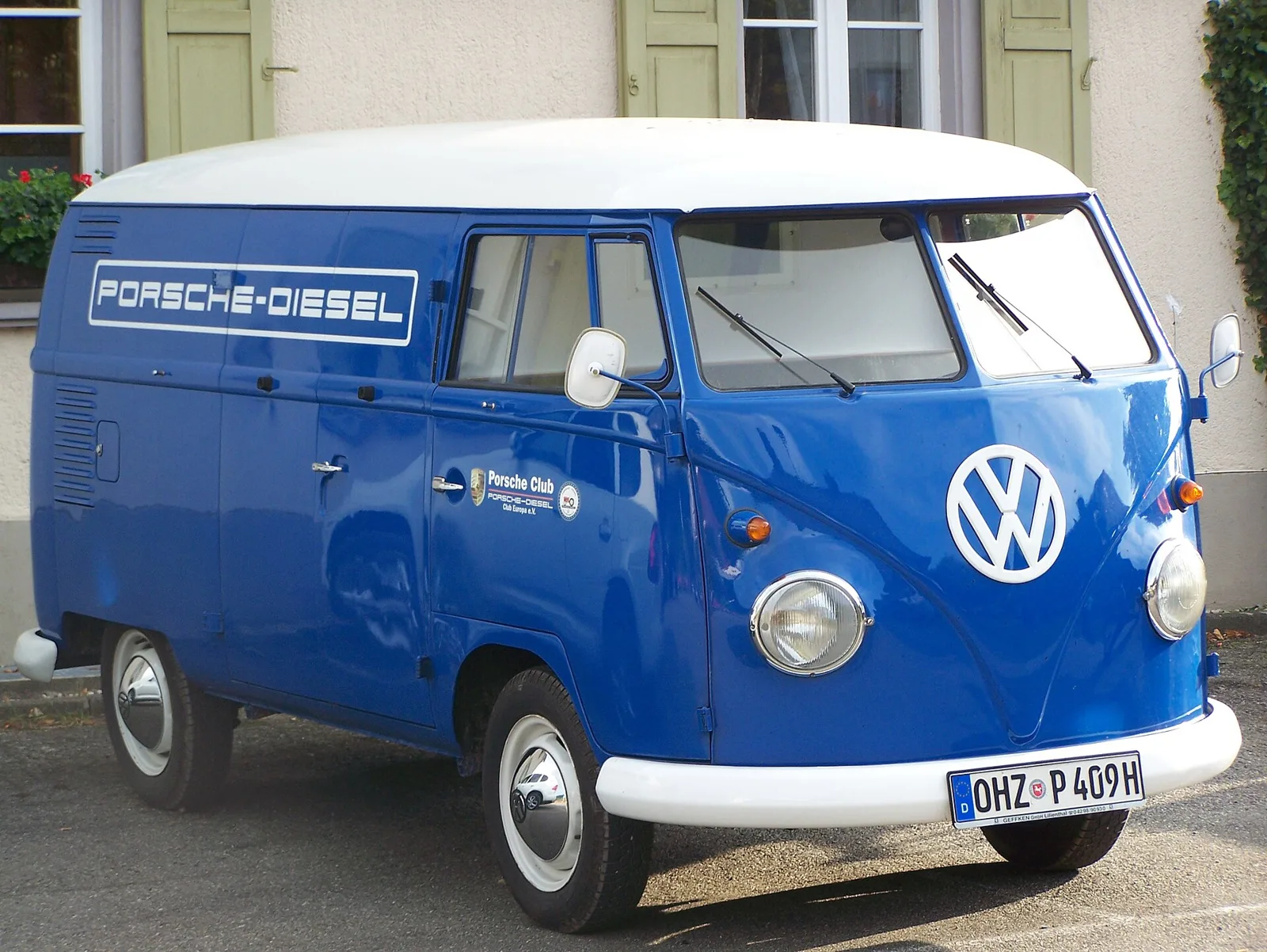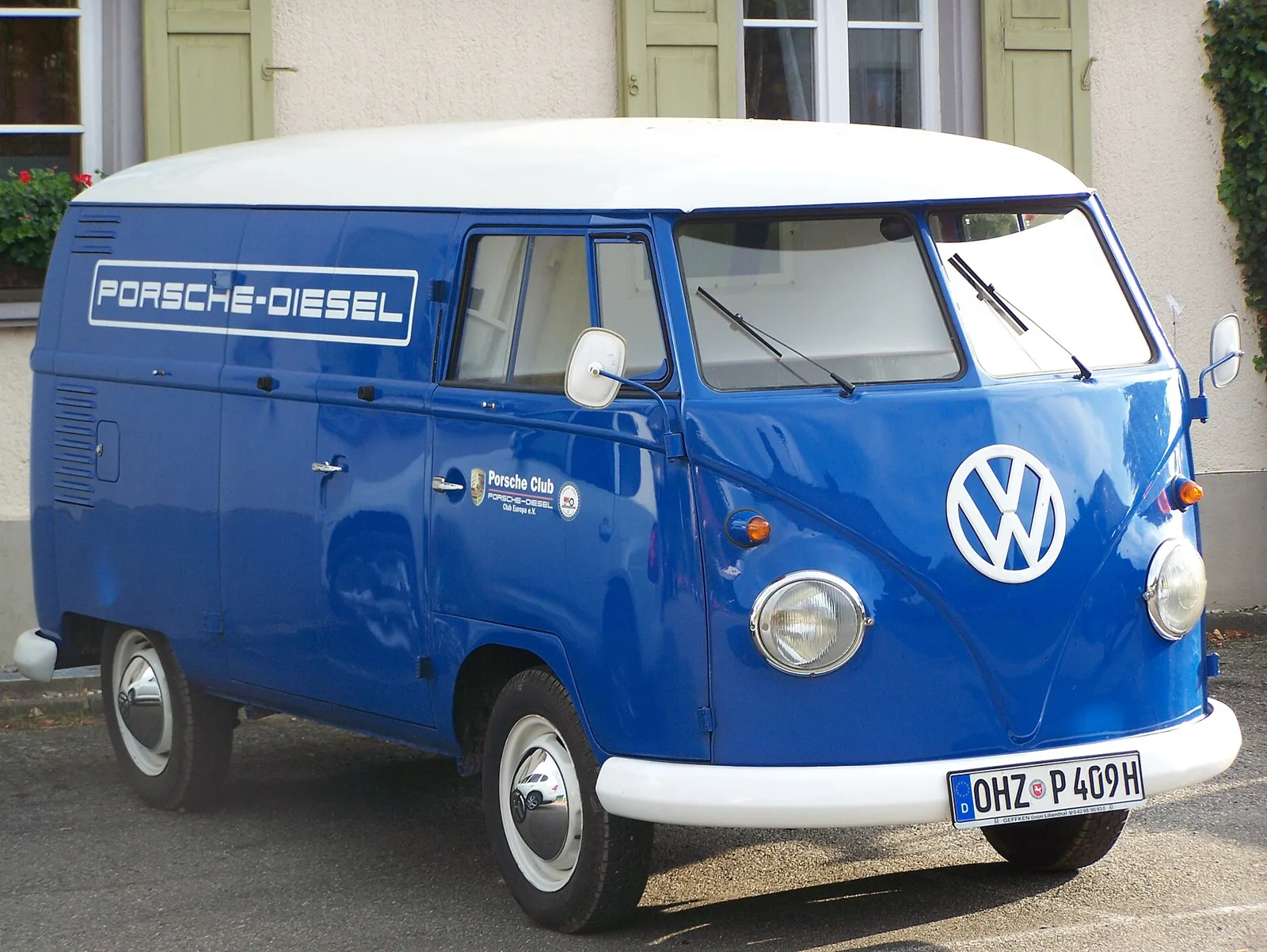
The most luxurious first-generation Type 2, built from 1951 with up to 23 windows, a fabric sunroof and a name that outlived its official titles.
The Volkswagen Samba was a luxury first-generation Type 2 Transporter that sat at the top of the range, built from 1951. It had up to 23 windows, a large fabric sunroof and bi-parting doors, and the second-generation Type 2 replaced it in late 1967, ending its run.
The Volkswagen Samba was the plushest first-generation Type 2 Transporter. It came with a large fabric sunroof, up to 23 windows and a more elaborate dashboard than the standard van, and its nickname outlasted the official titles Volkswagen gave it. Production ran from 1951 until the second-generation Type 2 replaced the first in late 1967.
What is the Volkswagen Samba?
The Volkswagen Samba was the most luxurious version of the first-generation Transporter, known officially as the Kleinbus Sonderausfuhrung, or small bus special version. Volkswagen began building Sambas in 1951, and they were sold in the United States as the Microbus Deluxe and Sunroof Deluxe.
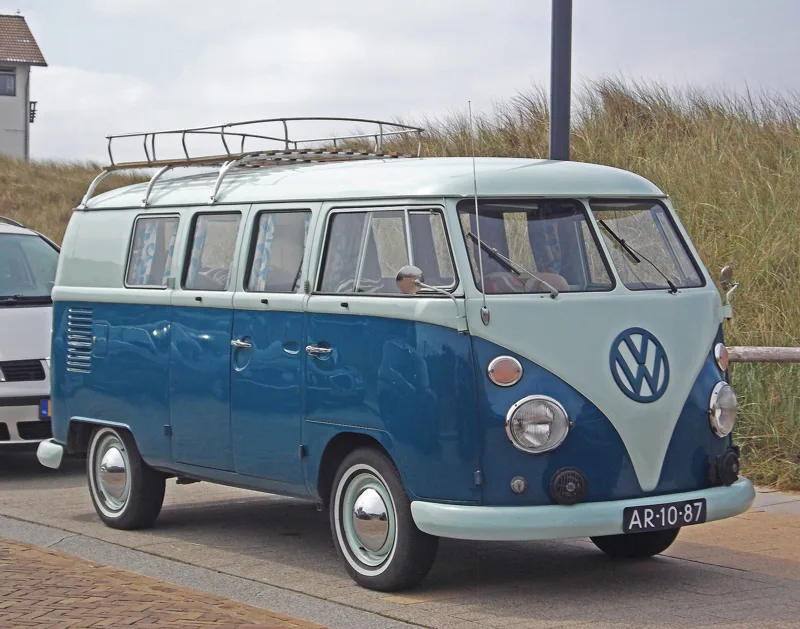
The Samba was built on the Type 2 body that Volkswagen had launched in 1950. Its defining features were its high window count, its large fabric sunroof and a dashboard more complete than that of the normal T1. Standard paint was two-tone, usually with white on the upper body and a contrasting lower colour divided by a decorative strip.
The windows had chrome tables, and the roof reached slightly forward of the windscreen to form an integral visor. Its bi-parting doors took the place of a sliding door, a detail that set the Samba apart from some of its siblings.
Volkswagen promoted the Samba as a vehicle for touring the Alps, pitching it at tourists rather than tradesmen.
A luxury Type 2 with up to 23 windows, a fabric sunroof and a nickname that outlived every official name.
Where did the Samba name come from?
The origin of the Samba nickname is unclear. Some sources link it to special dancing train cars used by the Bundesbahn in the 1950s, while others suggest it abbreviates a special equipment version or a sunroof version with a special dashboard. The name first appeared in official literature in Dutch price lists.
Whatever the origin, the word attached itself to the high-window vans and outlasted the official titles. The Type 2 gathered many other nicknames as well, including Microbus, Splitty and Bay-window, and each one reflects a different generation or body style.
The home market changed the official name to Sondermodell, meaning special model, in 1952. The Samba label stayed in common use, and enthusiasts still use it when they talk about the high-window van.
How many windows did a Samba have?
The Samba had 23 windows in its original form and 21 after 1964, when the rear corner windows were dropped. Eight high windows sat in the roof, and the 23-window version also had curved windows at the rear corners. North American enthusiasts still identify each van by its window count.
The plain Kombi or Bus had 11 windows: a split windscreen, two windows in the front cabin doors, six side windows at the back and a rear window. The DeLuxe added rear side glass and corner glass, bringing the total to 15, although the 15-window model was not sold in Europe. The sunroof DeLuxe added eight small skylight windows and reached 23.
The wider rear door fitted for the 1964 model year removed the corner glass, so the later high-window vans became the 13-window and 21-window models. The 23- and later 21-window variants both carry the nickname Samba, and in Australia the 21-window van was officially called Alpine.
How did the Type 2 begin?
The Type 2 traces back to a 1947 sketch by Dutch Volkswagen importer Ben Pon, who had seen the Beetle's chassis used as a parts mover. Volkswagen gave the van its go-ahead on 19 May 1949, and the first production model debuted on 12 November.
Pon's doodle, dated 23 April 1947, proposed a payload of 690 kg (1,520 lb) with the driver placed at the very front. The sketch is now on display at the Rijksmuseum. The Type 2 stayed forward control for its first 40 years.
Production had to wait because the factory was at capacity building the Type 1. Once space opened on the line, engineers built a prototype, known internally as the Type 29, in just three months. The Type 1 floor pan was not strong enough, so they switched to a ladder chassis with a unit body.
Early prototypes had poor aerodynamics, with a drag coefficient of 0.75. Work in the wind tunnel at the Technical University of Braunschweig, including a split windscreen and a vee-shaped roofline, brought the production van to 0.44, better than the Type 1's 0.48.
Volkswagen's chief executive, Heinz Nordhoff, took office on 1 January 1948 and gave the van its approval in May 1949. Only two models were offered at first: the Kombi, with two side windows and easily removable middle and rear seats, and the Commercial. The Microbus followed in May 1950, and the Deluxe Microbus in June 1951.
The company built 9,541 Type 2s in the first year of production. An ambulance model followed in December 1951, and a single-cab pickup appeared in August 1952.
What engines did the Samba use?
The Samba's first engine was a 1,131 cc air-cooled flat four rated at 25 PS (18.4 kW; 24.7 bhp), which Volkswagen upgraded to 1,192 cc and 30 PS (22.1 kW; 29.6 bhp) in 1953. An early 34 PS version appeared on the Type 2 in 1959.
The 1962 heavy-duty Transporter carried a 1.5-litre engine rated at 42 PS (30.9 kW; 41.4 bhp). It offered a 1,000 kg (2,205 lb) cargo capacity in place of the earlier 750 kg (1,653 lb) limit. The 1963 model year then brought the 1,493 cc 1500 engine as standard equipment for the US market, rated at 38 kW (52 PS; 51 bhp).
The rear-mounted flat four was the Type 2's defining trait. With the engine at the back and a 2.40 m (94 in) wheelbase shared with the Beetle, the van had a flat load floor at engine-cover height. That layout made early panel vans hard to load from the rear, although it helped traction and cut interior noise.
How did the Chicken Tax affect the Type 2?
In January 1964 President Lyndon B. Johnson imposed a 25% tax on light trucks, which hit German-built Type 2 vans and pickups shipped in commercial configuration. Passenger vans were not affected, so the Samba's passenger layout kept it outside the tax.
The tax answered the Chicken War, a dispute with France and West Germany over American chicken exports. Diplomacy had failed, and the 25% rate was almost ten times the average US tariff. Audio tapes from the Johnson White House later suggested a quid pro quo with the United Auto Workers that had nothing to do with chicken.
The effect on the Type 2 was sharp. In 1964, US imports of trucks from West Germany fell to $5.7 million, about a third of the previous year's value. After 1971, cargo vans and pickups practically disappeared from the US market, and the tax remains in effect today.
The end of the Samba and the arrival of the T2
The Samba ended when the second-generation Type 2 arrived in late 1967. The new T2 lost the split windscreen, was 22.5 cm (9 in) longer and was considerably heavier, and Volkswagen did not carry the high-window Samba over into it.
The T2 introduced a 1.6 L engine rated at 35 kW (48 PS; 47 bhp) DIN, and the rear suspension lost the swing axle used on the Beetle-based design. Half-shaft axles with constant velocity joints took its place, giving ride height without the wild camber changes of the old layout.
The first generation was built from March 1950 to the end of the 1967 model year. Wolfsburg produced it until 1956, after which the new Transporter plant in Hanover took over until 1967. The split-screen Samba is now among the most sought-after of all the early vans.
How did the Transporter evolve after the Samba?
The T2 gained an updated engine bay and later square bumpers, and production in West Germany ran until 1979. Brazilian production of the T2 series ended on 31 December 2013, closing the era of rear-engined Volkswagen vans.
The third-generation Type 2, known as the T25 in the United Kingdom and the Vanagon in the United States, arrived in 1979. It was larger and heavier than its predecessor, with square corners in place of the rounded edges of the older models, and it used a water-cooled boxer engine from 1983.
The fourth generation, released in 1990, dropped the Type 2 name in favour of Transporter. It moved the engine to the front and drove the front wheels, with Syncro four-wheel drive returning as an option. Three-row passenger vans were sold as the Caravelle in many markets.
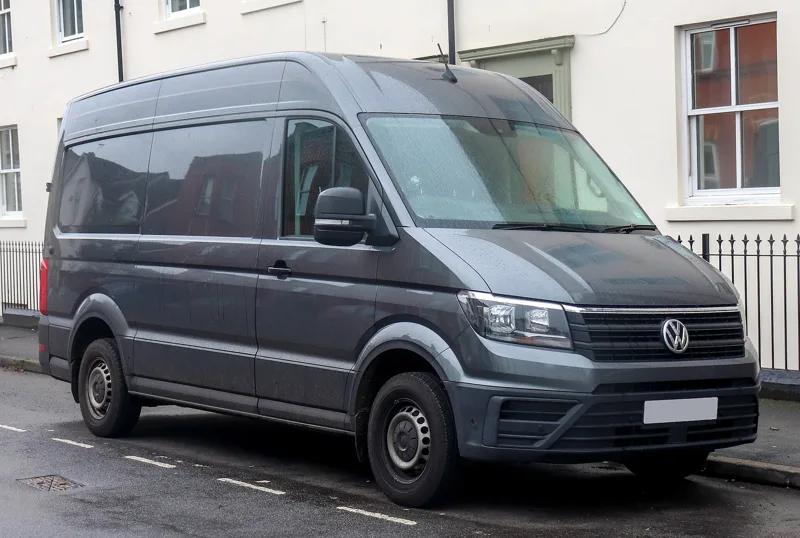
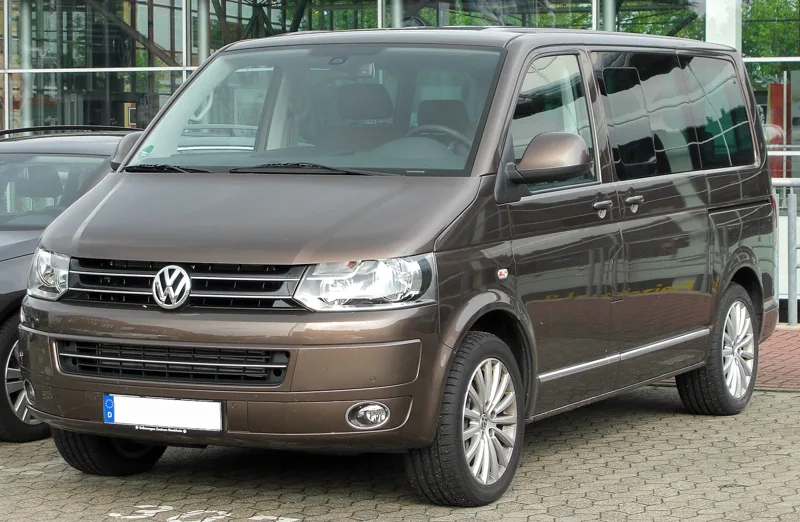
The fifth-generation T5 launched on 6 January 2003 and went into full production in April 2003. Volkswagen announced that the one millionth T5 had left the Hanover line in June 2009. The sixth generation, T6, launched in 2015 with Euro 5 engines and a Euro 6 diesel option.
What are the Volkswagen Samba specifications?
The Samba was a first-generation Type 2 with a 2.40 m (94 in) wheelbase, an air-cooled flat four of 1,131 cc to 1,192 cc, 23 windows and later 21, and bi-parting side doors. It was built from 1951 and replaced by the T2 in late 1967.
| Specification | Detail |
|---|---|
| Official name | Kleinbus Sonderausfuhrung (small bus, special version) |
| US names | Microbus Deluxe and Sunroof Deluxe |
| Production | From 1951; Sondermodell name from 1952 |
| Generation | First generation T1, 1950 to 1967 |
| Wheelbase | 2.40 m (94 in), shared with the Beetle |
| Engine, early | 1,131 cc air-cooled flat four, 25 PS (18.4 kW; 24.7 bhp) |
| Engine, from 1953 | 1,192 cc, 30 PS (22.1 kW; 29.6 bhp) |
| Windows | 23, later 21; eight high roof windows |
| Doors | Bi-parting doors in place of a sliding door |
| Roof | Large fabric sunroof as an option |
| Paint | Two-tone, usually white upper body |
| Ended | Late 1967, when the second-generation T2 arrived |
Why does the Samba still matter?
The Type 2 became a symbol of the counterculture in the 1960s. Its ability to carry a large group cheaply and simply, combined with its rear engine and open interior, made it a natural choice for travellers. Vans were often painted in bright colours, and they stood out against the large sedans and station wagons of the day.
The hippie van remains iconic. It appeared on album covers by Bob Dylan and the Beach Boys, and fans of the Grateful Dead followed the band on tour in them. At Woodstock in 1969, many brightly painted vans carried young crowds to the festival.