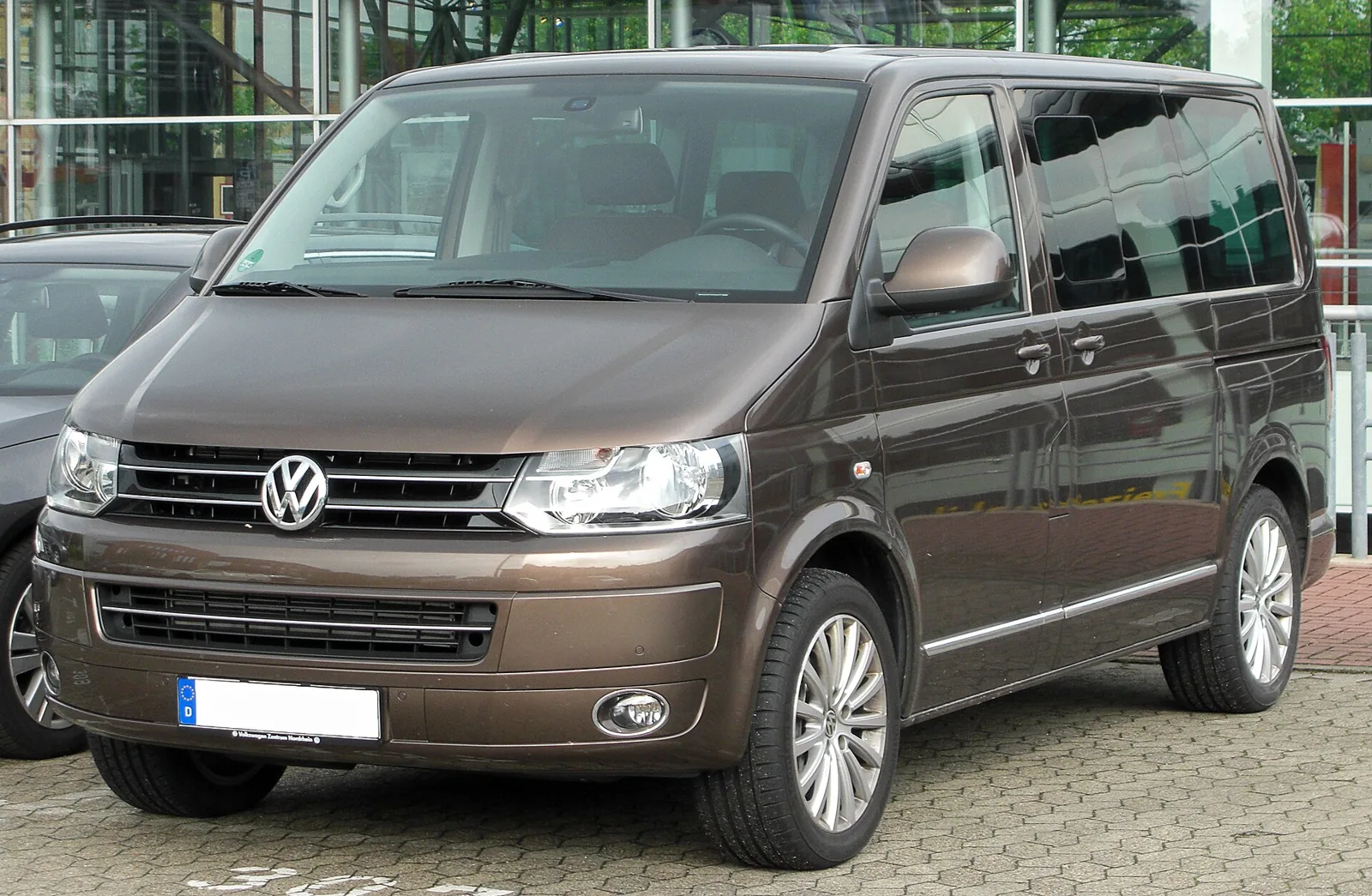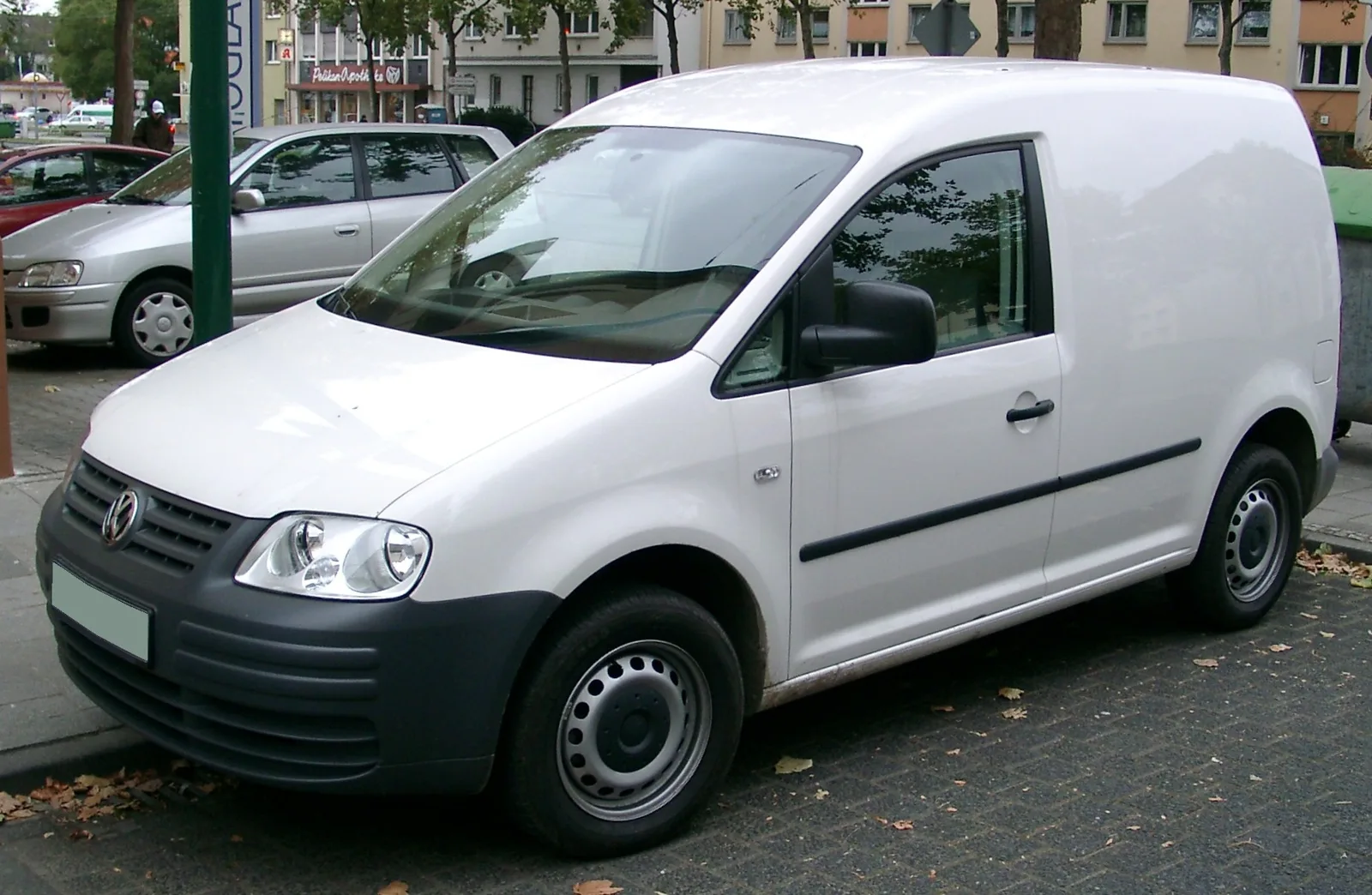
A high-roof van on the Golf V's platform from 2003 to 2020, with a passenger Life version, a natural gas EcoFuel and a long run of campaign specials.
The Volkswagen Caddy 2K was a high-roof light commercial vehicle built from 2003 to 2020 on the PQ35/A5 platform. It came as a van, estate and passenger Caddy Life, with diesel, petrol and natural gas EcoFuel engines.
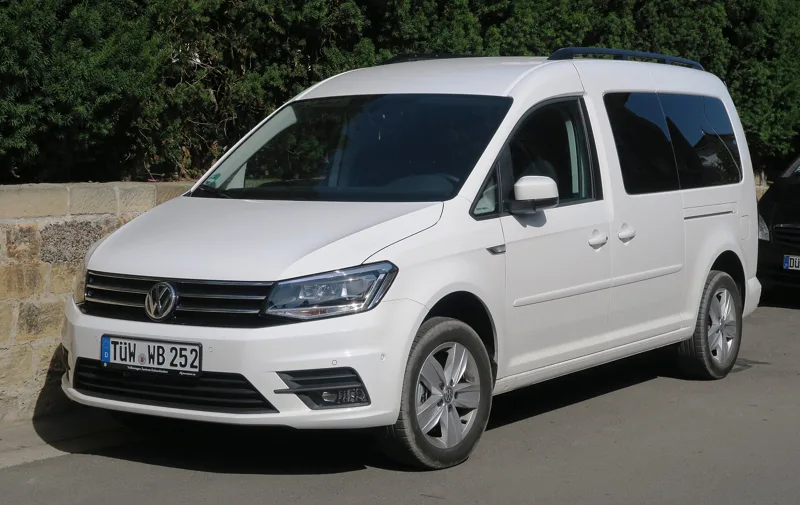
The Volkswagen Caddy 2K was a light commercial vehicle from Volkswagen Nutzfahrzeuge, built as a high-roof estate from autumn 2003 until 2020. It sat on the Golf V's platform family, offered a passenger Life version and a natural gas EcoFuel, and it gave rise to a long run of campaign specials. It is also known as the VW Caddy III and, after the 2015 facelift, the Caddy IV.
Its engineering drew heavily on the Golf family. The rear end, though, kept a rigid axle with leaf springs, where the Golf V-based Touran used independent suspension.
Where did the Caddy 2K come from?
The Caddy was introduced in autumn 2003 as a high-roof estate. It was built on the PQ35/A5 platform, which it shared with the Golf V and the Touran I. Its predecessor was the Caddy (9KV), and the successor, the Caddy (SB), was presented in February 2020.
The Touran was based on the Golf V, and it had independent rear suspension with four links, the setup the Golf V had introduced. The Caddy did not follow that route. At the rear it used a rigid axle with leaf springs.
The passenger car version came as an estate, and the Caddy was no longer offered as a pick-up. For that vehicle type VW has offered the Amarok since the end of 2010.
A van on the Golf V's platform family, with a rigid rear axle and a passenger version VW called a large-capacity saloon.
How did the Caddy Life differ from the van?
The Caddy Life was the higher-grade passenger version. Its headlining was fabric rather than coated wood-fibre board, and it was the version that carried the Life name. Both the van and the estate were also available as long Maxi versions.
VW described the Caddy Life, like the compact van Touran and the Multivan and Caravelle vans, as a large-capacity saloon. The specialist press used the term high-roof estate instead, a name that had taken hold with the Citroen Berlingo in 1996, and the press term stuck for this class of vehicle.
The Caddy Life was a cheaper alternative to the Touran. More than half of the Touran's parts were also used in the Caddy Life, and a version with up to seven seats was first introduced in 2004.
What changed with the Caddy's body styles?
The Caddy came as a panel van and as an estate, and it was offered in two wheelbases. A notable feature of the panel van was its smooth rear side panel, with no beads or embossing, which was regarded as a first in vehicle construction. That panel was not fitted on the Maxi.
Rear sliding doors could be specified on the left, the right or both sides, depending on the version. The basic estate had only one sliding door, on the side that matched the steering. The Caddy Life always had two.
The tailgate was available as a flap or as rear wing doors. With the rear wing doors VW offered an optional roof flap for loading long objects such as ladders, which is why it was called the ladder flap. It was not available on the Maxi.
Since November 2007 the Maxi Life had been available. It was 47 cm (18.5 in) longer than the Caddy Life and offered room for seven people and their luggage.
How did the facelifts change the Caddy?
In summer 2010 the Caddy III received a facelift that brought the VW face of the time. The Caddy Life was also facelifted that summer, and the Life name disappeared. From then on the car was sold with the usual VW trim names: Startline, Trendline, Comfortline and Comfortline Edition.
The 2015 facelift, type SA, was larger than the earlier one, and VW called it a new generation, the Caddy IV. The engines were switched to Euro 6 emission standards. The revised car was also tested for safety by Euro NCAP, and it scored four stars out of a possible five in the crash test.
The 2012 model year brought a further trim change. The Comfortline Edition was replaced by Highline.
Which engines did the Caddy use?
With the 2006 model year the TDI engines gained Euro 4 approval even if no diesel particulate filter was fitted. VW had offered the filter as an extra since December 2005, as a closed cleaning system. A filter could also be retrofitted, but that gave a less effective open system because the engine management was not involved.
The 1.9-litre TDI, of 1,896 cc (115.7 cu in), produced 55 kW (75 PS) and 210 Nm (155 lb ft) of maximum torque, with CO2 emissions of 158 g/km without the filter. The 1.4-litre petrol engine, of 1,390 cc (84.8 cu in), now gave 59 kW (80 PS) and 126 Nm (93 lb ft), with 191 g/km of CO2. The 2.0-litre SDI diesel was dropped from the Caddy Life in the same change.
Vehicles fitted with a particulate filter were not suitable for biodiesel from January 2006. Engine availability depended on model, equipment and market.
What was the Caddy EcoFuel?
The Caddy EcoFuel, available from mid-2006, had an engine optimised for natural gas. Its gas tanks held about 26 kg of natural gas and gave a range of more than 400 kilometres. The EcoFuel also carried a 13-litre reserve tank for super petrol.
The EcoFuel's CO2 emissions were stated as 157 g/km, which made it the most climate-friendly drive for the VW Caddy 2K at the time. Later petrol models came in below 140 g/km of CO2.
What was the Volkscaddy?
In mid-2005 Volkswagen teamed up with the Bild newspaper for a promotion. The Volks-Caddy undercut normal prices by about 3,200 euros, and it was built on a 2006 model year Caddy Life in standard trim, already well equipped.
The car came in only three metallic colours, Reflex silver metallic, Ravenna blue and Offroad grey metallic, which would otherwise have cost extra. The engine choice was narrowed too, to a 1.9-litre TDI with 77 kW (105 PS), a 1.4-litre petrol with 55 kW (75 PS) and a 1.6-litre petrol with 75 kW (102 PS).
An option package for about 950 euros added air conditioning, a third row of seats that turned the car into a seven-seater, four luggage nets and the RCD 300 radio with six speakers instead of four. Buyers who ordered in the first days of the 14-day campaign missed out on extras that were added later, such as ESP and seat heating.
Planned delivery times of eight to twelve weeks stretched to as long as six months because demand was far larger than expected.
Which other special editions did the Caddy get?
The Caddy Roncalli was a campaign of about two months in spring 2011, repeated in spring 2012, dedicated to the Roncalli circus family. Its standard kit ran to fog lights with a cornering function, the ParkPilot system, side and head airbags for the two front seats, a safety package, special interior fabrics, a leather steering wheel and air conditioning.
The Caddy JAKO-O was a 2013 campaign with the children's outfitter JAKO-O, aimed at families. Buyers received 200 euros per child, up to 600 euros, along with three accessory packages called Wellness, Practical and Explorer.
The Caddy Soccer, available from January 2014 at prices from 13,990 euros, was built for the 2014 football World Cup, and it was offered as a car and as a van. Its engines produced between 63 and 103 kW (86 and 140 PS). Buyers received 50 euros for every German World Cup goal, or an instant bonus of 350 euros instead.
The Caddy Team and Caddy Team Edition arrived in late 2014 with price advantages and a 200 euro child bonus per child. The Tramper, renamed Beach, was built for camping, with a second row of seats that folded down to make a bed nearly two metres long, and a tent that fitted to the tailgate. From 2007 it was also available as a Maxi.
The Colour Concept gave the Caddy Life body-coloured bumpers similar to its sister car, the Touran, along with leather on the steering wheel, handbrake and gear knob. The Gewinner, launched in mid-February 2009, answered the government's environmental bonus of 2,500 euros, which rewarded the scrapping of a car at least nine years old. Its basic price was about 4,500 euros below that of normal models, and it came with heat-insulating glazing.
The Edition 30, for the Caddy's 30th birthday, went the other way: it was priced higher than most special models and equipped to match.
The Gewinner also came with a limited choice of extras and colours, and as standard it carried the Light and Sight II extra package.
What was the Edition 35?
The Edition 35 marked the Caddy's 35th birthday. It came as a family van, based on Comfort equipment, or as a tradesman's car, based on the panel-van version, and both carried black 17-inch alloys and an intelligent cruise control with distance control.
Its specification list covered darkened rear lights, a leather multifunction steering wheel and an optional DSG automatic gearbox with shift paddles. The 17-inch Madrid alloys were black and gloss-turned, and a black load-edge protection film and a black roof rail, or a fully black roof, completed the exterior. Electrically folding mirrors had black housings.
Inside, the seats used fabric on the seat base and the lower two thirds of the backrest, with artificial leather elsewhere and contrast stitching in carbon-look leather. The two front seats had seat heating and lumbar support, and the dashboard trim was Dark Silver Brushed. LED interior lighting was standard.
Engines ranged from a 1.0-litre TSI with 75 kW (102 PS) to a 2.0-litre TDI with 110 kW (150 PS). Buyers could choose red, blue, white, grey or silver paint. The Edition 35 came only with the short wheelbase, although all-wheel drive was possible.
A puncture kit with tyre sealant and a 12 V compressor was standard. A full spare wheel could be ordered or fitted later, because the basic fixing parts were already in place at the factory. Only the holder with its screws, a matching jack, a wheel brace and a complete wheel had to be sourced, and fitting took 15 minutes.
Caddy 2K at a glance
| Specification | Detail |
|---|---|
| Generation | 2K, VW Caddy III, then Caddy IV (type SA) after 2015 |
| Built | 2003 to 2020, at Poznan, Poland |
| Platform | PQ35/A5, shared with the Golf V and Touran I |
| Diesel (2007) | 1.9-litre TDI, 1,896 cc (115.7 cu in), 55 kW (75 PS), 210 Nm (155 lb ft) |
| Petrol (2007) | 1.4-litre, 1,390 cc (84.8 cu in), 59 kW (80 PS), 126 Nm (93 lb ft) |
| EcoFuel | Natural gas, 157 g/km CO2, 13-litre petrol reserve |
| Maxi length | 47 cm (18.5 in) longer than the Caddy Life |
| Euro NCAP | Four of five stars after the 2015 facelift |
How did the Caddy 2K end?
The Caddy 2K was built from 2003 to 2020, and every car of this generation came from the Volkswagen plant in Poznan, Poland.