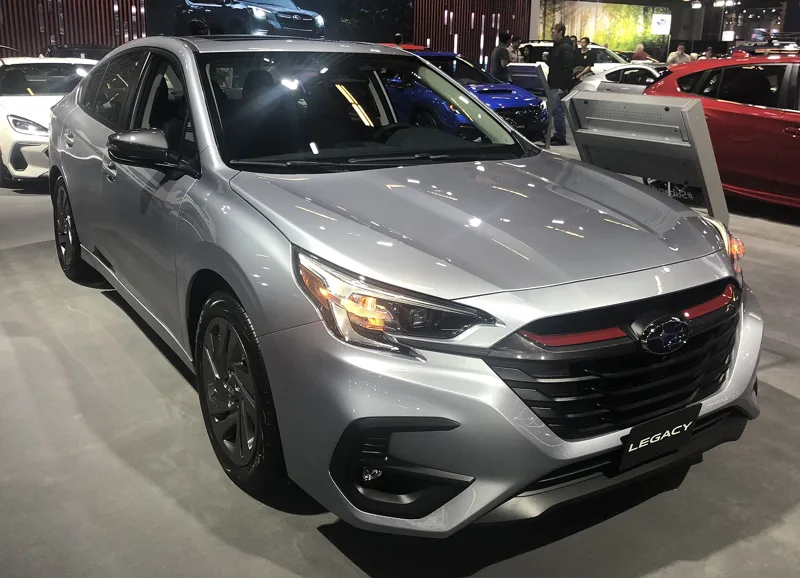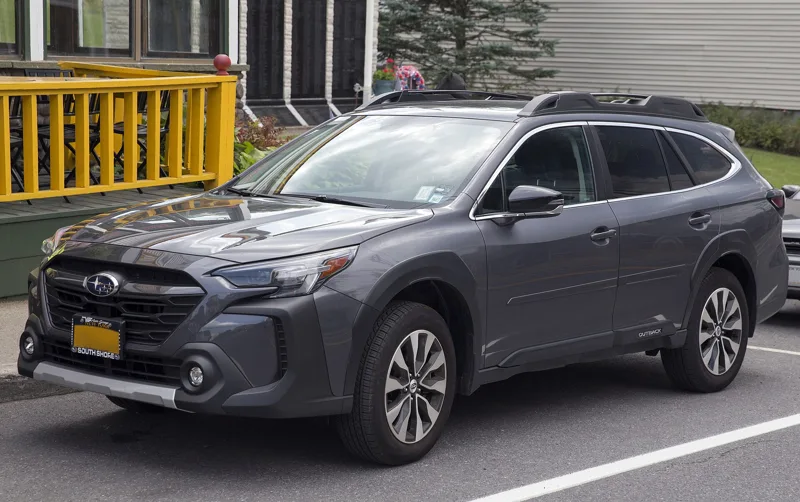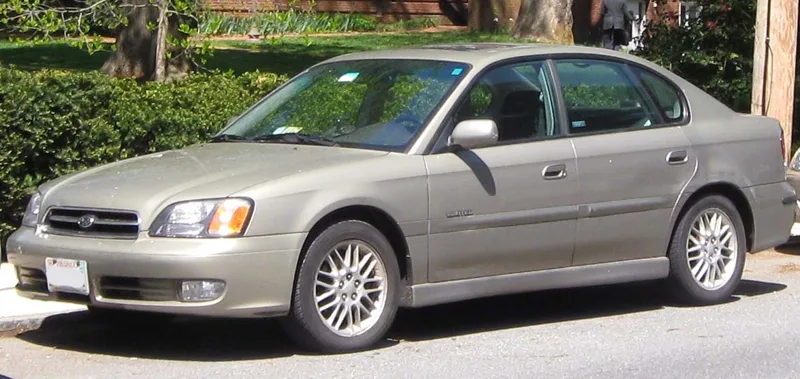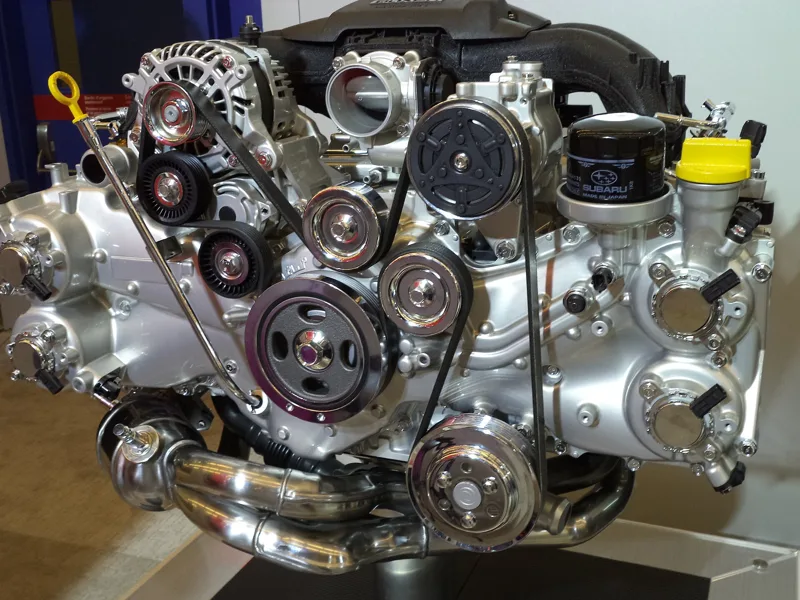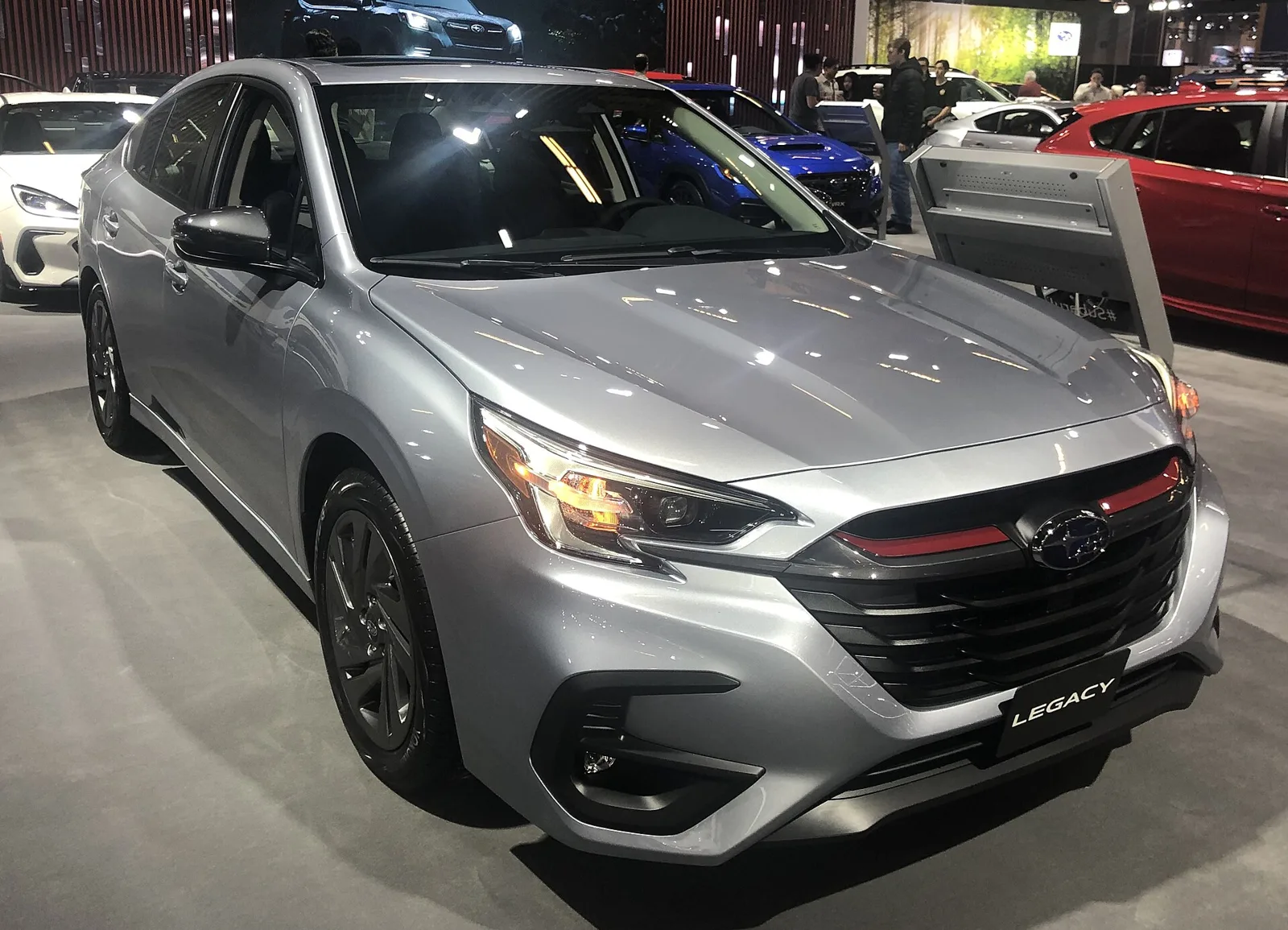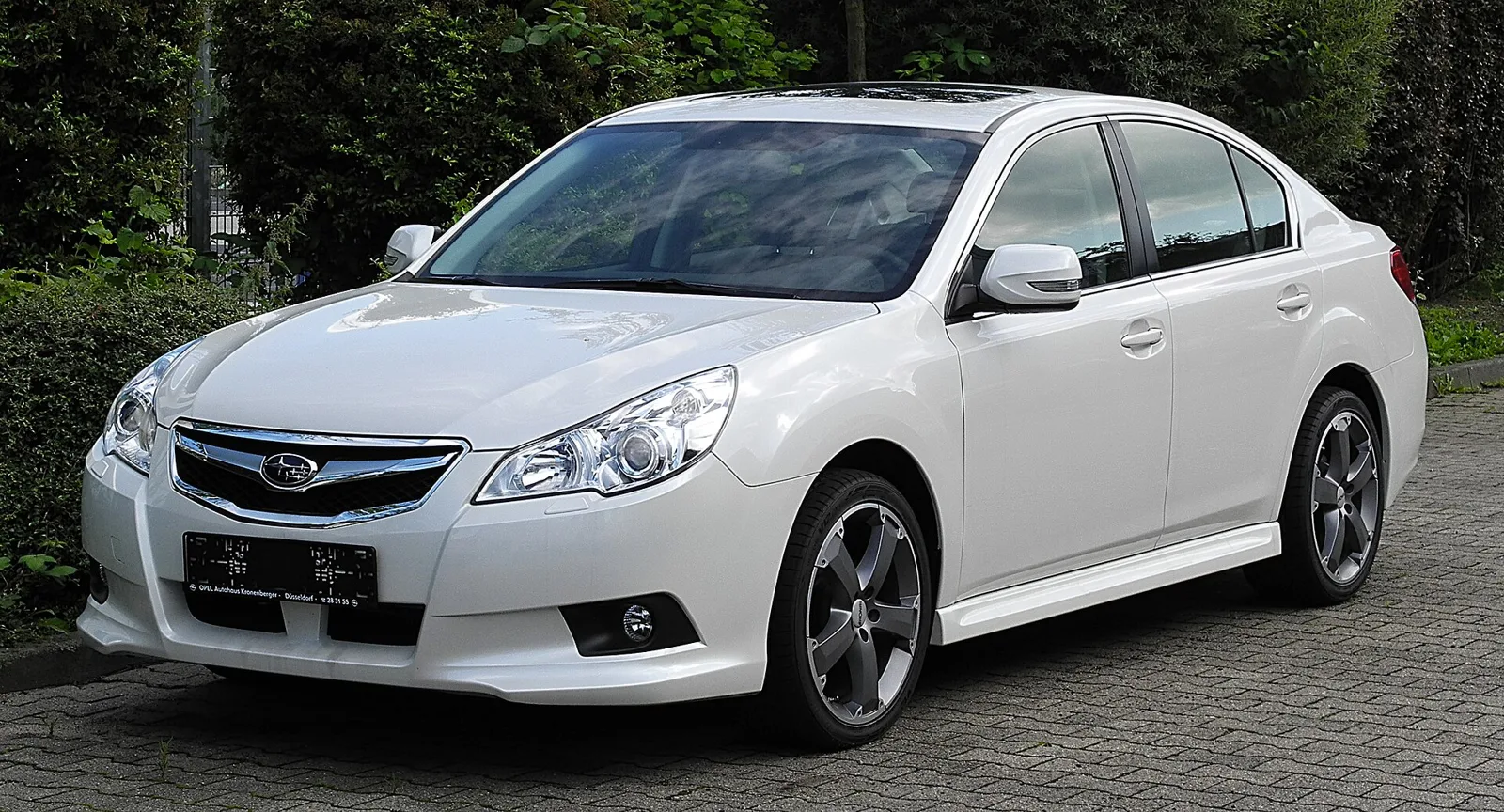
A concept shown for the model's 20th anniversary, a 2009 production launch, a new double wishbone rear and the regional variants that followed.
The fifth-generation Subaru Legacy debuted as a concept in Detroit in 2009 and entered production on 29 May 2009. It brought a double wishbone rear suspension, SI-Drive in Japan and a range of regional variants from sedans to a UK-only wagon line-up.
The fifth-generation Subaru Legacy began life as a concept car, shown in Detroit in 2009 to mark the model's 20th anniversary. It reached production later that year, and it ended several design traditions that Subaru had kept for decades. Over the following years it spread into a wide range of regional variants, from Japanese SI-Drive cars to a UK wagon-only line-up.
What was the fifth-generation Legacy?
The fifth-generation Legacy was first shown as a concept in Detroit in 2009, marking the model's 20th anniversary. The production version followed later that year in New York, and production started on 29 May 2009. Its arrival also ended several long-running design traditions from earlier Legacy models.
Several design traditions ended with the new car. Its side windows were no longer frameless, a Subaru habit that dated back to the first generation Leone of the early 1970s. Wagons also lost the glass covering the D pillar.
The parking light switch left the steering column, and the coolant temperature gauge gave way to a fuel economy gauge. That gauge reads in miles per gallon or litres per 100 kilometres, depending on the market where the car is sold.
The temperature indicator glows blue when the engine is below normal and turns red when the engine overheats. Locking the car with the remote and then using the key on the driver's door triggers the security system, so the car must be unlocked with the remote. The rule dates to the second generation, which introduced remote keyless access.
A concept shown for the model's 20th anniversary that became a 2009 production car with a new double wishbone rear.
How did the parking brake and safety equipment change?
The manual handle between the front seats gave way to an electric parking brake switch beside the driver's door, and the Hill Holder function returned as part of that system. VDC became standard on every model sold internationally, along with ESC, Brake Assist and EBD.
Badges told the trims apart. The Limited badge was dropped in North America, a 3.6R badge marked the 3.6-litre six, and a Boxer Diesel badge identified the diesel. Turbo cars were marked by a bonnet scoop and symmetrical dual exhausts below the rear bumper.
Subaru called its chassis work the Dynamic Chassis Control Concept, which used high-tensile steel in critical areas to save weight while keeping strength. The front end used a Cradle Mount that isolated the suspension and engine from the cabin on rubber mounts.
The double wishbone rear suspension was new to the generation. Its links and the rear differential were carried on large rubber mounts away from the rear subframe, which kept noise and vibration out of the cabin.
What did North American buyers get?
North American cars came with a choice of Warm Ivory or Off-Black interiors and leather on Limited trims. The Limited and optional Premium audio used a 440 W, nine-speaker Harman/Kardon system, while other models had a four-speaker set.
The dual-zone climate system was limited to Limited trims, which had a six-speed fan, while other models had a four-speed fan. Bluetooth with voice recognition, called Blueconnect, was an optional add-on for trims without the GPS stereo, and it was not offered outside North America.
The hood and bumper covers were unique to North America because of a more prominent grille shared with the Outback. That look also featured on the Forester of the third generation and the Tribeca after its facelift.
Turn signal repeaters left the North American mirrors, and from the 2011 model year the mirrors could be folded by hand. All models had painted door handles, and the base 2.5i sedan had black exterior mirrors. Only the 2.5i kept the PZEV rating, which allowed sales in all 50 states, while other models were certified LEV2 or ULEV.
Premium unleaded was required for the turbocharged GT models. The naturally aspirated 2.5 flat-four with a six-speed manual was a feature it shared with Australia alone.
In 2011 the 2.5GT swapped its woodgrain for faux carbon-fibre trim and gained contrasting stitching and aluminium cross-drilled pedals. XM Satellite Radio came on the Premium and Limited trims.
What was the 2010 Mediocrity campaign?
In 2010 Subaru ran a parody campaign for the 2011 Legacy, built around a fictional car called the Mediocrity. The campaign used a series of television adverts and a microsite. The Mediocrity was a beige four-door mid-size sedan styled like a 2001 to 2006 Hyundai Sonata or Kia Optima.
The microsite linked visitors to the real Legacy and suggested that anyone seeking a more exciting car should click through.
How did SI-Drive work in Japan?
SI-Drive was standard on every Japanese trim and offered three modes: Intelligent, Sport and Sport Sharp. It controlled the engine control unit, the transmission control unit and the electronic throttle, and the car started in Sport mode.
Intelligent mode made throttle response more gradual and cut maximum power by 10 percent. Sport mode let the engine run at higher speeds, which the company credited with a 5 percent gain in fuel efficiency over engines without the feature.
Sport Sharp made throttle response more abrupt, kept the automatic transmission at higher revs within a gear and reduced steering effort. SI-Cruise, an autonomous cruise control, could reduce or resume a set speed and stop the car behind a slower vehicle without driver input.
What audio and trim options did Japan get?
Japanese buyers chose between a Harman/Kardon GPS stereo with six speakers and a McIntosh GPS stereo with 10 speakers and Dolby Digital 5.1 surround. Both carried a 600 MHz 40GB hard drive and a digital TV tuner.
A smart key was an option alongside a two-position memory seat that stored driver position, mirror and climate settings. Japanese mirrors kept their turn signal repeaters, and the headlights were HID on every trim except the base 2.5i. Rain-sensing wipers and a choice of two backup cameras were also available, with front parking assist sensors.
The STi accessories brochure offered stiffer springs, a short-throw gear shift and 18-inch alloys from BBS or ENKEI.
What was EyeSight in this generation?
On the first anniversary of the fifth generation's launch, Subaru offered EyeSight again, on the Touring Wagon only. The system used two cameras mounted either side of the interior mirror, which judged distance with stereoscopic vision and watched for pedestrians.
EyeSight could help the driver keep a safe distance on the highway, gave a lane departure warning and sounded a wake-up call when traffic lights changed. SI-Cruise was built into the EyeSight feature as a driver aid.
What was the Legacy 2.5GT tS?
The 2.5GT tS, tuned by STI, arrived in June 2010 for the Japanese market as a limited edition of 600 units, available as a B4 sedan or a Touring Wagon. It had Bilstein inverted struts, stiffer springs and a reinforced front crossmember for better steering feedback.
Its tuning focused on sharper handling and better ride quality. An STI flexible tower bar, flexible low stiffeners at the front and a pillow-ball arrangement at the rear made the body more rigid.
Visually it had a front lip spoiler, 18-inch alloys, a sport exhaust, a tS grille emblem and either a lip trunk spoiler on the sedan or a roof spoiler on the wagon. Inside, the seats were sports pieces in black leather and Alcantara, with red stitching and STI logos.
How did the FA and FB engines arrive?
From 8 May 2012 Subaru replaced the EJ engines with the FA and FB series, which were developed together with Toyota. The FB25 powered every trim, while the turbocharged FA20 was sold as the Legacy GT DIT, short for Direct Injection Turbo.
The change marked the end of the EJ engine series in the Legacy's line-up.
What did the UK and European lines look like?
In the UK only the wagon, called the Legacy Tourer, was sold, with either the EE turbodiesel and a six-speed manual or the 2.5-litre with CVT. European buyers could choose sedan or wagon, with EE20, EJ20 and EJ25 engines and a 170 HP (130 kW) 2.5-litre naturally aspirated unit as the most powerful option.
UK interiors were black throughout, with cloth on the 2.0D S and leather on the other trims, and silver strips marked the base car while carbon fibre marked the rest. Dual-zone climate control was standard on every UK trim. UK cars also came with a Thatcham Category 1 perimeter alarm and immobiliser as standard, along with 18-inch wheels on all but the 2.0D S, which had 16-inch alloys. The UK also received Camellia Red Pearl paint, which was not sold in Japan or North America.
The Legacy GT with the turbocharged EJ25 and a five-speed automatic was sold in some European countries before it was phased out, without an official explanation. Every European engine apart from that turbo EJ25 met Euro5 standards.
Europe's upper trims had their own rules. Comfort and Sport packages took 18-inch alloys, and the smart key was limited to Sport and Comfort cars, which also carried satellite navigation and memory seats. Japan and Europe shared the Dark Amethyst Silica paint, which the UK and North America never received.
What about South Africa and Australia?
South African buyers got the Legacy as a sedan with a black interior, including a 2.0i Premium with a six-speed manual or Lineartronic CVT. Australia sold the Liberty sedan and wagon, with EJ25, EZ36 and turbo EJ25 engines.
Australian 2.5i buyers could choose the Lineartronic CVT or a six-speed manual, while the 2.5GT offered a manual or a five-speed automatic. The EZ36 came only with the five-speed automatic, and SI-Drive was offered on the 3.6R and the 2.5GT.
The 2.5i Sport Premium CVT added twin electric front seats, carbon-fibre dash trim and Bilstein suspension, although satellite navigation was not offered alongside the premium Harman/Kardon system.
Australian trim details set the models apart. Silver trim went on the door panels and dash of the base and Premium 2.5i, carbon-fibre inserts appeared on the 2.5i Sports and 2.5GT, and woodgrain was limited to the 3.6R sedan. The 2.5i Sports and turbo 2.5GT came with Bilstein struts as standard, and black HID headlight housings identified both cars.
How did the transmissions and fuel rules work?
Lineartronic CVT models had steering-column paddle shifters that gave six virtual gears in manual mode. The manual gearboxes were six-speed units in the markets described, and the turbocharged GT models needed premium unleaded.