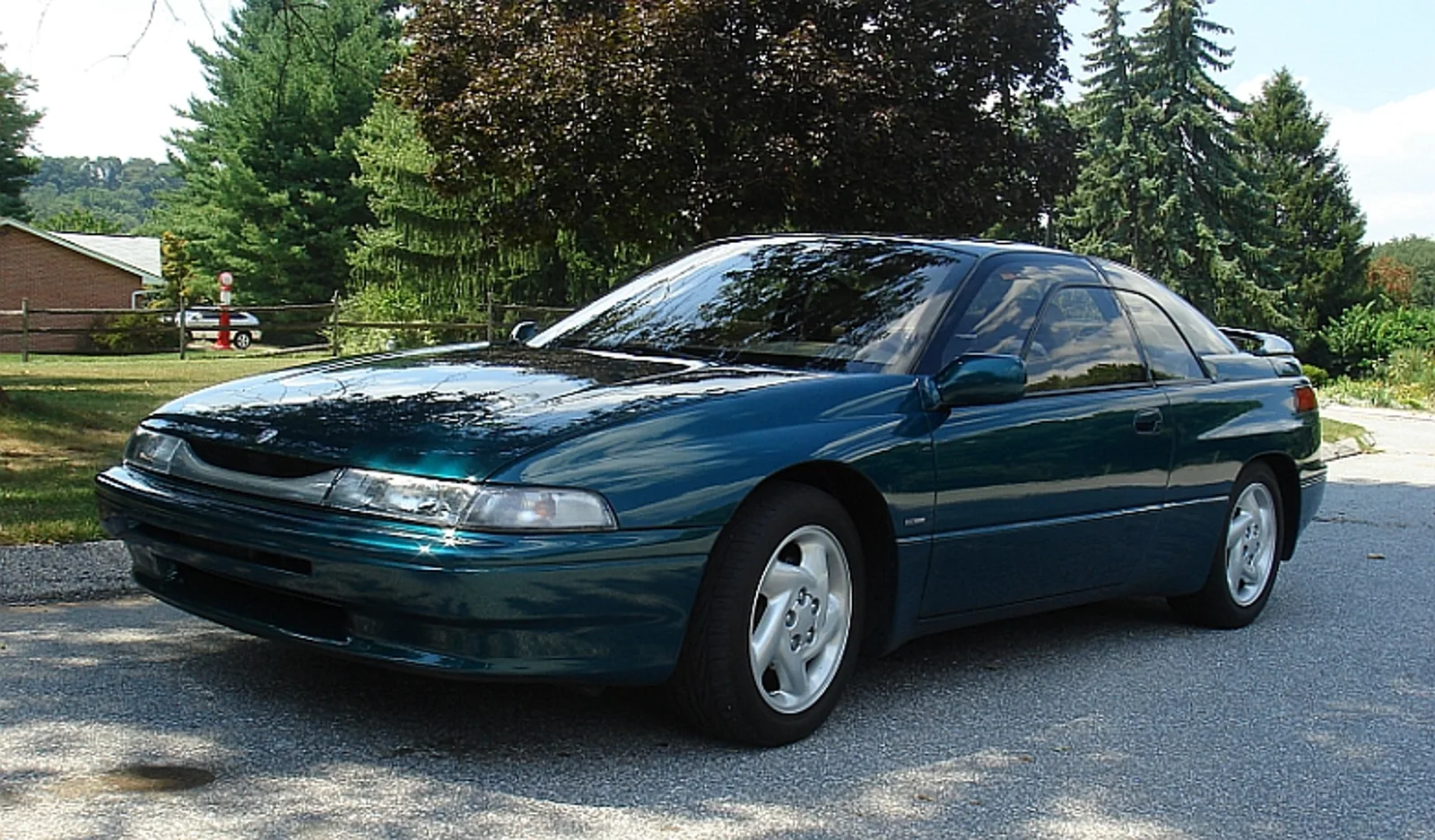
Giugiaro styling, a 3.3-litre flat-six with automatic-only transmission and a production run from 1991 to 1996.
The Subaru Alcyone SVX was a two-door coupe sold from 1991 to 1996 with a 3.3-litre flat-six, automatic transmission only and all-wheel or front-wheel drive. Known outside Japan as the SVX, it sold 24,379 cars worldwide and is remembered for its window-within-a-window side glass.
Between 1991 and 1996 Subaru built the Alcyone SVX, a two-door coupe with a 3.3-litre flat-six and an automatic gearbox. Sold outside Japan under the SVX name, it was Subaru's first move upmarket into performance motoring.
Where did the Alcyone SVX come from?
The SVX started as a concept at the 1989 Tokyo Auto Show, styled by Giorgetto Giugiaro of ItalDesign. It replaced the angular XT coupe and became Subaru's first entry into the luxury performance market. Subaru introduced it in the United States in July 1991 as a 1992 model, and the Japanese launch followed that September.
The name has its own story. Alcyone is the brightest star in the Pleiades and appears in the Subaru logo, while SVX stood for Subaru Vehicle X. Outside Japan the Alcyone badge was dropped, and the car was simply the Subaru SVX.
The SVX was designed to replace the XT and XT6 coupes. Subaru expected to sell 10,000 cars a year, but US sales of 5,280 in 1992 and 3,859 in 1993 fell well short of that forecast.
Subaru's first serious move into luxury performance, built around a 3.3-litre flat-six and a glass canopy inspired by aircraft.
How was the SVX styled?
The SVX kept the window-within-a-window side glass of the earlier Alcyone and XT, but its lines were softer than the angular XT it replaced. Subaru called the glass covering the A-pillar an aircraft-inspired canopy. Its drag coefficient of Cd=0.29 matched the XT coupe it succeeded.
Each two-piece power side window had an operable section covering roughly two-thirds of the glass, with the division running parallel to the top curve of the door frame. European cars were slightly slipperier, at Cd=0.285, thanks to a larger undertray.
Subaru also developed the Amadeus, a shooting brake prototype shown in two-door and four-door versions between 1991 and 1992. It was considered for production, but it never went on sale.
What engine did the SVX use?
The SVX used one engine, the EG33, a 3.3-litre flat-six with DOHC and four valves per cylinder. It produced 172 kW (231 hp) at 5,400 rpm and 309 Nm (228 lb ft) of torque at 4,400 rpm. It was the largest Subaru passenger car engine until the 3.6-litre EZ36 arrived in 2008.
Internally the EG33 was essentially a six-cylinder version of the EJ22 used in the first-generation Legacy and Impreza in Japan. Compression rose to 10.1:1, and fuel was delivered by sequential multi-port injection with dual-spray injectors. Platinum spark plugs and a limp home feature with over-rev protection completed the ignition and management package.
The exhaust used head pipes from each bank with their own pre-catalytic converters, which joined a dual-inlet main converter. A single 64 mm (2.5-inch) pipe then led through a resonator to a transverse muffler with twin tips in the bumper. No turbocharger was fitted, because the larger EG33 was already more powerful than the turbocharged four-cylinder of the earlier Alcyone.
How did the all-wheel drive system work?
The SVX offered two all-wheel drive systems. ACT-4, an active torque split system first used on the 1988.5 Alcyone, went into US cars and could bias up to 50 per cent of torque to the rear. VTD, a more advanced design with a planetary centre differential, was used in Japan, Europe and Brazil.
In VTD the planetary gear turns as one unit when front and rear speeds match, giving a mechanical 36/64 split. The active clutch then adjusts the balance in practice, varying between 34 and 50 per cent to the front and 64 to 50 per cent to the rear.
VTD could not run in two-wheel drive, which meant it could not be tested on the 2WD dynamometers that some US states required for emissions checks. That kept it out of US showrooms until the rules changed long after SVX production had ended. It later reached America on the Outback VDC.
Was a manual gearbox available?
No. The SVX was offered solely with an automatic, because Subaru did not have a manual that could handle the torque of the EG33 engine at the time. Early automatics had torque converter clutch faults that could clog radiators, along with clutch failures. Several major revisions were made, and all of them were in place by late 1994 production.
Shortly after the SVX ended, Subaru moved to a completely redesigned four-speed automatic.
What were the SVX's performance figures?
The published figures put the SVX at 0-60 mph in 7.3 seconds, with a quarter mile of 15.4 seconds at 148.9 km/h (92.5 mph). Top speed was 248 km/h (154 mph) in 1992 and 1993, falling to 230 km/h (143 mph) from 1994 when an electronic speed governor was added.
The same figures list a stop from 60 mph to zero in 30 m (98 ft).
How many SVX cars were sold?
Subaru sold 24,379 SVX cars worldwide, including 14,257 in the United States and 2,478 in Europe. Around 5,884 stayed in Japan, and roughly 7,000 of all cars were right-hand drive models.
Within Europe, Switzerland took 951 cars, Germany 854 and France 60. Australia received 249 vehicles, priced between approximately A$73,000 and A$83,000.
Sales continued into 1997, when 640 units sold in the final year. Production itself had ended in December 1996.
Was there a front-wheel drive SVX?
Yes, for a short time. Subaru offered a front-wheel drive model, chassis code CXV, in 1994 and 1995 to lower the price for the US market. It cost about $5,300 less than the AWD version in 1994 and about $1500 less in 1995, though sales were less than stellar.
In 1994 the front-drive car was offered on the base L and mid-range LS, while the LSi stayed AWD only. In 1995 only the base L was offered in front-drive form, with AWD optional on the L and standard on the LSi.
How did the SVX sell in Japan?
Japan treated the SVX as a luxury car. It was Subaru's first car to exceed the government's dimension rules, and its engine size meant buyers paid more annual road tax, which limited sales. Japanese models came in L and S4 forms, and later S-Four versions made 250 PS (184 kW; 247 hp).
Standard features included one-touch climate control, leather trim, heated electric front seats and a single-disc CD player with a Panasonic AM/FM stereo, hidden behind a retractable panel. A remote-controlled infrared keyless entry system with a security alarm was also fitted. Some later cars had 16-inch forged BBS wheels in place of the standard five-spoke alloys.
Japanese television advertising used a 500 Miles theme, sung by Minako Yoshida, which pointed to 805 km (500.2 mi) from one 70 litre (18 US gal) tank. The same campaign quoted 9.4 L/100 km (30 mpg-imp; 25 mpg-US).
What did the SVX achieve in motorsport?
The SVX's notable rally result came in 1991, when Ken Knight and Bob Dart won the Alcan Winter Rally. That event started in Seattle and ran to the Arctic Circle and back. In the early 1990s the car also served as a PPG Pace Car, evaluated by Wally Dallenbach Sr, an Indy Car Chief Steward.
The pace car had a silver-to-purple fade, silver front wheels, purple rear wheels, a roll cage and an amber roof light. Most pace cars were retired after one season, but this example stayed in use for several seasons as a promotional tool for Subaru. It was later stored in the Subaru Performance Attic in Cherry Hill, New Jersey, near the company's new Camden headquarters.
Legacy and later models
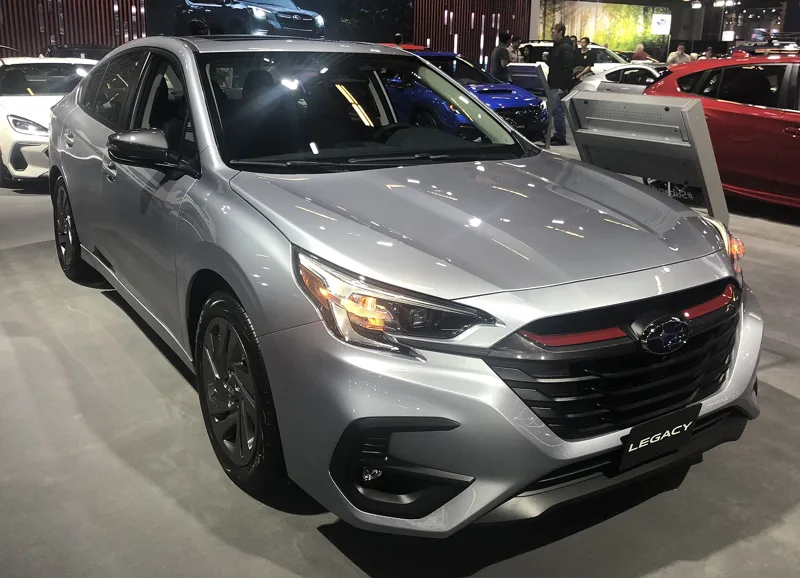
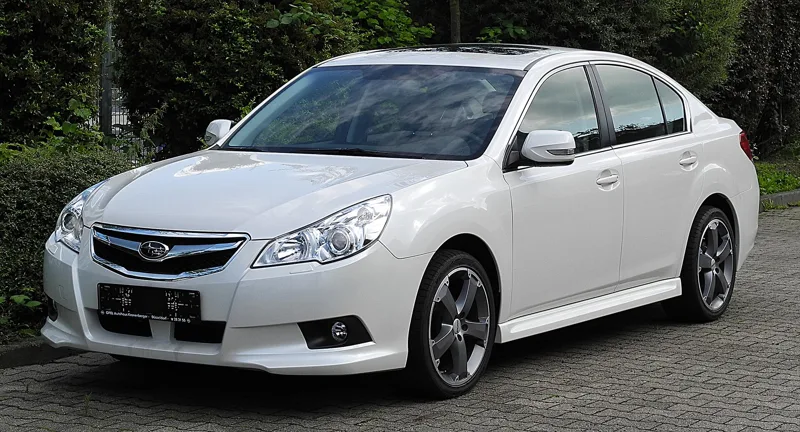
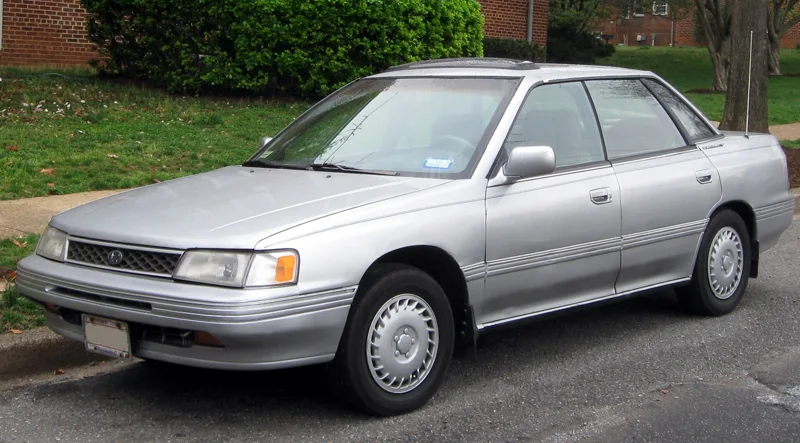
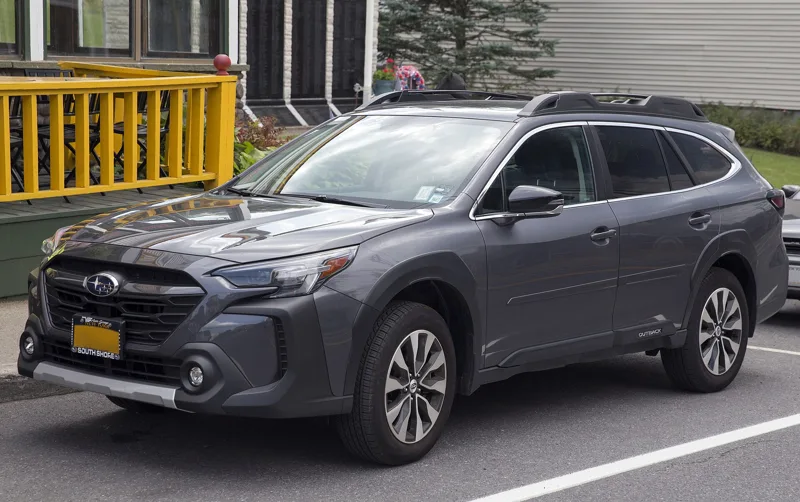
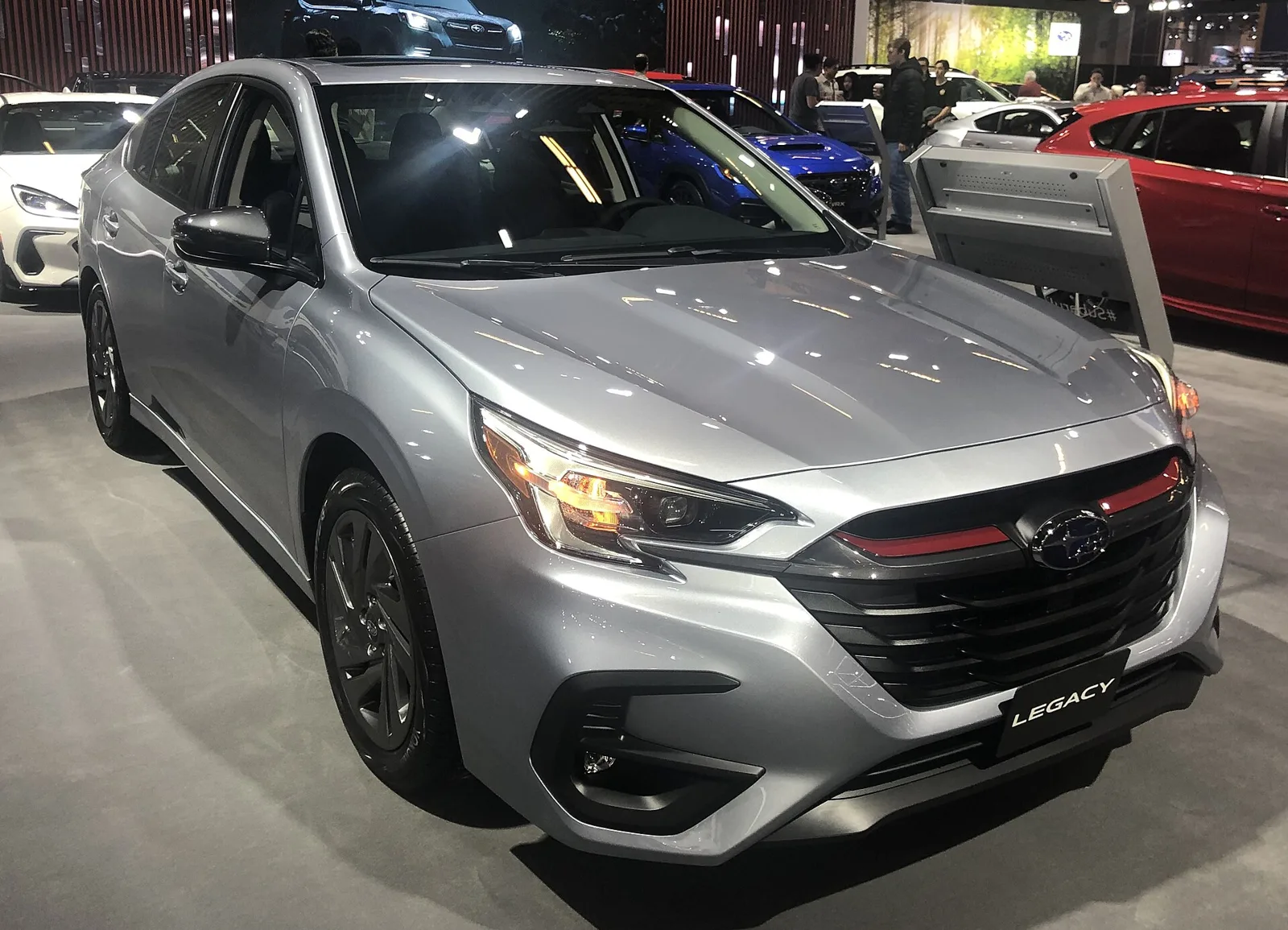
The SVX also left a mark on the wider range. The 1992 Subaru Legacy received a facelift inspired by the SVX. The car arrived after the Acura NSX had been introduced in 1990, and it was developed during Japan's bubble economy, a period whose downturn later hurt its domestic sales.