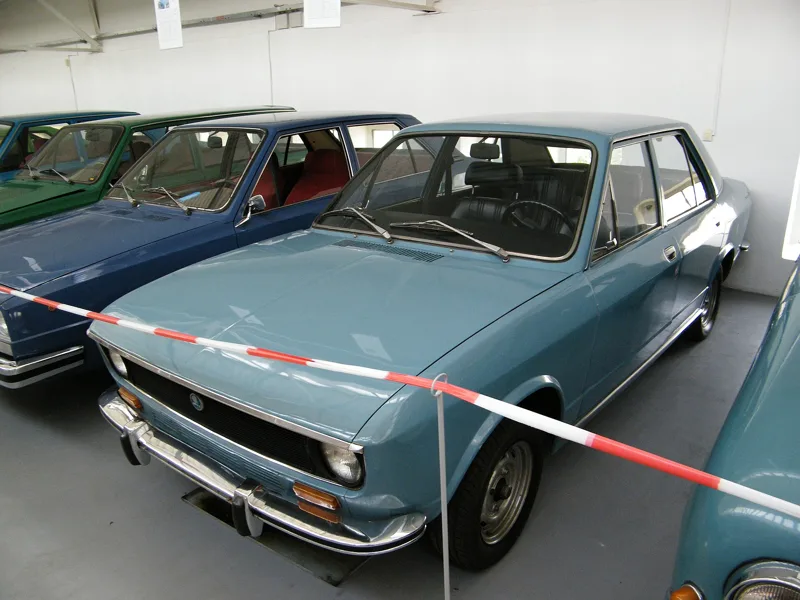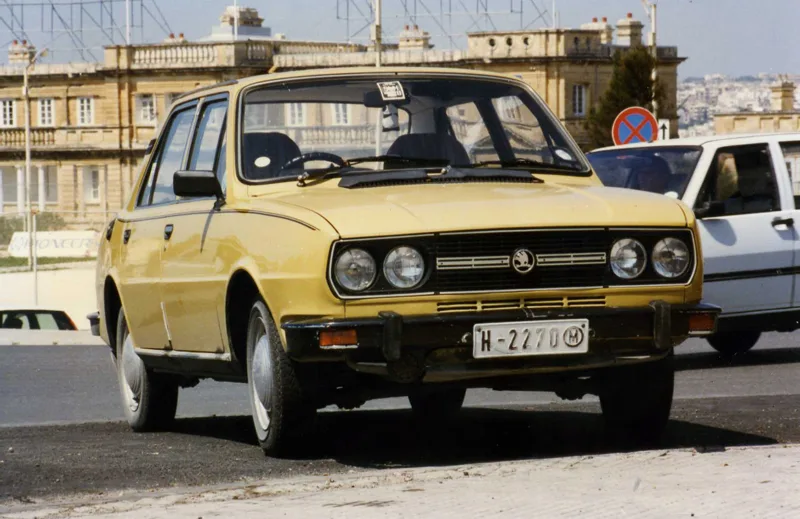
A rear-engined Skoda coupe built at Kvasiny from 1975, with rally wins at home, circuit results across Europe and a place in the museum.
The 130 RS was a competition coupe from AZNP, built at Kvasiny for roughly 300 cars between 1975 and 1980. Its rally wins included the Skoda and Barum events, and its circuit crews helped take the 1981 European touring car manufacturers title.
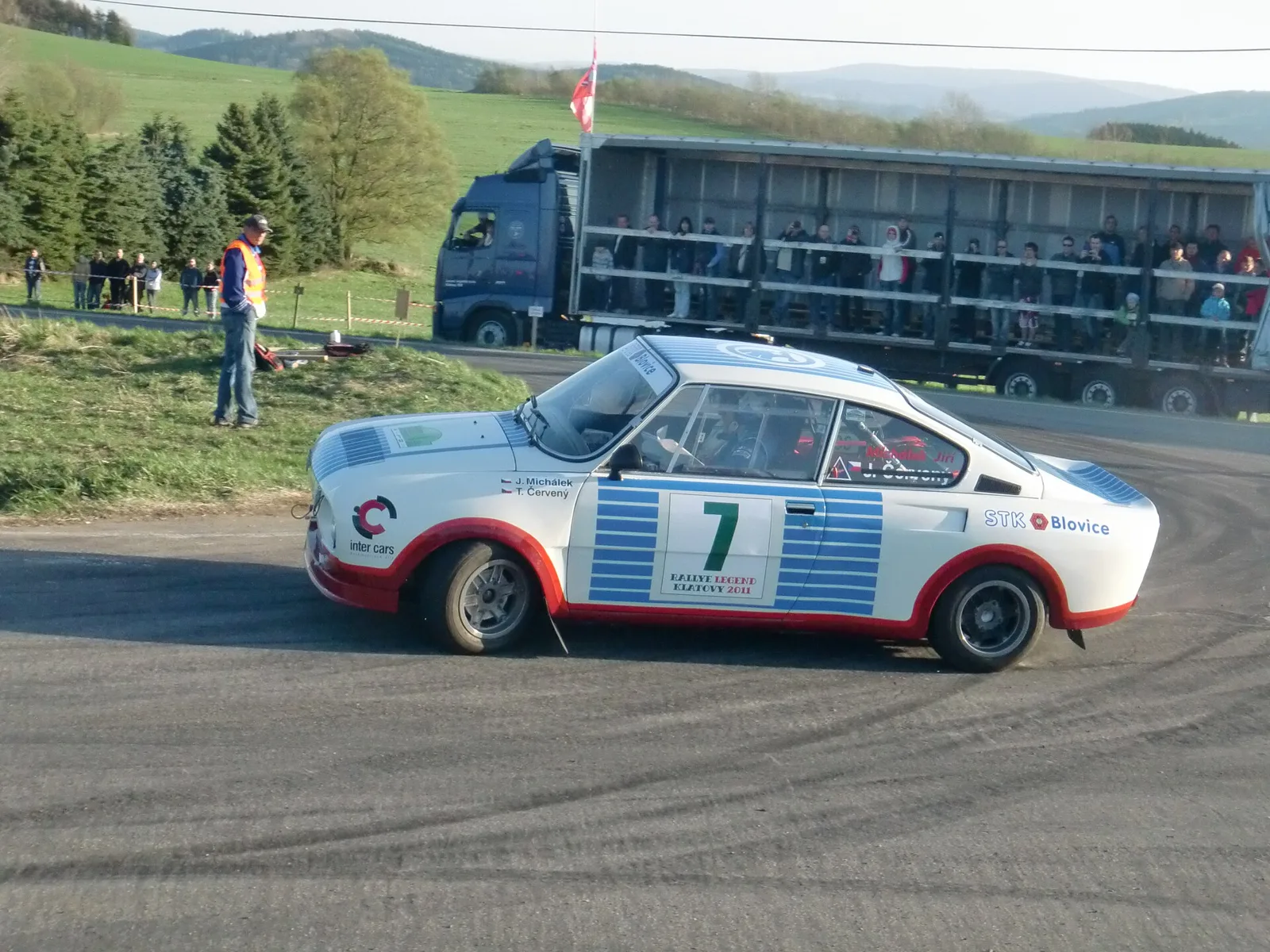
The Skoda 130 RS was a rear-engined competition coupe that AZNP built at its Kvasiny plant between 1975 and 1980. Roughly 300 examples were made, and the car won rallies at home and abroad, raced on circuits across Europe and earned the nickname Porsche of the East.
Its roots lie in the 110 LS, which was raced in the early 70s with a 1,107 cc engine producing 46 kW (63 PS; 62 hp). The 120 S Rallye that followed was only a step towards a genuinely competitive race car, and the 180/200 RS prototypes of 1974 proved a dead end.
How did the 130 RS come about?
A 1971 rules change raised the A2 displacement limit to 1,300 cc, and AZNP answered first with the 120 S Rallye. After the prototypes failed, the 130 RS project was approved in October 1974. A team led by Eng. Cerveny presented a circuit version that was homologated in May 1975 with a five-speed gearbox, less than a year later.
The car borrowed its body shell from the 110 R sports coupe, took its engine from the 120 S and its chassis from the 200 RS prototype. Works drivers raced it first, and private crews joined them from 1978.
A rear-engined Skoda coupe that won rallies at home and raced on circuits across Europe.
What engine did the 130 RS use?
The 130 RS used an inline four-cylinder engine with OHV valve gear and two valves per cylinder, mounted longitudinally behind the rear axle. The first homologated car had 1,289 cc (78.7 cu in) and 101 kW (135 PS). After the 1976 rules, the displacement grew to 1,298 cc (79.2 cu in), and the engine initially gave 88 kW (120 PS; 118 hp) at 8,000 rpm.
Inside, the block was aluminium with cast-iron cylinders pressed in, and three main bearings held the crankshaft. Fuel came from twin Weber 40 DCOE2 carburettors, or from Lucas fuel injection. Output later climbed to 96-103 kW (130-140 PS), and peak torque of 127 Nm (94 lb ft) came at 5,250 rpm.
What were the Skoda 130 RS specifications?
After 1976 the car ran a 1,298 cc engine that started at 88 kW (120 PS; 118 hp) and later reached 96-103 kW. The homologated car weighed 720 kg (1,587 lb). With its four-speed gearbox it could reach 220 km/h (137 mph) on circuits, and the 0 to 100 km/h sprint took 7.5 seconds.
| Specification | Skoda 130 RS (from 1976) |
|---|---|
| Engine | Inline four, OHV, rear-mounted |
| Displacement | 1,298 cc (79.2 cu in) |
| Power | 88 kW (120 PS; 118 hp) at 8,000 rpm, later 96-103 kW (130-140 PS) |
| Peak torque | 127 Nm (94 lb ft) at 5,250 rpm |
| Compression ratio | 10.5:1 |
| Gearbox | Four-speed |
| Circuit top speed | 220 km/h (137 mph) |
| 0 to 100 km/h | 7.5 seconds |
| Kerb weight | 720 kg (1,587 lb) |
| Wheels and tyres | 5.5 x 13 inch magnesium alloy, 185/70 SR 13 tyres |
How was the body different from the 110 R?
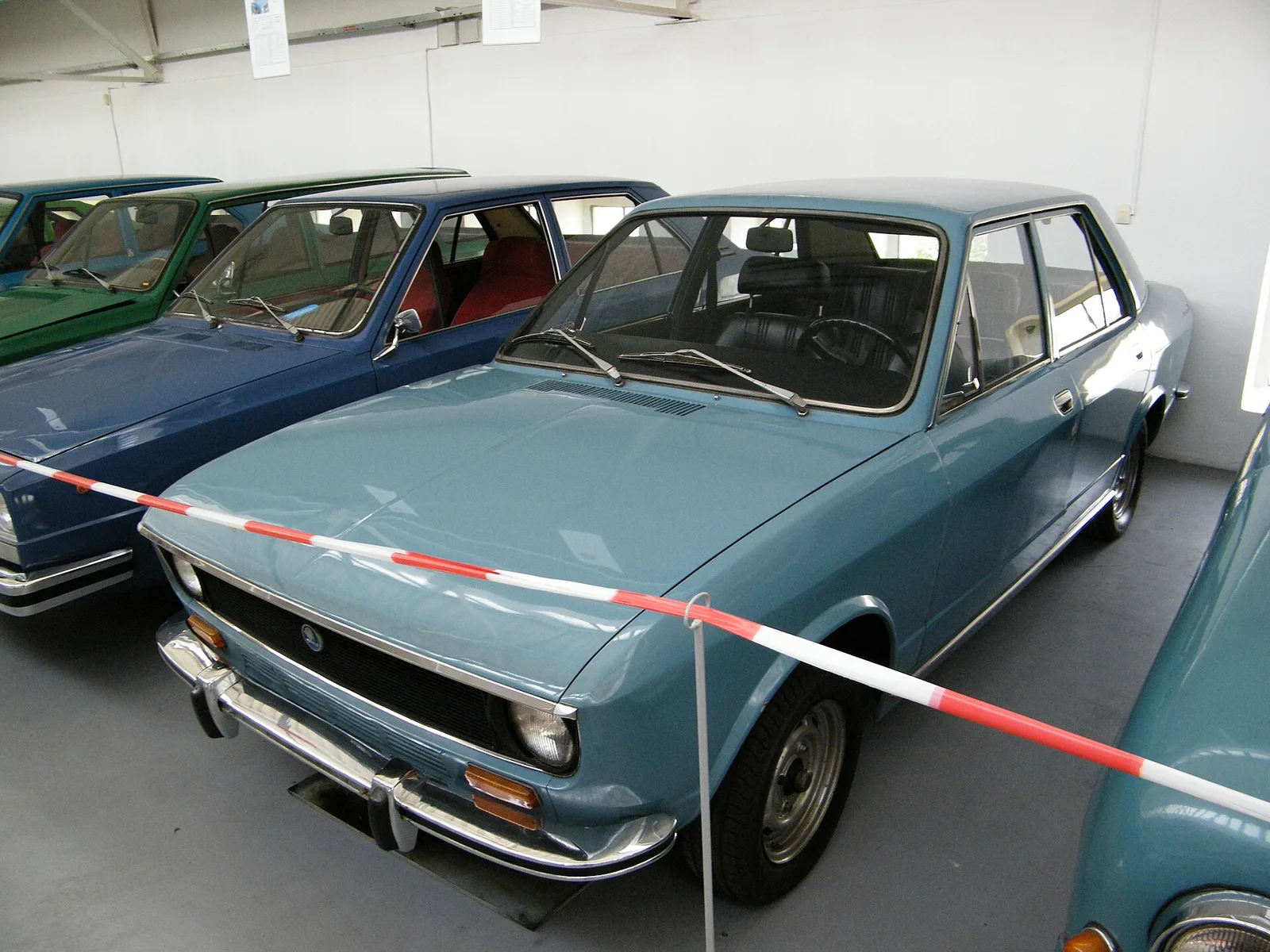
The two-door body was self-supporting and based on the 110 R, but engineers added floor reinforcements, rear suspension mounts and an internal protective frame. Aluminium covered the roof and the front panel, and glass-fibre went into the engine cover and wings.
A 0.7 mm aluminium sheet went on the roof to lighten the steel shell. The front panel had openings to take an auxiliary radiator. Outer door panels were aluminium as well.
How was the chassis set up?
The front used a trapezoidal wishbone suspension, while the rear had a new trailing axle with triangular arms and a 15-degree swing angle. Every wheel had coil springs and double-acting Koni Sport telescopic dampers. Girling discs were fitted at the front and drum brakes at the rear.
The wheels were 5.5 x 13 inch magnesium-alloy units carrying 185/70 SR 13 tyres. From the 1979 season 15-inch Goodyear tyres were fitted.
How did the 1975 and 1976 cars differ?
The 1975 circuit homologation car ran a five-speed gearbox whose first and reverse gears lacked synchromesh. The second homologation of 1 June 1976 brought a larger engine of 1,298 cc (79.2 cu in) and only four forward gears.
The first car also carried a reinforced single-plate clutch from Fichtel and Sachs, and its engine block dated back to production four-cylinder units.
What did the 130 RS win in rallies?
The best-known rally result came at the 1977 Monte Carlo Rally, where Vaclav Blahna and Lubislav Hlavka won the 1,300 cc class and finished twelfth overall. Their colleagues Miloslav Zapadlo and Jiri Motal ended three places further back. The car also won the Skoda Rally five times between 1976 and 1980.
The Barum Rally went to the 130 RS six times, in 1976 to 1980 and again in 1983. The car's first home success came when Blahna and Hlavka won the third Skoda Rally in 1976. Their entry at the Kosice Rally in June 1976 was probably the car's first start and first win.
Four more top-ten finishes came in World Rally Championship events. Norway's John Haugland earned the first world championship point of the car's career with tenth at the 1977 Rally 1000 Lakes in Finland. Zapadlo took ninth on the gravel of the 1978 Acropolis Rally, and Blahna was eighth in Greece in 1979 and again in 1981.
The European rally championship tells a quieter story. Blahna was 15th in 1978 and 32nd the year after, and Kvaizar was 18th in 1980. Those placings were mainly shaped by how few events counted for the European championship in each year. The 130 RS drivers entered five to eight events a year, against as many as 50 in a full season.
How did the 130 RS fare on circuits?
The circuit debut came in spring 1975 at the Most Autodrome. In May, Milan Zid and Oldrich Horsak took third in Division 2 at the four-hour race in Brno. By 1980 the crews were second overall in the final ETCC standings, and in 1981 the drivers helped win the manufacturers' title.
The homologated version made its race debut on 5 June 1977 at Grand Prix Brno. Oldrich Horsak and Jaroslav Bobek took the class up to 1,300 cc there and placed 13th overall in the 3.5-hour event.
Private teams from Bohemia Crystal Liberec were part of the circuit effort from 1978, sometimes with factory help. The 1981 title was earned without direct AZNP backing at the time.
In 1981 the Vojtech-Enge crew, sometimes joined by Jan Senkyr or Vaclav Bervid, won six of the eight Division I races in that season at Monza, Vallelunga, Donington, Brno, Pergusa and Silverstone.
Who drove the 130 RS?
Early works crews included Svatopluk Kvaizar, John Haugland and Oldrich Horsak, while Ladislav Krecek and Jiri Sedivy also raced for the factory. Oldrich Brunclik and Milan Zapadlo were part of the early effort too, alongside semi-works names such as Josef Michl, Petr Samohyl and Petr Martinovsky.
Later the main racing drivers were Vojtech, Enge, Senkyr and Bervid, who usually started in two cars. They did most of the work on the 1981 title.
Who won the Peace and Friendship Cup with the 130 RS?
Vaclav Blahna won the Peace and Friendship Cup (PMaP) in 1977 and again in 1980. Jiri Sedivy took it in 1978, and Jan Trajbold Sr. won in 1979 and 1981. Svatopluk Kvaizar had finished third in the 1976 cup by just one point.
When did homologation for the 130 RS end?
Homologation for circuit endurance races, and for rallies, ended in 1983. The car had been homologated first as a circuit version in May 1975, so its competition life ran from that point until 1983.
Where is the 130 RS today?
A works circuit car built in 1978 entered the Skoda Museum in 1984 after a purchase, and it was restored in 2014. The same car was shown at the Automobile Jewels exhibition in 2026, and private driver Petr Dolezal had raced it in hill climbs between 1979 and 1983.
Competition examples still appear now and then at Rally Legend events, in FIA European historic rally series and at Czech historic rallies. Many people see it as the best-known Czech competition car.