A 1999 restyle that became a model in its own right, with a common rail diesel from 2000 and an all-wheel-drive RX4.
The Renault Scenic I was a mid-range people carrier built from 1999 to 2003 as a restyled Megane Scenic. It dropped the Megane name, offered engines from 1.4 to 2.0 litres, and gained a common rail diesel from 2000.
Renault sold the Megane Scenic so well that it decided to give its people carrier an identity of its own. The result was the Scenic I, launched in autumn 1999 with a simpler name and a restyled front. Within about a year it had gained a common rail diesel and an all-wheel-drive variant that edged towards a crossover.
Why did Renault drop the Megane name?
The Megane Scenic was a people carrier of mid size that sold far beyond what Renault's marketing team had expected. Renault's top management decided to separate the car from the rest of the Megane range, so that it would have a more specific identity. That surprised the whole Renault management.
The Megane Scenic was the first mid-size people carrier built in Europe. Plenty of writers call it the first in the world, yet the Mitsubishi Space Runner, of similar proportions, had been on the market for some years and was sold in Europe too. With the new name the car also became the founder of the Scenic range.
The Scenic I took the people carrier away from the Megane name and gave Renault a common rail diesel.
What changed at the front and rear?
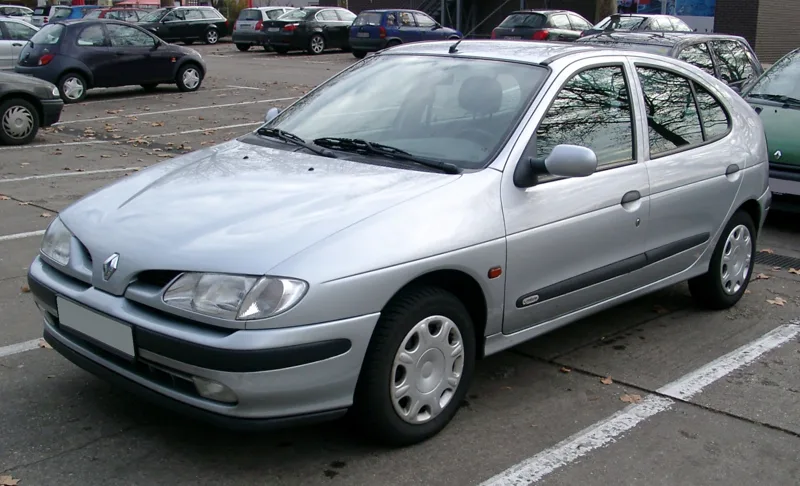
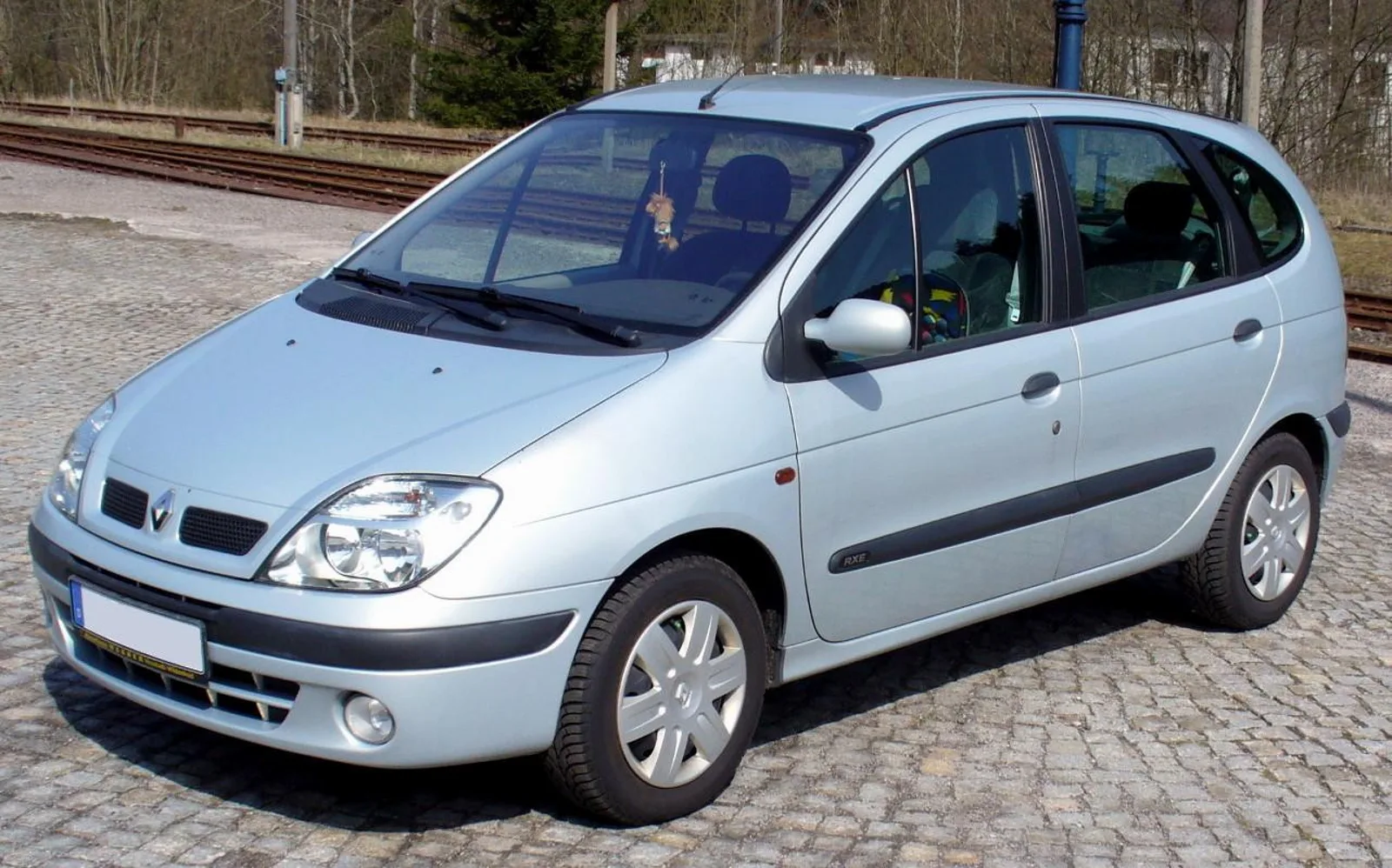
Most of the styling changes were at the front, where the much-debated nose-shaped grille was given up. The reason was less about the grille itself and more about the wish to set the car apart from the Megane range, which was being restyled at the same time with a new front end.
The Scenic I got a more discreet grille, both in design and in size. On either side sat square front light clusters, developed more vertically than before. The lines of both bumpers changed, and at the rear the lights kept their shape while their graphics were redrawn. A small but telling detail was the removal of the Megane badge from the tailgate.
What was inside the Scenic I?
The general layout of the cabin stayed as it was on the Megane Scenic, but there were updates, including more storage compartments and a refrigerated compartment under the centre console. Safety was also improved with larger brakes and dual front airbags that used a programmed restraint.
One feature was unusual for its time and would spread widely years later: the doors locked automatically once the car reached a set speed, and on the Scenic I that point was 7 km/h.
How much luggage could the Scenic I carry?
The boot offered 410 litres with all the seats in place. Folding the rear bench raised the total to 1,800 litres.
Key specifications of the Scenic I
| Specification | Detail |
|---|---|
| Production | 1999 to 2003 |
| 1.4 16v | 1,390 cc (84.8 cu in), 95 PS (94 hp), some markets only |
| 1.6 16v | 1,598 cc (97.5 cu in), 107 PS (106 hp) |
| 2.0 16v | 1,997 cc (121.9 cu in), 140 PS (138 hp), later 138 PS (136 hp) |
| 1.9 D | Naturally aspirated diesel, 1,870 cc (114.1 cu in), 65 PS (64 hp) |
| 1.9 dTi | Turbocharged diesel, 1,870 cc (114.1 cu in), 98 PS (97 hp) |
| 1.9 dCi | Common rail diesel, 102 PS (101 hp), from 2000 |
| Transmission | 5-speed manual; 4-speed automatic on some versions |
| Boot | 410 litres; 1,800 litres with the rear bench folded |
What did the Scenic I inherit from the Megane?
As a restyle, the Scenic I kept the basic structure of the Megane Scenic and, more broadly, of the whole Megane I range. The front used a MacPherson suspension with coil springs, and the rear axle had interconnected wheels on torsion bars. The braking system carried over too, with disc brakes now fitted as standard across the range.
The rear of the Megane Scenic had used drum brakes before.
What engines did the Scenic I launch with?
At its debut the Scenic I came with five engines, although not every one was offered everywhere. Where the 1.4 16v was missing, the 1.6 16v formed the base of the range. The 2.0 16v sat at the top of the line-up, and the naturally aspirated 1.9 D and turbocharged 1.9 dTi covered the diesel side.
- 1.4 16v: 1,390 cc (84.8 cu in), up to 95 PS (94 hp), in some markets only
- 1.6 16v: 1,598 cc (97.5 cu in), 107 PS (106 hp), the base engine where the 1.4 was absent
- 2.0 16v: 1,997 cc (121.9 cu in), 140 PS (138 hp), the top engine
- 1.9 D: 1,870 cc (114.1 cu in), naturally aspirated, 65 PS (64 hp), in some markets only
- 1.9 dTi: 1,870 cc (114.1 cu in), turbocharged, 98 PS (97 hp)
What was the RX4 version?
Early in 2000 the range gained the Scenic RX4, a version that kept the people carrier body but took on features that brought it closer to a crossover SUV. It had all-wheel drive, the most significant technical novelty, and its ground clearance was 12 cm higher than the standard car.
Other changes were visible. The spare wheel sat exposed on the tailgate, and the bumpers, wheel arches and lower half of the doors were left unpainted. The heavy spare forced changes to the tailgate hinges, which left the RX4 as the one Scenic I whose tailgate swung open only to the side. At launch the only engine on offer was the 2-litre (122.0 cu in) 140 PS (138 hp) unit, shared with the standard car.
When did common rail reach Renault?
The 1.9 dCi arrived in 2000 and brought common rail technology to Renault for the first time. Based on the familiar 1.9, it produced 102 PS (101 hp). It also gave the RX4 a diesel alternative, far more economical than the 2-litre petrol it had been offered with until then.
The 1.9 dCi arrived as the 98 PS (97 hp) 1.9 dTi was discontinued, and a cheaper diesel was introduced at the same time. It had direct injection rather than common rail, and its output was 80 PS (79 hp). Where the naturally aspirated 1.9 diesel was sold, the 80 PS unit first joined it and later replaced it, and where that engine was absent it simply offered an alternative to the 1.9 dCi.
How did the 2000 and 2001 updates change the car?
The petrol range gained a 1.8 16v producing 116 PS (114 hp) in 2000. Euro 3 compliance meant some engines were reworked, and a few lost a little output. On the Scenic I the 2-litre was the most affected, falling from 140 PS (138 hp) to 138 PS (136 hp).
For 2001 the safety equipment grew. Side and curtain airbags, emergency brake assist and ESP were added. Almost the whole range received ESP as standard, though automatics and the RX4 were left out.
How did the first Scenic end?
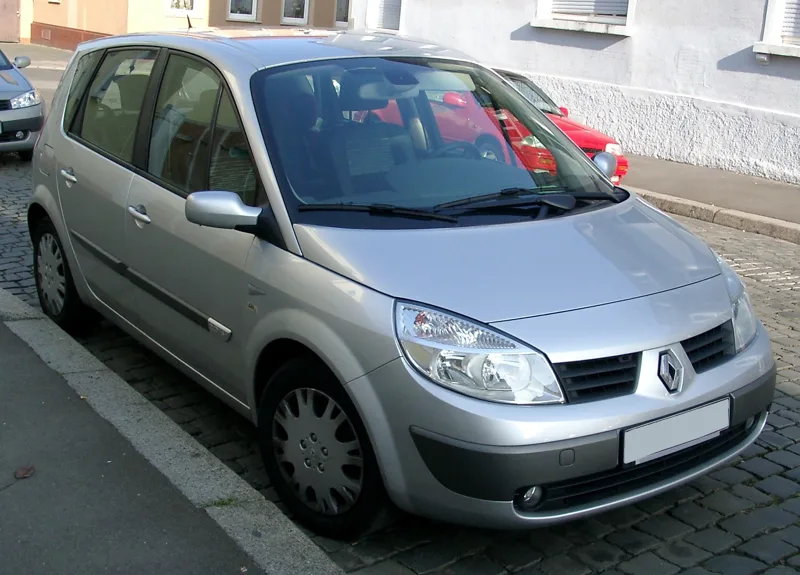
The first generation began a slow decline. Nothing new arrived in 2002, although the range remained largely unchanged. The end came in 2003, when the Scenic II, the next compact people carrier from Renault, took over its place.
Where was the Scenic I built?
The main European plant was Douai in France. The Belgian plant at Vilvoorde also built the Scenic I, but after it closed, assembly moved to Palencia in Spain.
Production went much further afield. The Scenic I was built in Argentina, and output there continued for many years after the French lines had stopped. The last Argentine-built Scenic I, in fact, rolled out as late as 2010.
What was the Iranian Veek?
A far more unusual Scenic was built in Iran by Kish Khodro for the local market. Clearly related to the European car, it began production in 2004 under the name Veek. From 2005 it became the Sinad Veek, which had a redesigned front with the light clusters set lower.
Under the bonnet it ran a 1.6 petrol related to the European engine of that size, though tuned down to 92 PS (91 hp).