From the 1994 Mitsubishi-based hatchback to the Lotus-tuned GTi, the R3 limited editions and a rally career.
The Proton Satria was a compact hatchback whose first generation came from the Mitsubishi Mirage and Colt platform. It was replaced by the Satria Neo in 2006. Its Lotus-engineered GTi and limited R3 variants gave it a sporting name, and a rally version carried the name into international competition.
Proton's Satria started life in 1994 as a Mitsubishi-based three-door hatchback made in Malaysia. The Satria Neo succeeded it in 2006. The name means knight in Sanskrit, a choice meant to suggest sportiness, and the Lotus-tuned GTi and limited R3 editions gave the badge a following well beyond everyday driving.
Where did the Proton Satria come from?
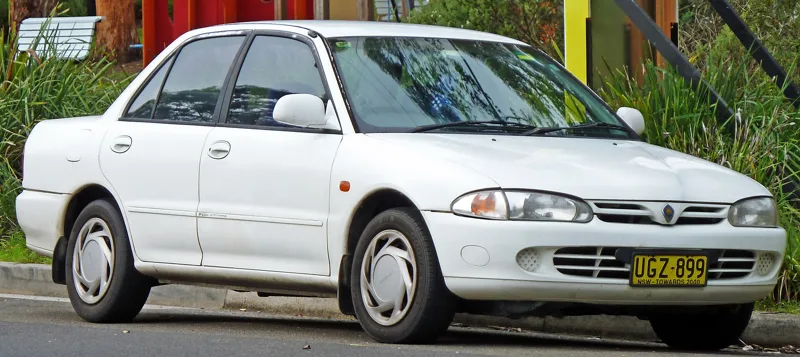
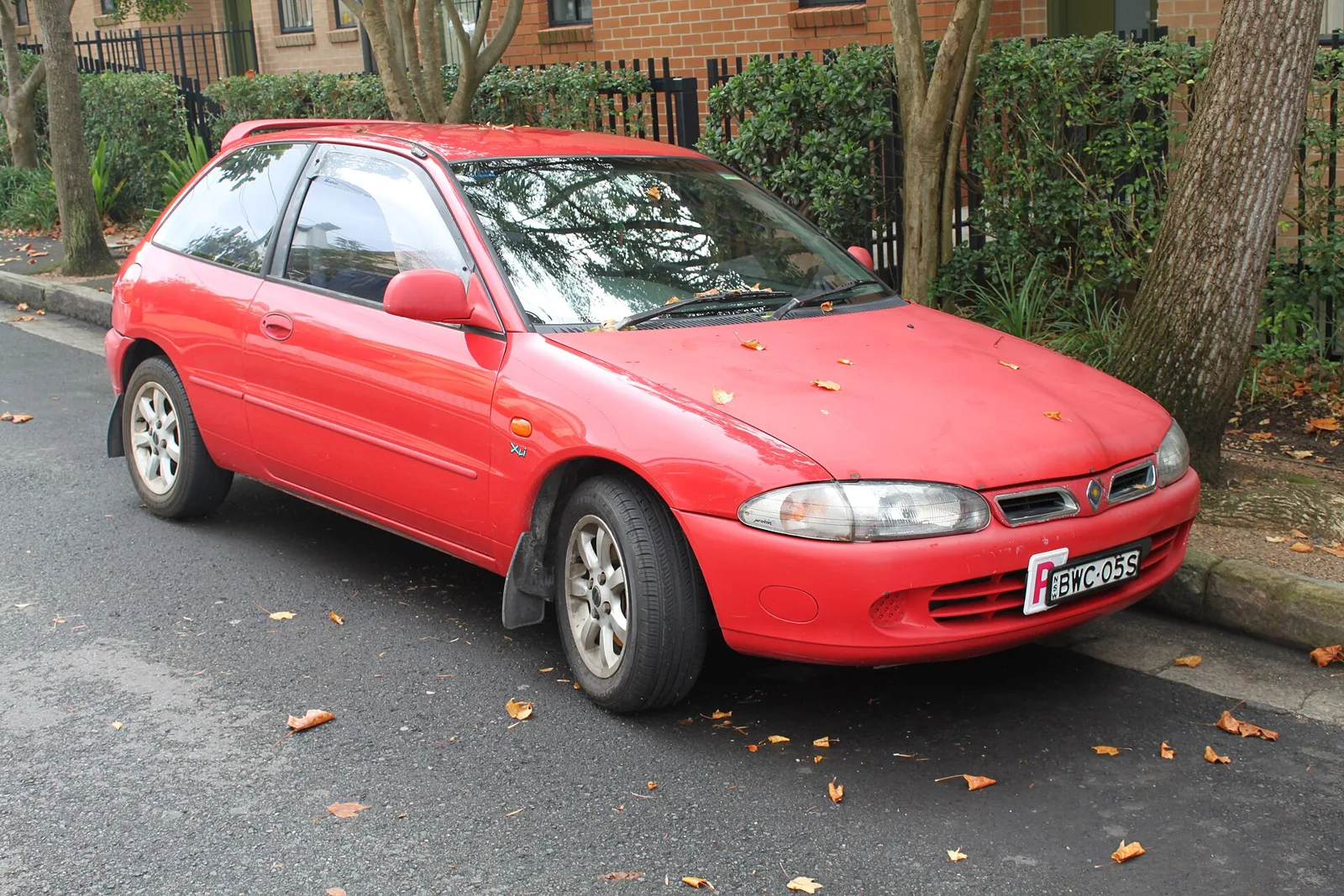
The first Satria was unveiled on 24 November 1994 as a joint venture between Proton and Diversified Resources Bhd, usually called DRB. It was a three-door hatchback based on the fourth-generation Mitsubishi Mirage and Colt, built at the Pekan plant in Pahang and first imported to Europe during 1995.
Proton's share in the distribution arm was 30 percent by late 1994, and the venture was run through Usahasama Proton-DRB. The car cost RM150 million to develop, and at launch it was priced between RM38,000 and RM54,000.
Export names varied. The car was sold as the Proton Compact in the United Kingdom and as the Proton 300 Series in several continental European markets. Australia received it in 1997 with three fuel-injected variants: 1.5 GL, 1.5 GLi and 1.6 XLi.
Much of the car came from a parent design. Its front-end styling and many interior parts were shared with the Proton Wira, while the rear end was largely carried over from the Mirage and Colt. The Satria was also a regular prize on the Australian game show Sale of the Century.
A Mitsubishi-based hatchback that Proton, with Lotus, turned into a hot hatch with a real following.
What engines and trims did the first Satria offer?
At launch the Satria used a 1.3-litre 12-valve carbureted engine from the Saga and a 1.6-litre 16-valve fuel-injected unit. A 1.5-litre 12-valve carbureted engine was added later, and a five-speed manual was offered with all three. Three-speed and four-speed automatics were also available with the larger engines.
Trim levels were LSi, GLi, GLSi and SEi. The base LSi had only the 1.3-litre engine, GLi added the 1.5-litre unit, and the GLSi and SEi versions added the 1.6-litre 16-valve engine.
A facelift in 1996 gave the car a redesigned rear end and new XLi, S XLi and GTi trims. The Malaysian Special Edition of 2004 came as 1.3 GL M/T, 1.5 GL M/T and 1.5 GL A/T, with black headlight casings, an engine cover, race-style headrests and a yellow gear shifter base.
What made the Satria GTi special?
The Satria GTi, launched in 1998, used a 138 bhp 1.8-litre Mitsubishi 4G93P engine that Lotus re-engineered as a traditional hot hatch in Hethel, England. It could go from 0 to 60 mph in 8.5 seconds, and it wore a Handling by Lotus badge on the rear hatch.
The engine came from the Mitsubishi Lancer GSR but was used without the turbo, with a higher compression ratio to compensate. A new body kit improved the aerodynamics. The Mitsubishi-built engine ran until mid-2002, and a VDO (Siemens) version was built from mid-2002 until production ended in 2005.
The GTi reached the United Kingdom in November 1999 at 14,500 pounds sterling. The UK car included climate control, anti-lock brakes, front electric windows, electric mirrors and Recaro seats. Proton sold 160 units in its first six months in Britain.
Richard Hammond tested the GTi against the Peugeot 206 GTi. The Satria was praised more as a traditional hot hatch, even though it cost 500 pounds more. A GTi was also trialled by Humberside Police's Vehicle Crime Unit for six months in 1999, alongside two Subaru Imprezas, and no orders followed.
What was the Satria R3?
The R3, short for Race, Rally, Research, was a limited Malaysian edition developed by Proton's racing team with Lotus. It was soft-launched on 4 October 2004 and opened for booking on 17 October 2004. It kept the 1800 cc 4G93P engine but gained a stiffer chassis and lighter body. Lotus made only minor adjustments to the handling, and the R3 was a redefined version of the GTi built by Proton's racing development team.
The body shell received double stitch welded construction and front and rear strut tower brace bars, and body weight was reduced. The interior included Recaro SR4 semi-bucket seats, a Momo steering wheel and a Momo gear knob.
Proton's motorsport effort also reached British touring cars briefly. At the end of the 2001 British Touring Car Championship season, TH Motorsport ran a Satria GTi in the Production Class with Steven Wood at Silverstone and Brands Hatch. His best result was seventh in class in Race 2 at Silverstone.
What replaced the original Satria?
The Satria Neo replaced the first generation in June 2006. It used a new in-house platform with some parts borrowed from the larger Gen-2 and Waja, and it was sold only as a three-door hatchback. Proton spent RM500 million and four years developing it.
Proton expected the Neo to sell 2,000 to 2,500 units a month and aimed it at youthful, sporty buyers. Prime Minister Abdullah Ahmad Badawi launched the car, and it was the first and only Malaysian car to be sold in Japan.
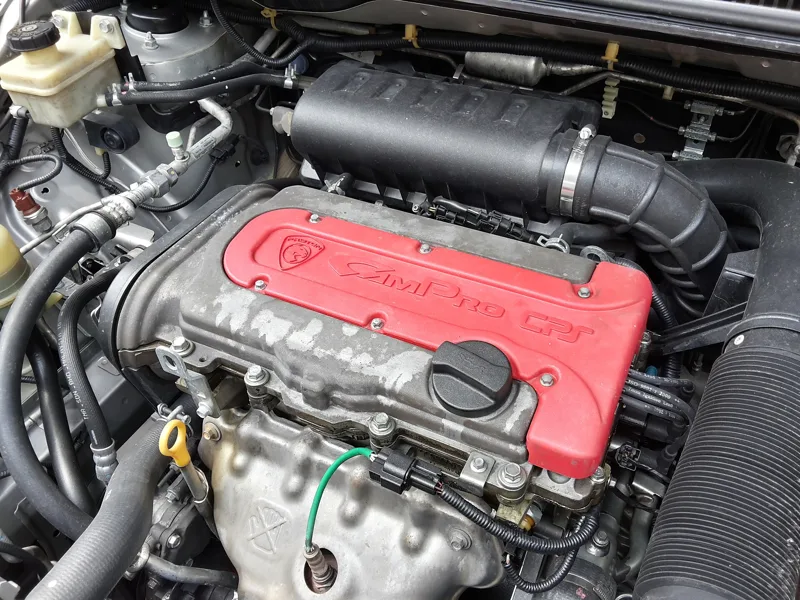
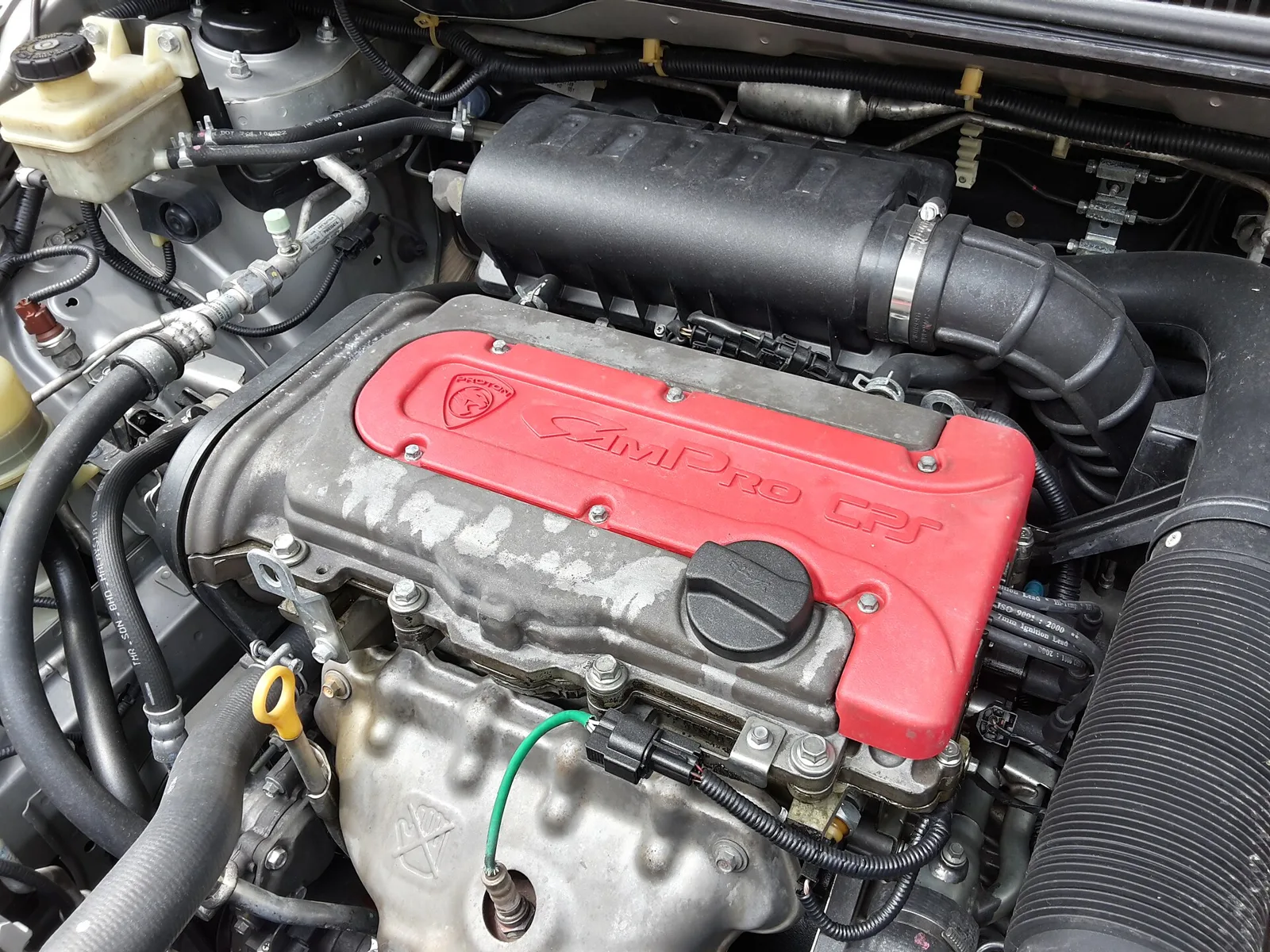
The entry-level 1.3 B-line used a 1.3-litre CamPro twin-cam producing 94 bhp at 6,000 rpm and 120 Nm at 4,000 rpm. The 1.6 M-line and top-of-range H-line used a 1.6-litre version with 110 hp at 6,000 rpm and 148 Nm. Gearboxes were 5-speed manuals or 4-speed automatics from Mitsubishi, and every version had a Blaupunkt CD player.
The M-line and H-line both had active system antennae that searched for signals in areas of poor reception. The H-line added twin airbags, ABS with EBD and seatbelt pre-tensioners.
Was there a Satria convertible?
A concept Proton Cabriolet was shown at the 1997 Frankfurt Motor Show, with ambitions for UK sales from 1999. Those sales never happened, and the convertible stayed a concept rather than becoming a production car.
The 2011 Satria Neo R3 also had a concept model, which debuted at the Tokyo Auto Salon 2011 before the car's launch. The Satria's sporting identity was built instead on hatchbacks such as the GTi and the R3 editions.
How did the Satria Neo CPS and R3 versions differ?
The CPS, launched in February 2009, replaced the H-line with a 1.6-litre CamPro CPS making 125 bhp and 150 Nm, plus a more aggressive body kit. The R3 variants were limited editions with Lotus-derived chassis tuning and bespoke styling, and prices ran from RM60,800 to RM115,000 across the range.
The CPS switched from low cam to high cam at 4,400 rpm instead of 3,800 rpm, as in the Waja, Gen-2 and Exora. Its front track was narrower than its rear track, and a member of Proton's R3 team said the change was made to induce slight understeer, since the base Neo had shown mild oversteer.
The 2008 Satria Neo R3 was a high-performance version with a naturally aspirated 1.6-litre engine producing 100 kW (136 PS; 134 hp), or 110 bhp, with 17-inch wheels, Lotus-derived lowered suspension and a MOMO steering wheel. Only 50 were made, all in Incognito Black.
The 25-unit Satria Neo R3 Lotus Racing arrived on 30 March 2010 at RM115,000. It produced 145 bhp, about 13.8 per cent more than a normal CamPro CPS, with 168 Nm of torque. It reached 205 km/h (127 mph) and 100 km/h in 12.2 seconds, with Ohlins adjustable coilovers and AP Racing brakes.
The 2011 R3 RS followed on 8 February 2011. Only 150 were built, in bright red with a black roof, at RM79,797.00 each, and each carried a numbered metal plaque. It introduced a built-in 2-DIN navigation system, the first in Proton's history. Its handling and performance stayed the same as the Lotus Racing sibling. The 2013 Satria Neo R3, launched on 29 November 2012, reused the 2011 body kit at a lower price, with a body-coloured roof. It had dual airbags, ABS with EBD and manual or automatic transmissions, in silver, black or red. Proton also offered optional decals and performance parts such as ECU upgrades and full exhaust systems.
How did the Satria compete in rallying?
Proton's British partner Mellors Elliot Motorsports prepared a FIA Super 2000 Satria Neo, and the car gave Alister McRae the 2011 Asia Pacific Rally Championship drivers and constructors titles. In Japan, CUSCO bought road-going Neo bodies, homologated them to Group N rules and fitted its own race parts.
The Super 2000 car used the same engine as the Proton Waja 1.8. Chris Atkinson drove on the Intercontinental Rally Challenge, with Per-Gunnar Andersson in the second car. A pair of Satria Neo S2000s also appeared in a Top Gear race against Australian presenters at Cornbury Park, a former Rally GB venue.
Malaysian driver Karamjit Singh piloted a CUSCO-tuned Neo 2WD to first place in the 2011 APRC 2WD category at the Rally of Queensland in May 2011, and also took first in the N2 class. Three Satria Neos ran in the 2011 Japan Rally Championship in JN-3, and the CUSCO Junior Rally Team won a class at Rally Hokkaido 2011.
Proton made its first appearance in Japan through CUSCO, which unveiled a specially developed Satria Neo rally car at the Tokyo Auto Salon. In January 2011 Proton announced that CUSCO would buy standard road-going Neo bodies, engineer them and sell finished cars to customers competing in junior championships.
Specifications at a glance
| Specification | Detail |
|---|---|
| Body | Three-door hatchback |
| First generation | Unveiled 24 November 1994; 1.3, 1.5 and 1.6-litre engines |
| Satria GTi engine | 1.8-litre Mitsubishi 4G93P, 138 bhp (103 kW) |
| Satria GTi 0-60 mph | 8.5 seconds |
| Satria Neo | Introduced June 2006; production to 2015 |
| Neo 1.3 B-line | 94 bhp at 6,000 rpm; 120 Nm at 4,000 rpm |
| Neo CPS | 1.6-litre CamPro CPS, 125 bhp (93 kW), 150 Nm |
| Gearboxes | 5-speed manual; 3-speed or 4-speed automatic |
| Development cost | RM150 million (1994); RM500 million (Neo) |
| Launch price | RM38,000 to RM54,000 (first generation) |
| Lotus Racing R3 | 25 units at RM115,000; 145 bhp; 0-100 km/h in 12.2 seconds |