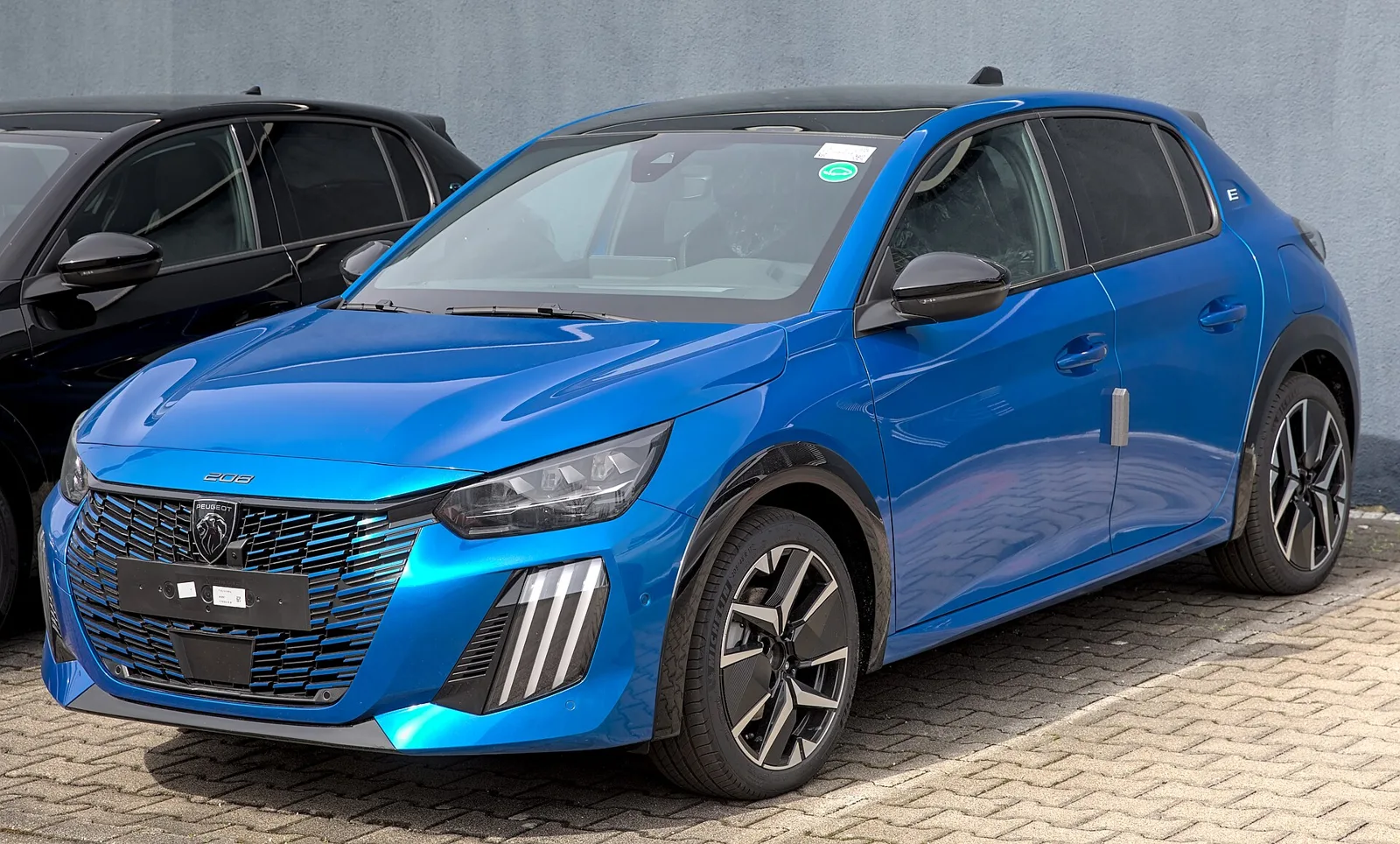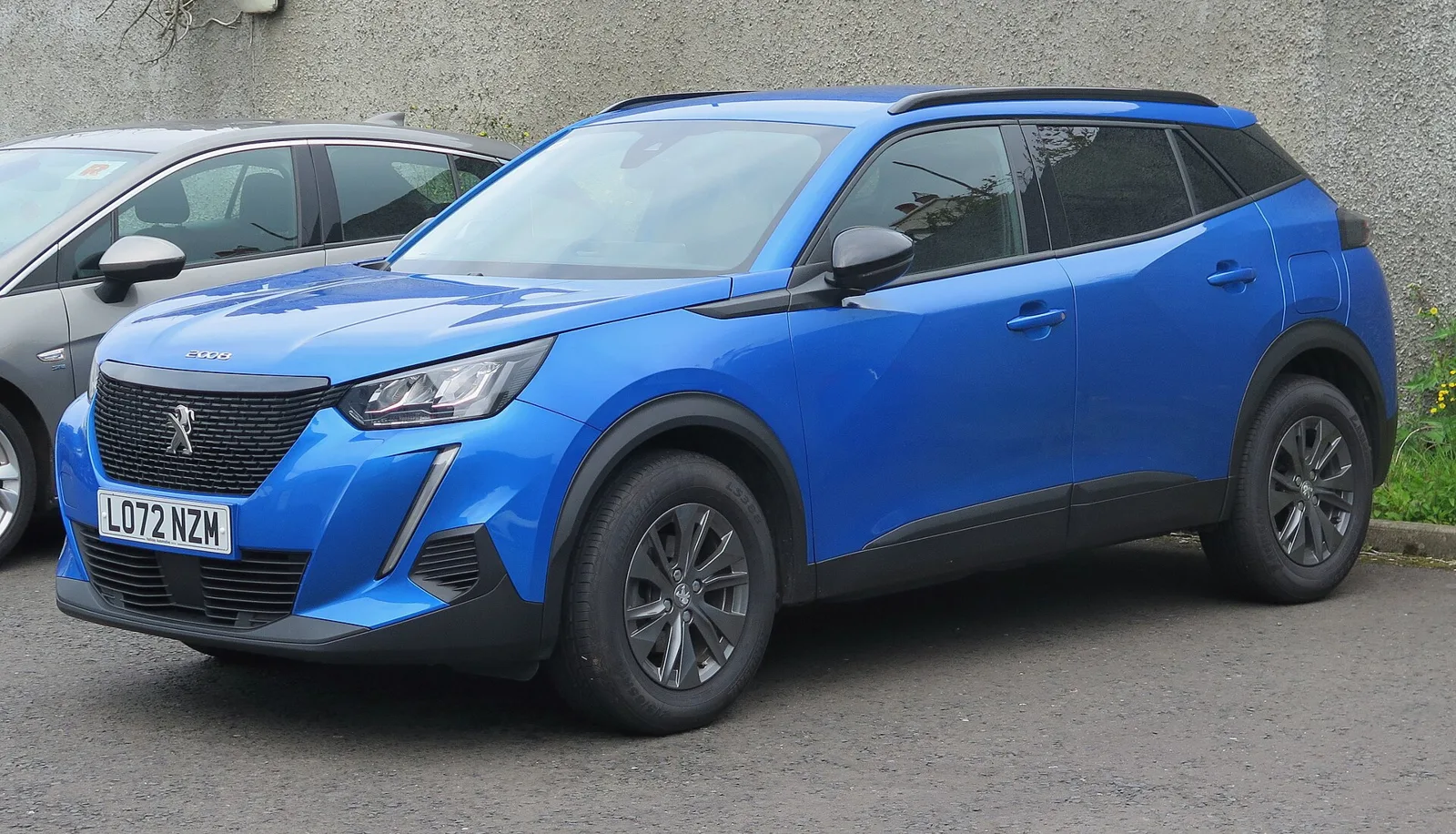
A bigger, sportier crossover built on the 208's cabin, sold with petrol, diesel and an electric e-2008 version.
Peugeot's second 2008 crossover arrived in 2020 with a bigger body, a lion-claw face shared with the 208 and a choice of petrol, diesel or fully electric power. Its length, width and wheelbase all increased. Every version sends its drive to the front wheels.
The Peugeot 2008 II is the second generation of the French crossover, built from 2020 by Peugeot. Its body grew in almost every direction and took on a sportier look, while the cabin came straight from the 208. Buyers could choose between a combustion car and the fully electric e-2008.
Where did the second-generation 2008 come from?
Peugeot put the second-generation 2008 online in photographs in the summer of 2019, then presented it in person at the 2020 Brussels Motor Show. Sales began in April. From the start the range split into two paths, the combustion 2008 and the electric e-2008, which was a new option compared with the first generation.
The 2008 II shares its mechanical family with the 208 and with the Opel Mokka and DS3 Crossback. All of them use the CMP platform made for segment B cars. That shared architecture is what made a fully electric variant possible alongside the combustion models.
Peugeot kept the 208's cabin and gave the 2008 far more road presence.
Exterior: a bigger, sportier body
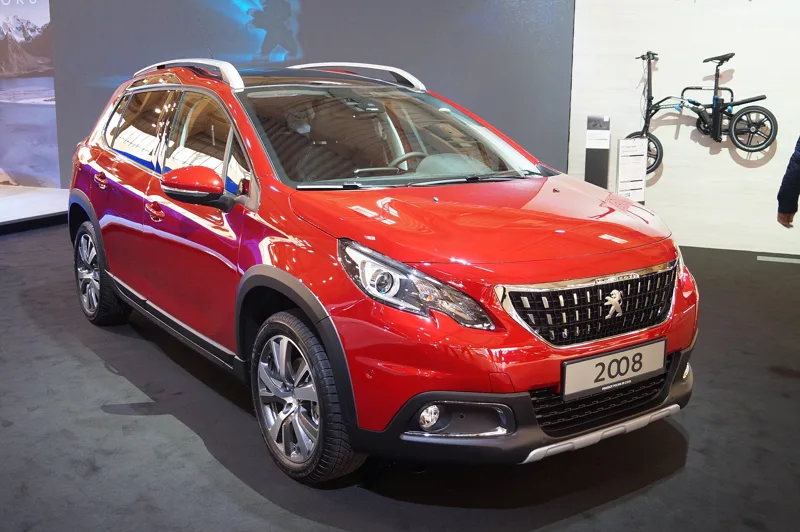
At first glance the car looks far larger than the model it replaces. Length grew by 149 mm, width by 26 mm and wheelbase by 63 mm, while height dropped by 10 mm. Alongside the growth came a sportier style, and the bodywork reads as more substantial at both ends.
The flanks are busier than before. The window line rises towards the roof, and a line that splits into two diverging strands at both ends suggests a solid body cut by a blade. On the GT, the fourth side window is a panel of glossy black plastic rather than glass, and a decal can be fitted to it.
At the back, the window slopes away steeply, and glossy black side spoilers help the air leave the flanks cleanly. The new LED lights take the family look of the latest Peugeots, and a glossy black band joins them and carries the brand name. The model name sits beside the number plate holder, with the trim code added only on the GT-Line and GT.
What does the front design look like?
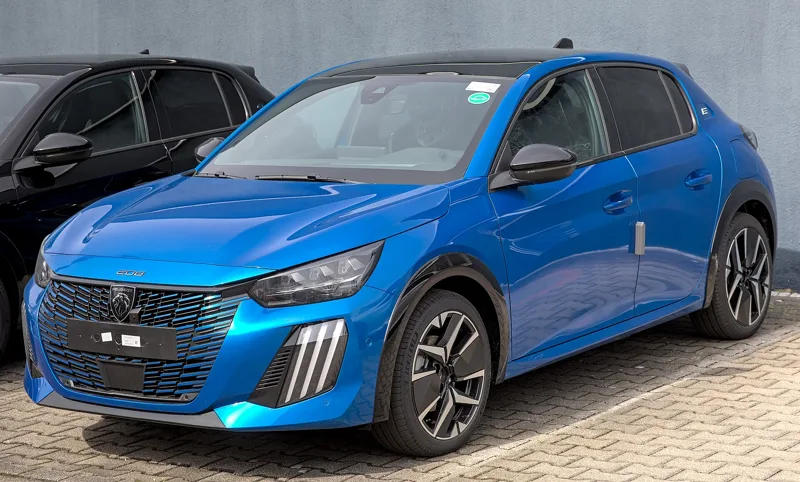
The 2008 II's face borrows from the 208, with near-identical headlights carrying three vertical lines that imitate a lion's claws. Its grille is much larger than before and holds the lion badge. Daytime running lights are LED, set apart from the main headlights, and fog lights sit further out.
Lower on the nose is a second air intake with a satin trim strip beneath it. The grille finish changes with the trim: black slats on the base car, silver slats on the middle grades and body-coloured slats on the electric version. The top GT-Line and GT trims switch to vertical silver slats.
Colours, wheels and the rear bumper
Seven exterior colours are offered across pastel, metallic and special paints. The roof is black on every version except Active and Allure. Wheels run from 16 inches to 18 inches, and the cladding is raw plastic, with a small silver plate on the mid-range trims and above.
The rear bumper is large and finished in raw plastic. Its only ornaments are a satin plate on top, the fog lights and the exhaust. The exhaust can be a single outlet in black or chrome, a double chrome pair on the right, or a double outlet on each side, which is fitted only on the GT trim.
Is the interior the same as the 208's?
Largely, yes. The 2008 II keeps the 208's iCockpit 3D layout, with a small steering wheel and a digital instrument panel that projects speed and rpm onto a glass panel. The infotainment screen measures 7 or 10 inches and includes the climate controls. Seats come in fabric, leather with fabric, or leather with Alcantara.
The dashboard is split into two levels. The upper level holds the instruments and vents, in soft-touch plastics. The lower level uses a carbon-look finish that carries on across the doors. On the GT-Line and GT trims, thin LED strips run around the dashboard and onto the doors. Door tops use soft plastic at the front and hard plastic at the rear.
Between the seats, the centre console has large storage areas in its upper part. Its lower part holds the gear lever, cup holders, the handbrake, which is mechanical or electronic, and the drive mode selector.
Platform and suspension
The suspension matches that of the sister and cousin cars, with MacPherson struts at the front and a torsion beam at the rear. The mechanics are shared with the 208 and with two cousins in the group, so the crossover is a close relative of the cars around it. No engine in the range offers all-wheel drive, so every version drives through the front wheels.
Which petrol and diesel engines are offered?
The petrol choice is the 1.2-litre (73.2 cu in) turbocharged PureTech three-cylinder, offered in 100, 110, 130 and 155 PS outputs. The diesel is a BlueHDi unit whose capacity falls from 1.6 to 1.5 litres, sold in 100 and 130 PS versions. All combustion versions carry a particulate filter.
Unlike the 208, the 2008 keeps a diesel. After the restyle the range narrows: the 1.2 PureTech stays in 100 and 130 PS forms, the 100 PS with a six-speed manual and the 130 PS with the eight-speed EAT8 automatic. The diesel is limited to the 130 PS version with that eight-speed automatic.
How does the e-2008 electric version work?
The e-2008 places a three-phase electric motor at the front. It produces 100 kW (136 PS; 134 hp) and 260 Nm (192 lb ft) of torque. Its battery holds 50 kWh and gives a range of 320 km, and both restyled batteries charge at 7.4 kW AC and 100 kW DC.
Apart from some blue accents in the exterior lettering and inside, the e-2008 looks much like the combustion car. After the restyle two versions were sold. The base car makes 136 PS (100 kW) and reaches 337 km of range. The stronger one makes 156 PS (115 kW), uses a slightly larger battery and covers 403 km.
Specifications at a glance
| Item | Detail |
|---|---|
| Generation | Second, built from 2020 |
| Petrol engine | 1.2-litre (73.2 cu in) turbo three-cylinder, 100 to 155 PS |
| Diesel engine | BlueHDi 1.5 litres, 100 and 130 PS (1.6 litres before) |
| Electric motor | 100 kW (136 PS; 134 hp) |
| e-2008 torque | 260 Nm (192 lb ft) |
| e-2008 battery | 50 kWh |
| e-2008 range | 320 km at launch; 337 km and 403 km after the restyle |
| Length change | +149 mm |
| Width change | +26 mm |
| Height change | -10 mm |
| Wheelbase change | +63 mm |
| Wheels | 16 to 18 inches |
| Drive | Front-wheel drive only |
What did the 2023 restyling change?
The 2023 restyling mainly changed the face of the car. The grille gained a new design, the headlights now have three light points in place of one, and the rear lights were redrawn. Inside, a 10-inch screen with new graphics arrived, and the Virtual Cockpit was updated. Mechanically the car changed very little.
The claws moved lower, forming a sort of air intake beside the bumper. The central panel of the nose now houses the radar used by the driver-assistance systems. The side is largely unchanged, but the wheel design is new, at 16 inches for the Active and 17 inches for the Allure and GT.
The e-2008 gained a stronger option at 156 PS (115 kW), which is the version with the larger battery.
How do the trim levels differ?
Active is the base trim and has only the analogue iCockpit instrument version. Allure sits in the middle of the range, and GT-Line and GT sit at the top. The GT-Line and GT trims add LED strips around the dashboard and doors. On the restyled car, Active has a black grille, while Allure and GT have a body-coloured one.
The roof stays black on every trim except Active and Allure. The electric version has blue accents in the lettering, and the top GT trim is the only one with the double exhaust on each side.