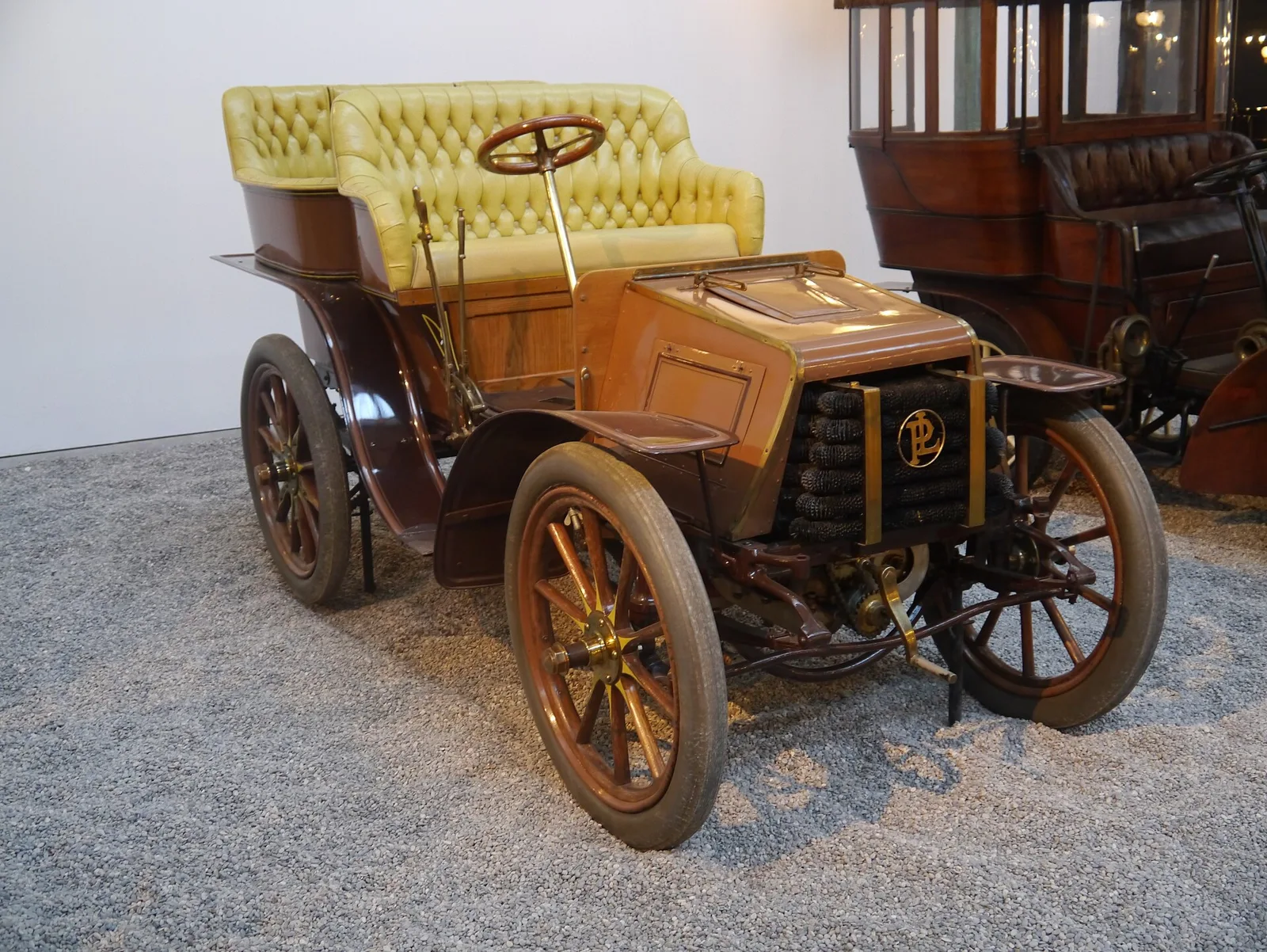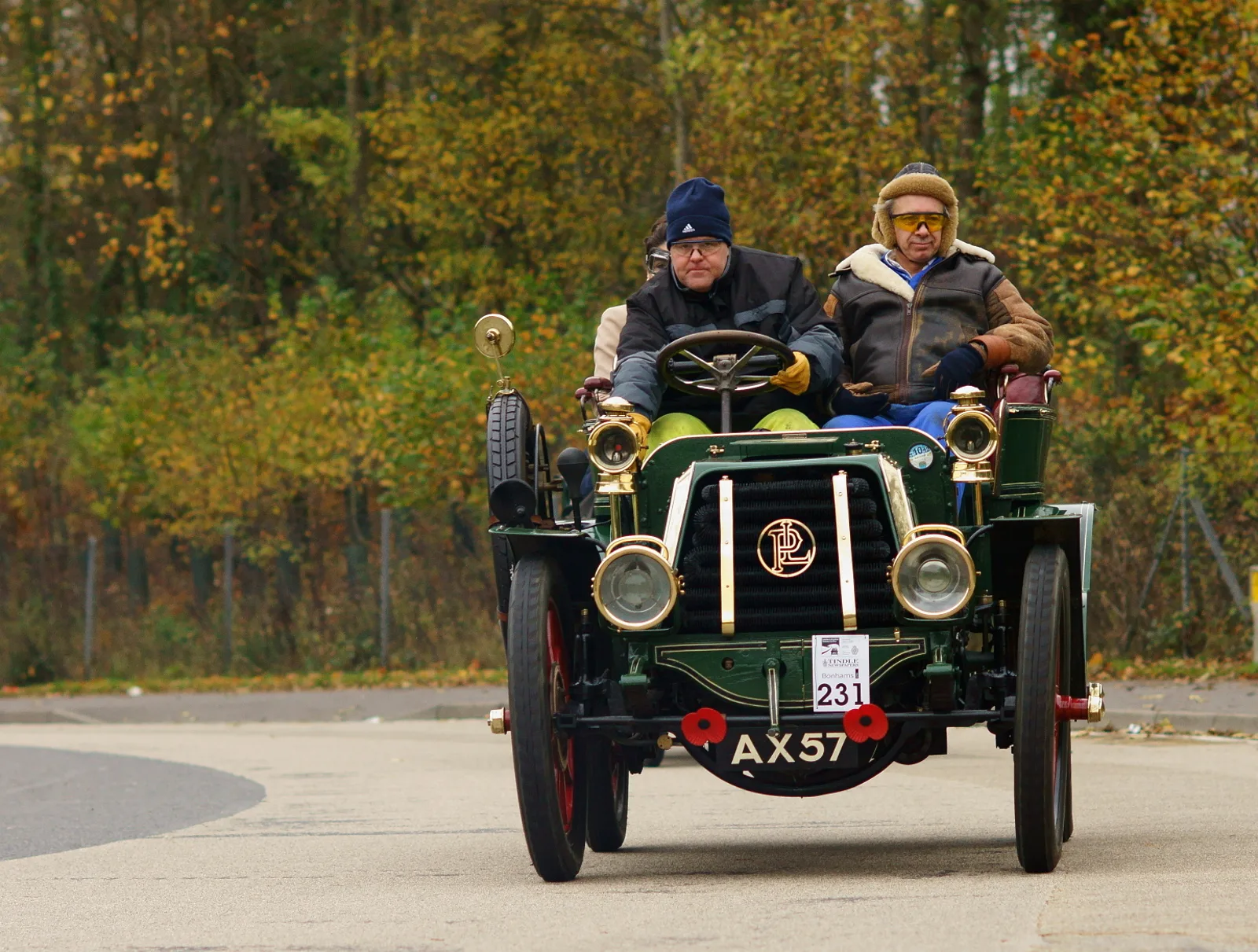
Two luxury families from Paris, a Knight-engined best seller in wartime and a six-cylinder finale that ran until 1931.
The Panhard & Levassor 16CV and 18CV were two families of luxury cars, named after their fiscal horsepower ratings and listed by the French maker from 1899 to 1931. The 16 CV line later produced the Type X26, the firm's best-selling model during the First World War.
Panhard & Levassor's high-class range was built around two families, the 16 CV and the 18 CV, named after their fiscal horsepower ratings. Together with the 15CV family, they were listed from 1899 to 1931, a run of more than three decades in which the models changed again and again.
What were the 16 and 18 fiscal CV cars?
The 16 and 18 CV designations were fiscal horsepower ratings, and the two families formed the high-class range of Panhard & Levassor with the 15CV family. They were closely linked, especially early in the 20th century, when the switch from 16 to 18 fiscal horsepower took place, and again in 1914, when the 18 CV cars returned to 16 CV.
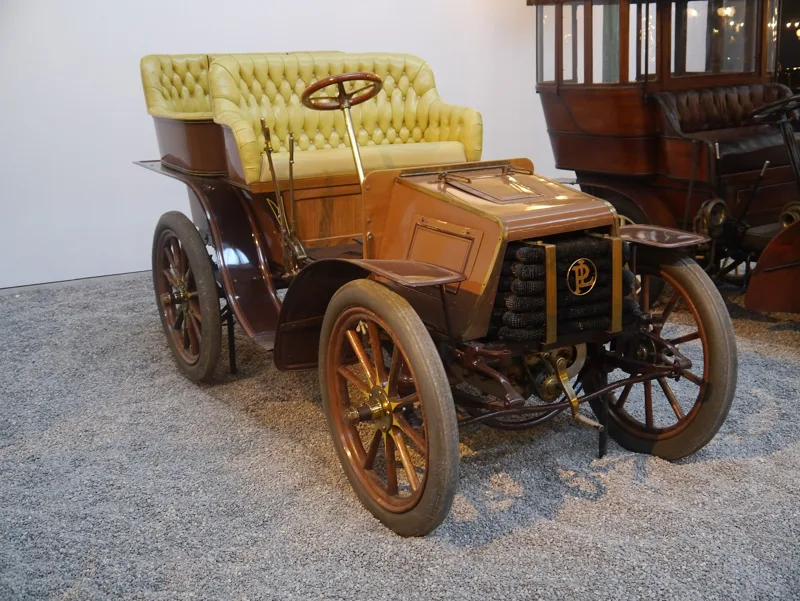
The first 16CV appeared in July 1899 with no special designation. The engine was a Phoenix unit, built under licence from Daimler, displacing 4,387 cc (267.7 cu in). Panhard & Levassor used it mainly in competition, and only one example was built in the last months of 1899, with eight more in the following year.
From January 1901 the gear ratios were revised, and that moved the car towards genuine series production, though it was still a small series by today's standards. The model entered the price list regularly, but it left the 16 fiscal CV family.
Named after their fiscal horsepower, these cars sold best in the middle of a world war.
What did the Type E and Type F add to the 16 CV range?
In 1901 the Type E 16 CV followed, with a Centaure engine of 4,072 cc (248.5 cu in) and a 4-speed manual gearbox. The Type F joined it in its last year and a half, with a new KC gearbox in place of the KB unit and a 20 fiscal CV version with a 5.3-litre (323 cu in) engine.
The Type E was produced from January 1901 to September 1904, and it was not to be confused with the Type E 10CV, which entered the price list the following year. Between them the pair reached 153 examples, only three of them Type F. These were the only road cars in the 16 fiscal CV class, although across the range they did not always stay in that slot.
How did the 16 CV cars become 18 fiscal CV?
From 1904 the Type E and Type F were revised to change their gear ratios, moving them from 16 to 18 fiscal horsepower. The Type F received a real evolution of its gearbox, available with three or four speeds, and the two models were built in 24 and 14 examples respectively.
A single model, the Type J 18CV, then took over from the Type E and Type F. It let buyers choose between the KB and the 4-speed KC gearboxes, but its real novelty was the new Centaure allege engine of 4,072 cc (248.5 cu in). Production ran until 1907 and totalled 471 examples.
Which 18 CV models followed?
The Type U2 18CV followed the Type J, with a revised 4.1-litre (250 cu in) engine that ran at a slightly higher speed, and a new 4-speed manual gearbox. From early 1907 it was also offered in a 15 fiscal CV version. Production lasted more than four years, ending in October 1911, with 856 examples built.
From June 1908 the Type X1 joined the U2, with a cardan shaft in place of the chain drive used on the earlier models. The Type U6, introduced in February 1910, differed from the U2 only in details. The Type X8, from January 1911, brought a six-cylinder engine of 3,603 cc (219.9 cu in), less powerful than the 4.1-litre unit but more prestigious because it had six cylinders.
The Type U2 was retired in October 1911. In 1912 the 18 CV range had three models. The Type U6 left the price list in October, with 105 examples produced. The Type X8 evolved into the Type X15, which was built in only a handful of examples. The Type X1, renamed Type X12, lasted until September 1913, and it was the final 18 fiscal CV car.
How did the Type X26 become the best seller?
The Type X26 was launched in December 1914 as the first of a new 16 CV family, with a 3,175 cc (193.8 cu in) Knight sleeve-valve engine. Sales began in earnest in 1915, and it became the firm's best seller during the war and the three years after. It used a flexible-joint transmission.
From the autumn of 1913 until the end of 1914 Panhard & Levassor had no 16 or 18 fiscal CV models on sale. The Knight engine had made its debut at the firm in 1910, and as with almost all models in the range in the early 1910s, the 16 CV family was converted to it.
Sales were strong despite the conflict. The Type X26 sold 3,613 examples between late 1914 and late 1921. Many wartime examples went to prominent figures in the French armed forces and beyond, and two went to the American embassy in Paris. Without the war, it could have achieved even better results than those figures.
The Type X26 also gave rise to the Type X28, which differed practically only in its axle ratio. That model never entered the price list, and its production stayed limited to two experimental prototypes.
What was the Type X33 Special?
The Type X33, commercially known as the Type Special, arrived in February 1921 as a sportier 16 CV on a lowered, short-wheelbase chassis. Its engine was the Type X26 unit tuned to about 40 PS (39 hp), against 37 PS (36 hp) for the normal 16 CV, and it was credited with a top speed of 115 km/h (71 mph).
The Type X33 was designed for slim, dynamic bodies, such as a two- or four-seat saloon or a torpedo. It was built for a little over a year, producing 72 examples. Its price, about 9,000 francs more than the Type X26, limited its spread.
How did the Type X36 to X46 family develop?
The Type X36, launched in October 1921, was an evolution of the Type X26 with a new separate frame of longitudinal and cross members, trapezoidal in shape. The layout followed that of the contemporary 12 fiscal CV models, and the X36 was built until October 1923.
Its successor, the Type X40, appeared early in 1924 with a longer wheelbase to suit bigger bodies. Its braking was improved and now reached the front wheels too. Later in 1924 the Type X46 took the Type X33 engine, a still longer wheelbase, and a dynamo at the end of the crankshaft for starting.
Together the Type X26, X36 and X46 made 7,138 examples between October 1921 and October 1928.
How did the 16 CV family end?
The 16 fiscal CV family grew again in October 1926 with the Type X57, a six-cylinder of 3,445 cc (210.2 cu in). Sold as the 16CV Six, it brought back cardan shaft transmission and was the last Panhard & Levassor of 16 fiscal CV, built until 1931.
From May 1928 the Type X57 was also offered with a long wheelbase, while the short-wheelbase car inherited the Type X46's place, since that model was due to leave the price list within months. From 1929 to 1931 only two 16 fiscal CV models remained, and both were six-cylinder cars.
Production ended at the end of 1931. The cars were to be replaced by the 6DS, which had a 3.5-litre (213.6 cu in) engine.
Key specifications
| Model | Engine |
|---|---|
| 16CV (1899) | Phoenix, built under Daimler licence, 4,387 cc (267.7 cu in) |
| Type E 16 CV | Centaure, 4,072 cc (248.5 cu in), 4-speed manual |
| Type U2 18CV | Revised 4.1-litre (250 cu in), 4-speed manual |
| Type X8 | Six-cylinder, 3,603 cc (219.9 cu in), cardan shaft |
| Type X26 | Knight sleeve-valve, 3,175 cc (193.8 cu in) |
| Type X33 Special | About 40 PS (39 hp), top speed 115 km/h (71 mph) |
| Type X57 16CV Six | Six-cylinder, 3,445 cc (210.2 cu in) |
| 6DS | 3.5-litre (213.6 cu in) |
How many examples of each model were built?
- Type E and Type F 16 CV: 153 examples, of which three were Type F.
- Type E 16 CV: 24 examples after the 1904 revision, and Type F: 14.
- Type J 18CV: 471 examples, until 1907.
- Type U2 18CV: 856 examples, until October 1911.
- Type U6 18CV: 105 examples, left the price list in October 1912.
- Type X26: 3,613 examples, late 1914 to late 1921.
- Type X33 Special: 72 examples.
- Type X26, X36 and X46 together: 7,138 examples, October 1921 to October 1928.