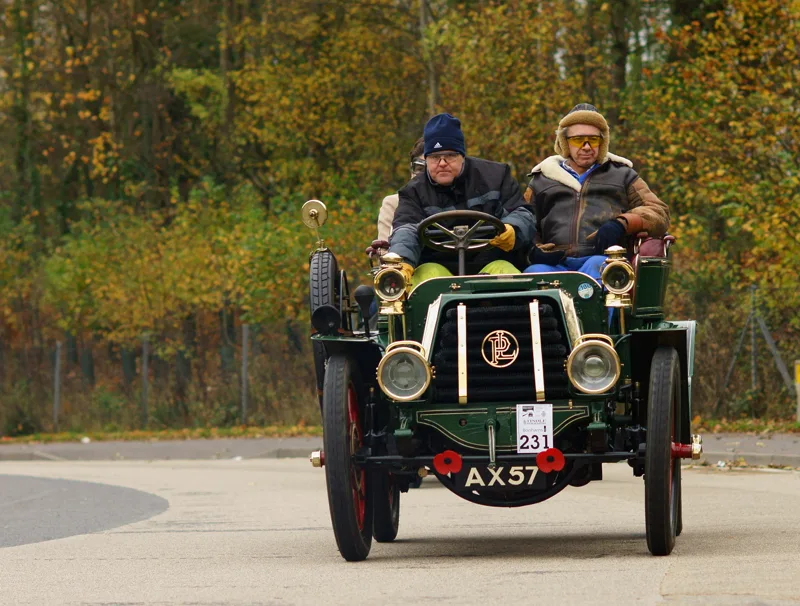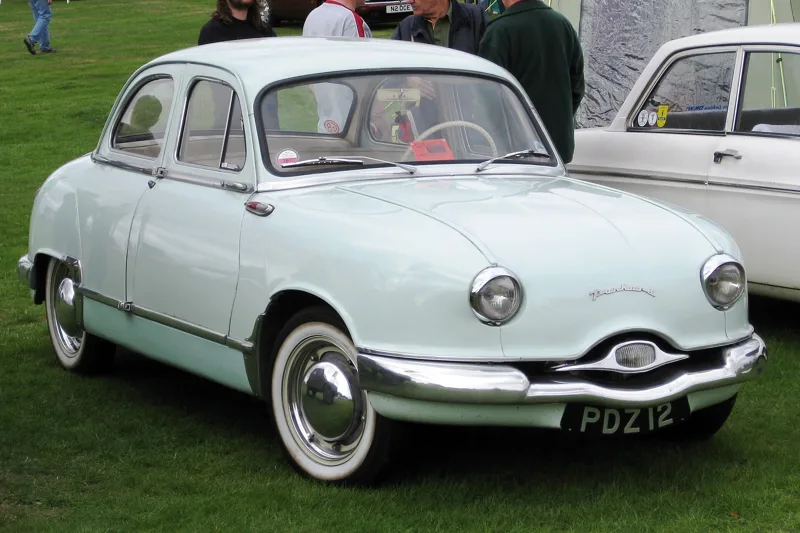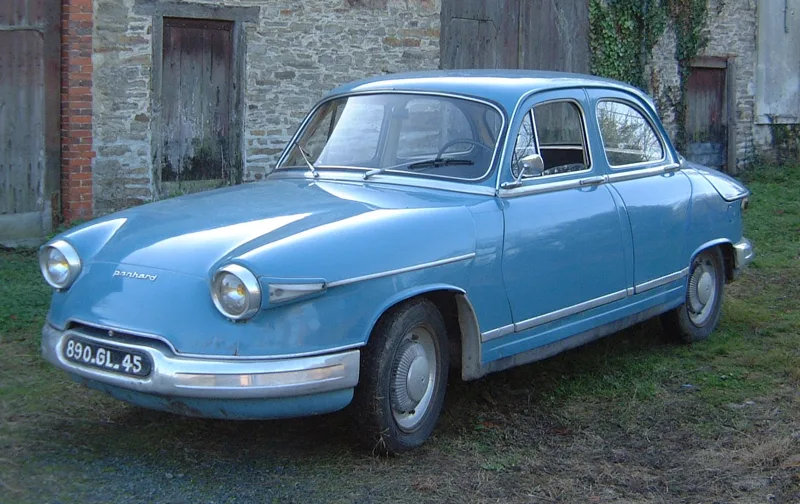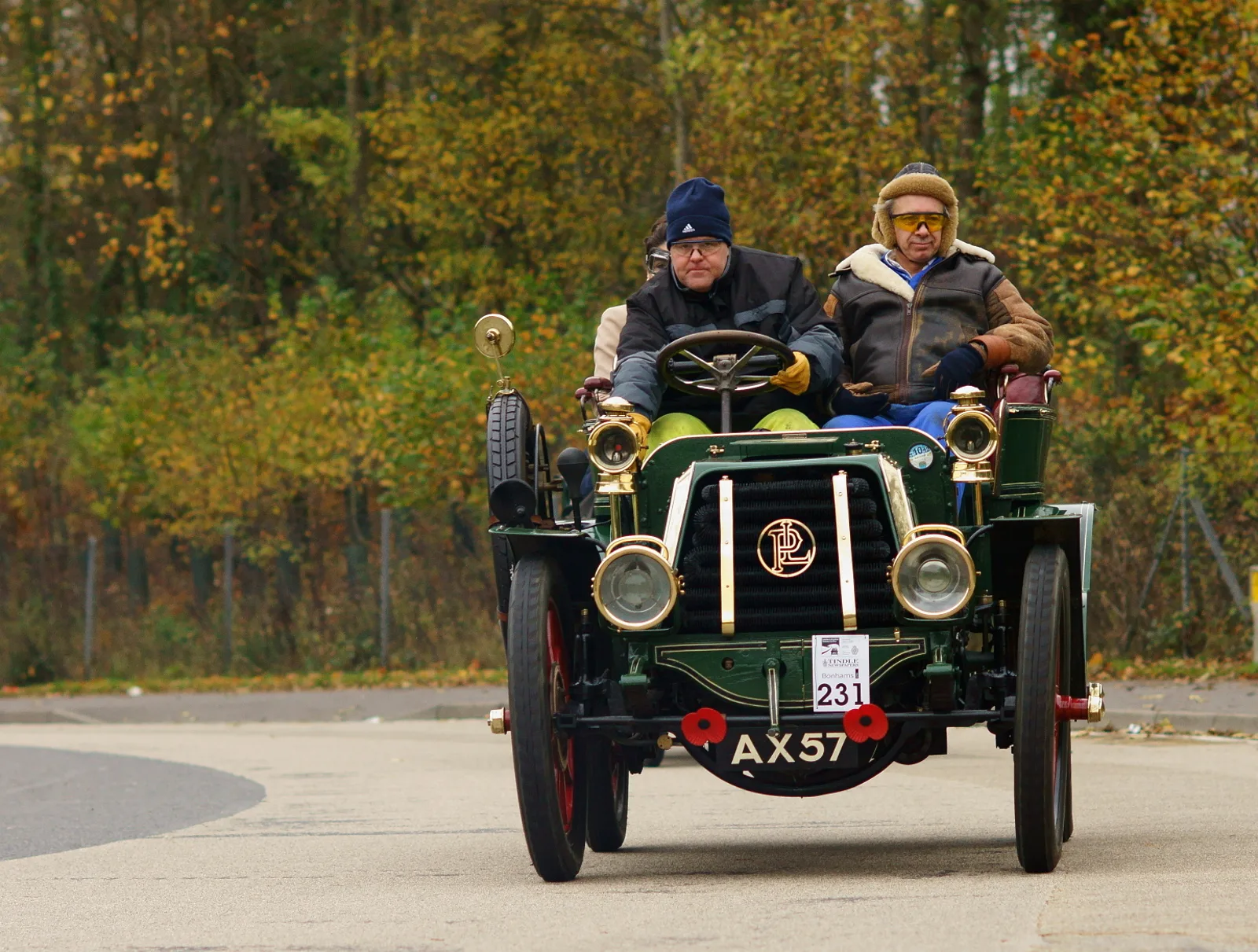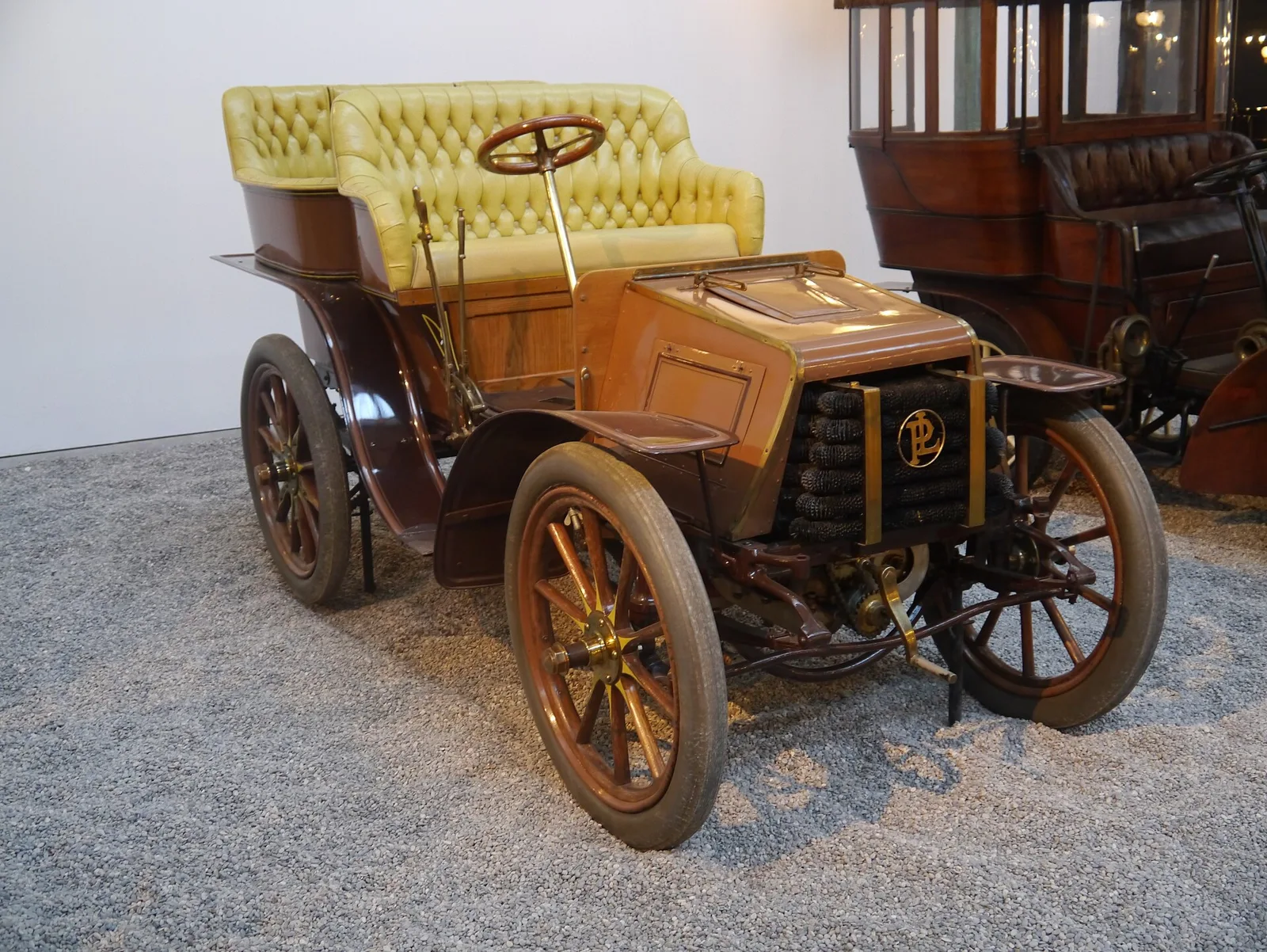
A French middle-range family from 1902 that moved from chain drive to Knight sleeve valves and ended with a six-cylinder model in 1930.
The Panhard et Levassor 10CV was a French middle-range family sold from 1902 to 1930. It moved from chain-driven cars with Centaure engines to Knight sleeve-valve units, and its final model, the six-cylinder Type X59, left the catalogue in 1930.
The Panhard & Levassor 10CV was one of two families that, together with the 12CV, filled the middle of the French maker's range between 1902 and 1930. Most of its models had 4-cylinder engines, and only the last of them, the Type X59, had six cylinders.
What was the 10CV family?
The chapters below follow the models in order, from the 1902 Type B and E through the Knight-engined cars of the 1920s to the Type X59, the final 10 CV model, which left the range in 1930.
The 10CV was a large family of cars developed through several increasingly sophisticated models, mostly with four-cylinder engines. Because it spanned almost three decades, its history is easiest to follow in stages, from the first chain-driven cars to the late sleeve-valve models.
From chain drive to Knight sleeve valves and finally a six-cylinder, the 10CV kept changing until 1930.
How did the first 10CV models start?
The first models were the Type B and the Type E, launched in July 1902 with Centaure two-block engines of 2,402 cc. They differed mainly in their gearboxes, both with four speeds but of different types, and their production ended at the close of 1905.
The Type S 10 CV arrived in December 1904 and brought the Centaure Allege engine into this market segment, keeping the 2,402 cc displacement. Its chain-driven transmission used a revised four-speed gearbox. The cheaper Type I 10CV joined it in 1905 with the Type E's gearbox, but neither model sold well.
The Type S stayed on sale until the end of 1907. A Type S 15 CV with a 3.3-litre engine also existed. At the start of the following year the Type X 10CV replaced it and extended the cardan-shaft transmission, which had until then been reserved for the 15 CV Type X. The Type X used the Type S engine, revised to reach higher engine speeds and better overall efficiency. In the same year the cardan-shaft system also reached the Type X1, with a 4.1-litre engine, and later the rest of the range. The Type X 10CV sold 105 units, and production was dropped in January 1910, after only two years in the catalogue.
Why did the Type X19 succeed where the Type X failed?
For almost three years after the Type X left the range there were no 10 CV models. The Type X19 arrived in November 1912 as the new base of the range, replacing the smaller Type X6. Its 2,150 cc monobloc engine had a long 140 mm stroke, which favoured the delivery of torque and flexible driving. Sales were strong, and the car stayed listed until after the First World War.
The engine, gearbox and clutch formed a single unit, and the X19 introduced a flexible-coupling transmission that Panhard first used on this model. The company also gave it a divided-shape radiator, a styling feature that gradually spread to the rest of the range.
The gap from the previous 2.4-litre engine was small, a sign that the Avenue d'Ivry company wanted to move away from the most popular market segments. Output reached 3,020 cars by May 1921, plus 403 light trucks on the same chassis.
What was the Type X37 and its Knight engine?
Right after the Type X19 left the catalogue there was no direct heir, because the designers were still developing the new model.
The Type X37, launched in May 1922, was the first 10 CV Panhard with a sleeve-valve engine built under Knight licence. Its 1,190 cc engine was nearly halved compared with the Type X19, yet it offered better performance, and under French rules the car stayed in the 10 CV tax class.
The first near-definitive prototype was built in October 1921, following four earlier prototypes. The Type X37 went back to cardan-shaft transmission and was offered as a bare chassis, a torpedo or a six-light limousine, with a coupe following later. A handful of commercial vehicles were also bodied on bare chassis.
It faced hard competition, mainly from the Citroen Type B2, launched in 1922 at a far lower price. The much dearer Voisin 8-10 CV, which also had a Knight engine, cost 32,000 francs. The Type X37 sat between these prices but aimed at a different customer from the typical Citroen or Peugeot buyer.
Production ended in February 1924 after 1,391 cars and twelve light trucks.
What changed with the Type X44 and Type X47?
The Type X44 replaced the Type X37 in March 1924. Its chassis was lengthened by 10 cm in wheelbase, and the brakes were extended from the rear wheels to the front axle. The engine grew from 1,190 cc to 1,390 cc to offset the 250 kg added by the new equipment, and dynamo starting, a new four-speed gearbox and larger 775/145 tyres arrived too.
The Type X47 followed in December 1924. Its engine was bored out to 1,480 cc to offset more weight from extra equipment. Because it was slightly less powerful, it was classed as a 9 CV car. Its Sport derivative, with an engine revised for higher speeds, stayed in the 10 CV class.
The Type X47 was offered as a bare chassis, torpedo, sport torpedo, saloon or coach. Production lasted three and a half years and ended in September 1927, while the Type X44 left the price lists in March 1925.
Which model replaced the Type X47?
The Type X60 took over in September 1927. It was essentially a further evolution of the X47, differing mainly in rear-axle updates and a single-plate clutch in place of the earlier cone clutch. A Sport version had a slightly more powerful engine.
Production of the X60 lasted two more years, ending in September 1929. Across the X47 and X60, 4,024 cars were built, 34 of them in Sport form, and 89 trucks and commercial vehicles followed on the same chassis.
What were the long-wheelbase versions?
The long-wheelbase Type K22 was built on the X47 chassis, with its wheelbase stretched from 2.94 to 3.27 metres. The initial K marked commercial vehicles in Panhard's naming, but the K22 also came as a limousine, a six-seat torpedo or a bare chassis.
The move from the X47 to the X60 brought the Type K33 in September 1927, with the same updates as the short-wheelbase car. It was built until the end of 1928. In total only 16 cars of the K22 and K33 were made, alongside several hundred light trucks sold under the same names.
What was the six-cylinder Type X59?
The Type X59 was the last and most sophisticated 10 CV, shown at the Paris Motor Show in October 1927. It was the only six-cylinder 10 CV from the company, and it was the last of its class to leave the catalogue, in July 1930.
It rode a generous wheelbase of 3.12 metres and used a 1,829 cc sleeve-valve engine with a new four-speed gearbox, whose third gear was especially quiet thanks to helical gears. Low noise and comfort were its main selling points.
The car was produced in 636 units in total. Its price of about 45,300 francs was not very popular, given the difficult economy at the end of the 1920s. In its final year the Type X59 was the base model of the range, despite its six cylinders.
Key specifications at a glance
| Model | Engine | Notes |
|---|---|---|
| Type B and Type E (1902) | 2,402 cc Centaure two-block | Production ended at the close of 1905 |
| Type S 10 CV (1904) | 2,402 cc Centaure Allege | On sale to the end of 1907, then replaced by the Type X |
| Type X 10CV | Revised 2,402 cc engine | 105 units; dropped in January 1910 |
| Type X19 (1912) | 2,150 cc monobloc, 140 mm stroke | 3,020 cars by May 1921 |
| Type X37 (1922) | 1,190 cc Knight sleeve-valve | 1,391 cars; production ended February 1924 |
| Type X44 (1924) | 1,390 cc | Wheelbase 10 cm longer |
| Type X47 (1924) | 1,480 cc | Rated 9 CV; Sport version 10 CV |
| Type X60 (1927) | Evolution of the X47 engine | Single-plate clutch; production ended September 1929 |
| Type X59 (1927) | 1,829 cc six-cylinder, sleeve valves | 3.12 m wheelbase; 636 cars |