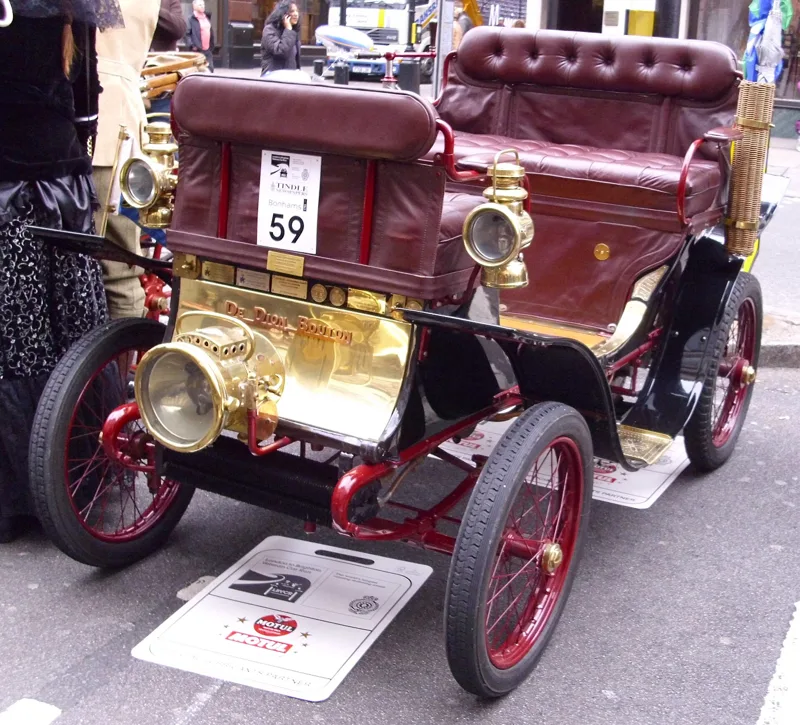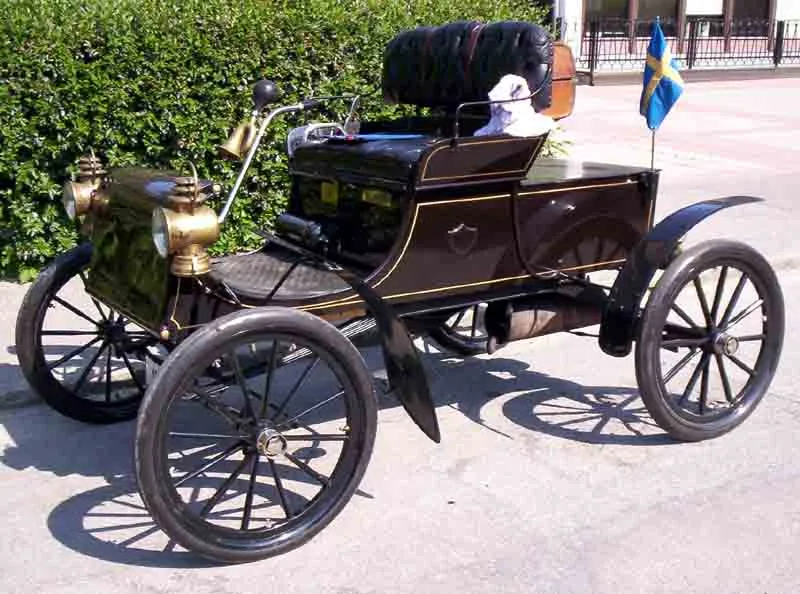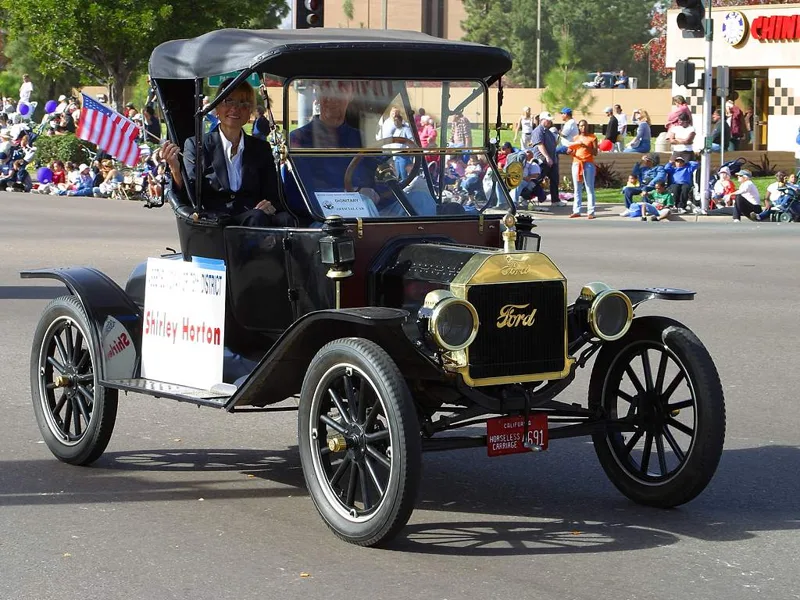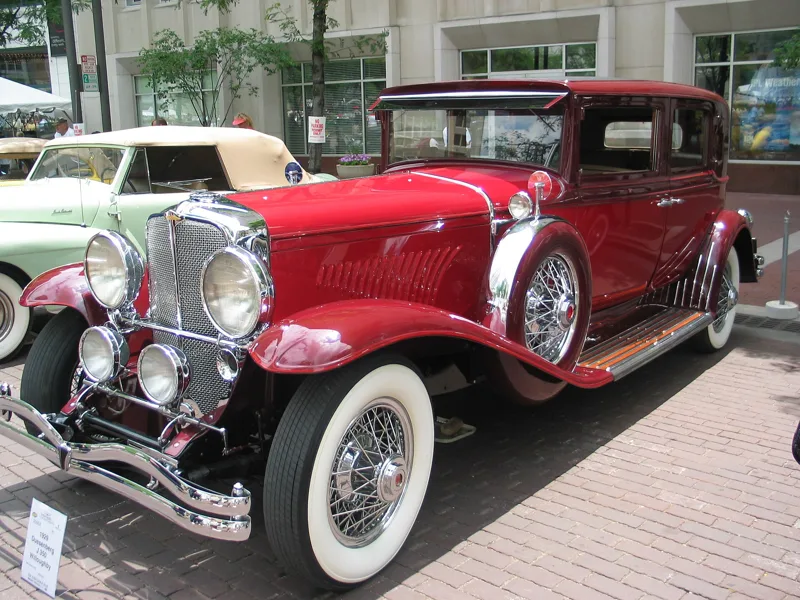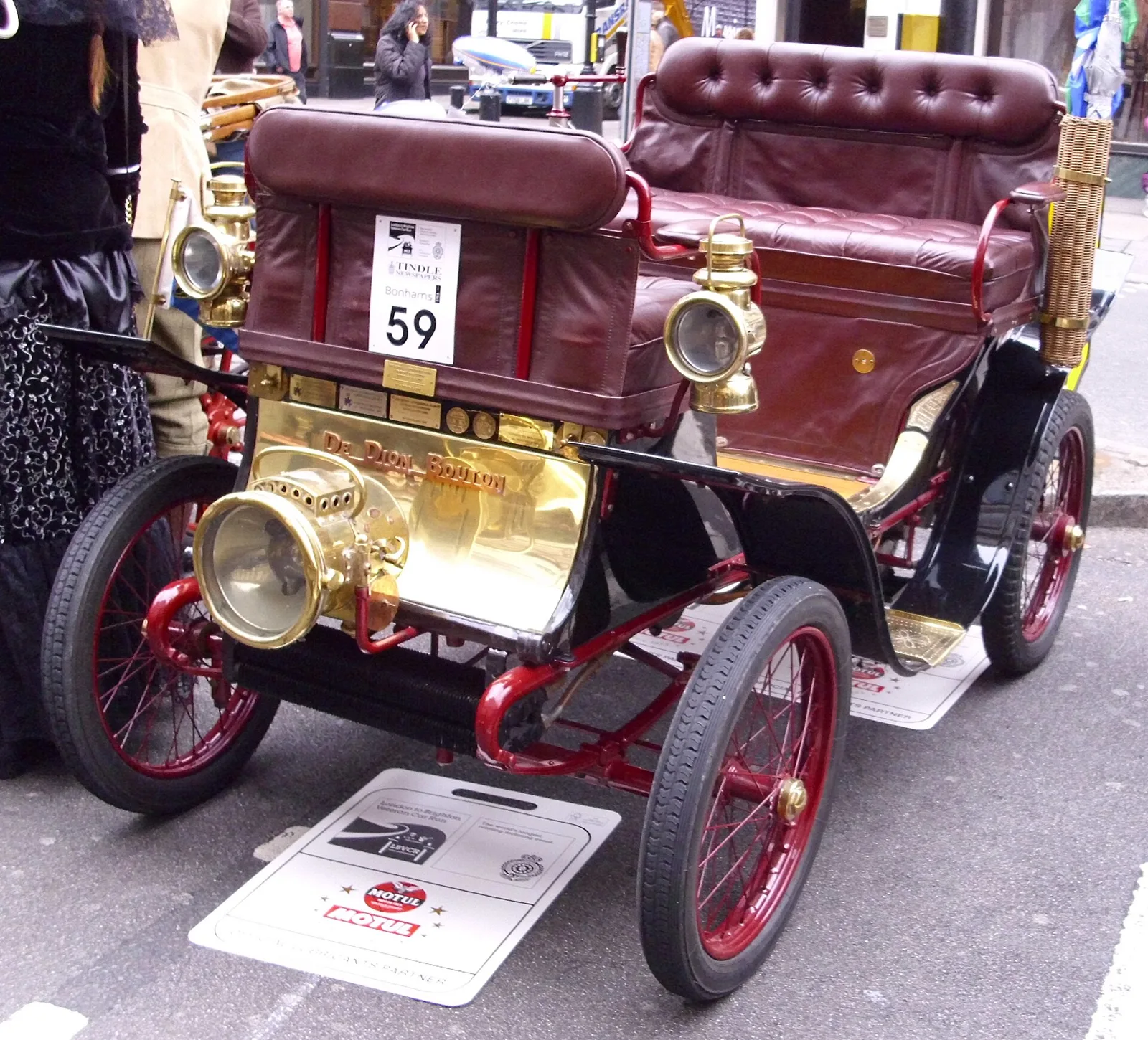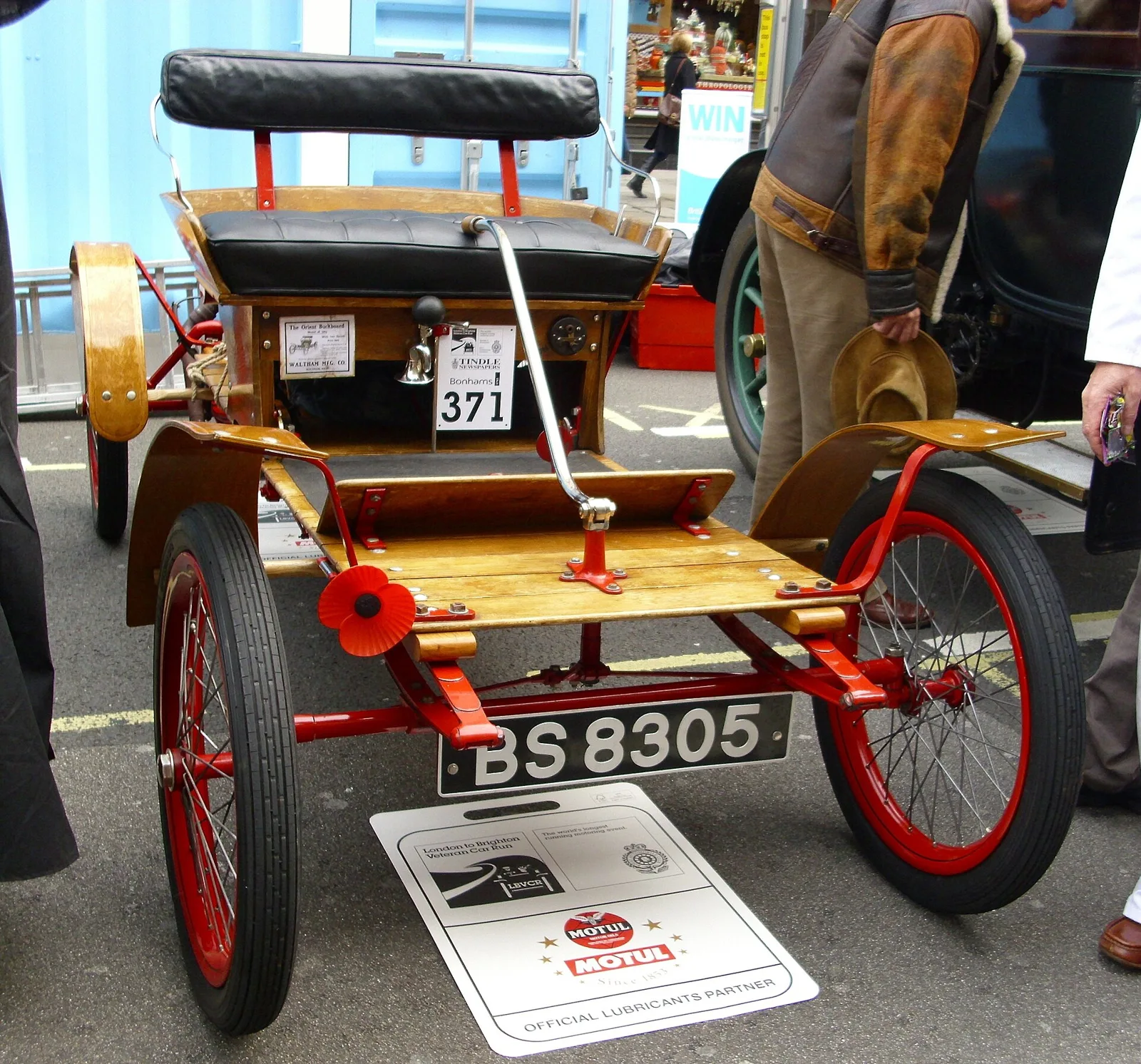
A wooden-framed, friction-driven light car from Waltham Manufacturing, offered from US$375 and built from 1902 to 1907.
The Orient Buckboard was a light automobile with a wooden frame, a single-cylinder engine and friction drive. Waltham Manufacturing built it from 1902 to 1907, and it started at US$375, less than half the price of the company's own Model No. 9 runabout.
The Orient Buckboard was a very simple light automobile built from 1902 to 1907. Its maker, Waltham Manufacturing of Massachusetts, was better known for bicycles and motorcycles, and it sold the Buckboard worldwide. A wooden frame, a bare body and a friction drive kept the car light, and it was priced far below the company's other car.
Anyone who sees one today will find almost no bodywork and very little suspension, just a seat on a board above a light frame. Waltham Manufacturing sold between 2,500 and 3,250 Buckboards, but very few cars of any kind.
What was the Buckboard, and how was it built?
The name refers to the construction. A frame of wood or, less often, steel tubing carried a simple board, and the driver's seat was fixed to that board. There was no bodywork and almost no suspension. A small petrol or electric motor sat at the rear, and it drove the rear wheels.
Leonard B. Gaylor dispensed with everything that was not strictly necessary. The floor was a platform of hickory wood, with a two-seat bench at its centre and a tubular tank lying across the car just behind it. The engine stood upright on the rear axle, and four mudguards had to keep off the worst of the spray.
Later cars gained a small storage space at the front. From 1904 at the latest, a makeshift weather shelter could be bought for an extra charge: US$22.00 for a two-seater and US$25.00 for a four-seater.
A board, a bench and a friction drive, sold as the cheapest car in the world.
Waltham Manufacturing and its engineers
The company's roots lay in bicycles. Waltham Manufacturing was based in Waltham, Massachusetts, and Orient was its brand name. Charles Herman Metz (1863-1937), a co-founder and the technical director, held several bicycle patents. He laid the groundwork for the car indirectly.
Starting in 1898, Metz brought in French single-cylinder motors from Aster (3 PS) and De Dion-Bouton (5 PS). He then built the Orient-Aster Pacer, one of the first motorcycles made in America. By 1902 his own single-cylinder units produced 4 and 8 PS. The De Dion-Bouton motor tricycle and a four-wheeled version were also sold, or built under licence.
A light automobile designed by Metz appeared in 1902 and sold about 400 times. Metz left the company in May 1902, and Gaylor, who came from the Tribune bicycle works in Pennsylvania, took over as managing director and chief engineer. The company's first offering was a light automobile powered by the new in-house 8 PS engine, on the 2,032 mm (80 in) wheelbase later used for the Buckboard. It sold for US$875 and about 400 buyers took it.
John Robbins, works manager from the 1893 founding, gave way at the end of 1904 to Leo Melanowski, a Russian-born man well regarded in the trade.
Why did the Runabout Model No. 9 fail while the Buckboard sold?
The Runabout Model No. 9 appeared in 1902 for the 1903 model year. It was a two-seater on the same wheelbase, with the larger 8 PS engine, but it cost US$950. It was discontinued at the end of 1903 after only about 50 sales, while the Buckboard, at US$375, kept going.
The Buckboard was continually refined. The 1904 price list included a two-seater at US$425, a three-seater at US$450 and a delivery model with a rear load bed at US$443. Between 1905 and 1907 four versions appeared, ranging from US$375 to US$525, and a V-twin of 8 PS could be specified from about 1906.
Engine and drive
Every Buckboard came with the company's own single-cylinder engine. Its output stayed at 4 PS (3.9 hp; about 3 kW) throughout production. The displacement was 584 cc (35.6 cu in), with a bore and stroke of 83 x 108 mm, and it had one inlet valve and one exhaust valve, both operated from the side.
The single-cylinder engine and the optional two-cylinder engine, which arrived around 1906, were both air-cooled and mounted lengthwise at the rear. Nothing covered them. Only a minimal guard was fitted around the fan.
How did the friction drive work?
Power passed through a friction drive, a continuously adjustable form of friction-wheel gearbox with very few moving parts. The engine's flywheel doubled as the friction disc. Early cars drove the left rear wheel by belt, while later cars had a chain to each rear wheel.
The system was light and simple, but slip wasted a great deal of power. Waltham and its successor, the Metz Company, kept the design for many years out of conviction, even though the car industry used it only briefly.
Versions from 1902 to 1907
- 1902 to 1903: unsprung, with a belt to the left rear wheel
- 1904 to 1905: front-axle springs, belt on the left rear wheel
- 1905 to 1906: suspension on both axles, drive by two chains
- 1907 Model E.R.: steering knuckles with a steering wheel
The Buckboard was given leaf springs at the front from about 1904, and the last Buckboards also received a pair of leaf springs for the rear axle from about 1906. Steering was by a cow's-tail lever, a common arrangement even on larger cars of the time. A four-seat surrey was also available, otherwise identical but with an upright steering lever set at the driver's side.
The Waltham B.R., D.C. and E.R.
The high point of development was the B.R. runabout and the D.C. delivery van, which had a longer wheelbase. They were much more elaborate than their predecessors. They used a proper wooden frame, sprung at both axles, and drove each rear wheel by its own chain. Both sold for slightly less than the Oldsmobile Curved Dash, a car in its final production year that still listed at US$650.
The E.R. runabout was derived from these models and was somewhat shorter. Waltham offered it with steering knuckles, a steering wheel and suggested bodywork, which brought it close to a light car. At US$1,275 it was very expensive.
How fast could a Buckboard go?
Figures varied, but the cars weighed 400, 500 or 600 lb (about 180, 227 or 272 kg). They could reach 30 to 35 mph (48-56 km/h) on unpaved roads, provided the road and the driver's nerve allowed it. The tank held 3.5 gal. (13.25 litres), enough for about 100 miles (160 km) according to a contemporary source.
The car is also credited with a consumption of 35 mpg, which corresponds to 6.7 litres per 100 km.
Positioning and advertising
A Buckboard started at US$375, less than half the price of the Model No. 9 runabout at US$950. The Model No. 9 shared that wheelbase but had the larger 8 PS single-cylinder engine and a reasonable body. It belonged to the smallest car class of the day, the so-called light cars, forerunners of the cyclecar. Oldsmobile's Curved Dash at US$650 undercut it as well.
Waltham could claim, with some justice, to sell the cheapest car in the world. A second slogan told buyers that everyone should have one. Running costs were promoted too, quoted at half a US cent.
How many Buckboards survive today?
The Waltham Museum has traced 57 Buckboards, of which 45 are in the USA. The museum owns one of them, chassis number 495B, which is probably the second-oldest survivor. A Buckboard from 1906 was on display at Retro Classics in Stuttgart in 2011.
Further examples are kept by car museums and private collectors, Europe included. Two or more enter the London to Brighton Veteran Car Run now and then, a rally held over the first weekend of November. RM Auctions sold a running example in 2009 for US$11,000.
Specifications at a glance
| Specification | Detail |
|---|---|
| Built | 1902 to 1907 |
| Maker | Waltham Manufacturing, Waltham, Massachusetts |
| Engine | 584 cc (35.6 cu in) single-cylinder, 4 PS (3.9 hp; about 3 kW) |
| Drive | Friction drive to the rear wheels by belt or chain |
| Wheelbase | 2,032 mm (80 in) |
| Weight | 400, 500 or 600 lb (about 180, 227 or 272 kg) |
| Top speed | 30 to 35 mph (48-56 km/h) |
| Price | US$375 at launch; US$375 to US$525 from 1905 to 1907 |
Racing driver Ralph DePalma (1884-1956) had a Buckboard from Waltham Manufacturing as his first motor vehicle of his own, and that car still exists.