Northern's two-cylinder mid-size car, changed almost every year, with a boxer engine, a steering-column control set and a second plant in Michigan.
The Northern Type C was a two-cylinder mid-size car built by the Northern Manufacturing Company from 1904 to 1908. It used a water-cooled boxer engine, a single lever on the steering column for controls, and probably a two-speed planetary gearbox, with output rising to 24 HP in 1908.
Northern's two-cylinder mid-size car was offered in several guises between 1904 and 1908, and it was changed almost every year. Its engine sat at the front, the drive ran to the rear wheels by propeller shaft, and by 1908 the limousine's controls sat entirely on the steering column.
Where did the Northern Type C come from?
Northern built the Type C as a mid-size two-cylinder car from 1904 to 1908, with a front-mounted engine and rear-wheel drive by propeller shaft. The engineer Maxwell had established the marque with the Runabout, and the main design work was probably carried out by Charles King.
Maxwell was probably still involved in the design of the new car, but King is the name most likely to lie behind the main work. King also introduced technical solutions that simplified the operation of the vehicle, and these were perfected in the later Northern Type K and L.
The model was updated almost every year, and not every change brought a new name. Engine output was raised several times, wheelbases changed, further body styles came from the maker, and at least two visual touch-ups were made at the front end.
From 1906 a delivery van was built on the same chassis, the only commercial vehicle this maker ever offered. In 1907 Northern set up a second plant at Port Huron, Michigan, where only the Type C was made.
A two-cylinder boxer that changed almost every year, with its controls moved to the steering column.
What did the two-cylinder engine look like?
The engine was a water-cooled two-cylinder boxer, a development of the single-cylinder unit from the Runabout. Its oversized flywheel, 24 inches (about 61 cm) across, probably ensured smooth running, and fan blades cast into its back were meant to whirl road dust behind the car.
Two- and four-cylinder engines were normally built up from single cylinders on a shared crankcase, although paired castings were also possible. The fan blades were meant to keep the dust away from driver and passengers while the engine was running.
How were the Northern controls arranged?
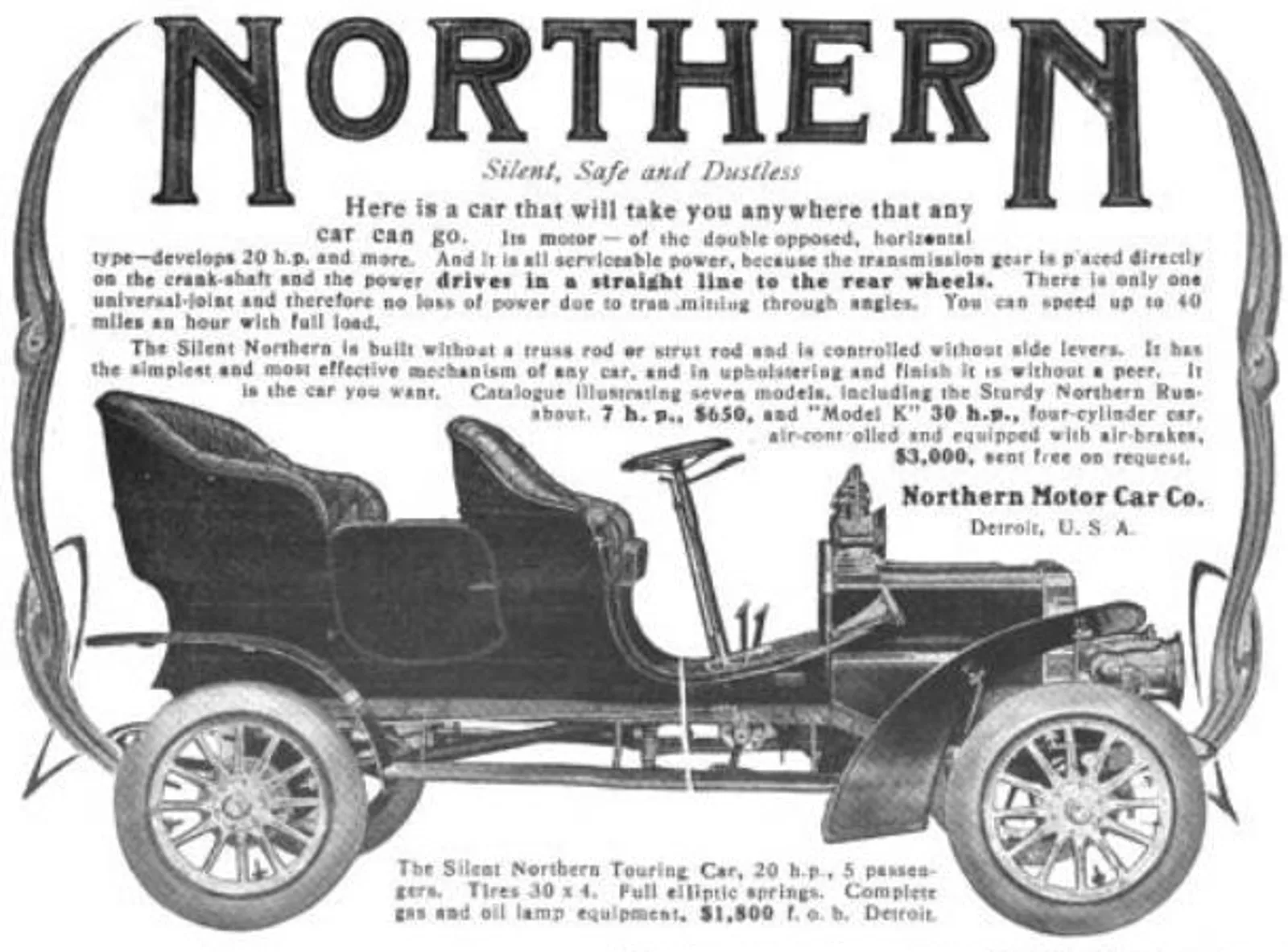
The two-cylinder models could be driven without the usual hand levers at the side for gearbox and handbrake. A single lever on the steering column handled both acceleration and braking, and by 1908 the whole control set sat on the steering column, though only the limousine was offered in that form.
Northern also stressed that all the important components under the bonnet were easy to reach.
What was the Type C's gearbox and chassis?
The Type C probably used a two-speed planetary gearbox with reverse throughout its run, and certainly from the 15 HP onwards, with direct drive in top gear. The engine was bolted to the gearbox, a solution that only became common years later.
The engine sat tilted towards the rear in the chassis, which placed the crankshaft and rear axle in an ideal position and let the propeller shaft transmit power quietly and with little wear. The body rested directly on the chassis.
The Runabout's main and auxiliary frame system cannot be shown for the two-cylinder series. From 1904 to 1906 the maker named angle steel as the frame material, and there is no evidence that this changed later.
How long was the wheelbase?
The wheelbase changed several times, and Northern muddled matters itself. In 1906 it offered the two-seater in three lengths, 88, 100 and 106 inches (2,235, 2,540 and 2,692 mm), while the specialist literature follows only part of that spread. Not every figure is confirmed elsewhere.
Touring and limousine bodies were offered in 1906 with 106 inches (2,692 mm). Another account says the two-seater was available only in the shortest version, while the specialist literature gives 88 and 100 inches, or adds the third length only for 1907.
The track was the 56 inches (1,422 mm) customary for passenger cars of the time, and tyres of 4 inches were already listed in 1904.
How much power did the Type C produce?
For the Type C, output was 20 HP in 1906 and 1907 and rose to 24 HP in 1908, according to the model overview used here. The 20 HP and Type C engines are given by one reference as 249.5 cubic inches (4,088 cc) throughout 1906 to 1908.
That reference gives a bore of 5 1/2 inch (about 133 mm) and a stroke of 5 1/4 inch (about 140 mm). Only in 1908 do most references give 24 HP.
An online listing gives 261.4 cubic inches (4,283 cc) for 1906, with a square bore and stroke of 5 1/2 inch (about 133 mm), but an output of 20 HP. For the 1908 Type C Touring a probably rounded 260 cubic inches and 24 HP are quoted, and the only explanation for the inconsistency is a transcription error in one of the references.
What was the A.L.A.M. rating and why does it matter?
The A.L.A.M. formula did not measure power but calculated it from the cylinder bore, and the association usually insisted that members use it. Northern had been a member since 1903, which makes its rated figures an estimate rather than a test result.
Only the 1904 15 HP is clearly recorded with brake horsepower, and no such figure is documented even for the Runabout of the same year. By the A.L.A.M. rating, the 12 HP bore works out at 3 7/8 inch (98.425 mm), a figure drawn from one advertisement, and the 15 HP comes to roughly 4.3 inch.
Which bodies were available?
Bodies were made of wood, as was typical of the period, and no evidence shows whether Northern built them in its own workshop or bought them in. Limousines cost up to 50 per cent more, reflecting the extra hours of work and generally finer materials.
The 12 HP advertisement called the vehicle a touring car but showed a tonneau with a rear entrance, where two passengers sat facing each other at each side and a folding seat in the door made room for a third. The same body arrangement seems to have been used on the 15 HP and 18 HP.
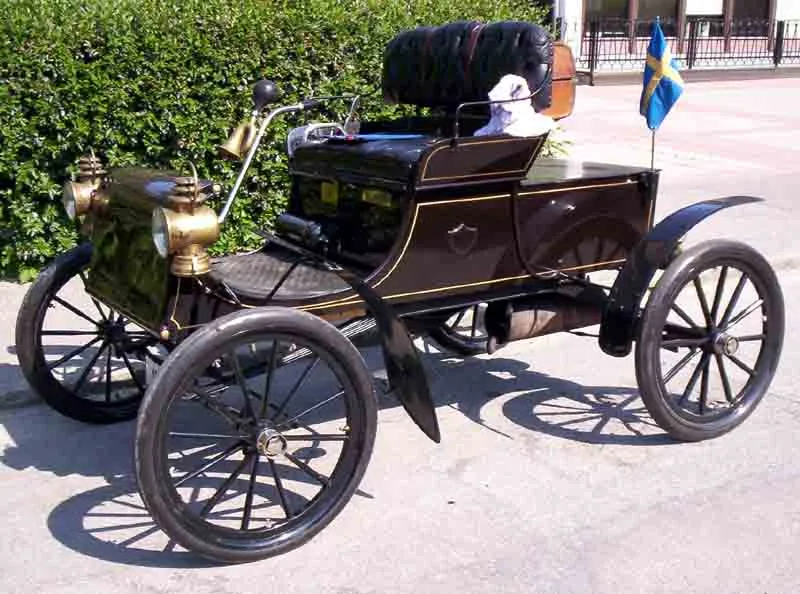
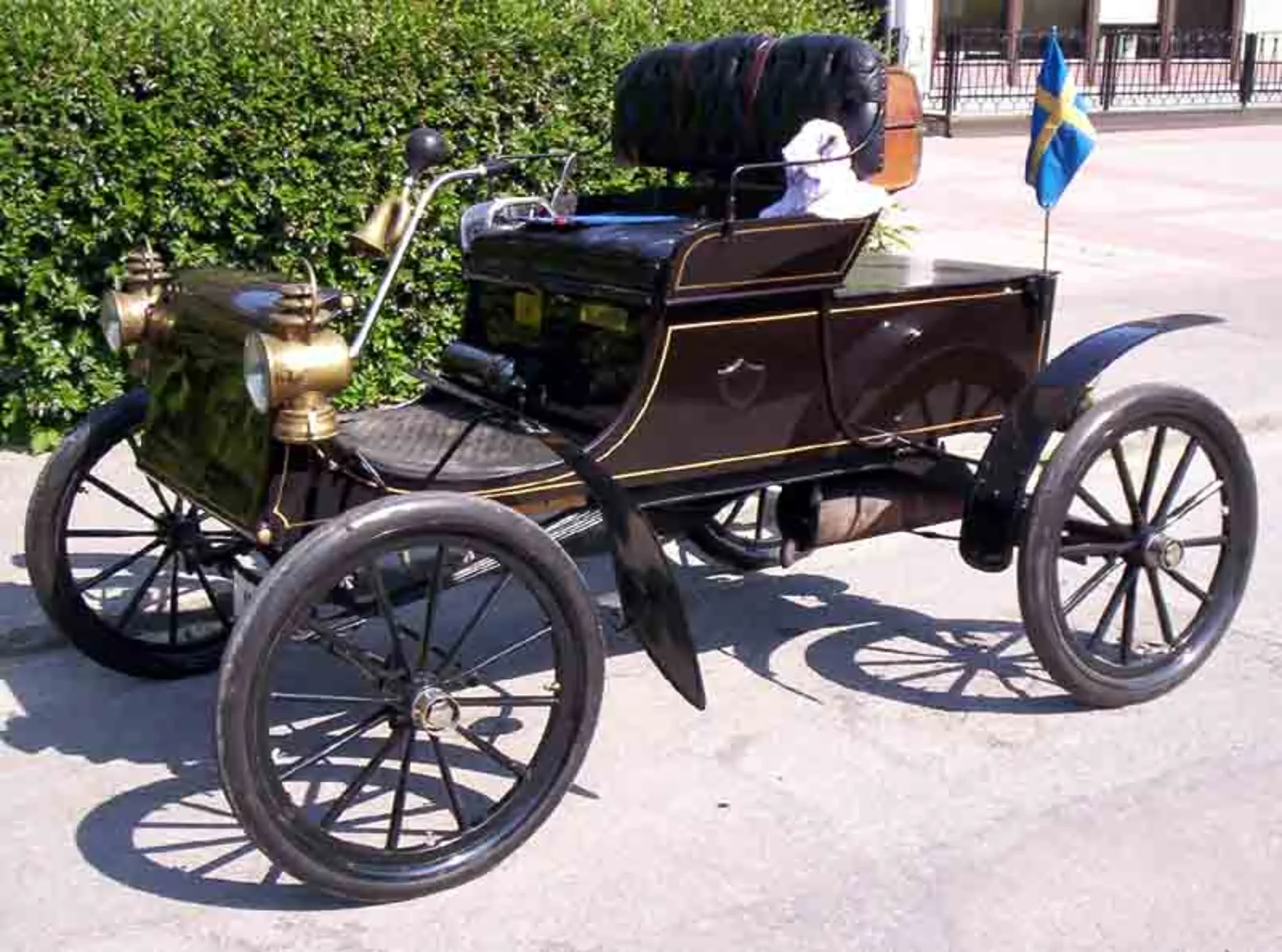
For the two-seaters introduced in 1905, Northern first used the seldom-used term Two Passenger Touring Car. The illustrations show ordinary runabouts, and from 1907 they were called runabouts. The tonneau name returned in 1908, but a surviving Type C from that year has side access to the rear and a conventional rear bench, so the 1908 name probably did not mean a rear-entrance body.
An advertisement of the period mentions four interchangeable body variants.
Was there a commercial version?
Northern offered a delivery van only on the two-cylinder chassis, documented from 1906 to 1908 with a payload of 1,200 lb (about 1.6 tonnes). Its wheelbase is not known. That made it the sole commercial model in the range, built on that chassis.
Vans of this kind were often built longer at the factory, with a stiffened frame, heavier springs, stronger wheels and, at times, twin wheels at the back.
Which Northern two-cylinder cars survive today?
Very few are known. An 18 HP tonneau dated 1904, in dark green with a cream-coloured chassis, was on show at the 2008 Pebble Beach Concours d'Elegance. A Model C Touring in dark red was shown at the 2014 Concours d'Elegance Stan Hywet Hall and Gardens.
The 12 HP is known only through a special motoring issue of Frank Leslie's Popular Monthly Magazine, The Automobile of 1904, published in January 1904.
Northern Type C specifications
| Specification | Detail |
|---|---|
| Maker | Northern Manufacturing Company, renamed Northern Motor Car Company in 1906 |
| Production | 1904 to 1908 |
| Engine | Water-cooled two-cylinder boxer |
| Output, 1906 and 1907 | 20 HP |
| Output, 1908 | 24 HP |
| Displacement, 1906 to 1908 | 249.5 cubic inches (4,088 cc), per one reference |
| Bore and stroke | 5 1/2 x 5 1/4 inch (about 133 x 140 mm) |
| Gearbox | Two-speed planetary with reverse; direct top gear |
| Track | 56 inches (1,422 mm) |
| Wheelbase, 1906 touring and limousine | 106 inches (2,692 mm) |
| Wheelbase, two-seater | 88, 100 or 106 inches (2,235, 2,540 or 2,692 mm), depending on the reference |
| Flywheel | 24 inches (about 61 cm) |
| Wheels | 30 x 4 inch, 1905 to 1908 |
| Delivery van payload | 1,200 lb (about 1.6 tonnes) |
| Second plant | Port Huron, Michigan, from 1907, Type C only |