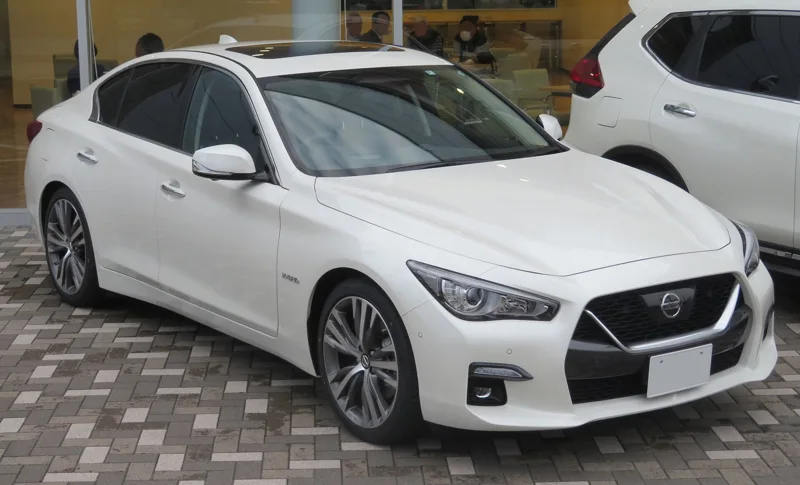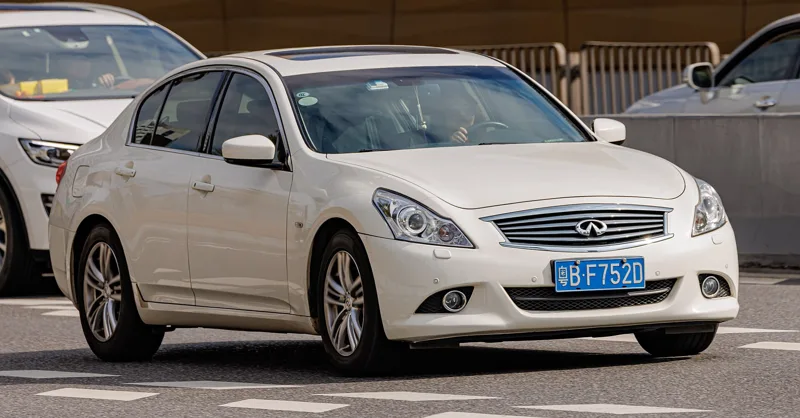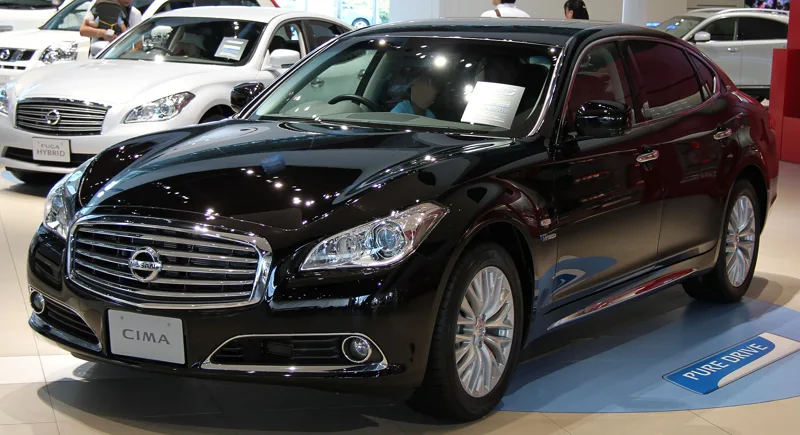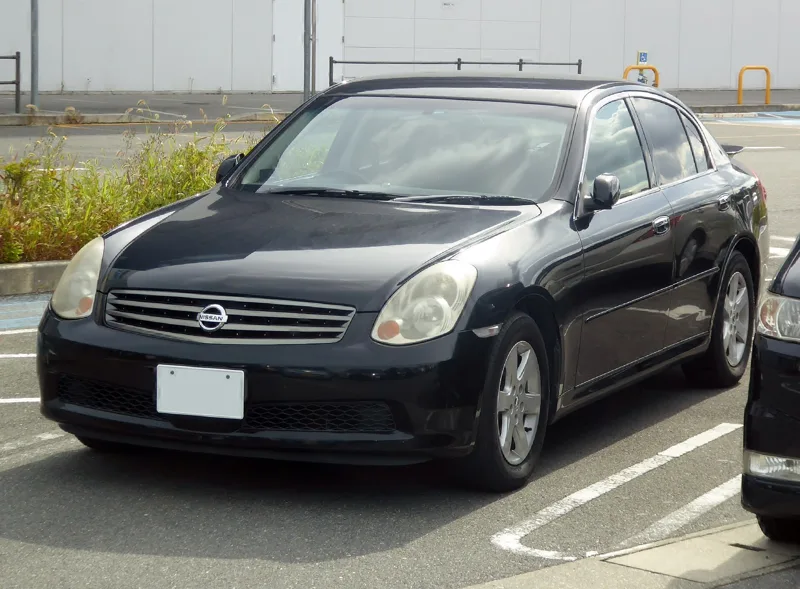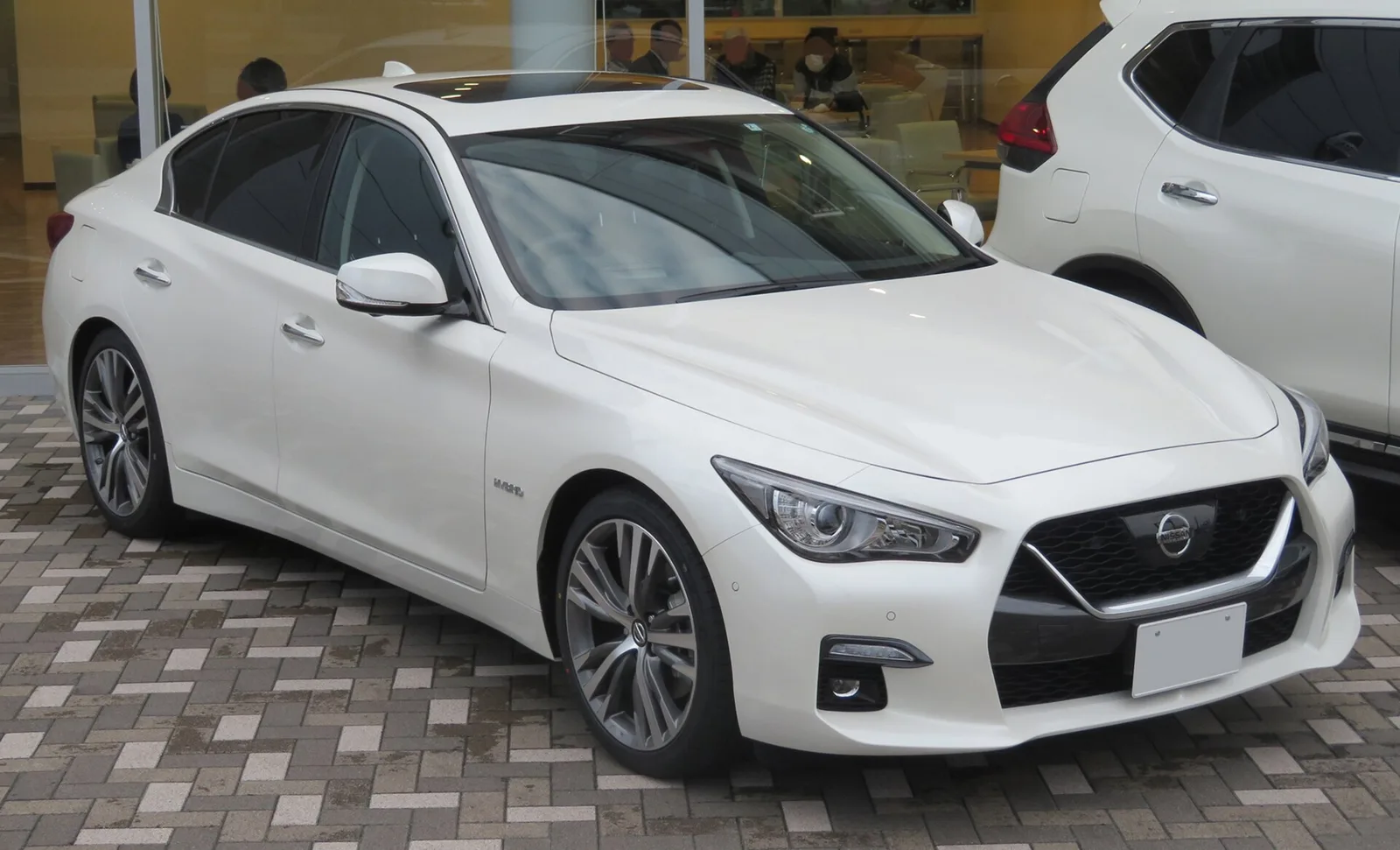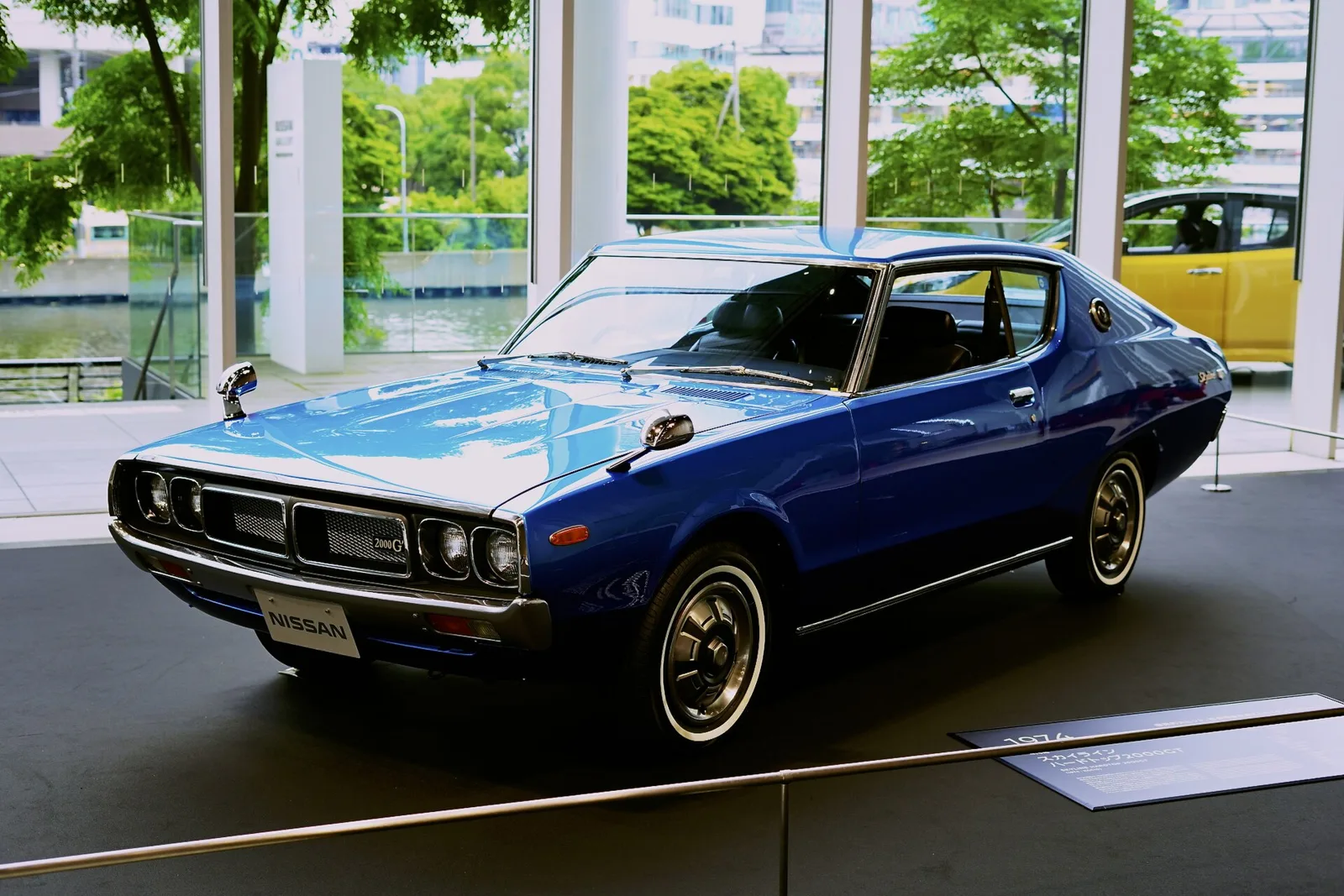
Two generations of the Skyline coupe, the engines behind them, and the Infiniti G35 and G37 versions sold in North America.
The Nissan Skyline Coupe was a Skyline coupe sold in two generations. The first, the CPV35, went on sale in January 2003 with a 3.5 L V6 and a body that shared no outer panels with the sedan. The second, the CKV36, arrived in October 2007 with the VQ37VHR engine and VVEL. Sales of the CKV36 ended in January 2016.
Nissan gave its Skyline Coupe a body of its own from the first generation, breaking with earlier coupes that shared their front ends with the sedan. Over two generations it sold in Japan and, under the Infiniti name, in North America, where reviewers praised it. The story runs from a launch that slipped by about six months to a model line that disappeared in 2016.
Where did the Skyline Coupe come from?
The coupe was announced in June 2001 alongside the V35 sedan, with sales promised for a year later. It reached showrooms on 16 January 2003, roughly six months behind that schedule. Talks between Nissan and Renault made it difficult to develop the sedan and coupe together, so full coupe work began once the sedan was complete.
Development had started between late 1999 and early 2000. Counting from the first-generation ALSI type, this was the tenth Skyline coupe, since the S50 series offered none. The CPV35 was also the first Skyline coupe with a fully dedicated design.
The coupe also picked up a role. Earlier, the Fairlady Z came as a 2-seater or as a four-seat 2by2. Once the Z33 type made it a 2-seater only, the Skyline coupe inherited the 2by2 slot.
Tuning was a different story. Like the sedan, the coupe carried little sporting image and stayed unpopular with tuners, unlike the Z33 Fairlady Z launched at the same time. Even so, the tuning firm Top Secret produced a twin-turbo version, a swap using the VK45DE engine, and a V35 GT-R with its gearbox moved to the rear. Top Secret recorded a top speed of 341 km/h (212 mph) on the Autobahn in Germany.
A coupe with its own body from its first generation, sold as the G35 and G37 in North America.
Engine and transmission specifications
| Specification | First generation (CPV35, 2003 - 2007) | Second generation (CKV36, 2007 - 2016) |
|---|---|---|
| Engine | Six-cylinder, 3.5 L (213.6 cu in), code VQ35DE | Code VQ37VHR, with VVEL |
| Automatic | 5-speed with manual mode | 5-speed, then 7-speed from December 2008 |
| Manual | 6-speed | 6-speed, lightened |
| Front-to-rear weight distribution | 53:47 | 55:45 |
| Platform | FR-L, shared with the sedan | E, shared with the sedan |
The sedan supplied the basic 3.5-litre V6, but a dedicated tune sharpened intake and exhaust flow and cut friction at low and medium speeds. Output and torque climbed until they matched the Z33 Fairlady Z. Compared with that car, its six-speed manual was smaller and lighter, with the weight and size of the five-speed manual used before the R34.
For the 350GT Premium, the November 2004 revision added synchro rev control to the five-speed automatic. The six-speed manual became easier to operate, and its lever shake was reduced.
How did the first generation differ from the sedan?
The CPV35 rode on the FR-L platform it shared with the sedan, yet its body panels were all new. Set against the sedan, length dropped by 35 mm (1.4 in), width grew by 65 mm (2.6 in) and height fell by 75 mm (3.0 in). Nissan wanted a ground-hugging look, and the extra width came from enlarged front and rear fenders.
Inside, the hip point sat 50 mm lower than on the sedan. The instrument panel, however, kept the straight-line design of the sedan and the M35 Stagea, with decorative trim around the door speakers. The exterior was styled with more weight on North America than Japan, and it reached a drag coefficient of 0.29.
The round tail lamps came back here. LEDs set in a circle inside the L-shaped lamps shared with the sedan revived the round tail that the sedan had dropped. Nissan said the choice was made for design and visibility rather than Skyline tradition, and the same arrangement reached the sedan in its November 2004 minor change.
November 2005 brought changes to the tail lamps, headlamps, front bumper and side sill protectors. The first generation offered two grades, the base 350GT and the 350GT Premium with leather seats and a BOSE sound system. Each came with a 5-speed automatic or a 6-speed manual, and the base 350GT was dropped in November 2005.
Why did the second generation need a new engine?
Expectations ran high in North America, where the previous model had sold well. Nissan first considered keeping the 3.5 L of its predecessor, but the company did not want to fall short of the BMW it saw as its rival, so it added 200 cc. The new engine, the VQ37VHR, was the first to use VVEL.
VVEL works by continuously varying valve lift and timing. With other changes, fuel economy rose by about 10% compared with the previous model, even with the bigger engine. Two transmissions were offered, an automatic and a manual.
The automatic began as almost the same five-speed unit used in the Fuga. In December 2008 it changed to a seven-speed already used by the Z34 Fairlady Z. The six-speed manual carried over, with weight savings.
How did the second-generation chassis change?
The CKV36 rode on the E platform shared with the sedan, with its engine mounted 15 mm lower to bring the centre of gravity down. Front-to-rear weight distribution moved to 55:45. Static torsional rigidity rose 36% over the previous model, even though the car was lighter.
Double wishbones up front and multilink at the back carried over from the sedan, while the track was widened and the shock absorbers got their own tuning. Lateral stiffness rose 55% up front and 40% at the back. Engineers raised stiffness with real driving in mind rather than static figures, and lateral bending rigidity, already judged sufficient, is almost unchanged.
Safety came through a pop-up engine hood, the first of its kind in Japan, which lifts the bonnet instantly when the car hits a pedestrian. A low bonnet looked good but left too little clearance for pedestrian protection. A lot of cost went into the styling: the headlamps were moved away from the hood and production was made a manual process.
Exterior parts were largely new. The side turn lamps match the V36 Skyline family, Crossover included, and the door handles match the sedan. A November 2008 partial revision gave the sedan the coupe's door mirrors.
When did the second generation go on sale?
Nissan revealed the new coupe on 20 November 2006, alongside the V36 sedan, and promised sales for autumn 2007. The car made its debut at the New York show on 4 April 2007. Japanese sales began on 2 October 2007, roughly a year after the V36 sedan reached buyers in November 2006.
On 24 April 2007 a reference exhibit appeared at Tokyo Midtown, during a Skyline 50th-anniversary event. Every example, the G37 coupe included, was built at Nissan's Tochigi plant.
The G37 coupe was pre-sold in North America in August 2007, ahead of the Japanese launch in October.
Which grades did the second generation offer?
Four grades made up the second-generation line-up, from the entry 370GT through Type P and Type S to Type SP. Type P added leather seats and various comfort equipment to the base car. Type S focused on performance, while Type SP combined the equipment of both.
Type S added paddle shifters and 19-inch alloy wheels (18-inch on regular cars), and its chassis gained active steering on four wheels plus a viscous limited-slip differential. Only Type S and Type SP were offered with the six-speed manual.
The November 2010 upgrade made a sporty front bumper and sill spoilers standard on all cars, and reworked both wheel patterns. Earlier, Type S and Type SP had their own bumpers and spoilers.
Navigation was the other change: HDD Car Wings, previously optional on all cars, became standard from January 2010. That made room for a budget grade without navigation, the 370GT A Package.
What did the North American Infiniti versions add?
In North America the coupe first appeared as the G35 in March 2002, shown in New York, then went on pre-sale as the Infiniti G35 coupe in November of that year. Motor Trend named the coupe and sedan its Car of the Year. The second generation arrived as the G37 coupe in August 2007, ahead of its Japanese launch.
A G37 Convertible sharing the coupe's front section went on sale in the US on 19 June 2009. The V37 type, the next model, brought a coupe to North America as the Infiniti Q60. Japan did not get it.
Which special editions did buyers get?
Nissan offered several special editions. The 70th-II came out in October 2003 as the second release of a 70th-anniversary series. Only the 350GT Premium received it, along with an ecru interior and heated front seats.
Its interior environment package offered ion-based air conditioning, a deodorising roof lining and green glass that cut IR and UV. The April 2004 Leather Package left out the roof lining and the UV-blocking glass. Stylish Silver Leather, from June 2006, added grey leather seats to the 350GT Premium.
The 55th Limited, on sale from February 2012, marked a 55th anniversary and was limited to 55 cars. It was based on the 370GT Type P and Type SP, with red leather seats and 55th-anniversary embroidery. Orders were taken until April 30, 2013, and closed once 55 cars were ordered within the period.
How did the Skyline coupe line end?
Sales of the CKV36 ended in January 2016, and the Skyline coupe model disappeared with them. Its successor, the V37 type, reached North America as the Q60 coupe but was not introduced in Japan. The Skyline coupe therefore closed without a Japanese successor.
The first generation won a Good Design Award in October 2003.