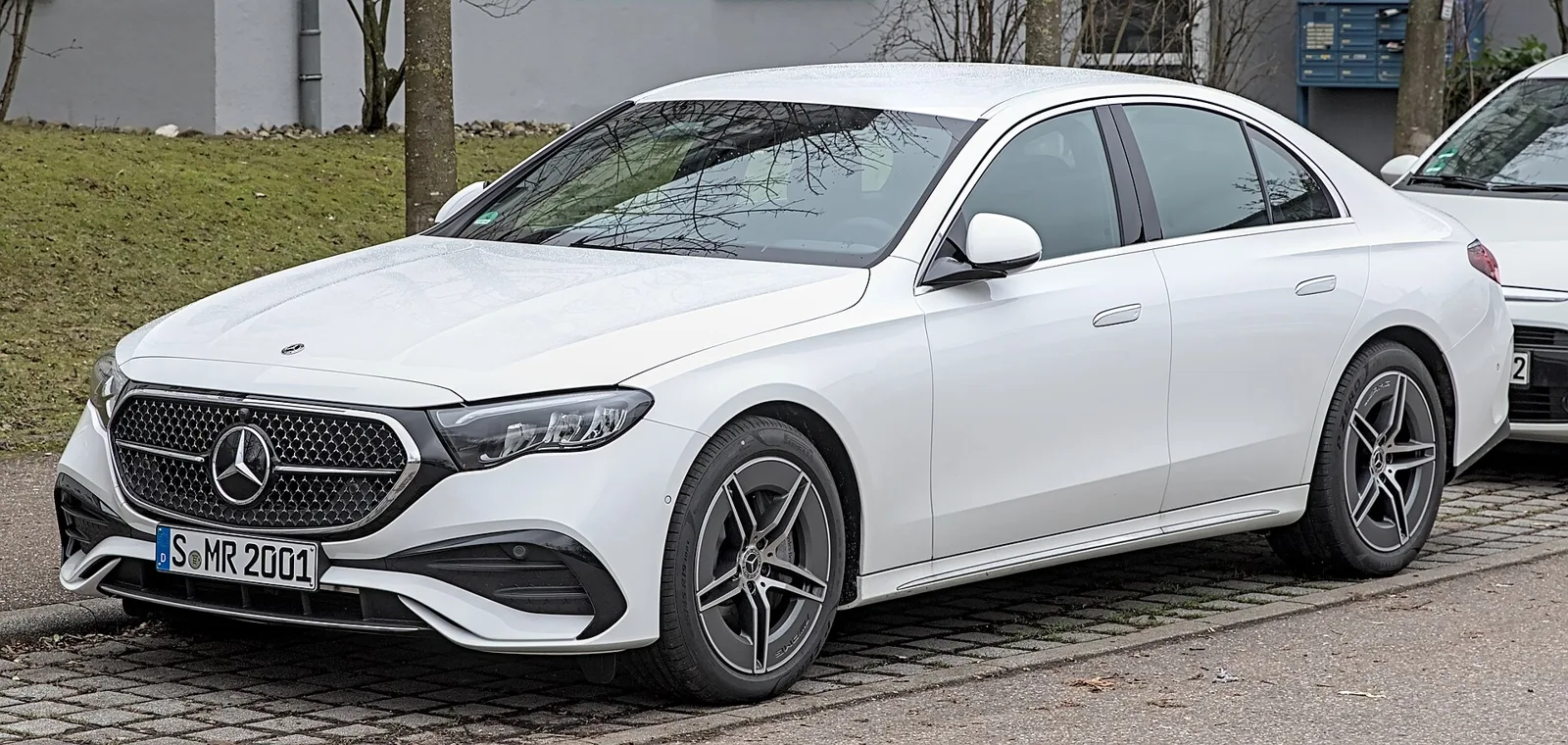
A 2005 Tokyo concept with a hydrogen fuel-cell hybrid, a 4.35 metre body built around family use and a set of safety and lighting ideas.
A 2005 Tokyo concept, the F600 Hygenius paired a hydrogen fuel cell with an electric motor for 85 kW (115 PS). Its hybrid work later reached the B-Class, and its cabin was built around family life in a 4.35 metre body.
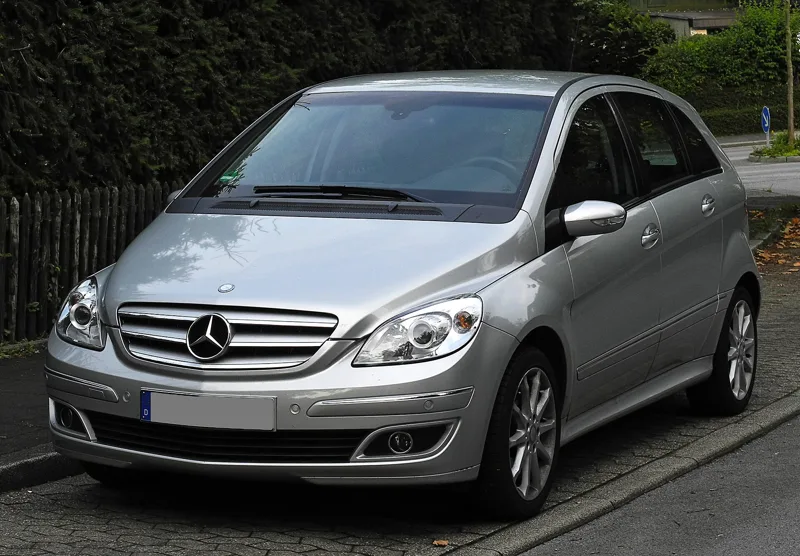
The Mercedes-Benz F600 HYGenius was a 2005 concept car with an environmentally clean hybrid engine, shown at the Tokyo motor show. It belonged to the company's F series of experimental cars, and its hybrid research later formed the basis of the 2009 B-Class.
The concept packed a hydrogen fuel-cell drive, a roomy family cabin and a set of safety and lighting ideas into a body only 4.35 metres long. Several of those ideas later appeared on other models.
What were the F600 Hygenius goals?
The project set out to research clean engines for family cars, to test an unusual interior layout and new approaches to control, and to develop the PRE-SAFE system. That hybrid work eventually shaped the 2009 B-Class.
Mercedes-Benz presented the car at the Tokyo show in 2005, and it continued a line of experimental vehicles that the company had built before it.
A hydrogen family car that wrapped fuel-cell engineering around a 4.35 metre body.
How big was the F600 Hygenius inside?
For a car 4.35 metres long, the cabin was surprisingly generous, larger than the room found in classic luxury cars. Front and rear seats were 95 cm apart, a gap well above that of the standard-body S-Class saloon, and rearward movement of the back seats could add a further 40 centimetres.
The designers presented it as an excellent family car. Its seats were made for adult passengers and for children, and they were fairly bulky because of the electric adjustment mechanisms built into them. The concept was aimed at the needs of families in large cities.
How did the seats work for families?
The seats could be swivelled to the required angle, so the front seat could face a rear passenger, for example to keep an eye on a child secured in a child seat. Every seat except the driver's had Isofix mounts.
The driver's seat could be adjusted individually in size, width and position. Its backrest tracked the movement of the upper body and reshaped the seat, which lowered the strain on the intervertebral discs.
How did the tailgate and doors work?
The double tailgate looked traditional, with hinged doors and no complex kinematics or electric drives. It opened at an angle, so when open it projected far less than an ordinary door of the same width.
Electronics stopped the tailgate from opening if its camera spotted an obstacle, and a special button controlled opening. The rear bumper moved down and pulled out the boot floor, which made loading easier and gave extra room for a picnic, for example.
The front doors swung slightly upwards, reducing the space they took. This was an advantage on narrow streets and in car parks. Bulging wheel arches covered specially designed wheels with 215/45 R20 tyres.
What was the interior like?
The cabin used natural wood and bright yellow inserts on the floor and seats. Italian designers from the Como studio developed the interior trim of the concept car.
The armrest panels slid. Seat adjustment controls were tucked away in the doors beneath them, and cup holders in the centre could warm or chill drinks. The COMMAND system used a joystick, as in the S-Class, which recognised by skin conductivity whether the driver or a passenger was using it.
How did the hybrid fuel-cell engine work?
The engine combined a hydrogen fuel-cell system with an electric drive, giving 85 kW (115 PS) in total: 60 kW from the hydrogen fuel and 25 kW from electricity. Maximum torque was 350 Nm (258 lb ft).
The torque was similar to that of the 3.5-litre six-cylinder engine of the S-Class, which made 272 PS (268 hp). The engineers reduced the hybrid unit's size by 40% while raising its efficiency, and a lithium-ion battery came into use during hard acceleration.
How does a hydrogen fuel cell make electricity?
Oxygen and hydrogen react inside the fuel cells, producing water vapour and releasing electrical current. The principle was not new, but Mercedes-Benz had pushed and widened it considerably.
Humidifying the incoming air allowed the car to run at temperatures as low as 25 degrees C of frost. The fuel-cell stack sat at the front and drew on hydrogen stored at 700 atmospheres in a tank ahead of the rear axle.
The electricity drove the electric motor and, when needed, recharged a high-voltage lithium-ion battery, which meant less energy was lost. The power unit chose the best energy source for the situation on the road.
Passengers could plug into a standard mains socket at normal voltage. The fuel cells could also act as a mobile power station, with an output of 66 kW. The top speed was 170 km/h (106 mph).
What fuel economy did the hybrid claim?
The average equivalent diesel consumption was 2.9 litres per 100 kilometres (81 miles per gallon). The car ran on hydrogen, so that number is an equivalent rather than a diesel reading, and one hydrogen fill was quoted at 400 km (249 miles).
How did the side cameras work?
Cameras built into the door mirrors watched the space to the sides and behind the car. If a motor vehicle or a cyclist came up from behind, the system locked the matching door for a short time, sounded a tone and showed a red warning in the mirror.
While the car was moving, blind-spot cameras tracked vehicles in the adjacent lanes. A special system warned the driver when another vehicle was too close as they tried to change lanes.
Why did the displays project in front of the driver?
The two colour high-resolution displays were reflected by two mirrors and projected in front of the driver, about 1.40 metres away. The result was that the driver's attention stayed on the road rather than dropping to the dashboard.
Research found that, with this layout, the driver's eyes were not constantly refocusing, so they tired less quickly than in ordinary cars.
What was PRE-SAFE on the F600 Hygenius?
PRE-SAFE was already fitted to S-Class cars that debuted in 2002, and on the F600 Hygenius it was developed further. The research produced an active knee protection system for the front passenger, plus side supports on the seat cushions that extend automatically to hold the head.
These features were activated before an accident the car judged unavoidable, to prepare the occupants and the vehicle for impact. Belts and airbags also came into action for maximum protection. If the crash was avoided at the last moment, the reversible PRE-SAFE systems returned to their original settings.
What LED lighting did the concept use?
The F600 Hygenius used high-performance LED lighting to make the road easier to read in the dark. The LEDs sat in three projection modules, giving a wide and even spread of light.
The middle module came on in special road situations and served as high beam, adaptive lighting or a turn indicator. The rear and brake lights were LED too, and in an emergency stop the rear brake lights flashed to warn drivers behind.
Which technologies were created or upgraded?
Work on the concept created or upgraded several systems, ranging from family-oriented interior and exterior designs to active seats, LED headlights and cameras that help passengers get out safely.
- A family-oriented interior and exterior design for large cities
- Self-adjusting seats with a complex spinal support system
- A new tailgate concept, plus front doors that lift at an angle
- Bright LED headlights
- Cameras for safer drop-off and for changing lanes
- A virtual-display control concept and an updated COMAND system
Did any of the ideas reach production?
Some of the features went into production on other models. Flashing brake lights in emergency braking arrived in 2005 on the W221 S-Class, and new sensors for the steering, clutch, brakes, doors, seats and mirrors arrived in 2009 on the E-Class (W212).
The hybrid work fed into the 2009 B-Class. A 1:43 scale model of the concept is also made by a specialist firm.