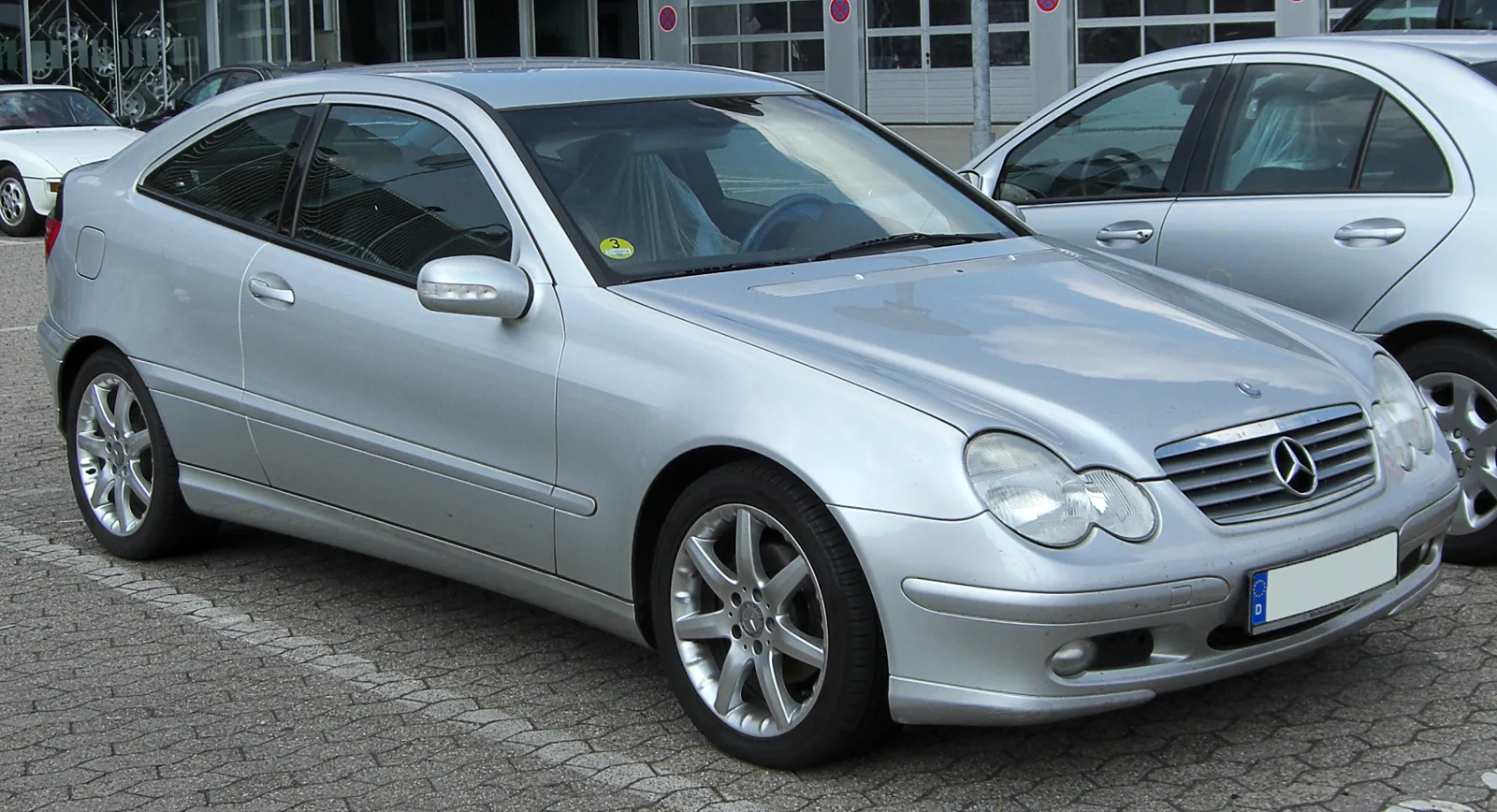
A C-Class coupe built to take on the BMW 3 Series Compact, sold first as the Sportcoupe and then as the CLC until early 2011.
The Mercedes-Benz CL 203 was a sports coupe built between autumn 2000 and early 2011. It was sold as the C-Class Sportcoupe until 2008, then as the CLC, and it used the 203 series platform. About 370,000 were delivered before production ended.
Mercedes built the CL 203 to take on the BMW 3 Series Compact, and roughly 370,000 reached customers before production ended in early 2011. Its life fell into two phases, first under the Sportcoupe name and then as the CLC, both on the 203 series platform.
Why did Mercedes build a C-Class coupe?
Mercedes developed the car to compete with the BMW 3 Series Compact. Built from autumn 2000, the coupe was offered from November 2000 with five engines, four of them petrol and one diesel. It was built at Sindelfingen until early 2007, when production moved to Juiz de Fora in Brazil.
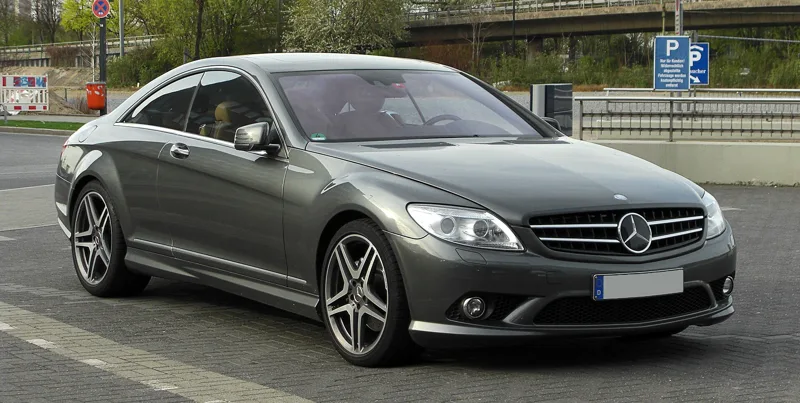
At first the price-performance ratio drew criticism, but the model grew more popular over time. Its design was typical of a coupe: at the front it resembled the saloon, while the side line rose steeply to a high tail finished with a spoiler. The boot held 310 litres, and the cockpit was almost identical to the saloon's, apart from the trim around the instrument cluster.
A C-Class coupe that was renamed the CLC in 2008 and built until early 2011, with about 370,000 cars delivered.
How did the engine line-up change in the early years?
In mid-2002 a supercharged 1.8-litre (110 cu in) unit took over from the 2.0-litre (122 cu in) engine of the C 180 Sportcoupe, producing 105 kW (143 PS; 141 hp). By summer 2002 the same M 271 engine was offered in three outputs: 105, 120 and 141 kW.
The 200 CGI, a petrol direct-injection engine based on the supercharged 1.8-litre units, joined the range in spring 2003 with 125 kW (170 PS; 168 hp). That year AMG, the in-house tuner, also presented two versions of the car, the C 30 CDI AMG and the C 32 AMG. A 200 CDI diesel arrived in the Sportcoupe in 2003 as well.
How did the Sportcoupe's prices move?
The C 180 launched at 24,128 euros including 16% VAT. The price rose to 26,042 euros for the C 180 Kompressor after the first facelift, and then fell to 24,708 euros once the C 160 arrived in March 2005. VAT rose to 19 per cent later, and prices climbed again.
The C 180 Kompressor had reached 24,882 euros including 16% VAT in summer 2002. At the start of 2007 the C 160 cost 25,585 euros, after the VAT increase had been passed on. The CLC launched in 2008 at 28,113.75 euros including 19% VAT.
Engines and prices at a glance
| Model | Output | Note |
|---|---|---|
| C 160 Kompressor | 90 kW (122 PS; 120 hp) | New base model with the first facelift |
| C 230 | 150 kW (204 PS; 201 hp) | 2.5-litre (153 cu in) six-cylinder, no supercharger |
| C 320 successor | 200 kW (272 PS; 268 hp) | 3.5-litre (214 cu in) replaced the 3.2-litre |
| CLC 200 Kompressor | 135 kW (184 PS; 181 hp) | After the second facelift |
| CLC 160 BlueEFFICIENCY | 95 kW (129 PS; 127 hp) | Added in 2009 |
| CLC 180 Kompressor | Price 28,113.75 euros (including 19% VAT) | Launch price of the CLC |
What changed at the 2004 facelift?
The coupe was revised alongside the saloon and T-Model and went on sale at dealers on 24 April 2004. The front gained redesigned bumpers with a lower air intake, a radiator grille with three slats and headlights covered in clear glass, while the rear lights were the only other change. Track width grew, and steering, gearbox and suspension were reworked for better handling without losing comfort.
The cockpit was redesigned and looked fresher, and a new three-spoke steering wheel with silver control buttons arrived. Bi-xenon headlights and navigation audio systems were available, and the top version carried a DVD-based Comand system with an extra-large colour screen.
The C 160 Kompressor with 90 kW (122 PS; 120 hp) became the new base model, and the C 200 CGI, C 30 CDI AMG and C 32 AMG were dropped because they sold poorly. The C 230 received a 2.5-litre (153 cu in) six-cylinder without supercharger, with 150 kW (204 PS; 201 hp), and the 3.2-litre engine of the C 320 gave way to a 3.5-litre (214 cu in) unit with 200 kW (272 PS; 268 hp). Every engine was coupled to a six-speed manual.
Two sports packages could be ordered. EVOLUTION had a grille with perforated slats, an enlarged exhaust tailpipe trim, seven-spoke light alloy wheels, a three-spoke leather steering wheel and an aluminium pedal set. It also lowered the body by 15 mm at the front and 5 mm at the rear. EVOLUTION AMG added AMG front and rear skirts and AMG light alloy wheels.
What did the 2008 facelift change?
The revised Sportcoupe reached the market on 17 May 2008 and was sold from then on as the CLC-Class. Its front was adapted to the look of the 204 series C-Class, the rear was reshaped, and the interior was slightly changed, while the basic body shape and cockpit stayed the same.
Inside, the changes included more sharply contoured sports seats, generous brushed aluminium trim, a new sports steering wheel and a new generation of infotainment. A large colour monitor was added for navigation, alongside a DVD or hard-disk drive, and a new interface let iPod, USB sticks or SD cards connect external music players.
Apart from the CLC 200 Kompressor, which rose to 135 kW (184 PS; 181 hp), the engines stayed the same. Six remained available from May 2008: four petrol engines with 105 to 200 kW (143 to 272 PS; 141 to 268 hp) and two diesels with 90 to 110 kW (122 to 150 PS; 120 to 148 hp). Mercedes had refined them and cut fuel consumption by up to eleven per cent.
Which engines were left at the end?
In 2009 the CLC 230 became the CLC 250, and a new small petrol engine, the CLC 160 BlueEFFICIENCY with 95 kW (129 PS; 127 hp), joined the range. Diesel variants were dropped from spring 2010, leaving five petrol engines from 95 kW to 200 kW (129 PS to 272 PS) by the end of that year.
Orders closed in the second week of January 2011, and the final new car rolled off the line in early February. By the end of 2010 the launch price of 28,113.75 euros had come down to 26,894 euros including 19% VAT, with help from the CLC 160 BlueEFFICIENCY.
The Sport Package and the Special Edition
As an option the CLC offered an extensive Sport Package. It was also, in a way, a stand-in for the trim lines of the saloon and T-Model, which had three so-called Lines. For the CLC it included direct steering with a variable ratio, sports suspension, darkened headlamps and rear lamps, a third brake light with smoked glass, a radiator grille with black slats and chrome, and 18-inch light alloy wheels with five double spokes.
Mixed tyres came in sizes 225/40 18 at the front and 245/35 18 at the rear. Further parts included a sports air filter, dark brushed aluminium trim, stainless steel sports pedals with rubber studs, and a modified instrument cluster whose needles rest at the 6 o'clock position. Upholstery was Artico imitation leather, with cognac-brown leather as an option.
The Special Edition had 17-inch wheels, metallic paint, a black headlining and sports pedals in brushed stainless steel. Inside it came with a three-spoke sports leather steering wheel with multifunction controls, PARKTRONIC, front seat heating and a comfort package with a rain sensor, electrically folding mirrors and a tyre pressure loss warning.
How many were still on the road?
In 2017 just under 69,000 were still registered in Germany, a figure that covers the home market only, and a little over 12,000 of them had diesel engines. About 14,000 are C 180 Kompressor models with type key 568, the most common version of the car. The scarcest coupes today are the C 200 CGI, the C 32 AMG and the C 30 CDI AMG, with under 100 of each.