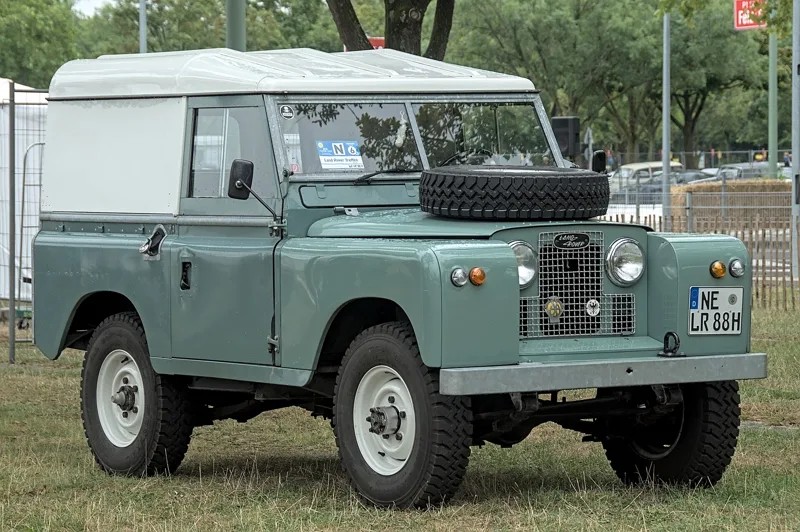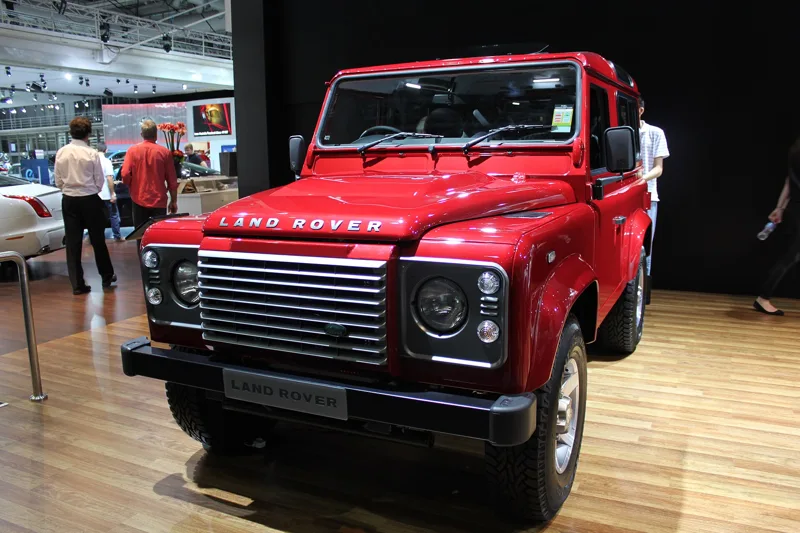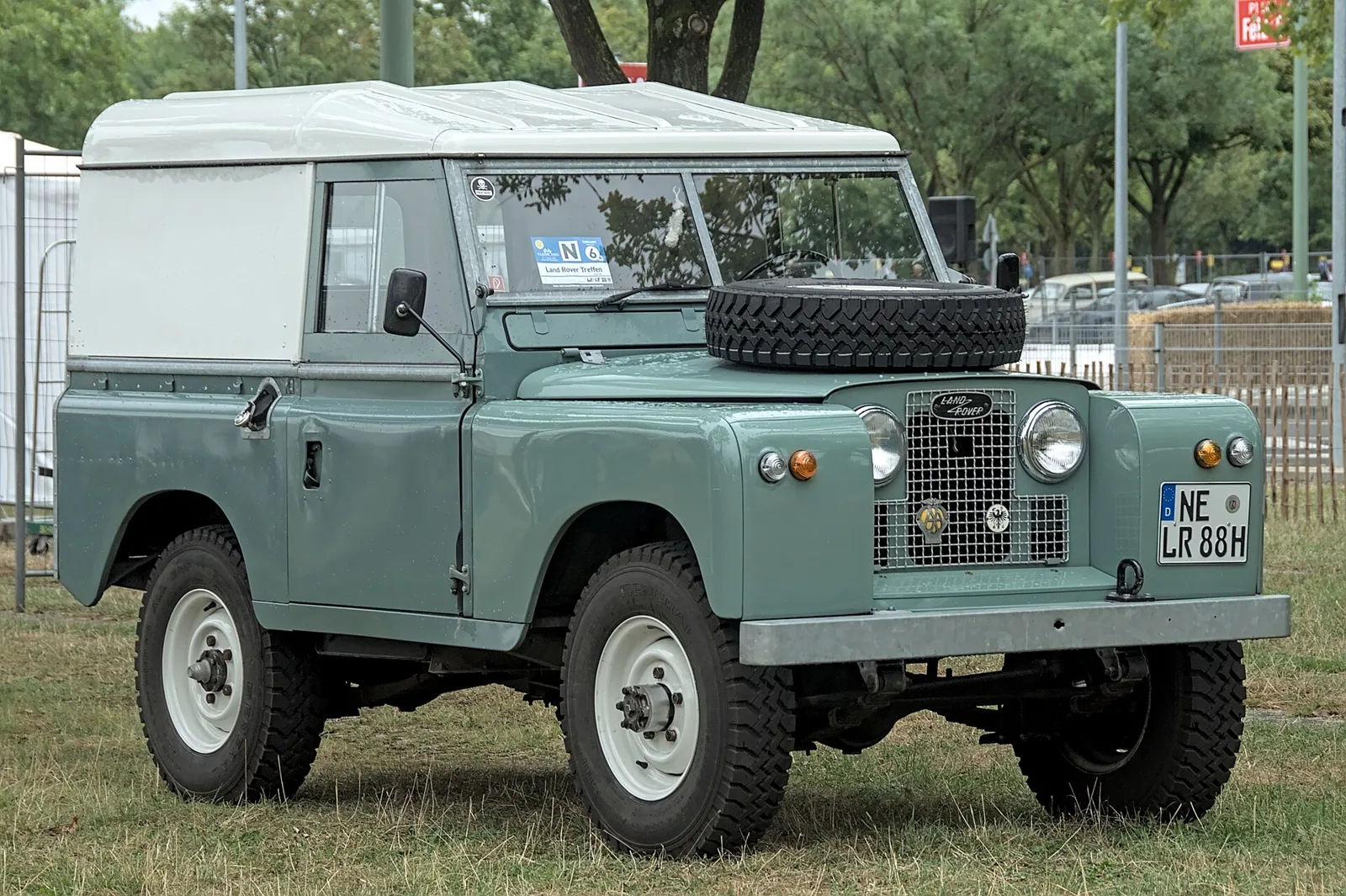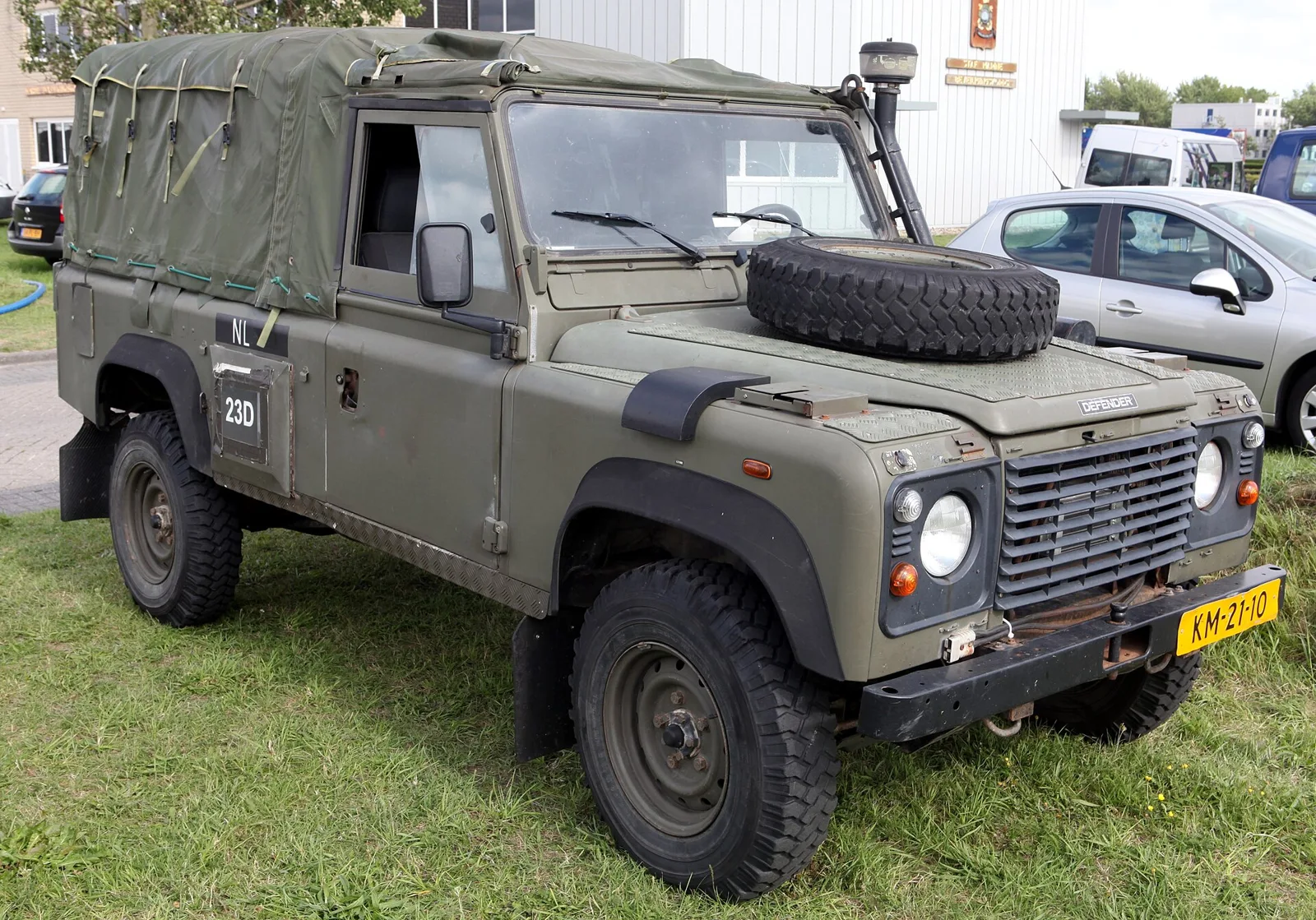
The military Defender that the Ministry of Defence put through rigorous trials, then sent into patrol roles in Iraq and Afghanistan.
The Land Rover Wolf is a military Defender built by Land Rover for the British armed forces, with a heavier chassis, reinforced axles and 24-volt electrics. It came in short and long versions and became a familiar patrol vehicle in Iraq and Afghanistan.
The Land Rover Wolf is a light military vehicle built by Land Rover in the United Kingdom on the Defender platform. The Ministry of Defence bought it in short and long wheelbase forms, and it became one of the most recognisable British vehicles on patrol in Iraq and Afghanistan.
What was the Land Rover Wolf?
The Wolf is a military Land Rover based on the Defender, with a heavier duty chassis, reinforced axles and 24-volt electrics. The Ministry of Defence calls the short version Truck Utility Light (TUL) HS and the long version Truck Utility Medium (TUM) HS, where HS stands for High Specification.
Land Rover markets the vehicle as eXtra Duty, or XD. Foreign procurement agencies often decided they did not need its extra strength, because their own vehicles had already passed their testing. For many of them the Wolf was simply too expensive.
A different vehicle is the 1992 Snatch Land Rover. It carries composite armour for ballistic protection, but it does not use the heavy duty chassis that the Wolf received.
Built to be tougher than the Defender it came from, then sent on patrols in Iraq and Afghanistan.
How did the Wolf perform in Iraq and Afghanistan?
The Wolf became a symbol of British forces in both countries. It was chosen for patrol work instead of heavier vehicles like the Warrior infantry fighting vehicle. Concern grew that its unarmoured body exposed crews to excessive danger.
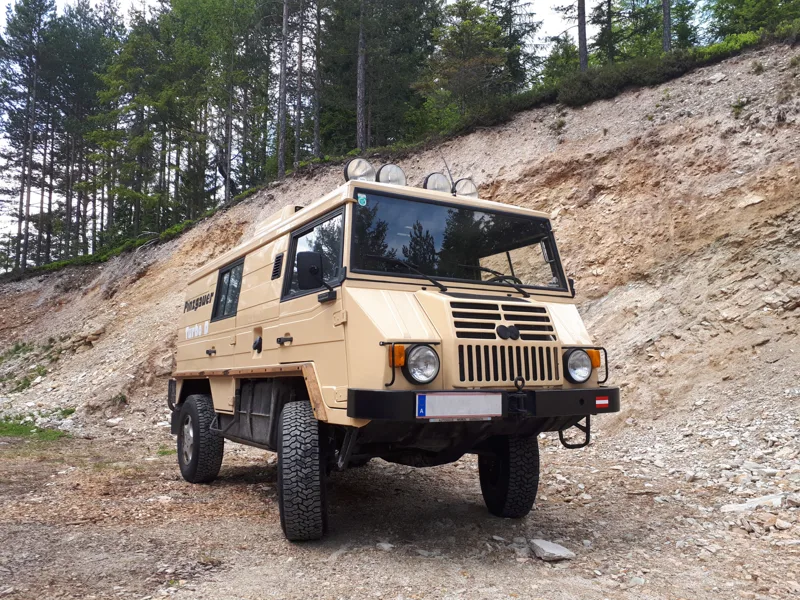
As that concern grew, the Ministry of Defence brought in more heavily armoured types, including the Vector, the Mastiff and the Jackal, to share the work. Snatch and Pinzgauer ATV vehicles, along with the Supacat MWMIK, also supplemented the Wolf in theatre.
Some surplus equipment was reported to be sold below cost once operations in Iraq ended. The Treasury had refused to cover the cost of replacements.
In Afghanistan an average of one vehicle a week was lost to enemy action. A fifth of the WMIK fleet was damaged or destroyed by enemy fire, and replacements often arrived late.
The Ministry later sold off most of the Wolf 90 fleet, because the Bowman radio system was too heavy for the short wheelbase. The 110 version remains in service.
How was the Wolf tested before it was accepted?
The vehicle went through repeated cycles of rejection, upgrade and retest before the Ministry of Defence was content with it. James Arbuthnot, then Minister of State for Defence Procurement, described the trials, and the order for about 8,000 vehicles was worth about 170 million pounds sterling.
The vehicle was far stronger and more reliable than the Defender it was based on. Land Rover's commercial name for it was Defender XD, which reflected the extra duty built into the design.
Why did the Wolf use the 300 TDI engine?
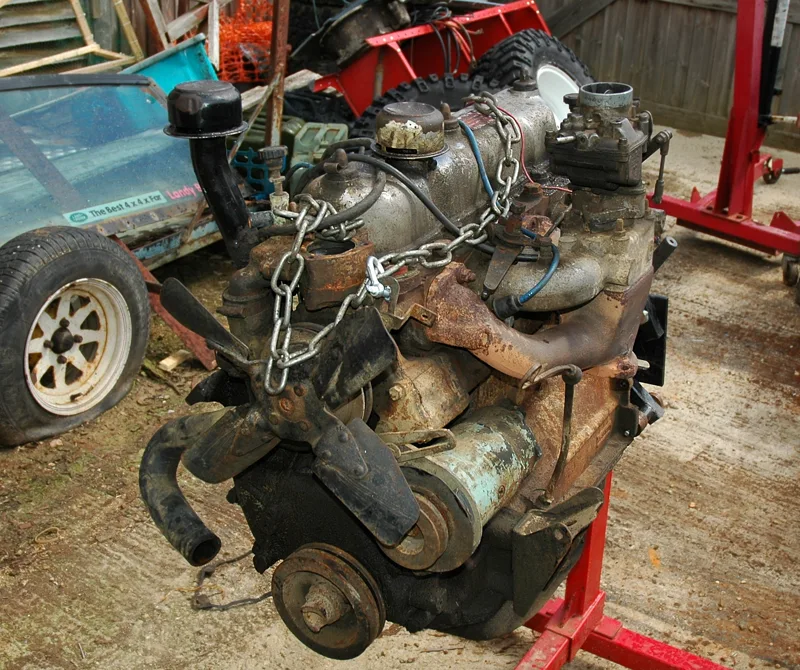
The Ministry of Defence chose the 300 TDI rather than the Td5 used in civilian Defenders. The Td5's electronics were more complex to manage in the field, and the 300 TDI on a Wolf uses a slightly different timing cover from the civilian version.
The engine choice was essentially a field maintenance decision, because the Td5's electronics were harder to manage once a vehicle was away from base.
Why was the rear axle redesigned?
Salisbury axles kept breaking during the trials, so the axle was redesigned with stronger internals, hubs and an outer casing. The result was one of the strongest Land Rover axles ever made. The same pattern of failure, fix and retest ran through the whole vehicle.
The fibreglass roof was another practical change. Shaping a roof over the raised roof-bars was far simpler in fibreglass than in the aluminium Defender roof, and production of the roof was outsourced.
Where was the spare wheel carried?
Land Rover tried several spare wheel positions, but the mountings kept breaking free and the wheel was too heavy for the bonnet. The side-mounted spare that was adopted came in three versions: soft top, hard top and quick release.
How was the Wolf chassis different from the Defender's?
The side walls are standard, but most of the Wolf chassis is bespoke. An additional rear load bed mounting was added because the standard chassis kept punching dents into the rear floor. Later service chassis gained a triangular reinforcement behind the front outriggers.
The chassis was not galvanised, which kept costs down. Health and Safety concerns about welding galvanised steel were unfounded, because correct respiratory protection for welders would have removed the problem. Each chassis was sprayed inside with Dinitrol rust-proofing wax.
Wolf-based WMIKs had a different arrangement. A factory WMIK had two outriggers in the middle of the chassis, while a standard Wolf had one, because the second outrigger carried the extra load of the gun mounting.
What tyres did the Wolf use?
Goodyear G90 tyres were designed for the project, and their sidewalls were strengthened during testing. Michelin tyres were judged better but more expensive. The G90 has been in service on military vehicles for over 20 years.
The Wolf used the heavy duty wheels that were available on the Defender at the time.
How were jerry cans carried?
Earlier experience with the military Defender had shown that full jerry cans were dangerous and too tight for the lockers. The Wolf's unusual door shape was designed to take full jerry cans more easily, and the side lockers were never meant to be watertight.
The Wolf 90 has no side lockers at all, but it does have mountings inside the vehicle for jerry cans.
Other equipment followed the same practical logic. Wolfs had a steering guard for cross-country work, and the MoD's wish to simplify the stores chain meant the vehicles used 24-volt electrics, so simple parts such as bulbs matched the rest of the fleet. FFR variants gained a second alternator to power their signals equipment.
Was the Wolf fitted with a roll cage?
Conventionally bodied Wolfs had a rear body roll cage, and some were later given an extra front roll cage. The cage is mounted to the rear body tub rather than the chassis, so its benefit in a rollover is questionable. Ambulance bodied Wolfs had no such protection.
Heavy duty matting was added to reduce noise and heat from the transmission. The matting weighs approximately 30 kilograms (66 pounds) and was designed by Wright Off-Road. Not every Wolf has it.
The soft top is made of PVC, and its rear flap is fastened by zips and Velcro or by Dutch lacing down the sides, with elasticated straps running to cleats on the tailgate.
How many Wolf versions were built?
The Ministry of Defence procured at least 97 different versions. The basic designs included an air drop model, a Commanders IK, several field ambulance types including a tropical version, a Fitted For Radio (FFR) variant, and a helicopter support platform, along with winterised and waterproofed forms.
Waterproofed versions have a snorkel that lets the vehicle wade through water up to windscreen level. Winterised versions have an engine fluids heater and a heated windscreen.
The Royal Marines use the waterproofed version for amphibious assaults. It has a periscope snorkel and waterproofed electrical systems, and it can run with the whole vehicle submerged if needed. Struts hold the tailgate open so water can drain after the vehicle reaches the shore.
Project Pulse was a separate battlefield ambulance design that Land Rover also won, using the Defender 130. Although it was not officially a Wolf, it was part of the same programme of military Land Rovers.
What was the WMIK?
The Weapons Mount Installation Kit, pronounced Wimik, turned the Wolf into a reconnaissance and close fire support vehicle. Land Rover and Ricardo plc built WMIKs jointly, and a typical vehicle carried one 12.7 mm heavy machine gun or 7.62 mm general purpose machine gun on the rear ring-mount.
Development began in 1997 as a rapid deployment concept. Early examples went into service in Sierra Leone during Operation Palliser, and the first production examples appeared in 2002 as prototypes shown to prospective buyers.
A front passenger side pintle-mounted GPMG was often added. Ricardo said the vehicle could be modified to take a GIAT 20 mm cannon. In late 2006 the MoD bought forty HK GMG grenade launchers. Each launcher could put out up to 360 grenades a minute. Effective range was 1.5 kilometres (0.93 miles), and the maximum reached 2.2 kilometres (1.4 miles).
How was the Wolf upgraded during service?
The REMUS project added Front Roll Over Protection, rear retracting seat belts, acoustic matting and wax injection of the chassis and bulkhead. Later upgrades came in 2006, 2009 and 2010, and a 2011 upgrade created the RWMIK+ designation, where the R stands for Revised.
That revision was a response to incidents in which British WMIKs were targeted by insurgents using improvised explosive devices and rocket launchers.
Which countries used the Wolf?
Users include Australia, the Czech Republic, Italy, Lebanon, Lithuania, the Netherlands, the United Kingdom and Uruguay, along with Brunei, which uses several for ceremonial duties. The Australian vehicle is the Land Rover 110 version, known there as the Perentie.
Australian vehicles differ from British ones in several ways. The spare wheel is relocated under the rear of the load area, the chassis is galvanised, and the vehicle uses an Isuzu engine.
Czech Republic vehicles entered service in 2009 and were based on the Defender 130 chassis. Lebanon received 100 former RWMIK+ vehicles from the UK as donations. Lithuania used Ricardo-based WMIKs made between 2005 and 2007, and the Netherlands Marine Corps also runs Ricardo-based WMIKs.
In the UK the Royal Irish Regiment uses R-WMIK+ vehicles, and 16 Air Assault Brigade has used WMIKs since 2000. Wolves were used in Operation Telic and Operation Palliser. Uruguay took delivery of 100 Defender-110-based vehicles in 2012, and by 2019 54 of those were moving on through swaps.
Did the Wolf have a civilian life?
A fleet of Wolf-specification Defender 110 hard-tops was built for the proposed TransGlobal expedition in 1998, with 24-volt electrics, arctic preparation and expedition gear. The expedition was cancelled days before departure, and most of the vehicles were auctioned to the public.
Those vehicles were painted gold and had a hydraulic power take-off intended for crossing the Bering Strait on catamaran rafts. Several went on to long-range trips with private owners, including Land Rover's own Fifty 50 challenge.
Small numbers of ex-military Wolfs have also reached the civilian market, usually after crash damage in service and an auction. New owners then rebuild them.
Why did Germany's Wolf order end?
In 2003 the German government ordered a fleet of Wolf vehicles for security and law enforcement forces, in Bonatti Grey with white roofs. The contract was cancelled in late 2004, when Germany chose the Mercedes Benz G-Class instead.
The German vehicles mixed 12 and 24 volt FFR variants, and some had 3 litre BMW engines while others used the standard Td5 turbodiesel. Electrical extras were kept to a minimum for simplicity.
Wolf key facts at a glance
| Feature | Detail |
|---|---|
| Short wheelbase | Wolf 90, Truck Utility Light (TUL) HS |
| Long wheelbase | Wolf 110, Truck Utility Medium (TUM) HS |
| Engine | 300 TDI diesel |
| Electrical system | 24 volt |
| Versions procured | At least 97 |
| Order size | About 8,000 vehicles |
| Order value | About 170 million pounds sterling |