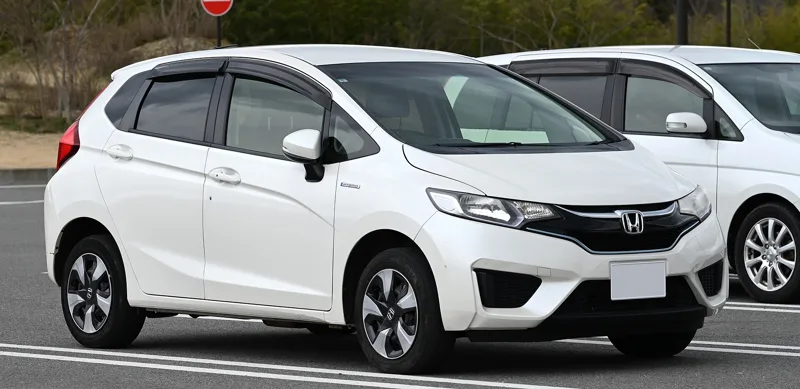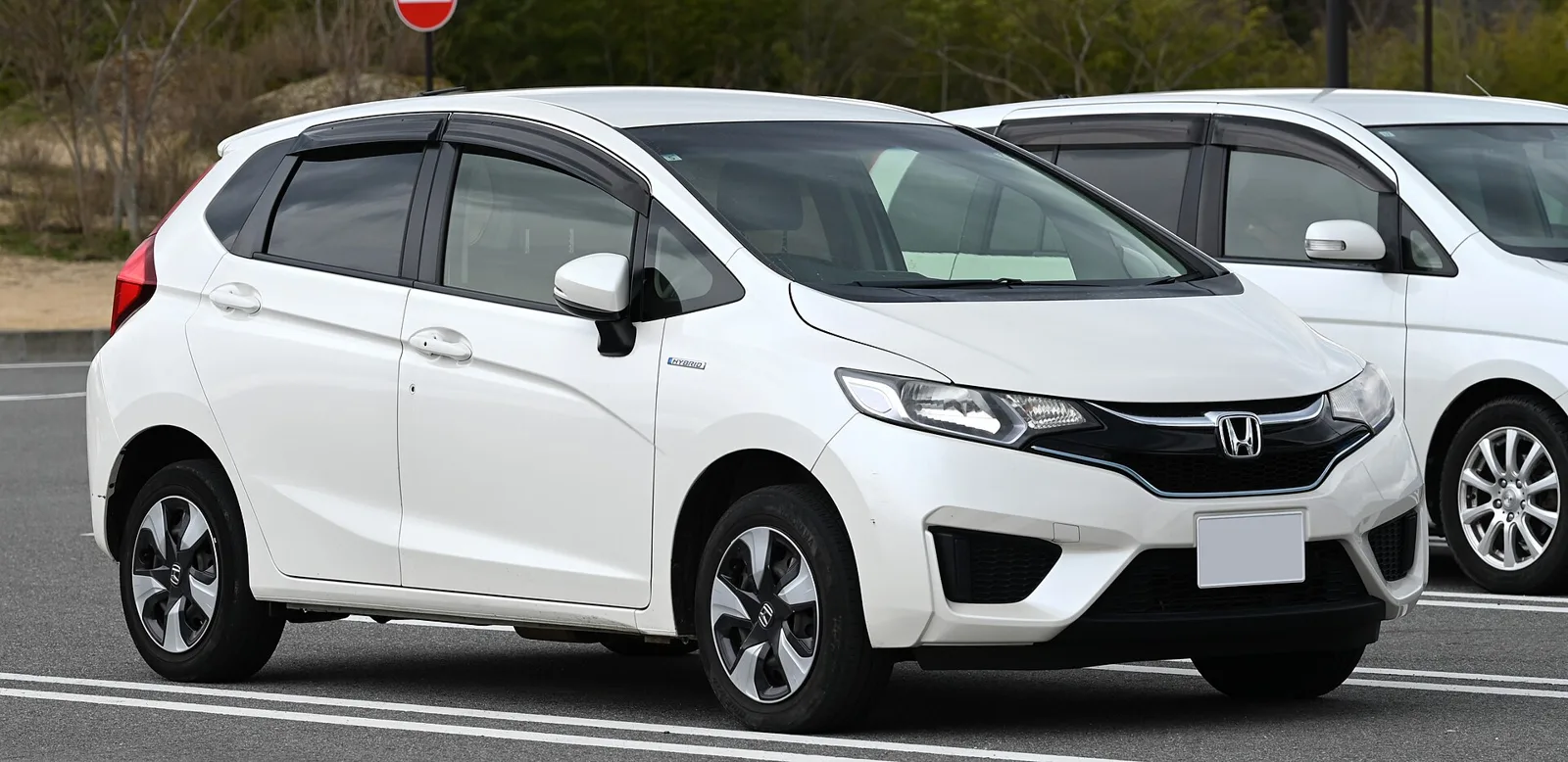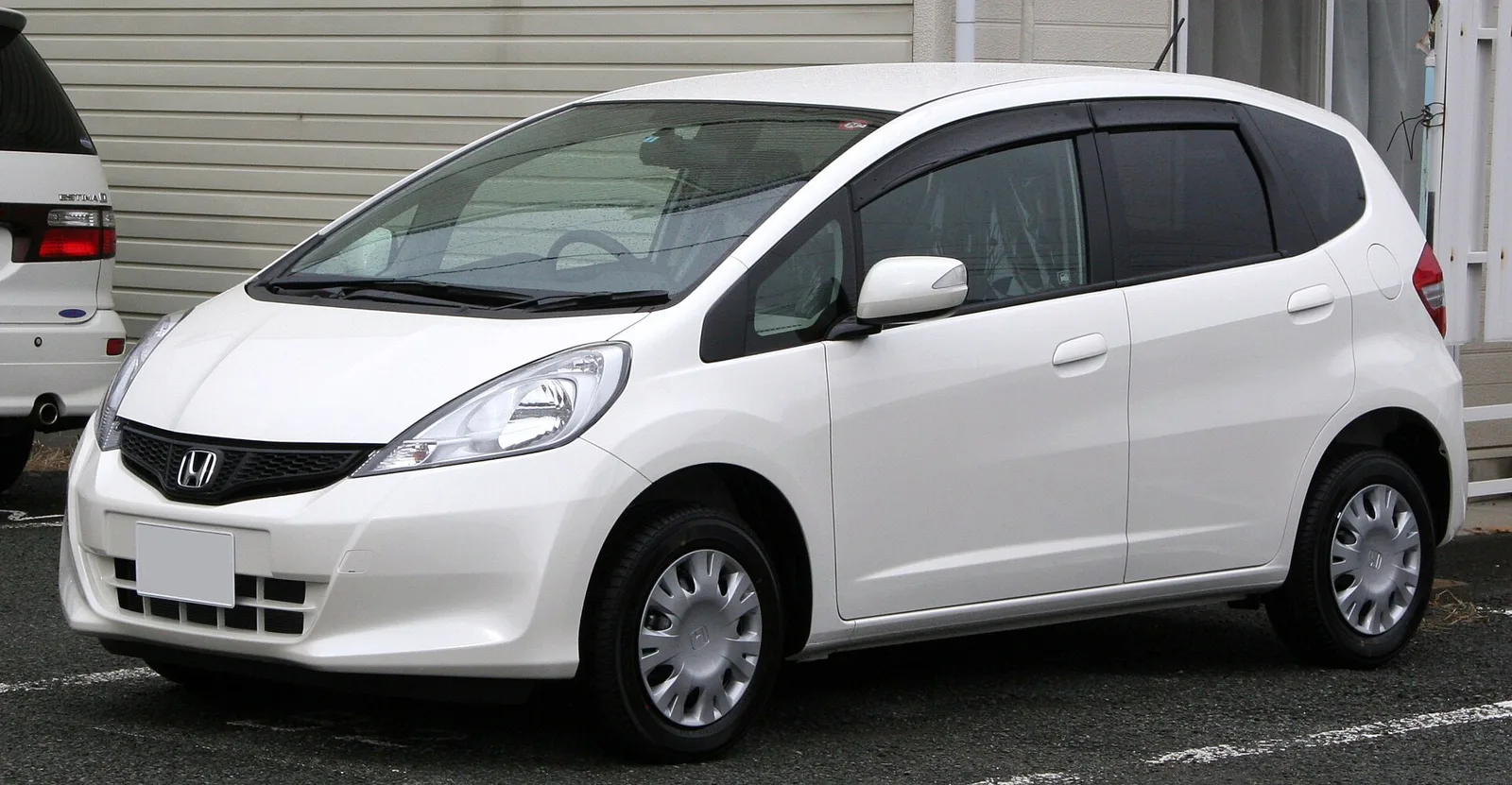
A longer, stiffer second Fit won Japan's Car of the Year award again, then spread through Asia, Europe and North America with a hybrid, a wagon and a short-run electric model.
Launched in 2007 as a longer, more rigid supermini, it used 1.3 and 1.5-litre i-VTEC engines in its core form. A hybrid, a Shuttle wagon and a short-run electric Fit EV came later in the decade.
The second-generation Honda Fit was a subcompact, or supermini, built from 2007 to 2014. It debuted at the 40th Tokyo Motor Show on 17 October 2007, with a longer wheelbase, a stiffer chassis and a larger cabin. Over the following years the line added a hybrid, a station wagon and a short-run electric model, and it spread across Asia, Europe and North America.
What changed from the first-generation Fit?
The second Fit had a longer wheelbase than its predecessor and was wider and longer overall. Overall height stayed the same, but interior height rose by 7.6 mm (0.3 in). The multi-mode seating and cargo configurations were kept, with redesigned headrests that made the rear seats easier to fold.
Boot capacity fell from 21.3 to 20.6 cubic feet (0.58 m3), even though the cabin grew. At its introduction in 2007 the car won the Car of the Year Japan Award for a second time. The chassis was re-engineered too, with structural rigidity increased by 164 percent over the first-generation Fit.
Honda's engineers said they had worked hard to fix a ride they considered too firm in the predecessor. The second-generation car was claimed to offer improved ride and handling as a result.
A longer, stiffer second Fit spread through many markets, and its electric version showed Honda's ambitions for city cars.
Which engines did the second Fit use?
Two engines were offered. The 1.3-litre i-VTEC is rated at 100 PS (99 hp; 74 kW), peaking at 6,000 rpm, and it was sold in European and Asian markets. Its torque, 127 N m (13.0 kg m; 93.7 lb ft), arrives at 4,800 rpm. The 1.5-litre i-VTEC reaches 120 PS (118 hp; 88 kW) at 6,600 rpm, with 145 N m (14.8 kg m; 107 lb ft) of torque at 4,800 rpm.
The 1.5-litre was the only engine in the American market, and it also appeared in several Asian markets including Japan and Malaysia. Five-speed manual, five-speed automatic and CVT transmissions were available, with the automatic only on four-wheel-drive models in some markets.
How did the Fit sell in Japan?
Sales in Japan started in October 2007, and a facelift together with the hybrid came in October 2010. The Japanese line-up used 1.3 and 1.5-litre variants in the 13G, 15XH and top-of-the-range RS grades.
The tuner Mugen introduced a line of accessories for the Japanese 2008 Fit and, on 17 January 2008, showed the Mugen Fit F154SC at the Tokyo Auto Salon. It fitted a supercharger to the 1.5 L L15A engine, raising output to 150 hp (152 PS; 112 kW) and 184 N m. Full coilover suspension, exhaust, intake and brakes came with it, along with a widened track to feed more air to the engine bay.
What did the North American Fit look like at launch?
The first-generation Fit was still sold in North America for the 2008 model year. The second-generation car for that market was unveiled on 19 March 2008 at the New York International Auto Show, as a 2009 model. Its front overhang was several inches longer, and the rear bumper was longer too, to meet Canadian crash rules and improve crash test ratings.
The North American car used a 1.5 L (92 cu in) i-VTEC four-cylinder with 117 hp (119 PS; 87 kW) at 6,600 rpm, paired with a five-speed manual or five-speed automatic. It went on sale on 26 August 2008 for the 2009 model year. When fully equipped it was considered the most expensive in the subcompact class, although it was also described as modestly priced.
Currency also shaped the plan. In September 2009 it was reported that Honda was considering building the Fit in North America, because the Japanese yen was strengthening against the US dollar.
How did the North American Fit trims change?
The base Fit had 15-inch wheels with covers, power windows, a tilt and telescoping steering wheel and a 160-watt AM/FM/CD audio system with four speakers. The Sport added a ground appearance package, 16-inch (410 mm) alloy wheels, paddle shifters, fog lights and a leather-wrapped steering wheel. It was also the first Fit with an optional navigation system.
For the 2011 models, Vehicle Stability Assist, cruise control, remote entry and a USB audio interface became standard across all trims. The 2012 facelift gave the Sport a new front bumper cover and grille, black headlight bezels and dark machined-finish alloys, while the base model received body-colour mirrors and new wheel covers.
Canada had its own trims: DX, DX-A with factory air conditioning, LX, DX-G and Sport. The Canadian Sport resembled the US version but did not offer navigation as an option.
How was the Fit made and sold in Brazil?
The Sumare-built new Fit was introduced in October 2008 at the Sao Paulo Auto Show. There were four versions. LX and LXL used the 1.35-litre engine, marketed as 1.4, with a 16-valve layout, and EX and EXL used the 1.5-litre 16-valve engine. Both engines had VTEC and flex-fuel capability as standard.
Manual and automatic gearboxes were offered, both five-speed, and the CVT was no longer available in Brazil. That made the Brazilian line-up simpler than the one sold in Japan.
How did the Jazz sell in Malaysia, Singapore and Thailand?
The second-generation Fit was launched as the Jazz in Malaysia in August 2008, in Grade S and Grade V. A limited Grade S Modulo of 100 units followed in June 2009. A facelift came in April 2011 with a single Grade V, and in August 2012 the Grade V gave way to a Grade S with a lower price and less equipment.
Malaysian cars were imported from Thailand until July 2013, when the Jazz became locally assembled. Every Malaysian Jazz had the 1.5-litre i-VTEC with an automatic gearbox. In Singapore the car was sold by parallel importers and by an authorised dealer, which launched its Jazz later, in 2009.
In Thailand the Jazz came in S, V and SV trims, all with the 1.5-litre 16-valve i-VTEC, ABS and a CD/MP3 radio. The S was offered with manual or automatic gearboxes, while the V and SV were automatic only. A facelift arrived in January 2011, adding front dual airbags across the range.
After flooding hit the Ayutthaya plant, the Thai government allowed Honda Thailand to import Jazz and Accord models from Japan without extra excise and import tax in early 2012. The Japanese-built Jazz had HID headlights and six airbags. A Jazz hybrid followed in July 2012 as the first hybrid in the country's subcompact market.
How did the Jazz sell in the Philippines and Indonesia?
The second-generation Jazz arrived in the Philippines in October 2008, at the Philippine International Motor Show. Honda pitched it as a versatile subcompact hatchback with a competitive introductory price, aimed at young professionals and small families. It came as a 1.3 S with manual or automatic gearbox, and as a 1.5 V with a five-speed automatic and paddle shifters.
Launch prices were PHP 707,000 for the 1.3 S manual, PHP 747,000 for the 1.3 S automatic and PHP 797,000 for the 1.5 V automatic. Flooding in Thailand in late 2011 halted production there, and Honda scrapped more than 1,000 flood-damaged cars. Honda Cars Philippines imported completely built-up units from Japan for a brief period.
Production resumed in Thailand in early 2012, and the 1.3 S was relaunched on 18 May 2012 at PHP 742,000 for the manual and PHP 782,000 for the automatic. The 1.5 V was priced at PHP 857,000. The Jazz stayed on sale in the Philippines until its successor appeared in July 2014.
In Indonesia the Jazz launched on 27 June 2008 in S and RS variants. Sales reached 24,969 units in 2008, ranking fifth among passenger cars, and 15,713 in 2009, when it moved up to fourth. By the end of November 2010 the year's total was 20,581. A facelift on 19 May 2011 brought a redesigned grille and LED tail lights.
How did the Jazz reach India and Australia?
The Fit launched as the Jazz in India in June 2009, with 26% import content. It was made by Honda Cars India at its Greater Noida factory, and it used a 1.2-litre i-VTEC because the government taxes petrol cars above 1,200 cc more heavily. Honda later postponed the third-generation Jazz to 2015, citing production limits.
In Australia the second-generation Jazz was initially sold without electronic stability control. Honda added it at the end of 2010, and it became standard on every Jazz. Until the end of 2011 the Australian Jazz came from Thailand. After the flooding, Honda Australia brought in two special editions from Japan, the Vibe and Vibe S, which replaced the earlier GLi and VTi grades.
What was the European Jazz?
On 28 July 2008 Honda UK announced that the second-generation Jazz would go on sale from 17 October 2008. Two new engines were offered: a 90 PS 1.2-litre i-VTEC at 55.4 mpg imperial (5.10 L/100 km; 46.1 mpg-US) combined, and a 100 PS 1.4-litre at 53.3 mpg imperial (5.30 L/100 km; 44.4 mpg-US) combined. Both were rated at low CO2 levels of 120 g/km and 123 g/km.
An optional I-SHIFT automated manual replaced the traditional CVT available on the previous model. Production for European markets moved from Japan to Honda's UK plant at Swindon on 7 October 2009. Facelifted models and the new hybrid went on sale on 1 February 2011, when the Cd fell from 0.336 to 0.330.
After the 2011 engine changes, CO2 emissions fell by two grams to 123 g/km for the 1.2-litre and rose to 126 g/km for the 1.4-litre. CVT was available only on the larger engine.
What was the Fit Hybrid?
The Fit Hybrid went on sale in Japan in October 2010, and at launch it was the cheapest petrol-hybrid electric car sold there. It used a 1.3-litre engine and an electric motor in a parallel hybrid system, with an estimated 3.3 L/100 km (86 mpg-imp; 71 mpg-US) on the Japanese 10-15 cycle.
The European version, Jazz Hybrid, was shown at the 2010 Paris Motor Show and reached buyers in early 2011, rated at about 65 mpg imperial (4.3 L/100 km; 54 mpg-US) with CO2 of 104 g/km. At low, steady speeds the engine shut down and the car ran on the motor alone, making it the lowest-emission automatic in the B-segment.
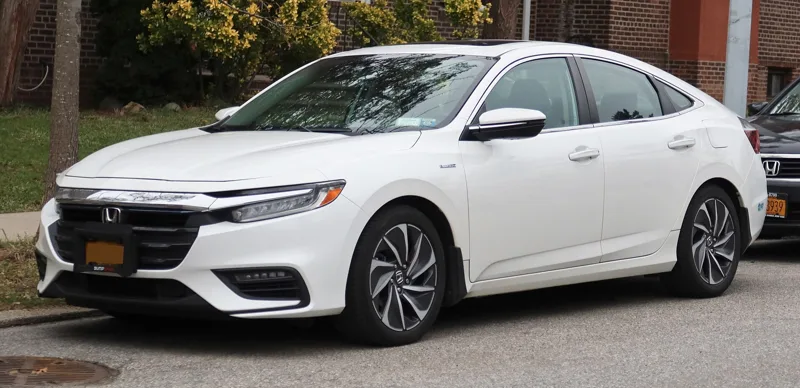
The hybrid drivetrain was the same system as the Honda Insight, and it could be paired with a manual or CVT. Kohei Hitomi, the project leader, acknowledged that a bigger motor and battery cost some cabin space, but he said the car kept its versatility. Reports put sales of about 86,000 Fit Hybrids in 2011, and Honda began Jazz hybrid production in Malaysia from late 2012.
What was the Fit Shuttle?
The Fit Shuttle was a compact station wagon derived from the second-generation Fit, sold only in Japan. It succeeded the first-generation Fit wagon sold as the Airwave. Its launch on 16 June 2011 was pushed back from March because of the earthquake and tsunami of 11 March 2011.
Production moved from Honda's Sayama plant to Suzuka in Mie Prefecture because of power rationing after the quake, and it started in early May 2011. The Shuttle was shortlisted for Car of the Year Japan 2012. It used a 1.5-litre i-VTEC with 120 PS (118 hp; 88 kW), and a 1.3-litre hybrid with IMA was also offered, with CVT as the only transmission on front-drive models.
A double-hinged two-piece load floor gave access to an under-floor storage bin and also acted as a divider for the cargo area. Better sound insulation was promised to make the wagon as quiet as a mid-size sedan.
What was the Fit EV?
Honda first showed a concept electric car with Fit styling at the 2010 Los Angeles Auto Show. Its motor was derived from the FCX Clarity hydrogen fuel-cell car, and in sport mode it gave the feel of a 2.0-litre petrol car. A production version followed for the 2013 model year, shown in November 2011, with 1,100 units earmarked for the US through October 2014.
US deliveries began in July 2012, and the Fit EV was leased rather than sold. The first lease was US$389 a month for three years, based on a base price of US$36,625, and from June 2013 the payment fell to US$259 a month for all customers. Dealers serving the car rose from 36 to 200 by mid-2013, and the initial markets were California and Oregon.
The EPA official range was 82 mi (132 km). The car was rated at 118 MPGe combined, which was then the highest of any electric car sold in the US, ahead of the Mitsubishi i-MiEV at 112 MPGe. Scion iQ EV, a two-seater, took the lead in December 2012 with 121 MPGe. Honda also said the battery could be recharged in four hours from a 240-volt outlet.
The car used a 20 kWh lithium-ion battery with a 92 kW coaxial motor, and it had econ, normal and sport driving modes. Econ extended range by 17% compared with normal mode. The Fit EV used Toshiba SCiB batteries, which Honda said could be recharged to 80% in 15 minutes.
Production of the Fit EV ended in July 2014, announced alongside the Insight and FCX Clarity. By April 2015, 1,070 new units had been leased in the US. A two-year lease extension followed in March 2015, priced at US$199 a month with no down payment and no purchase option at the end.
What were the second-generation Fit's key specifications?
| Specification | Detail |
|---|---|
| Production | 2007 to 2014; debut 17 October 2007 |
| Chassis rigidity | Structural rigidity up 164 percent on the first generation |
| 1.3-litre i-VTEC | 100 PS (99 hp; 74 kW) at 6,000 rpm |
| 1.5-litre i-VTEC | 120 PS (118 hp; 88 kW) at 6,600 rpm |
| North American engine | 1.5 L (92 cu in), 117 hp (119 PS; 87 kW) |
| Boot capacity | 20.6 cubic feet (0.58 m3), down from 21.3 |
| Fit Hybrid (Japan) | 3.3 L/100 km (86 mpg-imp; 71 mpg-US), 10-15 cycle |
| Jazz 1.2 (Europe) | 90 PS, 5.10 L/100 km (46.1 mpg-US), CO2 120 g/km |
| Jazz 1.4 (Europe) | 100 PS, 5.30 L/100 km (44.4 mpg-US), CO2 123 g/km |
| Fit EV battery | 20 kWh lithium-ion; 92 kW motor |
| Fit EV EPA range | 82 mi (132 km); 118 MPGe combined |
| Fit EV production | 1,070 new units leased in the US through April 2015 |