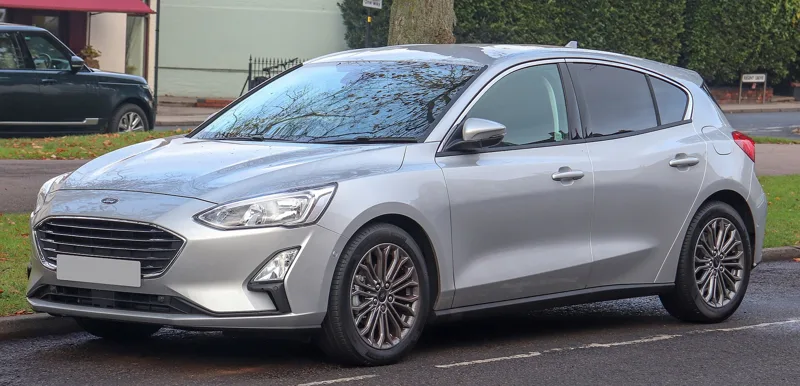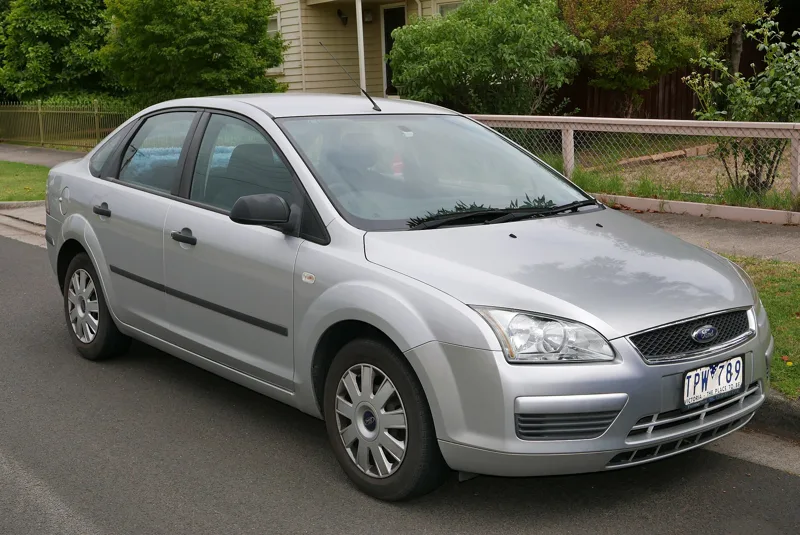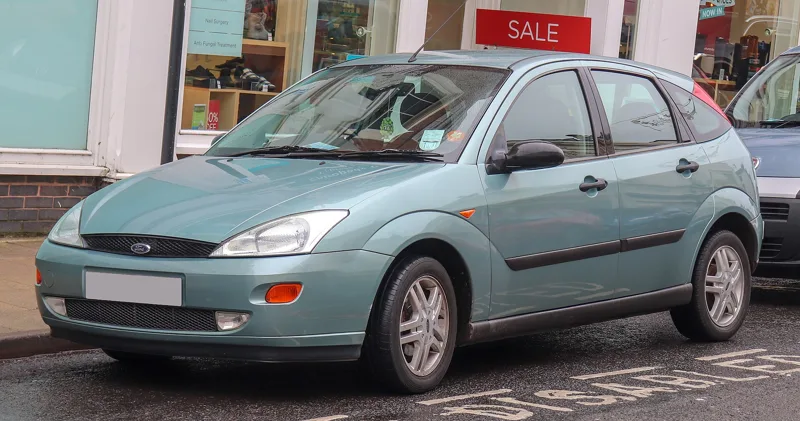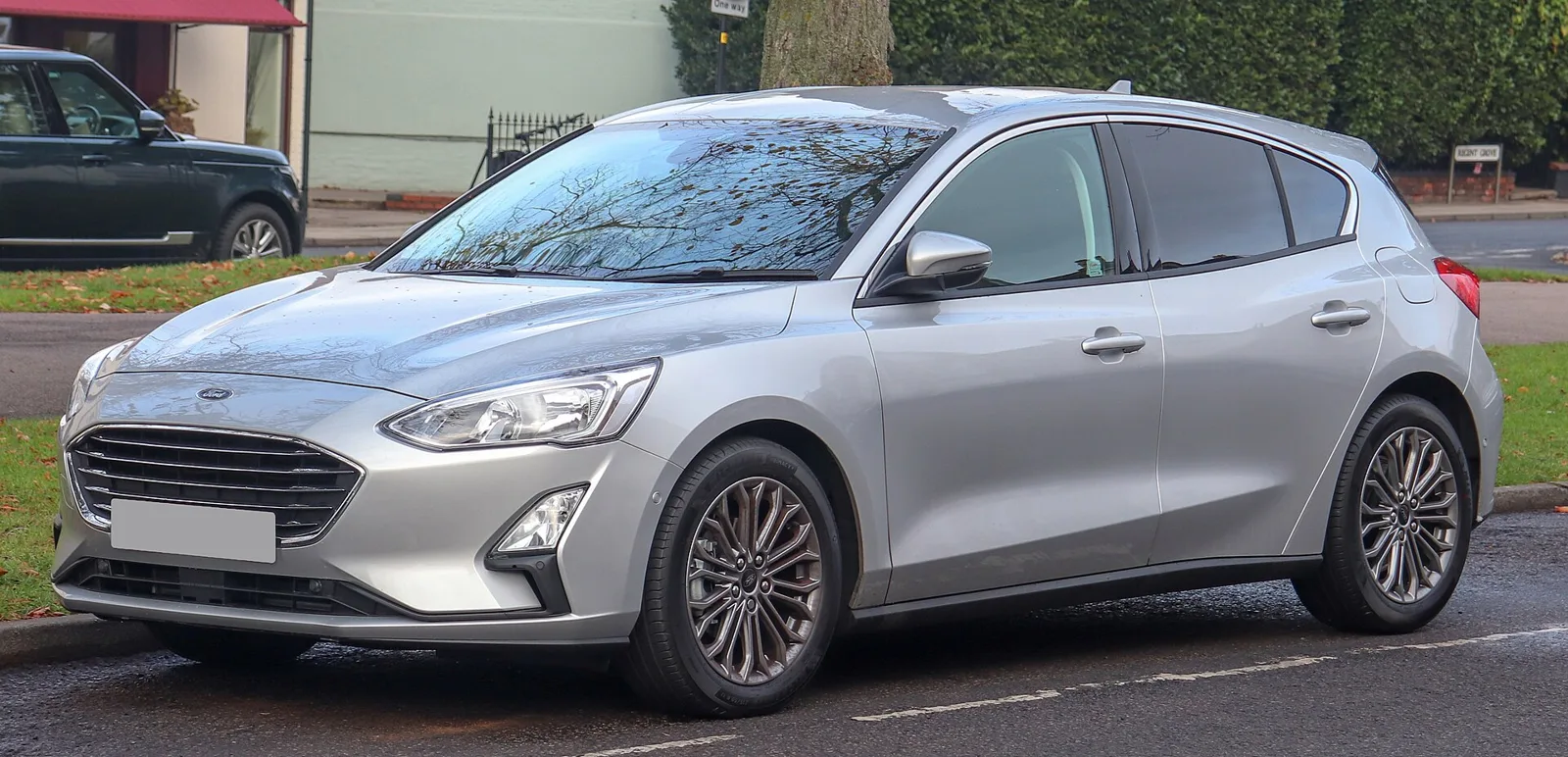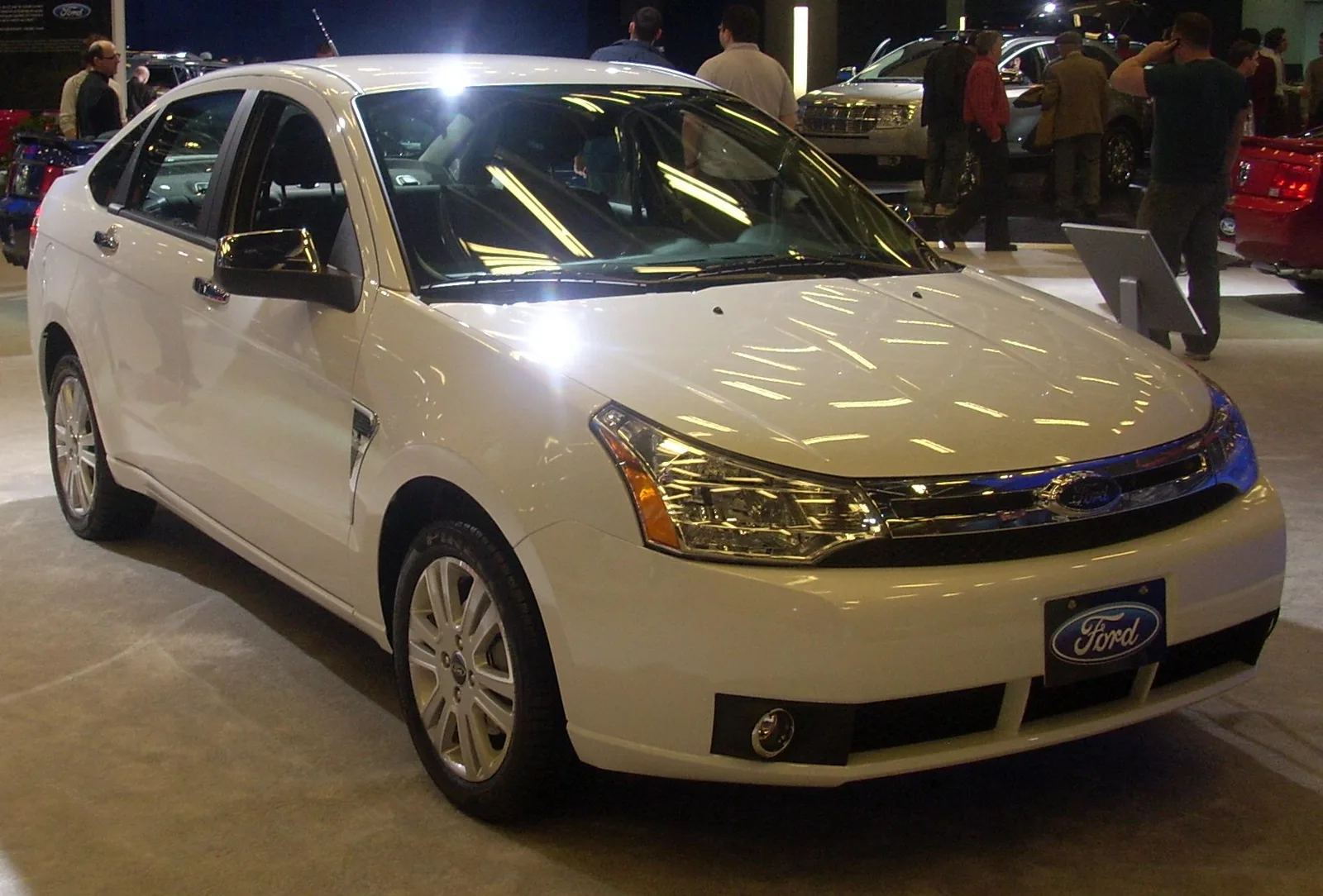
A global compact that reached North American showrooms as a hatchback, wagon, coupe and sedan before Ford ended its passenger-car line there.
Ford sold the Focus in North America from the 2000 model year, first as a hatchback, sedan and wagon, then as a coupe and sedan. The global third generation arrived in 2011, and Ford ended its North American passenger-car line in 2018.
The Ford Focus was a compact car sold in North America from the 2000 model year, and its story there is a mix of hatchbacks, sedans, coupes and a 2018 exit. It was created under Alexander Trotman's Ford 2000 plan, which aimed to sell one compact car worldwide. North American buyers saw the car differently from Europeans, and Ford ended its passenger-car line in the region apart from the Mustang.
Where did the Focus name come from?
The name Focus was chosen in early 1998, after Ford's senior managers had planned to keep the Escort nameplate. A Cologne court then ordered Ford to avoid the name in Germany, because a publisher named Burda already used Focus for one of its magazines. The dispute was settled, and the car kept the name.
The original Focus was designed mainly by Ford of Europe's German and British teams. It replaced the Escort in Europe in 1998, and the Mk 1 won the 1999 European Car of the Year award. The project manager at Dunton was Rose Mary Farenden.
A global compact that Ford sold in North America for nearly two decades before ending its passenger-car line there.
When did the Focus reach North America?
The Focus went on sale in North America in September 1999 as a 2000 model. It arrived as a three-door hatchback, four-door sedan and five-door wagon, and a five-door hatchback followed in 2001. The Focus had been launched in Europe in 1998 as the replacement for the Escort, so the North American launch came a year later.
Small cars were long seen in the US as a route to younger buyers and as a way to raise a manufacturer's fleet fuel economy average. Industry insiders often called cars like the Focus compliance cars for that reason. Ford was said not to worry about losing money on the Focus, because it could sell larger vehicles for bigger profits.
Sales held up well, and Ford managed to keep discounting on new Focuses lower than on many competing vehicles in its class.
What was the second North American Focus?
The restyled car shown at the 2007 North American International Auto Show was sold for the 2008 to 2011 model years as a coupe and sedan only. Its interior was new, with a message centre on top of the dashboard and ambient lighting. Observers often called it a second generation, but Ford never used that name officially.
Ford added Sync voice-controlled audio and Bluetooth, dashboard panels that imitated brushed aluminium and a support beam behind the dashboard for extra rigidity. The hatchbacks and the wagon were dropped with that redesign.
How did the third generation change things?
For the third generation Ford merged its international and North American Focus programmes. The global Mk3 launched in North America and Europe in early 2011, after production started late in 2010. Ford unveiled it at the 2010 North American International Auto Show as a five-door hatchback, with a five-door wagon available at launch.
The new model brought a 2.0-litre direct-injection four-cylinder engine. Australian production was planned at first, but that plan was dropped, and Thailand supplied Australia and New Zealand from a new plant whose output began in June 2012.
A facelift previewed at the 2014 Geneva Motor Show brought a redesigned front end with Ford's family grille and slimline headlights. The Focus RS returned in 2015 with a 2.3-litre EcoBoost engine and an all-wheel-drive system that could send full power to the rear wheels when needed.
Why did Ford stop selling the Focus in North America?
In April 2018 Ford announced that all North American passenger vehicles except the Mustang would be discontinued, so it could focus on trucks and SUVs. A Focus Active crossover had been planned as the only Focus for the US, but that plan was cancelled in August 2018 because the car would have been built in China and hit by tariffs.
The fourth generation, unveiled on 10 April 2018 for Europe and Asia, did not come to North America. Ford later announced that the Focus would be discontinued by 2025 as part of a pivot towards electric and crossover vehicles.
Did the Focus race in North America?
Yes, though most of its racing took place outside the United States. The Focus was used in the SCCA Speed World Challenge Touring Car Series, and Focus touring cars won TC 2000 titles in Argentina. A Focus with a 5.0-litre Coyote V8 took part in the 2014 Bathurst 12 Hour.
Rallying had a stronger record, with Ford and M-Sport building its world rally cars for several campaigns.
What was the first Focus RS?
The first Focus RS arrived in 2002 as Ford's highest-performance Focus, with a 2.0-litre turbocharged Duratec RS engine and a Quaife limited-slip differential. Tickford Engineering in the UK developed it, and up to 70 per cent of the base components were updated, re-engineered or redesigned.
The car used Sachs Racing dampers, Brembo brakes, 18-inch O.Z. Racing alloy wheels and Michelin Pilot Sport tyres, and it was sold only in Ford's Imperial blue. Ford built 4,501 cars at Saarlouis in 2002 and 2003, and 2,147 of them were sold in the UK.
What did the fourth-generation Focus add?
The fourth-generation Focus arrived in 2018 with a sportier exterior and a simpler interior. Ford promoted its Sync 3 infotainment, FordPass Connect and the CoPilot360 driver-assistance suite. A crossover-style Active trim was offered on hatchbacks and estates, and a Vignale luxury trim joined the line-up.
No Focus RS was planned for this generation, Ford confirmed in April 2020, citing pan-European emissions standards and high development costs. Ford's European chairman, Stuart Rowley, said in June 2022 that production at Saarlouis would end around 2025.
How did the Focus rally career unfold?
The first Mk 1 Focus World Rally Car debuted at the 1999 Monte Carlo Rally, and Colin McRae gave it a maiden win on the Safari Rally that February. Carlos Sainz and Markko Martin also won with it before the Mk 2 car replaced it in late 2005.
The Mk 2 car, run by the BP-Ford World Rally Team with Marcus Gronholm and Mikko Hirvonen, took the manufacturers' title in 2006 and defended it in 2007. All of Ford's rally cars were built and run by M-Sport in Cockermouth, Cumbria, managed by former British rally driver Malcolm Wilson. The Mk 2 car stayed in use until 2010, when the Fiesta WRC took over.
How do the North American Focus generations compare?
| Generation | Years in North America | Body styles | Detail |
|---|---|---|---|
| First | 2000 to 2007 model years | Three-door hatchback, four-door sedan, five-door wagon; five-door hatchback from 2001 | Launched September 1999 |
| Restyled (informal second) | 2008 to 2011 | Two-door coupe, four-door sedan | Same platform as the first generation |
| Global third (Mk3) | 2011 to 2018 | Five-door hatchback and five-door wagon at launch | Launched early 2011 in North America and Europe |
| Fourth (C519) | Not sold in North America | Sedan, hatchback and estate in Europe and Asia | Unveiled April 2018 |