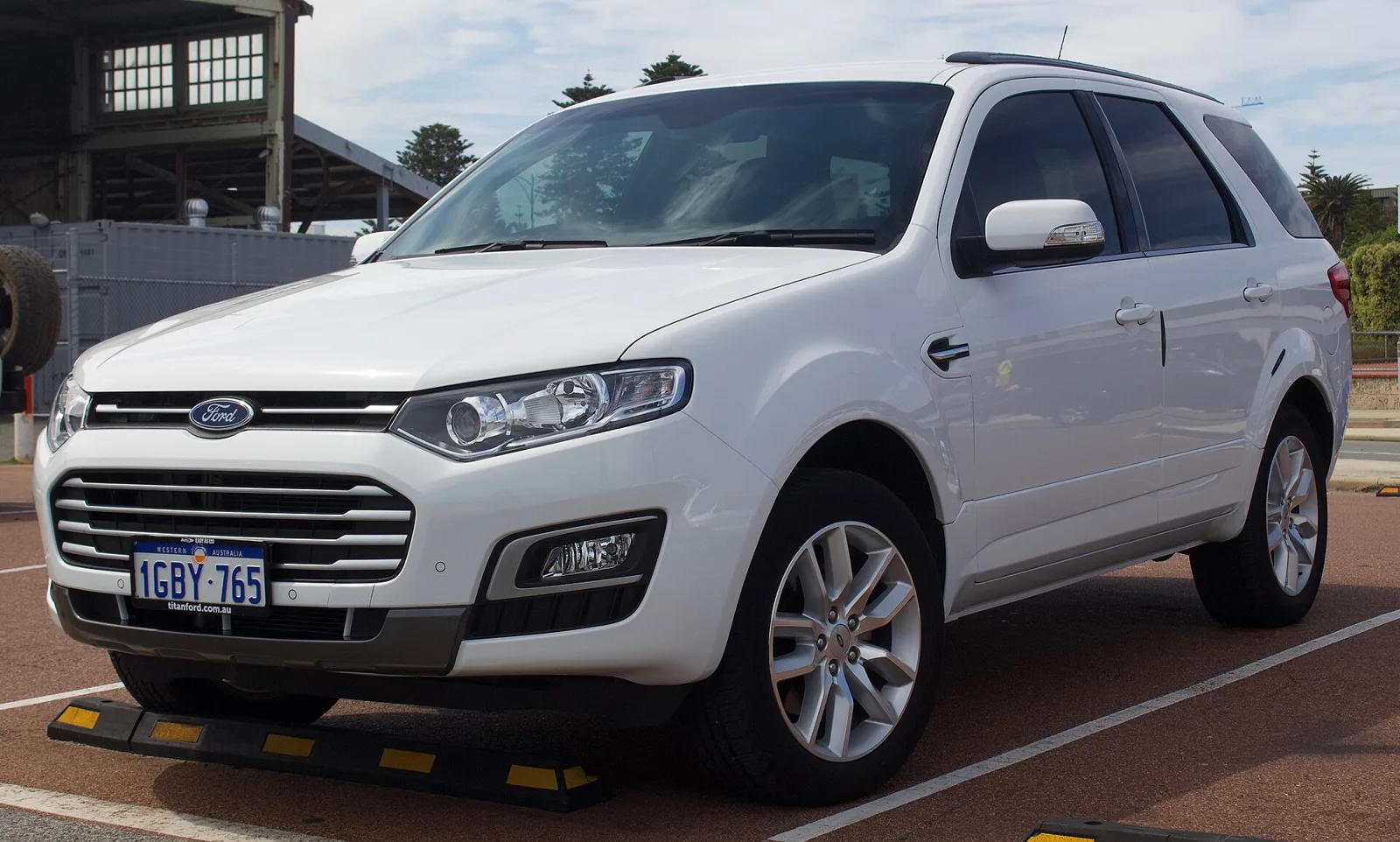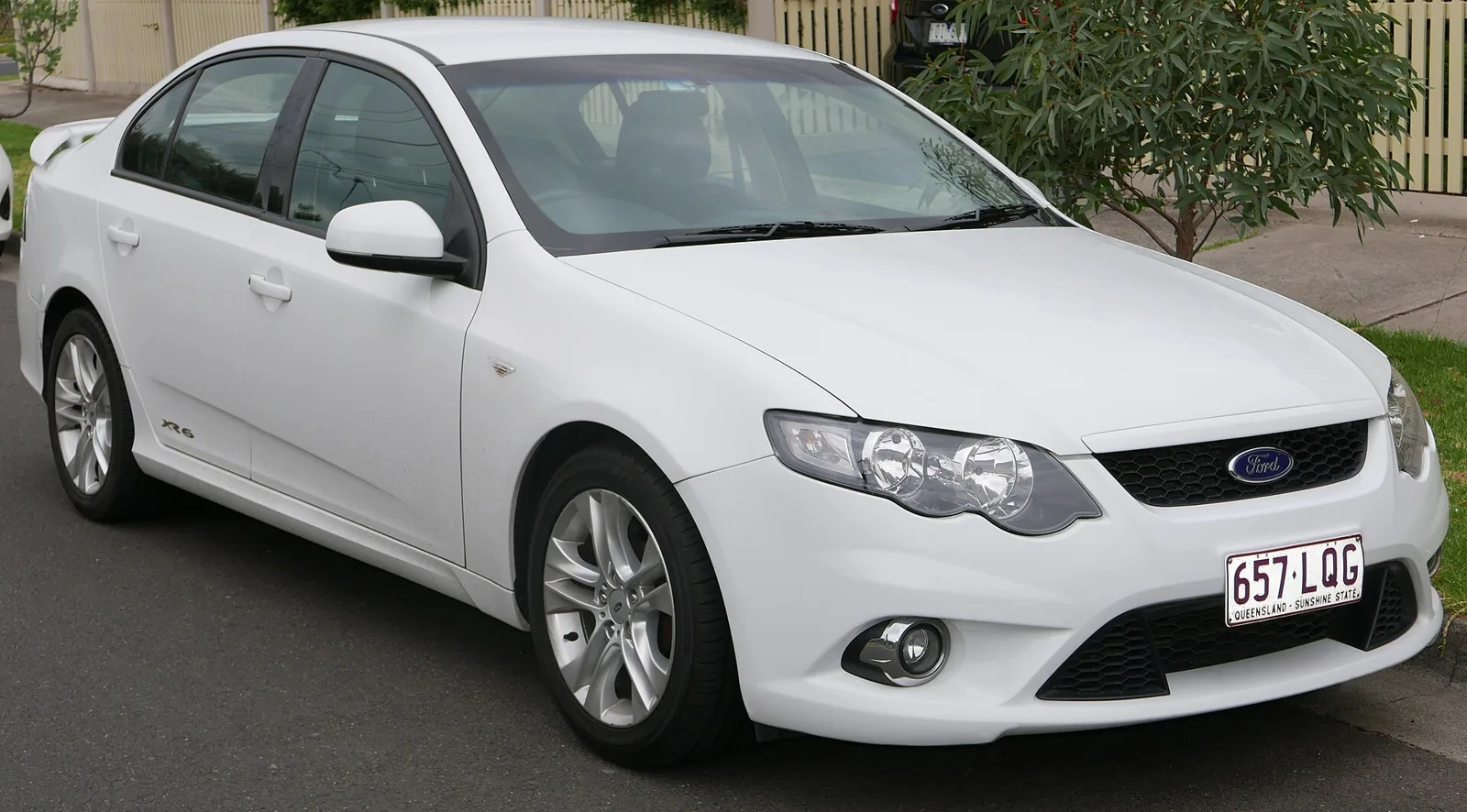
The first car of the final Falcon generation swapped Fairmont for the G Series, added an LPG engine and EcoBoost plans, and spawned FPV's GT F 351.
Built by Ford Australia between 2008 and 2014, the FG opened the final Falcon generation and replaced the Fairmont name with the G Series. It offered six-cylinder, turbo and V8 engines, plus FPV performance models built on the same platform.
The Ford Falcon FG was a full-size car built by Ford Australia from 2008 to 2014. It opened the seventh and final generation of the Falcon, and it dropped the Fairmont name in favour of a new G Series luxury range. Its six-cylinder and V8 engines, plus the FPV performance models built on it, made it one of the most talked-about Australian cars of its era.
Where did the Ford Falcon FG fit in the range?
The FG was the first version of the seventh generation, which was also the last generation of the Falcon. Ford Australia gave the whole model line a fresh start by renaming it. The long-running Futura, Fairmont and Fairmont Ghia were replaced by the G6 and G6E, with the FG name itself paying tribute to the Fairmont Ghia that it removed.
The car was first previewed at a press event on 17 February 2008 and remained on sale until October 2014. In December 2014 it was succeeded by the FG X series, which carried the story forward with a further round of changes.
The FG kept the Falcon's six-cylinder core but turned its luxury line into the G Series and its performance line into FPV's loudest cars.
How did the FG look and feel inside?
The new styling drew on the kinetic design language that Ford Europe used on its own cars. The centre console was raised to give a more luxurious and spacious feel, and the interior became roomier, with easier entry and exit for both front and rear passengers. Better equipment came with it, which set a higher bar for the entry-level model.
From 1 September 2008 all XT models came with alloy wheels as standard, a change from the earlier 16 x 6.5 inch steel wheels that wore plastic covers or centre hubcaps. Standard safety kit on the base car included four airbags, stability control with an emergency brake assist function, and a system that warned about driver fatigue. A 60/40 split fold-down rear seat and front and rear power windows completed the package.
The XT also picked up an MP3-compatible CD player, a 3.5 mm auxiliary input, single-zone automatic climate control and cruise control.
What engines did the Ford Falcon FG use?
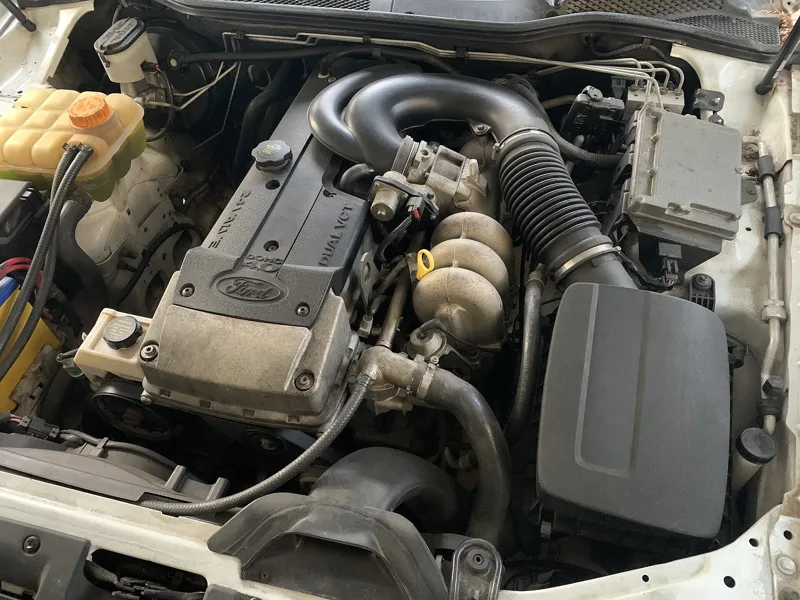
The standard FG engine was a 4.0-litre, 24-valve in-line six with variable cam timing. On regular 91-octane fuel it was rated at 195 kW (261 hp) at 6000 rpm, producing 391 N m (288 lb ft) of torque at 3250 rpm. Running 98-octane fuel raised the figures to 210 kW and 422 N m.
From July 2010 every in-line six, apart from the E-Gas models, met Euro 4 emissions standards. The ZF six-speed automatic was an optional extra, while the XR6 used a five-speed as standard. Hardware updates and the new gearbox improved fuel use for the entry sedans, although the turbo and V8 variants were thirstier by nature.
The turbocharged six was a separate performance story. It made 270 kW (362 hp) at 5250 rpm, and its 533 N m (393 lb ft) of torque arrived from 1950 rpm. It was offered in the XR6 Turbo and the G6E Turbo, and a ten-second over-boost function lifted torque to 640 Nm and power to 324 kW. The turbo engine also delivered as much as 515 N m (380 lb ft) at only 1250 rpm.
In 2011 Ford introduced a new LPG system called EcoLPI. Unlike the vapour setup in the previous E-Gas system, it used liquid injection. A higher compression ratio of 12.0:1, lighter pistons and rings, and other changes lifted output by 27% to 198 kW (266 hp) at 5000 rpm. Torque rose by 10% to 409 N m (302 lb ft) at 3250 rpm, and fuel use fell by around 15%. The EcoLPI car came with a six-speed automatic as standard and was available from July 2011.
Ford also planned a two-litre EcoBoost engine for 2012. It was expected to use 20% less fuel than the 4.0 litre and to emit much less CO2. The target was at least 179 kW (240 hp) and 353 N m (260 lb ft), with peak torque available between 2000 and 5500 rpm. The estimated fuel use was 8 L/100 km (29 mpg-US; 35 mpg-imp). The four-cylinder was expected to be the first rear-drive Falcon to use EcoBoost.
How much fuel did the FG use?
Hardware updates and the six-speed automatic brought fuel use for the entry-level naturally aspirated petrol sedan down to 9.9 L/100 km (29 mpg-imp; 24 mpg-US). The equivalent utility variant returned 10.7 L/100 km (26 mpg-imp; 22 mpg-US).
The turbo and V8 models used more fuel, which was the trade-off for their performance. The gap between the figures for the standard six and the performance versions shows how the range served two different kinds of buyer.
How safe was the Ford Falcon FG?
The FG range earned an ANCAP five-star rating, the first Australian-built car to reach that level. It scored 35.6 out of a possible 37 points.
Equipment expanded over the production run. Electronic stability control was added to the E-Gas LPG models, lifting their rating from four stars to five, and ESC later reached the utilities too. Bluetooth and iPod integration became standard across the sedans from June 2010.
What trim levels did the FG offer?
The FG came in seven trim levels divided into three groups. The base Falcon was the XT. The luxury G-Series included the G6, G6E and G6E Turbo. The sports range was the XR6, XR6 Turbo and XR8. Utility versions covered the base Falcon Ute, the R6, the XR6, the XR6 Turbo and the XR8.
The XT used Ford's Control Blade independent rear suspension, with a virtual pivot link at the front, the same architecture found in the Territory. Its brakes came from the BF Falcon, and its suspension was tuned for a standard ride. The five-speed auto replaced the older four-speed at launch, and the six-speed became standard in July 2010.
The XR6 was the sports base model, with the same 4.0 litre six as the XT, a sport tune and a different ECU. It had 17 x 8-inch five-spoke alloy wheels, optional 18 or 19-inch wheels, a sports body kit with side skirts, a rear spoiler, front fog lamps and cloth sports seats. The five-speed auto was withdrawn in July 2010 when the six-speed became the standard automatic across the range.
The XR6 Turbo kept the XR6's visual identity and added 18 x 8-inch five-spoke wheels, a limited-slip differential and larger front brakes with 322 mm rotors. Its rear brakes were 303 x 16 mm solid discs, the same hardware used on the original BA XT, which left it short of the ventilated rear discs on the BF XR6 Turbo and XR8. Its 6HP26 six-speed automatic was built to handle more torque than the 6HP21 in the nonturbo models.
Ford rated the XR6 Turbo as the fastest car in the FG range, reaching 0-100 km/h in 4.8 seconds. Over-boost raised the boost pressure from a standard 10 psi to 12 psi when the throttle was fully depressed at speed, giving power of around 310 kW (416 hp) for short bursts. The XR Luxury Pack added leather sports seats, dual-zone climate control, 19-inch alloy wheels and premium sound, while the Tech Pack added Bluetooth and iPod integration.
The G6 replaced the Futura and sat above the XT. It used the same engine and drivetrain but carried sport-luxury suspension, front fog lights, rear parking sensors and 17-inch alloy wheels. A limited edition of 1500 G6 cars was also released, with leather seats in Shadow, unique grille and bumper inserts, side-curtain airbags and 18-inch wheels.
The G6E took over from the Fairmont Ghia. It added the ZF six-speed automatic, dual-zone climate control, a premium audio system, leather seats, reversing camera, curtain and side airbags, an eight-way power driver's seat and 17 x 8-inch 10-spoke alloy wheels. Its side indicators were styled like those on premium European cars. The G6E Turbo had the XR6 Turbo engine, 18-inch seven-spoke wheels, lowered suspension and a boot-mounted spoiler.
Why did the XR8 leave the Falcon range?
The XR8 was discontinued in June 2010 because its 5.4-litre V8 did not meet Euro IV emissions rules that Australia had adopted. Meeting those rules would have cost the engine power and torque, and would have required significant further investment. The car was then expected to return with the 5.0-litre Coyote engine used in the Mustang GT, but it came back only in 2014, in the FG X series, with a supercharged 5.0-litre Miami engine.
The XR8 had been a flagship sports model. Its 290 kW (389 hp) V8 produced 520 N m (380 lb ft) of torque, and officially it made 20 kW (27 hp) more than the XR6 Turbo. Its performance was close to the XR6 Turbo's in practice, and a semi-active muffler opened above 2800 rpm for a louder note. Its heavier front end made it less agile than the six-cylinder cars through corners, and it sold poorly next to the XR6 Turbo, with most volume going to utilities.
What changed with the FG Mk II?
The Mk II arrived in 2011 as the first major visual update since the FG launched in 2008. Its front end took cues from the SZ Territory, with a smaller upper grille, a larger octagonal lower grille and new headlight and fog light assemblies. G6E and G6E Turbo models gained LED running lights as standard.
Most specification levels, except the XT and XL, also received an Interior Command Centre with an 8-inch touch screen. It offered 2D and 3D maps, SUNA traffic updates, overspeed and speed camera warnings, and a street-number display. Safety improved too, with six airbags on all sedans, Generation 9.0 stability control across the range and standard rear parking sensors. The Mk II went on sale in late 2011, and a turbocharged four-cylinder EcoBoost option arrived in early 2012.
What did FPV build on the FG?
Ford Performance Vehicles produced high-performance FG variants, as it had on the BA and BF. The sedan range comprised the F6 and V8 GT, GT-P and GT E, while the Ute range included the F6 Ute and the V8 Pursuit and Super Pursuit. The F6 cars used a 4.0 litre turbocharged DOHC 24-valve six making 310 kW (416 hp) at 5,500 rpm and 565 N m (417 lb ft) between 1,950 and 5,200 rpm.
The V8 cars used the 5.4 litre Boss V8, rated at 315 kW (422 hp) peak at 6,500 rpm, with 551 N m (406 lb ft) of torque arriving at 4,750 rpm. In October 2009 FPV added the F6-E, a luxury version of the GT E with the F6 engine. The same month it released the GS, which revived a 1970s nameplate and replaced the XR8 in the lineup. Only 250 GS sedans and 75 utilities were built, and the car used a detuned V8 from the GT.
In October 2010 FPV introduced a supercharged, all-alloy 5.0 litre Coyote Miami V8 of 302.1 cu in (4,951 cc). It replaced the Boss unit and made 315 kW (422 hp) in the GS and 335 kW (449 hp) in the GT, GT E and GT-P.
What were the FPV limited editions?
Limited versions included the Fifth-Anniversary car, the GT Black, the GT R-Spec and, most importantly, the GT F 351. The first two used the 335 kW (449 hp) engine, while the GT F made 351 kW (477 PS; 471 bhp) at 6000 rpm and 570 N m (420 lbf ft) between 2500 and 5500 rpm. The R-Spec and 351 cars also had an enhanced handling package with 9-inch rear wheels.
Dyno testing suggested the engine made more power than its quoted figures, with an estimated 380-400 kW (510-535 hp) at the rear wheels, or about 450-470 kW (600-630 hp) at the flywheel. FPV also added launch control to the GT F. The 351 name paid tribute to the original Falcon GT's displacement, and the car became known as the Final GT Falcon.
What are the Ford Falcon FG specifications?
| Specification | Detail |
|---|---|
| Production | 2008 to October 2014; previewed 17 February 2008 |
| Standard six | 4.0 litre, 195 kW (261 hp) at 6000 rpm, 391 N m (288 lb ft) at 3250 rpm |
| Turbo six | 270 kW (362 hp) at 5250 rpm, 533 N m (393 lb ft) from 1950 rpm |
| EcoLPI | 198 kW (266 hp) at 5000 rpm, 409 N m (302 lb ft) at 3250 rpm |
| XR8 V8 | 290 kW (389 hp), 520 N m (380 lb ft) |
| Economy, XT sedan | 9.9 L/100 km (29 mpg-imp; 24 mpg-US) |
| Economy, XT utility | 10.7 L/100 km (26 mpg-imp; 22 mpg-US) |
| XR6 Turbo 0-100 km/h | 4.8 seconds |
| ANCAP | Five stars, 35.6 out of 37 points |
| F6 FPV engine | 310 kW (416 hp) at 5,500 rpm, 565 N m (417 lb ft) |
| GT F 351 | 351 kW (477 PS; 471 bhp) at 6000 rpm, 570 N m (420 lbf ft) |
Read the rows against the engine notes above. Standard, turbo, LPG and FPV figures come from different versions, so each one should be read on its own line.