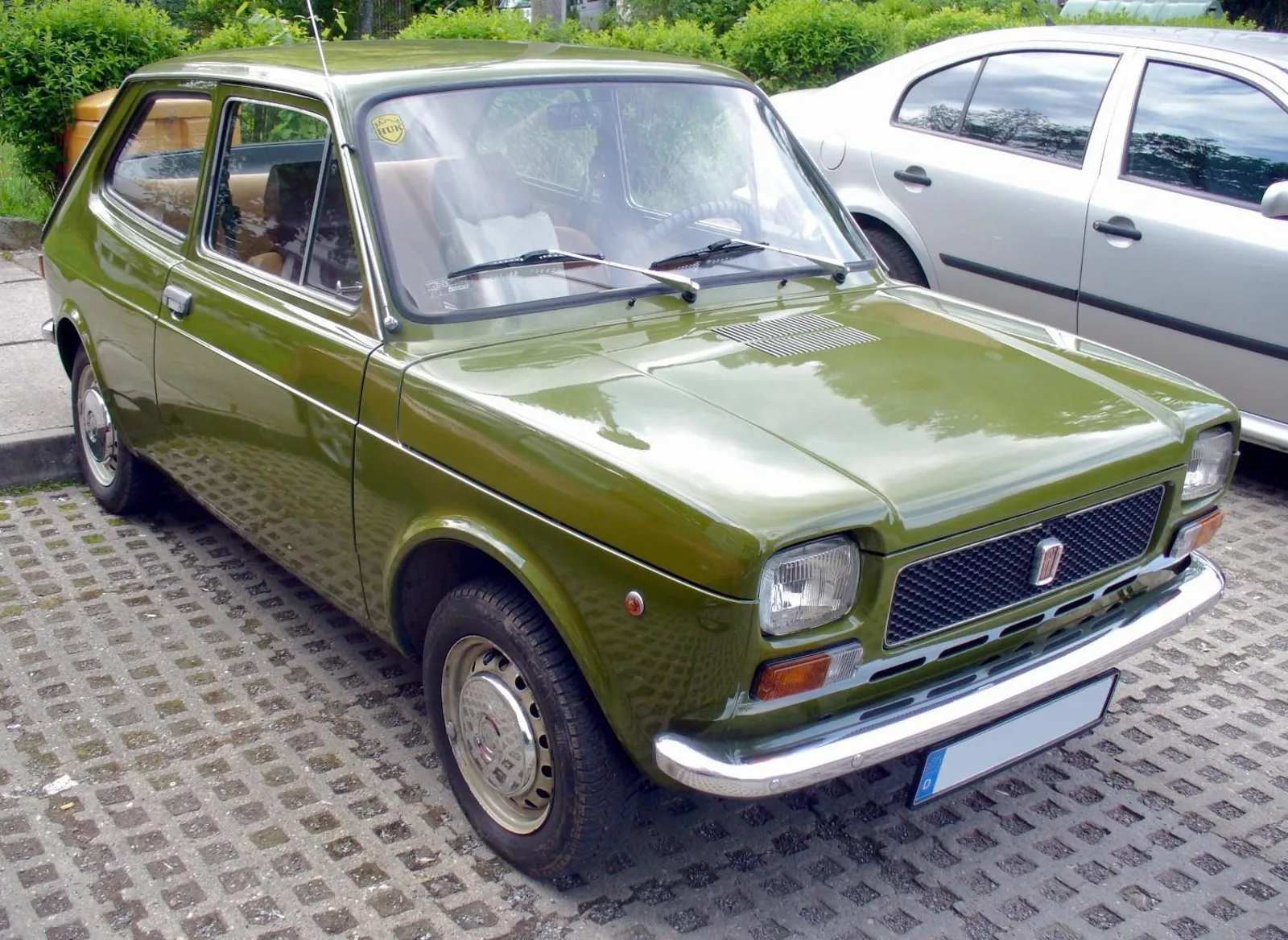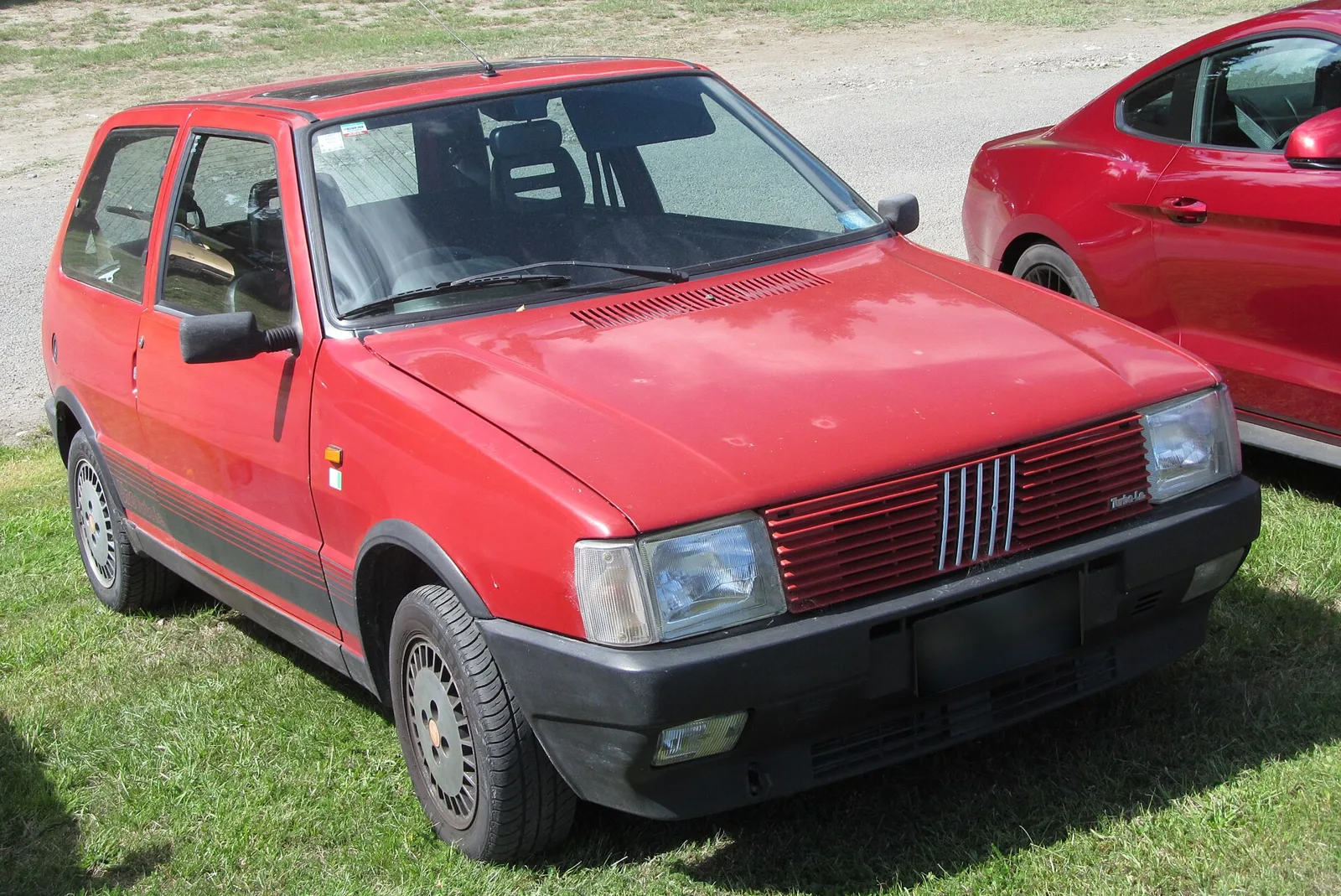
Fiat's turbocharged Uno from May 1985, with a bigger engine from 1989, catalysed versions for tougher markets and an antiskid option that caused trouble.
The Fiat Uno Turbo i.e. was the sporting Uno, produced from May 1985 until 1997 to compete in the hot hatch class. Its turbo engine grew from 1,301 cc to 1,372 cc in 1989, and a catalysed variant was offered for stricter emissions markets.
Fiat's sporting Uno arrived in May 1985 as the Turbo i.e., built to take on the established hot hatches of the day. It ran in two series until 1997. The 1989 restyling brought a bigger engine, and a catalysed version arrived for markets with stricter rules.
Why did Fiat build the Uno Turbo i.e.?
Fiat built the Turbo i.e. to compete in the hot hatch class, where the established rivals set the pace. Smoother running and better consumption and emissions from the base engine helped the Turin-built car win its place in that class.
The engine ran two separate control units, one for multipoint electronic injection and one for electronic ignition.
A turbocharged hot hatch that gained a bigger engine in 1989, then a catalysed version for markets with tougher rules.
How was the turbo engine built?
The 1,301 cc (79.4 cu in) turbo engine, code 146A2000, was revised in its cylinder head and water passages from the naturally aspirated version fitted to the Uno 70 SX, which produced 48 kW (65 PS; 64 hp). The turbo version delivered 77 kW (105 PS; 104 hp) at 5,750 rpm with 147 Nm (108 lb ft) of torque at 3,200 rpm.
The block was in fact developed for the Uno Turbo. It was derived from the engine originally used in the Fiat 128 and the Ritmo, a 1,116 cc (68.1 cu in) unit. The bore was kept, but the stroke was longer, giving 1,498 cc (91.4 cu in), the capacity of the engine fitted to the Lancia Delta 1.5 LX.
The turbocharger was a water-cooled Japanese unit with a maximum boost of 0.55 bar. An air-to-air intercooler cooled the charge before it reached the cylinders, and an oil radiator sat beside the turbo behind the front bumper. The car was rated at a top speed of 200 km/h (124 mph) and a 0-100 km/h time of under 9 seconds.
Alloy wheels were unique to the Turbo i.e. They were 13-inch units, fully diamond-cut with a 5.5-inch rim, and took 175/60 tyres. The wheel-centre caps carried the Abarth scorpion on a red background.
What did the first series look like?
The first series offered firm grip, a 205 km/h (127 mph) top speed and 8.3 seconds to 100 km/h, with modest consumption for a turbo car thanks to electronic injection. Its five-speed gearbox was derived from the one in the Ritmo 105 TC, and the self-ventilated front discs measured 240 mm (9.4 in) across.
Outside, a redesigned front bumper carried standard fog lamps and two extra slots to cool engine oil and charge air. Wheel arch extensions and side skirts matched the SX, and the tailgate was a fibreglass unit with a bold integrated spoiler. The exhaust tailpipe was chrome with a flat outlet.
Inside, the seats were black velvet with the Fiat emblem of five red bars repeated in three rows on each seat. The seat backs, the curved dashboard in front of the passenger and the roof used a soft plastic with small squares pressed into the surface. The carpet was red with long pile and no footrest, and the interior mirror held a red liquid-crystal clock.
A rare option, available only on this version, was a small control panel at the centre of the instrument cluster. It had warning lamps for cooling and lubrication faults, an open-door lamp and a bulbs-out indicator. The 1985 car is easy to spot: it has no adhesive side or tailgate stripes, and its grille and mirrors were not body-coloured. The launch list price in May 1985 was 14,450,000 lire, and the digital check control instrumentation cost 153,000 lire as an option.
The analogue instrument panel was adopted on the Lancia Delta S4, with the speedometer scale raised from 160 km/h (99 mph) to 260 km/h (162 mph). The turbo boost gauge and fuel level indicator were also made more precise.
The 1986 model year was almost identical, but it added body-coloured plastic trim and Turbo I.E. stripes on the sides and tailgate. A green liquid-crystal clock replaced the red one, and the control panel was dropped. A new optional digital instrument panel debuted, replacing the analogue instruments with amber light-bar displays. It looked striking but was perhaps less practical to read while driving than needle dials, and its displays left out total and trip kilometres.
What changed with the 1989 restyling?
The 1989 restyling brought a 1,372 cc (83.7 cu in) engine producing 85 kW (116 PS; 114 hp), and the 0-100 km/h sprint fell to 7.7 seconds. Top speed was 205 km/h (127 mph), and a new turbocharger began working at around 2,200 rpm.
The new engine was already fitted to the Tipo 1.4, code 146A8000. It was derived from the earlier 1,301 cc unit by lengthening the stroke by a few millimetres, and the cylinder head received a different compression ratio. The turbocharger was a brilliant Garrett T2 model with a maximum boost of 0.75 bar, which began working very early.
Inside, the seats now had black and grey checks, and the steering wheel was a three-spoke leather unit. The quality of the materials and assembly was better, and the trim was more modern and practical than before.
Outside, the look was still sporty but calmer. The resin tailgate and its spoiler disappeared, and the bumpers gained a red line across their width. The rear lamps were exclusive to this version, with red lines crossing their transparent parts. Over time many of those red lines faded to white, a fault that affected cars built early in production.
The new sporty alloy wheels had four spokes, which some owners called fans, in the same 5.5J13 ET42.5 size with 175/60 tyres. They were first fully diamond-cut, then offered in painted silver to cut costs. The dashboard carried seven gauges, including a speedometer with a 240 km/h (149 mph) full scale, an electronic rev counter reading to 8,000 rpm, and a boost gauge with a 1 bar full scale.
What were the Kat Europa and Kat Racing versions?
The Kat Europa was a catalysed 1,301 cc version sold in Germany and Switzerland, producing 74 kW (101 PS; 100 hp). The Kat Racing followed in June 1991 for Italy, with 82 kW (112 PS; 110 hp), built to meet the Euro 1 directive 91/441.
The Kat Europa carried the catalytic exhaust and was rated at 191 km/h (119 mph) with 9.1 seconds to 100 km/h. It was the least powerful version built, though some examples were later brought into Italy from those markets. Anti-pollution rules were already in force in Germany and Switzerland, which is why it was sold there.
The Kat Racing lost 4 horsepower to environmental rules, yet it still produced 112 PS (110 hp), with a 200 km/h (124 mph) top speed and an 8.4-second 0-100 km/h time. It used a catalytic converter, a lambda sensor and a slightly larger turbine. It remained available until the end of its production in December 1993, with some registration codes continuing into 1994.
The Racing trim arrived in June 1991 and was recognised by its body-coloured exterior plastic and the word Racing in italic script on the front wing. The non-catalysed Racing was built until October 1992 with all the standard options fitted. From June 1992 the catalysed Racing phase 2 charged for extras again, as it had at the autumn 1989 launch, and the price of those later versions stood above the 21 million lire threshold.
What went wrong with the Antiskid system?
The Antiskid was an optional anti-lock system that worked only on the front wheels. It was simpler and less efficient than ABS, and it was introduced with the 1987 restyling for the 88 model year. The option was the most innovative feature of that update.
The system had known faults that led to several recalls, and the dealer network found them hard to fix. Antiskid was still on the price list for a few months after the 1989 launch, and Fiat decided to offer it again. The problems came back, and in the confusion buyers who had ordered the option often never received their cars. The version disappeared from the price lists during 1990.
The main fault was that, under emergency braking, the car sometimes stopped braking when the pedal was pressed. Instead of shortening the stopping distance, the distance grew dangerously. Surviving Antiskid cars are very rare, and like the first-series examples, they probably had the anti-lock system removed because it did not work as it should.
A proper ABS system finally became available in 1993. Although it was dated by then, it improved braking in critical conditions.
Special trims and coachbuilt cars
A few extremely rare examples of both series were fitted out by private coachbuilders. The coachbuilders often bought the shells from Fiat with only the mechanical parts fitted, and completed them to the customer's order. The work included special-series colours and accessories such as spoilers, grilles, air intakes, different wheels, rear diffusers and sunroofs.
Inside, some cars received Alcantara or leather trim, and others were given options normally reserved for larger cars, such as air conditioning. Trims such as Style, Scioneri, Giannini, Moretti and Hormann were recorded on the registration document. Some carried a special badge on the bonnet beside the Fiat emblem.
In 1986 Moretti presented a better-equipped version called the Uno Turbo MX. It had solid-colour paint, alloy wheels with low-profile tyres, hand-stitched Alcantara upholstery, a dashboard with burr-wood parts and digital instrumentation.
Specifications at a glance
| Specification | Detail |
|---|---|
| Production | May 1985 to 1997, in two series |
| Launch price | 14,450,000 lire (May 1985) |
| First-series engine | 1,301 cc (79.4 cu in) turbo, code 146A2000 |
| Turbo power and torque | 77 kW (105 PS; 104 hp) at 5,750 rpm; 147 Nm (108 lb ft) at 3,200 rpm |
| First-series performance | 205 km/h (127 mph); 8.3 seconds 0-100 km/h |
| Second-series engine | 1,372 cc (83.7 cu in), 85 kW (116 PS; 114 hp); 7.7 seconds 0-100 km/h |
| Kat Europa | 74 kW (101 PS; 100 hp); 191 km/h (119 mph); 9.1 seconds 0-100 km/h |
| Kat Racing | 82 kW (112 PS; 110 hp); 200 km/h (124 mph); 8.4 seconds 0-100 km/h |
| Gearbox | Five-speed from the Ritmo 105 TC; high-lever unit derived from the Tipo from the '88 model year |
| Front and rear discs (first series) | 240 mm (9.4 in) and 227 mm (8.9 in) |
| Wheels | 5.5J13 ET42.5 with 175/60 tyres |
| Fuel tank | 42 litres plus 6 litres, 48 litres in total |