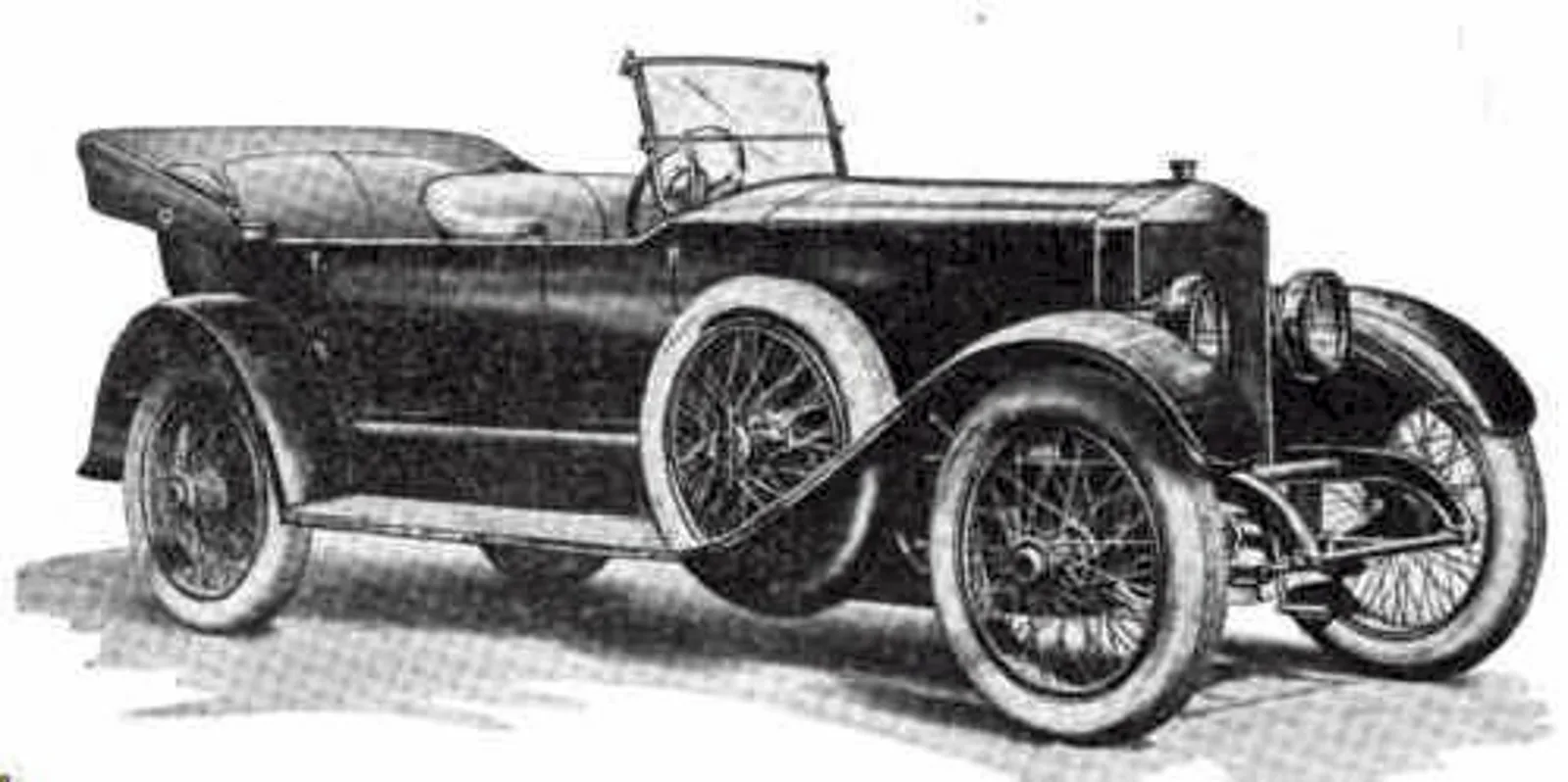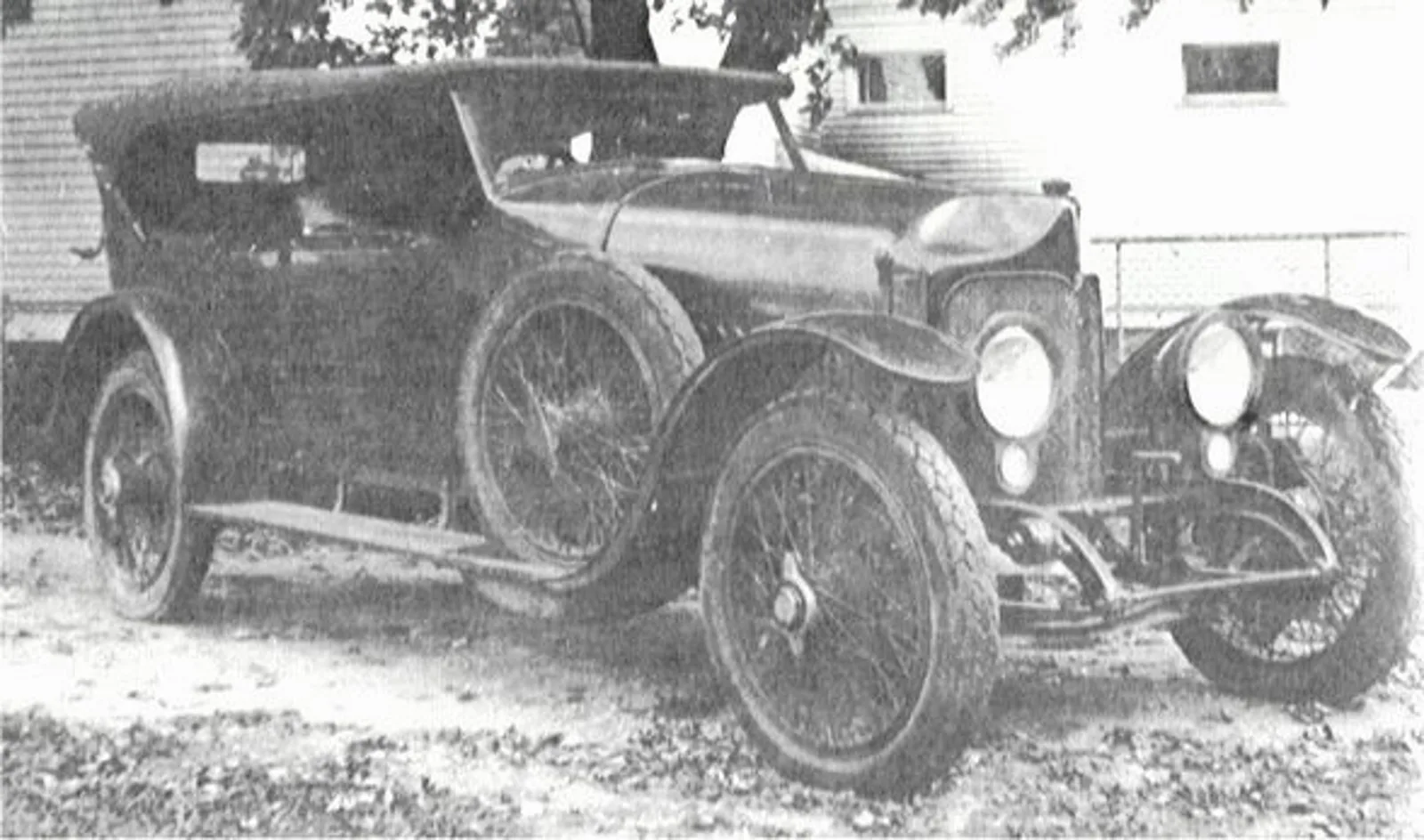
A top-of-market American car from a short-lived Long Island maker, with a lightweight aluminium engine and only two known survivors.
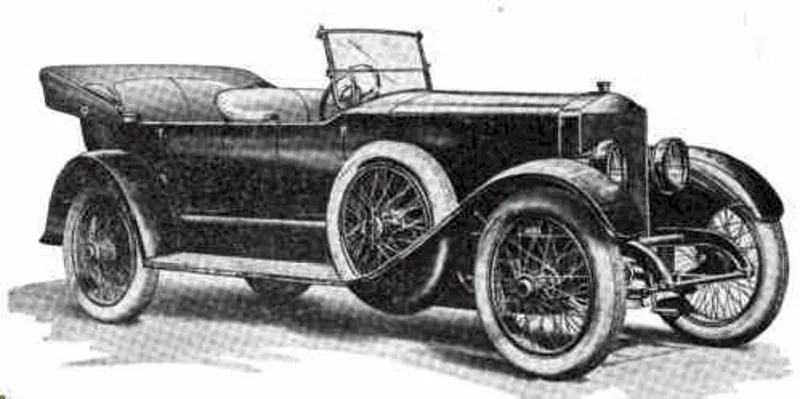
Built by Finley Robertson Porter's Long Island firm, the car ran from 1914 to 1916 on a light aluminium four with overhead valves. Between three and twelve examples were made, and two are known to exist today. Porter had earlier designed the Mercer Type 35 Raceabout.
Between 1914 and 1916 one American maker produced the F.R.P. Model 45, a sporting car aimed at the top of the market. Its large water-cooled four leaned heavily on aluminium, and only two survivors are now recognised.
The story brings together a celebrated racing designer, a short-lived maker, an unusually light engine and a collector who hunted for one for years. Each stage shows how a small firm could aim at the very top of the market.
Who was behind the F.R.P.?
Finley Robertson Porter, whose dates run from 1871 to 1964, had previously created the Mercer Type 35 Raceabout, a sports and racing car that sold well and used a T-head engine. In 1914 he set up his own company at Port Jefferson on Long Island, New York State. The F.R.P. was the firm's only model.
Porter made consistent use of the lightweight methods of his day. Frame and engine were solidly built yet comparatively light. The compressed timetable and tight budget point to a close kinship with the Porter-Knight racing car, and the shortest version, Series A, shares that racer's wheelbase.
A Long Island car built in tiny numbers, with an aluminium engine and two known survivors.
Why did production end so quickly?
Output stayed very low, partly because almost every part was made in-house. In 1916 the firm was sold to the US government for the manufacture of armaments, especially aircraft engines, and car production was not resumed.
Series numbering is disputed. Some name Series B for the 130-inch chassis and Series C for 140 inches, while others swap them. The maker's own launch advertisement backs the swap, placing Series C at 130 inches and Series B at 140, so that arrangement is followed here. The three series differ only in wheelbase and factory body.
How big was the engine and what did it weigh?
The four-cylinder was large and water cooled, with overhead valves and an overhead camshaft. At 580 lb (about 260 kg) it was light for its size, because much of it was made from aluminium alloy. The block was a single casting, and the crankshaft, camshaft and tappets were drilled hollow to shed weight.
Driving the camshaft was a vertical shaft sitting ahead of the crankshaft, geared by a worm and running in oil. Each cylinder carried one inlet and one exhaust valve, both operated by rockers. With the valves shut, the chamber was hemispherical, and the chrome-vanadium crankshaft ran in three main bearings.
Lubrication blended a pump with splash feed, and the oil pressure could be watched on the dashboard. A centrifugal pump moved the water through a V-shaped honeycomb radiator made to order by Mayo, with a cooling surface of 20 by 26 inches, roughly 51 by 66 cm.
What was the displacement?
The more common figures are a 4.6-inch (116.84 mm) bore with a 6.75-inch stroke, giving 448.7 cu in (7,353 cc). An alternative bore of 4 5/8 inches would make 453.6 cu in (7,433 cc), often rounded to 454 cu in.
Nobody can verify which is correct from the available material. The N.A.C.C. rating, derived from bore and cylinder count, comes out at 33.86 hp. The table gives 32.40 hp for a four-and-a-half-inch bore and 34.23 hp for 4.625 inches.
Specifications at a glance
| Item | Figure |
|---|---|
| Bore and stroke | 4.6 in (116.84 mm) by 6.75 in (171.45 mm) |
| Displacement | 448.7 cu in (7,353 cc), or 454 cu in |
| Engine weight | 580 lb (about 260 kg) |
| Power | 100 bhp, per the Seal Cove Auto Museum |
| Top speed | 88 mph (over 140 km/h) |
| Fuel use | 12 to 14 mpg (about 17 to 20 l/100 km) |
| Chassis wheelbases | 110, 130 and 140 inches |
Did the F.R.P. have four valves per cylinder or 170 bhp?
Claims of four-valve heads and outputs up to 170 bhp surface now and then, though the proof is weak. The Old Motor points to a 1917 magazine report about developing a four-valve head. That report cannot be consulted, and no engine of that type can be shown to have been made.
Such numbers still reached some reference books, which muddies matters, given that production ended in 1916 and never restarted. The later Porter was put together from parts originally bought for the F.R.P.
How fast was the F.R.P.?
Reports put the F.R.P.'s top speed at 88 mph (over 140 km/h), with fuel use of 12 to 14 mpg (about 17 to 20 l/100 km). A magazine account says the speed was reached in prototype tests on the Long Island Motor Parkway, the course that also staged the Vanderbilt Cup.
How was the car driven and built?
Drive ran through a four-speed manual with an outside gear lever, a direct top gear and a single-plate cone clutch. A propshaft fed a bevel-gear differential. Final drive ratios were recorded at three values, between 2.25:1 and 3:1, depending on the model. The car was built with right-hand drive.
The frame is also said to be chrome-vanadium steel, an alloy that Childe Harold Wills, Henry Ford's metallurgist, had developed for the Model T. Period drawings show a ladder frame with solid axles front and rear, with semi-elliptic leaves at the rear and visibly at the front. The rear axle was full floating, meaning the half-shafts carry no side loads.
Braking was split: the pedal worked drums at the back axle, and a hand lever operated another drum on the gearbox. Worm steering was another part F.R.P. made in-house. Artillery wheels and wire-spoke wheels both appear in the records, and 36 by 5-inch wheels were intended.
How many were built?
No firm count survives. Material for ten vehicles was purchased, and the number actually produced is put anywhere from three to twelve depending on the account. The Seal Cove museum says nine, and two runabouts are reported to have been made.
Who bodied the cars?
Holbrook built the touring and town car bodies seen in the sales literature. Buyers could also order a bare chassis for a coachbuilder of their choosing. The longer chassis, the 140-inch in particular, were aimed less at sport and more at formal closed cars, although the factory also offered a seven-seat open tourer.
One of the survivors carries a Brewster body. The car was reported to cost US$8,000 overall, of which US$3,000 was the body. It has just two doors, so the front seat is entered from the left, and the driver had to slide across to the right to take the wheel. Outside gear and handbrake levers blocked the direct route, and the rear seats were reached by a second door on the right.
What happened to the surviving cars?
Only two survivors are known: an early Series A speedster dating from 1914 and a Series B touring car of 1915. Tom Dawson bought the touring car, chassis number 5, in October 1975 for William F. Harrah's collection.
Harrah had sought an F.R.P. for years and put up a reward. The car was restored and recorded in his museum workshop in 1977. The collection, numbering as many as 1,400 vehicles, included many one-offs, and it is considered the largest of its era anywhere. Its restorations became benchmarks.
After Harrah died his company was sold, and a large part of the collection was auctioned off. A Bugatti Royale and the F.R.P. were among the cars sold. The car then changed hands several times, spending time in the Collier Automotive Museum in Naples, Florida. Automobile Quarterly featured it in 1993, and in 1994 it moved to the Seal Cove Auto Museum in Maine.
The other survivor, a black Series A Raceabout, is poorly documented. It appeared on a dealer's stand at Retromobile, a major European show for veteran and collector cars, in 2002. According to the seller, it had come from Harrah's reserve stock.
What were the later Porter cars?
After the war Porter became chief engineer at Curtiss in Garden City, New York. His car followed as the Porter Model 45 and 46, built from 1919 to 1922 by the American and British Manufacturing Corporation in Bridgeport, Connecticut. It carried 125 hp and a standard 142-inch (3,607 mm) chassis.
The chassis alone cost US$6,750, and bodies were priced as high as US$10,000 on top. Thirty-six chassis were delivered in those three years.