From the 1957 budget version of the DS to the 1975 end of the line: the ID's trims, engines, Break estate and rally win.
The Citroen ID was a cheaper, simplified version of the Citroen DS, built under several names from 1957 to 1975. It kept the DS's hydropneumatic suspension but used a less powerful engine and plainer trim, and the Break estate became its most practical form.
Citroen's ID was the budget sibling of the DS, and it kept the famous hydropneumatic ride while losing much of the finish. Built under several names from 1957 to 1975, it was a cheaper, simplified version of the DS for buyers who thought the DS list price too high.
Why did Citroen build a cheaper DS?
After the DS was presented, many people complained that its list price was too high. The prototype of the first ID was shown at the Paris Motor Show on 6 October 1956 as a simplified DS, and production started officially in March 1957, running alongside the DS itself.
The ID's name comes from the French word idee, meaning idea. The final improvements were made in the last months of 1956, before production actually started.
A DS stripped back for the price, with an estate body that set a record for load space.
How was the ID different from the DS?
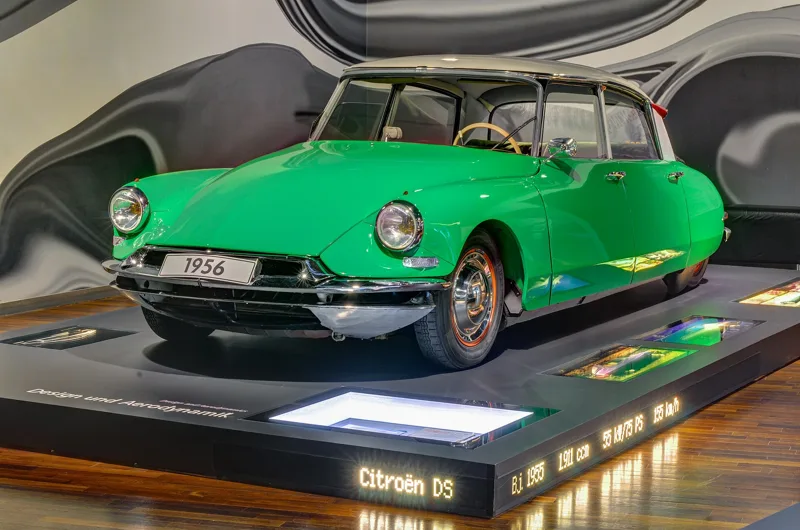
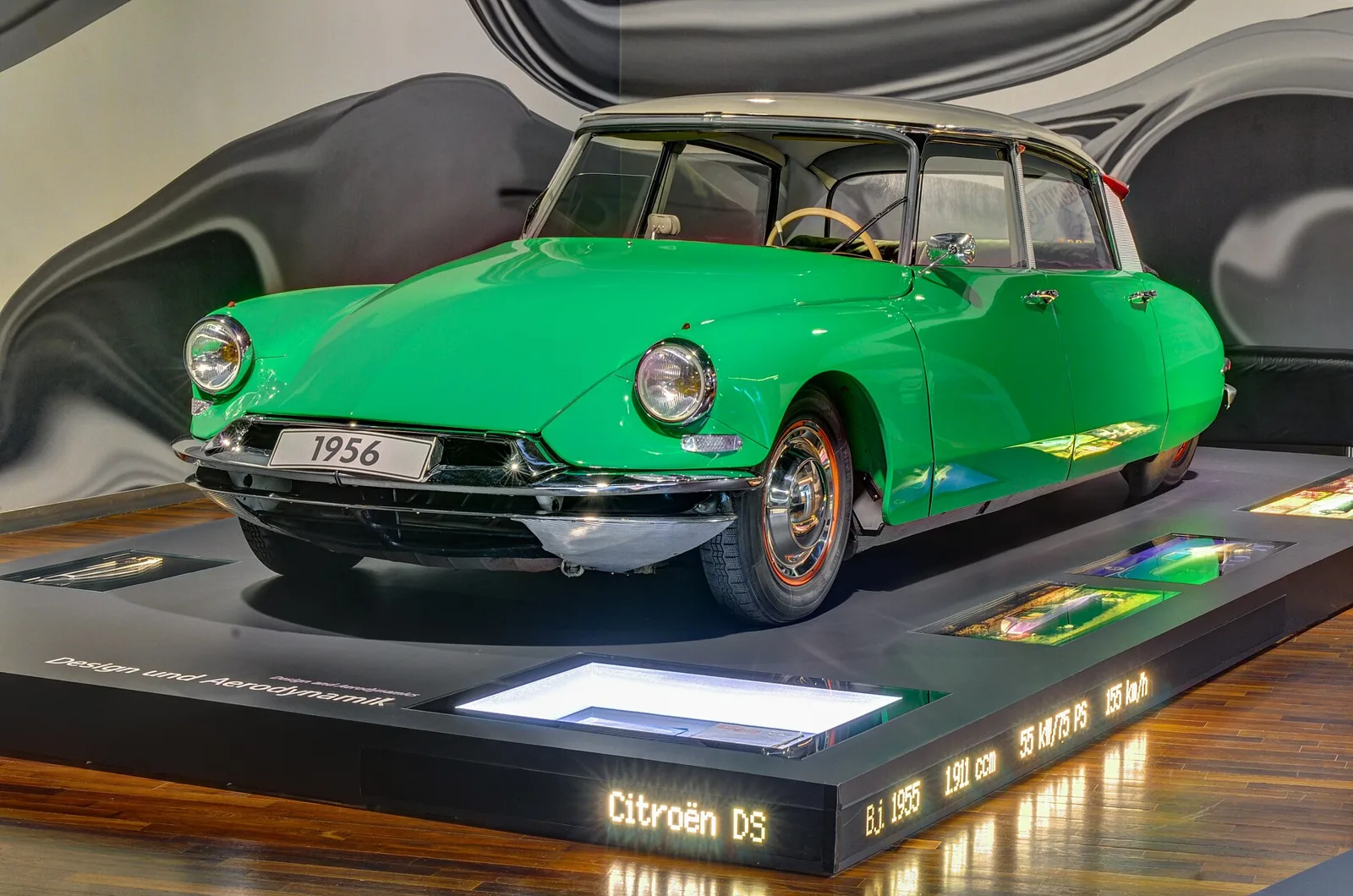
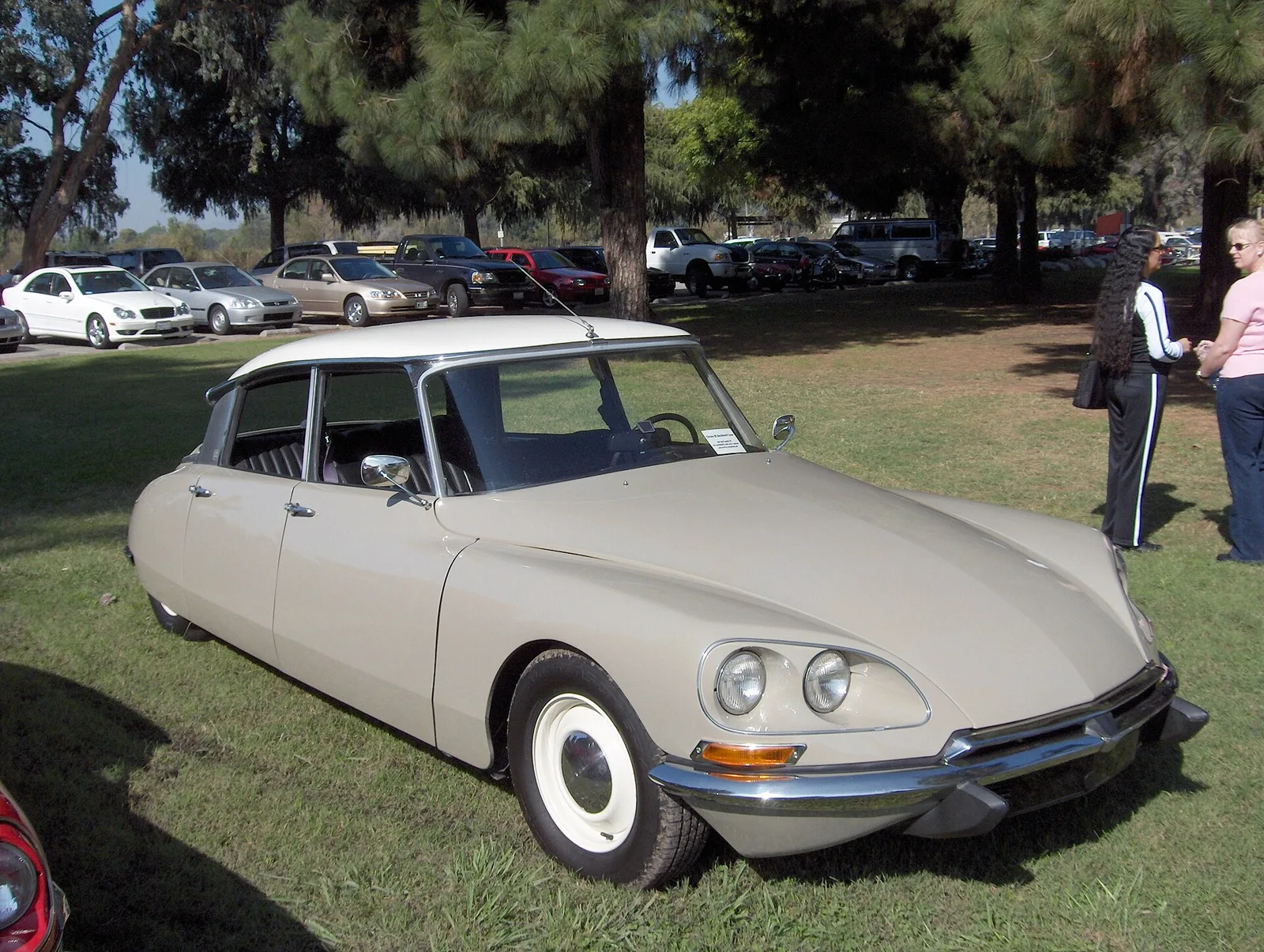
From outside, the ID could be told apart by its details. Headlamp surrounds were painted rather than chromed, the hub caps were chrome instead of full wheel covers, and the exhaust exited on the left. The roof was unpainted fibreglass, and early cars came only in black, sky blue or turquoise.
Inside, the trim was cheaper, although the DS upholstery could be ordered at extra cost. The instrument panel and controls were laid out again, the seat backs did not adjust, and the windscreen washer and the rear centre armrest were dropped. The boot had no lining at all.
The engine was the DS unit in a less potent form. It kept the same 1,911 cc (116.6 cu in) capacity, but with a less powerful cylinder head and a lower compression ratio, its output fell from 75 PS to 66 PS. That made it closer to the original engine of the Traction Avant of the same capacity.
The ID 19 had no power steering and no servo brake. To ease the work of the driver, the steering box was geared to give a higher reduction, and the footbrake was an ordinary pedal rather than the floor button of the DS. A four-speed manual gearbox replaced the semi-automatic unit, while the hydropneumatic suspension carried on with a simpler hydraulic circuit.
How did the ID's trims and price change?
At debut the ID 19 came in two trims, Luxe and Confort. The Confort arrived two months after production began, together with the first deliveries, and it added a clock and rear air vents that the Luxe lacked. Even so, the starting price of 925,000 francs, or 967,000 francs for the Confort, proved too high for many buyers.
In autumn 1957 Citroen added a barer Normale trim, simpler still than the Luxe. Its engine was detuned further, from 66 to 62 PS, and it had a single sun visor, fixed rear windows, blue fabric seats and no ashtray. It reached the price lists in January 1958 at 894,000 francs and was dropped during 1960.
Changes made to the DS range often reached the ID as well. The twin-jet windscreen washer, standard on the DS from early 1958, went onto the ID 19 Confort too. In August 1966 the ID 19 saloon received the 2-litre (122.0 cu in) estate engine, detuned from 90 to 84 PS.
What was the ID Break estate?
Flaminio Bertoni had considered an estate during the design work, but Citroen's leadership held back, fearing that an estate would damage the image of the DS. The idea was revived by a French coachbuilder called Franchiset, and two prototypes were shown in Paris in October 1958.
Franchiset cited the American woodies as an example to persuade Citroen to build the Break, and the tail lamps echoed them. The tail was much bulkier than the saloon's, with two vertical rows of rounded lamps set in fin-shaped housings, and the rear wheel arches lacked the usual Citroen fairings.
The roof was longer and carried a roof rack, and the glass was reshaped. Each side had three windows instead of two, the rearmost being particularly large, while the rear window wrapped slightly onto the flank to improve the view behind. The load floor could be reached through a wide tailgate, and a folding sill lowered the loading edge.
The practical result was a record for load space. With the fold-down seats and the middle row removed, the load area measured 2.11 metres long by 1.22 metres at the height of the rear doors, and its regular, flat shape made it easy to use. Interior space and boot capacity were unmatched by any other European estate in that layout, a lead the successors CX Break and XM Break also kept.
Lengthening the rear by 22 cm brought the Break close to 5 metres (16.4 ft) overall from bumper to bumper, and it weighed about 50 kg more unladen than the saloon. For a seating plan there were three rows for eight people: three at the front, three in the middle and two side-facing fold-down seats at the back.
The estate was also offered in three other forms. The Familiale had a fixed centre bench, the Commercial had no rear fold-down seats and a double floor that raised the usable load space from 2.3 to 2.5 square metres, and the Ambulance had separate front seats and an asymmetrically split rear bench. The Ambulance was a version planned by the parent company, although other coachbuilders could also fit ambulance bodies.
Estates needed more than a new roof. The servo brake was fitted so the car could stop safely when fully loaded, especially with a roof rack in use. The rear brakes were made more powerful, the chassis and suspension arms were strengthened, and the pressure of the rear hydropneumatic spheres was raised.
Confusion over names persists. Many sites call the estate a DS Break, but production data list no version under that name. The estates were called ID Break, or just Break in the final years of the model's life.
Was there an ID cabriolet?
The ID Cabriolet reached the market in July 1961, five months after its DS-based counterpart. It was built on the same structure as the DS Cabriolet, with simpler trims in the ID, and it was meant to offer Citroen's open car at a lower price.
Its engine was the 1,911 cc (116.6 cu in) unit of the ID 19 Luxe and Confort, producing 66 PS (65 hp). From May 1962 it took the engine of the contemporary DS 19, still 1.9 litres (115.9 cu in) but with 83 PS (82 hp).
Sales fell far short of expectations. Only one ID Cabriolet was sold for every twelve cars, the other eleven being DS Cabriolets. In total 112 were built and sold between July 1961 and August 1965, including an early prototype dating from 1960.
What changed in the early 1960s?
The 1960 range was completed by the Ambulance, which joined the price list in January 1960. The Familiale and Commercial estates followed in spring, and by the end of summer the ID 19 had a full line-up for the market.
In May 1962 the cylinder head and spark plug housings were revised. In October that year the ID had styling changes to refine its aerodynamics, including a better join between the front bumper and the lower air dam, new air intakes for the brakes and radiator, and rubber inserts for the front ram bars.
The biggest update was in power. Output rose from 66 to 70 PS, and top speed went from 135 km/h to 145 km/h (84 to 90 mph). In January 1963 power steering and a glass rear window (instead of Plexiglas) became options, and the estates were raised to 83 PS, a unique case in those years, with an estate, normally a lower-powered body, at the top of the engine range.
The ID 19 S arrived in September 1964 with a 75 PS engine and was sold for only a year. The same update redesigned the dashboard to look more like the DS's. A year later the saloon's engine rose to 81 PS, and the estates were offered with a 1,985 cc (121.1 cu in) five-main-bearing engine from the DS 19 with 90 PS, or a new 2,175 cc (132.7 cu in) unit with 109 PS for the ID 21.
In 1965 the estates therefore became essentially DS in their engines, and green LHM fluid was introduced for the suspension. The ID Cabriolet, which had sold poorly, was removed from the price list at about the same time.
What did the faired headlamps change?
In September 1967 the front end was redesigned to house new split, faired lamp units, which many people nicknamed cat's eye. The ID's lamps did not turn with the steering, which the cheapest DS versions also lacked, though they could be ordered on power-steered cars.
The update lengthened the body by 2 cm, partly because the bumper was redesigned, losing its ram bars and sitting more neatly into the front to reduce drag further. From February 1968 the hydraulic transmission of the DS was offered on estates as well.
Estates were getting more attention by then. This attention to the estates was among the first attempts to present the estate as a versatile car with wide appeal, not a mere work tool. In September 1968 the ID 19 rose from 84 to 91 PS and was offered only as a saloon, while the new ID 20 came with a 103 PS engine in saloon and estate forms, and the ID 21 estate went from 109 to 115 PS.
In August 1969 the ID 19 and ID 20 saloons were renamed D Special and D Super. The trims were no longer split into Luxe and Confort, and the D Super became the richest version, with a carpeted floor, a clock, a lined roof and plastic door handles. The estates became Break 20 and Break 21 and kept the Luxe and Confort trims.
A five-speed manual became available on the D Super on request from August 1970. During 1971 power steering became optional on saloons and the hydraulic transmission was removed from estates. The D Special rose to 98 PS at the end of that year, and the D Super and Break 20 rose from 103 to 108 PS.
In July 1972 the D Super 5 joined the saloons, with the 2.2-litre engine (134.3 cu in) and 115 PS from the Break 21 and a five-speed manual, which gave the model its name. Three months later the D Special received the D Super's 108 PS engine.
How did the ID's production end?
The career of the ID wound down in the early 1970s. The Break 21 was succeeded by the short-lived Break 23, which used the carburettor engine of the DS 23, a 2,347 cc (143.2 cu in) unit with up to 124 PS. Production of the saloons ended in January 1975.
The last estates were assembled in September 1975, although some ambulances, fitted out in that form, were delivered in January 1976.
| Specification | Detail |
|---|---|
| Production | 1957 to 1975 under several names |
| Debut | Prototype at Paris, 6 October 1956; production from March 1957 |
| Launch engine | 1,911 cc (116.6 cu in), 66 PS (65 hp) |
| Output, 1962 on | 70 PS (69 hp), top speed 145 km/h (90 mph) |
| Estate output, 1963 | 83 PS (82 hp) from January 1963 |
| ID 19 S | 75 PS (74 hp), 1964 model sold for a year |
| ID 21 estate | 2,175 cc (132.7 cu in), 109 PS (108 hp) |
| Break load area | 2.11 m long by 1.22 m at the rear door height |
| Break length | Close to 5 metres (16.4 ft) overall, 22 cm longer than the saloon |
| ID Cabriolet | 1961 to 1965; 112 built |
| Price at debut | 925,000 francs (Confort: 967,000 francs) |
Did the ID win in motorsport?
The ID was not built for competition, but it still carved out a small place in sport. It was the first car of the French marque to win an international rally.
The Coltelloni and Alexandre private crew drove an ID 19 with race number 176 to the finish first at the 1959 Monte Carlo Rally. That result came from a car that had been designed as a cheaper alternative to the DS.