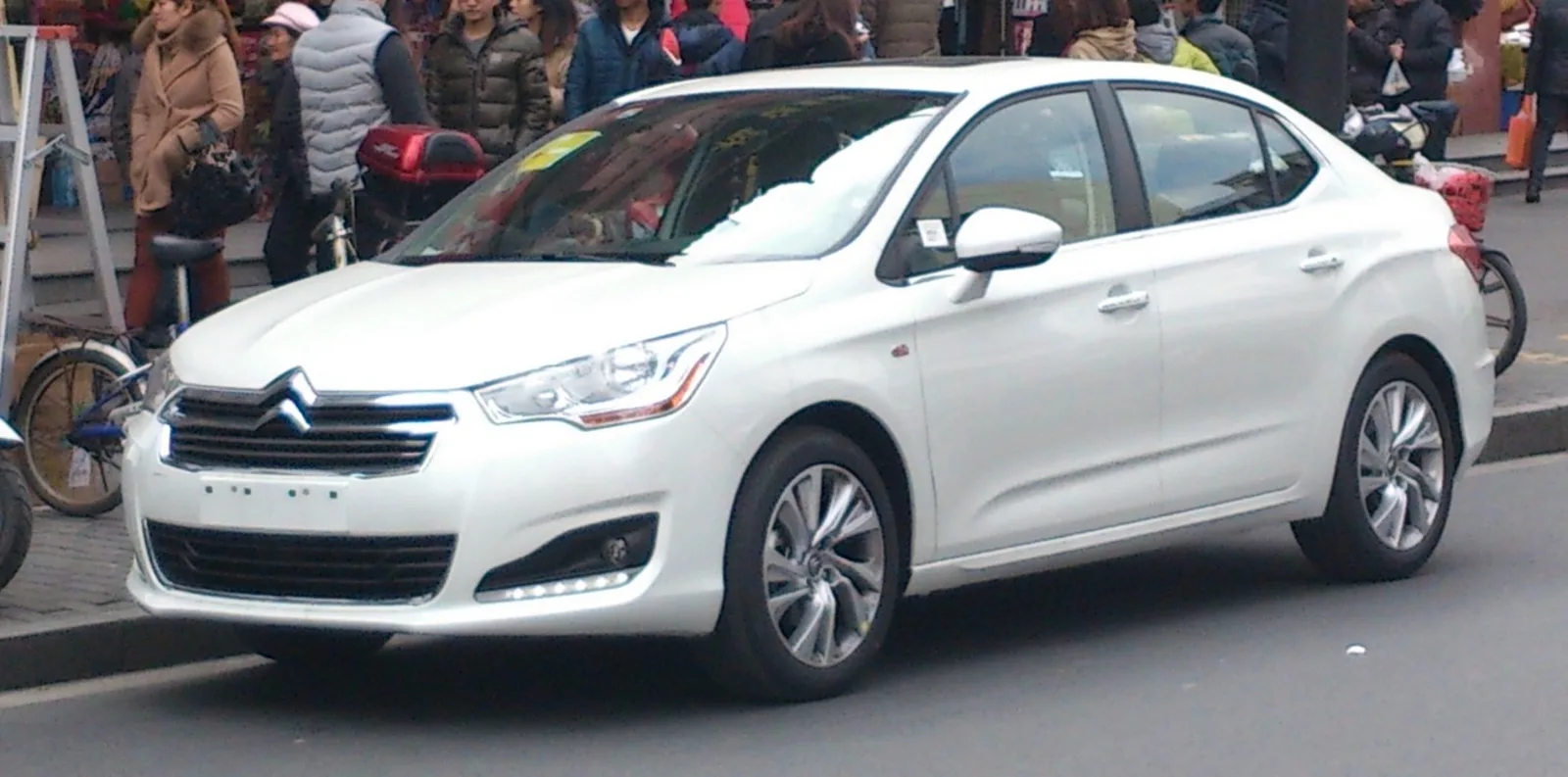
A second-generation compact on the PF2 platform, with VTi and THP petrol engines, third-generation HDi diesels, a robotised gearbox and Kaluga-built Russian cars.
The Citroen C4 II is the second-generation compact Citroen, launched in 2010 on the PF2 platform. Its petrol range used VTi and THP engines, its diesels were third-generation HDi units, and its gearboxes ran from a five-speed manual to a robotised six-speed. Russian cars were assembled at Kaluga.
Production of the Citroen C4 II began in June 2010, as the second-generation compact Citroen. It was built on the modular PF2 platform, dating from 2001, and it was the fourth model of the PSA group. Its engine line combined VTi and THP petrol units with third-generation HDi diesels, and it reached Russia in 2011.
Where did the C4 II come from?
The C4 II kept the interior dimensions and wheelbase of the first car, and its outside width and height stayed very close. The body used a larger share of high-strength steel, and torsional rigidity rose by 25%. The roof was not part of the load-bearing structure, which allowed some trims to use a toughened glass roof panel instead of steel.
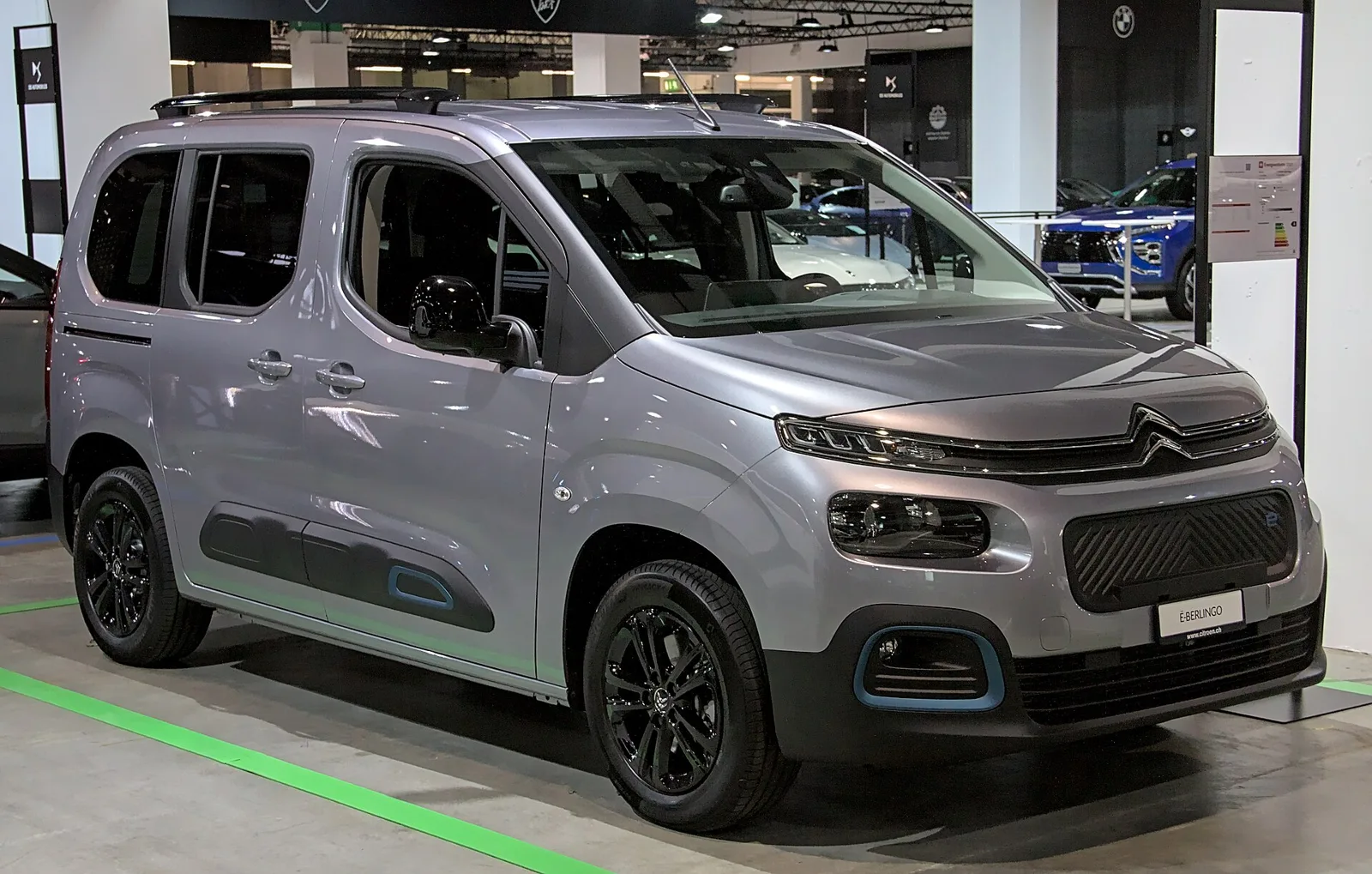
Citroen developed the car only as a five-door hatchback. The three-door body was dropped in favour of the DS4, and the estate role was covered by the Berlingo van and people carrier in the range.
Six engines in three power tiers, a robotised gearbox and no sporty options: the second-generation C4.
How did the petrol engines change?
From the start the C4 II used an engine generation that PSA had developed in 2006 and 2007, and slightly updated in 2010. The VTi came in 1.4 and 1.6 litre sizes with multipoint injection and a throttle-less intake. The THP was a 1.6 turbocharged engine with direct injection.
Both petrol engines were the last generation of PSA petrol units in 2010. They shared a common aluminium block, chain-driven twin camshafts operating 16 valves, and hydraulic lash adjusters. There were no balance shafts, and the cooling system used a variable-displacement water pump with an electronically controlled thermostat.
What set the VTi and THP apart?
The VTi had a displacement of 1,598 cc in its 1.6 form, with a compression ratio of 11.1, or 1,397 cc in its 1.4 form. Its timing gear could adjust valve lift and the width of the intake phase, with hydraulic phase shifters on both camshafts. The throttle stayed fully open across most of the operating range, which cut intake resistance and raised efficiency.
The THP used a Twin Scroll turbocharger and a compression ratio of 10.5, and its direct injection allowed lean mixtures that helped fuel economy. A single mechanical high-pressure pump on the cylinder head fed a common fuel rail, driven by the intake camshaft. Its throttle remained conventional, and the hydraulic phase shifter worked only on the intake camshaft.
Which engine was offered for other markets?
Non-European markets and Russia could take an older-generation 1.6-litre engine from 2002 as an option. It displaced 1,587 cc, had a compression ratio of 10.1 and used multipoint injection, with a belt-driven timing gear and no variable valve control.
That engine had no structural link with the VTi or the THP, so it was in effect a separate unit.
How did the HDi diesels work?
The C4 II used the third generation of HDi diesels, which PSA developed for the B, C, D and M segments. They used common-rail injection and turbocharging. The two engines were the 1.6 HDi and the 2.0 HDi, and the 1.6 HDi III had 1,560 cc, a compression ratio of 16.0 and eight valves on a single camshaft.
The 1.6 HDi III had an aluminium block with a forged crankshaft, and its turbocharger sat in front of the engine. The 2.0 HDi III had 1,997 cc, a cast-iron block with a forged crankshaft and sixteen valves, and its turbocharger sat behind the engine. Its exhaust system met Euro 5 rules with a particulate filter.
Which diesel outputs were on sale?
Diesel variants included the DV6CTED4, which produced 112 PS (82 kW; 110 hp) in its 2009 form, and the DV6DTED4 at 92 PS (68 kW; 91 hp), also a 2009 model.
Across the range the six engines fell into three power tiers, with one petrol and one diesel in each tier. The chassis architecture stayed the same whichever tier was chosen.
How did the gearboxes compare?
The five-speed manual was PSA's own design and had already been fitted to the Peugeot 307. The four-speed automatic was developed with Renault in 2001 for petrol engines of up to 2 litres, and the C4 II used its fourth revision. It is a shaftless hydraulic-mechanical unit with planetary gear sets and a torque converter.
The automatic's shift pattern adapts to the driver's style, and it has a manual mode that works like the Porsche-style gate, in which a push of the lever changes gear. A six-speed manual, able to handle torque up to 400 Nm (295 lb ft), gave a precise short-throw feel.
What was the EGS robotised gearbox?
The six-speed robotised gearbox, type EGS, was developed by PSA in 2007, with Borg Warner and Magneti Marelli as partners. It has two shafts with synchronised gears, a single clutch and electro-hydraulic actuators. Among compact cars it was the only single-clutch robot designed from scratch, and it is itself the donor for the six-speed manual gearboxes.
The EGS was 15 kilograms (33 lb) heavier than the manual, and its adaptive behaviour was described as matching the best automatics anywhere. Because there is only one clutch, each gear change briefly interrupts the power flow and can feel like a slight jolt. The unit was described as extremely reliable and not prone to overheating or wheelspin.
What did the chassis do well?
The car was front-wheel drive, with a transversely mounted engine, a MacPherson front strut with a lower L-shaped arm, and a torsion beam at the rear with coil springs. The layout was simple and common, yet the chassis gave a fairly acceptable level of comfort and handling rated very good.
The steering was rack-and-pinion with electro-hydraulic assistance, and its effort varied with road speed. The rear beam produced a self-steering effect on high-grip surfaces. Under braking in a bend the car tightened into the corner, while a sharp release of the brake pedal sent it onto a wider line.
How was the C4 II equipped for safety?
Standard active safety included eighth-generation ABS, electronic brake force distribution and emergency brake assist. The brake distribution used a four-circuit pressure regulator on each wheel line, adjusting for static and dynamic loads during braking, so the car could brake in bends of any radius.
Optional equipment included eighth-generation ESP, whose own processor and sensors work against both an outward slide and the amplitude of a skid, with traction control built in. A hill start assist appeared on 1.6 HDi cars with the robotised gearbox, and blind spot monitoring warned of cars in the zone the mirrors could miss.
When did the C4 II go on sale in Europe?
The C4 II debuted at the Paris Motor Show in September 2010, and European sales began in March 2011. European buyers chose from three or four fixed trim levels, varying by country, plus one or two corporate trims and one special trim aimed at Citroen's marketing goals.
Buyers could not build a unique car by adding only the options they needed to the base trim, though each trim had a small list of extras. Eight body colours were offered, and the interior combined one shared colour base with two seat and door colours and four upholstery textures, giving six combinations. The panoramic glass roof was among the rarer options.
How much did the engine tiers differ?
The engines fell into economy, middle and top tiers. Economy cars had petrol 98 PS (72 kW; 97 hp) or diesel 92 PS (68 kW; 91 hp). The middle tier offered petrol 120 PS (88 kW; 118 hp) or diesel 112 PS (82 kW; 110 hp), and the top tier petrol 156 PS (115 kW; 154 hp) or diesel 150 PS (110 kW; 148 hp).
No sporty-style options were offered in principle.
How much attention went to the chassis setup?
Citroen tuned the chassis with care, even though the suspension design stayed the same whatever engine was fitted. There were five damper variants, four front and two rear anti-roll bar variants, and a separate spring set for each power unit. Two steering rack variants were offered, with the same number again for right-hand drive cars.
Alloy wheels from 15 to 18 inches were available, and tyres could be up to 225 mm wide in profile. More than ten variants of the power steering pump were also used.
How did servicing and warranty compare?
Like Peugeot, Citroen emphasised low-cost servicing during the warranty period. In Europe the service interval was once a year or every 20,000 km, whichever came first, and the scheduled work was minimal and inexpensive. Service contracts cut costs further.
Over a comparable period, Toyota servicing in Europe came to about three to three and a half times the cost, a gap that set the brand apart from Japanese makers. The European warranty ran for 3 years or 100 thousand kilometres.
How did the C4 II reach Russia?
Russian sales began in May 2011, two months after Europe. Three trims were offered at first: Dinamik, Tendance and Exclusive. Eight colours and four interior options were available, with an optional leather interior. Russia sold only the cars the PSA plant at Kaluga put together from kits.
The Kaluga plant could not get other power units from France in 2011 for various reasons. The first Russian power unit was therefore the 1.6 VTi, with either a five-speed manual or a four-speed automatic. A 1.6 of the 2002 type with a five-speed manual followed, and later a 1.6 HDi 112 with the six-speed robotised gearbox and stop-start arrived.
What was the Rashn-Pak package?
Every car built in Russia received the Rashn-Pak upgrade. The package brought extra protection under the engine bay, a larger battery and a suspension built for harsh conditions. The car sat slightly taller and rode a touch softer, though it lost something in handling.
In Russia the service interval was 20,000 km or one year, whichever came first, and oil and filter changes were recommended every 10,000 km. The body was galvanised, with extra primer in the most exposed places, and carried a 12-year warranty against perforation corrosion.
Which engine suited Russian roads best?
The 1.6 VTi was best suited to Russian conditions. It ran on 95-octane petrol without losing user characteristics, and oil burning caused by poor-quality fuel did not affect its working life. Since the engine first went on sale in Russia in 2008, it had no known cases of replacement or long repairs under warranty.
The 1.6 HDi 112 for 2011 had piezoelectric injectors, which are extremely demanding of fuel quality. There were no Russian operating statistics for these injectors as of 2011, so an owner choosing this engine had to be careful about where they bought fuel.
Key figures at a glance
| Feature | Detail |
|---|---|
| Production start | June 2010 |
| Platform | PF2, dating from 2001 |
| VTi petrol | 1,598 cc, compression ratio 11.1 |
| THP petrol | 1,598 cc, compression ratio 10.5, Twin Scroll turbo |
| 1.6 HDi III | 1,560 cc, compression ratio 16.0 |
| 2.0 HDi III | 1,997 cc, compression ratio 16.0 |
| Manual torque limit | 400 Nm (295 lb ft) |
| EGS weight penalty | 15 kg (33 lb) over the manual |
| Economy tier | Petrol 98 PS (72 kW; 97 hp); diesel 92 PS (68 kW; 91 hp) |
| Top tier | Petrol 156 PS (115 kW; 154 hp); diesel 150 PS (110 kW; 148 hp) |
| European warranty | 3 years or 100 thousand km |
| Russian corrosion warranty | 12 years against perforation |