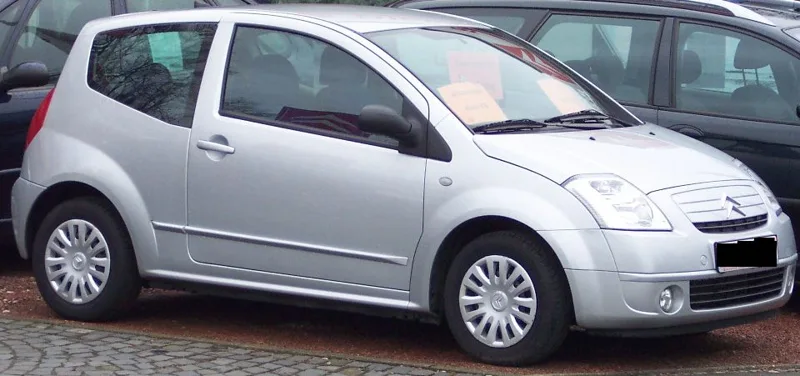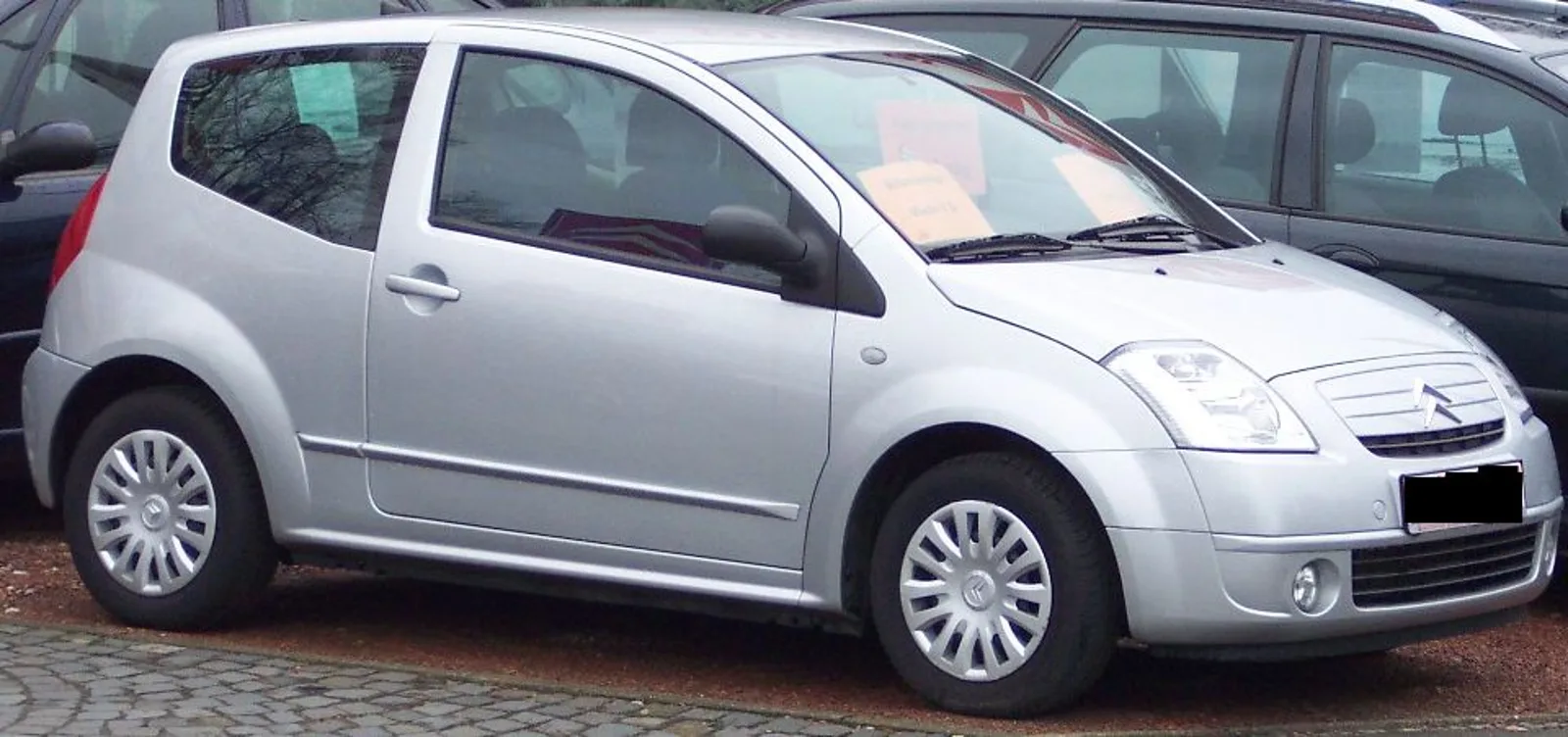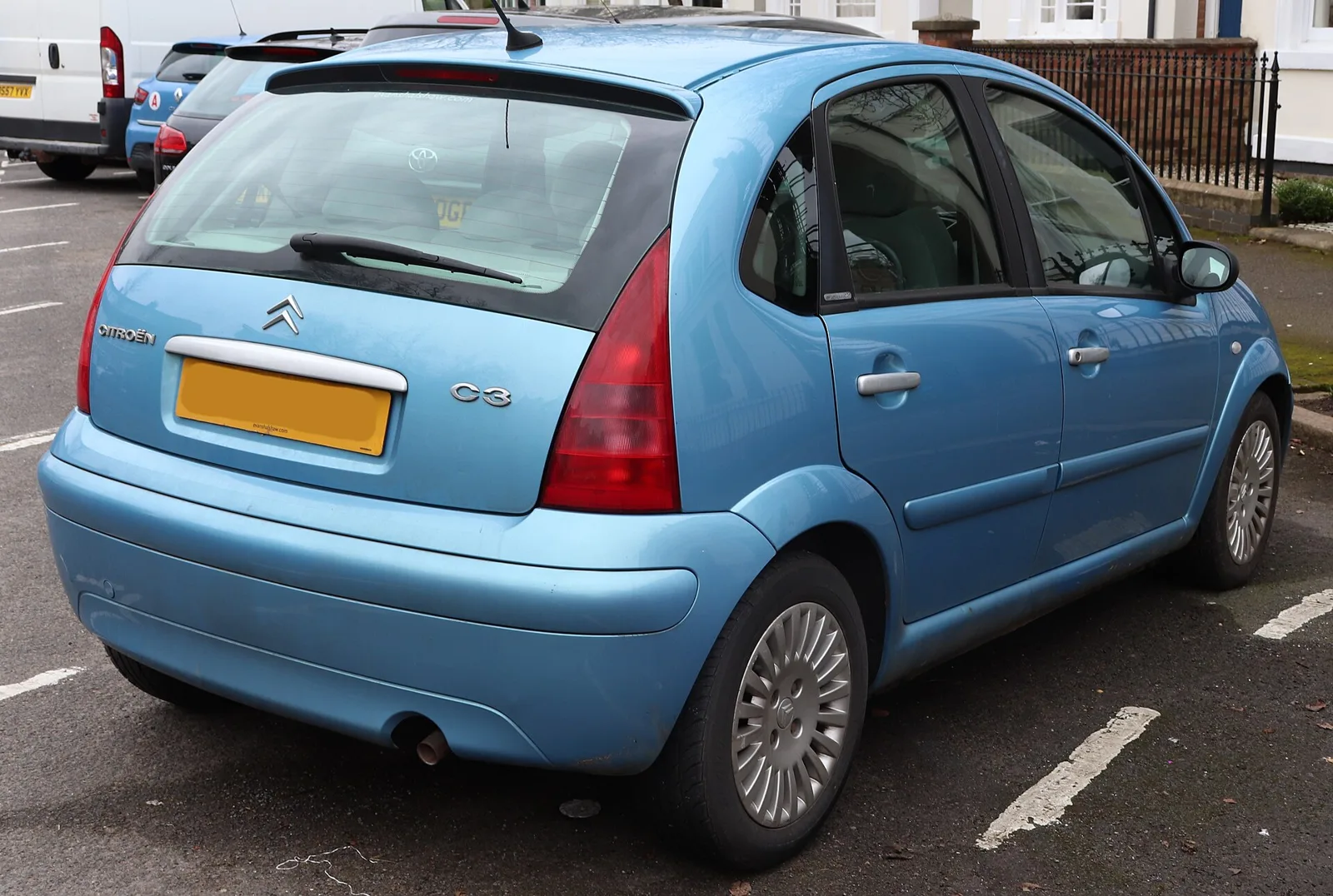
Launched in 2002 on a new floor pan, the first C3 brought digital instruments, a 2CV-like outline and an SUV-look XTR variant to the small-car class.
The Citroen C3 I was the first generation of the C3, a B-segment car built from 2002 to 2010 in Europe and until 2012 in South America. It came with an egg-shaped body, a Pluriel cabriolet and an SUV-look XTR variant.
The first Citroen C3 arrived to replace an ageing Saxo and brought a rounded, egg-shaped look to the small-car class. It came with a new floor pan, digital instruments and, later, an SUV-styled XTR variant.
Why did Citroen need a new small car after the Saxo?
The Saxo was technologically outdated and no longer met the occupant safety standards expected of new cars. A concept car called C3, dating from 1998, had already hinted at the look of the production model. The project lasted about three years before the car was announced in August 2001 and launched in 2002.
An egg-shaped supermini with digital dials, built to replace a Saxo that no longer met modern safety standards.
Design: an egg-shaped small car
Designers Donato Coco and Jean Pierre Ploue gave the C3 an egg-shaped profile, with the windscreen, roof and rear window forming a single arch. The rounded nose and bonnet linked its outline to that of the 2CV, and the new headlamps followed the line of the nose so they seemed part of it.
The final design was more aerodynamic than the early sketches. A trapezoidal motif sat on a curvy body, and the grille with horizontal slats added to a mix of curves and edges, in step with the styling of the moment. Thin, upward-pointing rear lamps and a high beltline gave the car a compact look and a sense of sturdiness.
What made the interior and dashboard stand out?
The C3 was bigger and roomier than the C2, which shared its floor pan, and far larger than the Saxo. The crescent-shaped dashboard carried concentric digital instruments, and the steering wheel included speed control, which was unusual for a car in its class at the time.
The digital speedometer revived a retro fashion for such devices, while the wavy dashboard was made of inexpensive materials. The richer Exclusive version had electrically adjustable side mirrors, a rarity for cars of this type at the time.
Storage was generous. The boot held 305 litres, rising to 1,155 litres when the rear seatback was folded down, and the Moduboard system split the space into smaller compartments.
Structure, suspension and steering
A fresh floor pan arrived with the C3, built to tougher safety demands than the Saxo and 106 floor pans, and closely related to the older AX's. Steel with high elasticity made up 41% of it, which cut weight without weakening the structure. A robust arch element crossed the body in the middle, passing over the roof, to stiffen the car against rollovers.
The body was built first to protect the occupants, and also to keep repair bills down after impacts below a certain severity. The strongest zones were the middle of the platform, where the passenger cell sits, both lengthways and crossways.
The front used MacPherson struts with coil springs, and the rear was a torsion beam with cast-iron arms and a U-shaped cross member. The rear dampers sat outside the arms so that the boot kept its space. Most of the range had mixed braking, but the 1.6 16v petrol and the 1.4 diesel had discs on all four wheels. The rack-and-pinion steering had electric assistance, driven by a motor of 60-65 A, which varied with speed.
Which engines did the C3 launch with?
At launch the C3 came with four engines: three petrol units from the TU series and a turbodiesel from the DV series, which was developed in a joint venture with the Ford group. Five-speed manual gearboxes were standard, with a four-speed automatic available on some petrol engines.
C3 I launch engine range
| Engine | Power | Top speed |
|---|---|---|
| 1,124 cc (68.6 cu in) petrol | 60 PS (44 kW; 59 hp) | 157 km/h (98 mph) |
| 1,360 cc (83.0 cu in) petrol | 73 PS (54 kW; 72 hp) | 168 km/h (104 mph) |
| 1,587 cc (96.8 cu in) petrol | 109 PS (80 kW; 108 hp) | 192 km/h (119 mph) |
| 1,398 cc (85.3 cu in) turbodiesel | 68 PS (50 kW; 67 hp) | 165 km/h (103 mph) |
How did the C3 change during its life?
Sales began in May 2002, and a 1.4 HDi 16v with 90 PS followed that September. The Pluriel cabriolet arrived in 2003, Stop and Start came in 2004, and a 2005 facelift changed the grille and rear lamps. European production of the first series ended in April 2010.
Engine updates came steadily. The 1.6 HDi reached 109 PS in 2006 with a particulate filter, and a 1.4 16V with 88 PS, meeting Euro 4, arrived in 2004 with a five-speed SensoDrive robotised gearbox. In 2008 Airdream technology trimmed fuel use and emissions on the 1.1 and 1.4 petrol engines and on all the diesels.
Trim levels came and went as well. In 2009, with the second generation imminent, the range shrank to a 1.1 petrol and a 1.4 HDi, and each could be had in Perfect, Perfect Techno, Exclusive or Exclusive Techno trim.
The 2005 facelift and engine changes
In October 2005 the C3 received a light facelift. The grille gained wider slats, and the rear lamps now had white indicator and reversing lights. The range changed at the same time: one trim level was dropped, the VTR was introduced for the 1.6 16v petrol only, and the 1.4 HDi 16v was replaced by a 1.6 HDi 16v of 90 PS (66 kW; 89 hp), also offered on the XTR.
An LPG version called BiEnergy G followed, using the 1.4 single-overhead-camshaft petrol engine at slightly reduced power, 72 PS (53 kW; 71 hp). In 2006 a methane version, the BiEnergy M, joined it, fitted with the 1.4 TU3 unit.
Also in 2006 the 1.6 HDi was offered with 109 PS (80 kW; 108 hp) and a particulate filter, in VTR and Exclusive trims. A Seduction trim arrived for the single-overhead-camshaft 1.4 petrol and the turbodiesel. The 1.4 16v, previously sold only with the robotised gearbox, could now be had with a five-speed manual. In 2007 the 1.6 16v SensoDrive was withdrawn, but buyers could still order the 1.6 16v with a conventional four-speed automatic.
Special editions and the C3 Classic
A sporty VTR trim, introduced at the end of 2004, came with its own styling kit, with sportier front and rear bumpers and side skirts bearing VTR logos. On the Italian market a special version made with the fashion house Dolce & Gabbana offered leather seats, chrome trim, alloy wheels and its logos on the bodywork and inside. The Espera design school built its own version, the Profil-R, from a crashed car, with a sports body kit and 18-inch wheels on 215/35/18 tyres.
The Pluriel, launched in 2003, was a cabriolet that could be reconfigured into several body styles.
From November 2009 the first series lived on as the C3 Classic, sold alongside the second generation. Its engines were a 1.1 petrol with 61 PS, a 1.4 diesel with 68 PS offered only on the van version, and a 1.1 LPG unit.
What was the C3 XTR?
The C3 XTR was a raised, SUV-styled variant introduced in February 2004, with an anti-slip front differential, an underbody guard and unpainted plastic trim. The raised suspension gave 30 mm more ground clearance than other C3 models.
It followed models such as the Polo Fun and the Rover 25 Streetwise, whose raised ride, roof bars and raw plastic cladding suggested a crossover at a time when SUVs were beginning to enjoy great success around the world.
At debut the XTR offered a 1,360 cc 1.4 16v petrol with 90 PS, a 1,587 cc 1.6 16v with 110 PS that was not sold in every market, and a 1,398 cc 1.4 16v HDi diesel with up to 92 PS. The 1.4 petrol came with the robotised gearbox, and the others with a five-speed manual.
In 2005 the petrol versions were dropped, and the 1.4 HDi was replaced by a 1.6 HDi of 90 PS that delivered more torque. It stayed in the range until spring 2008.