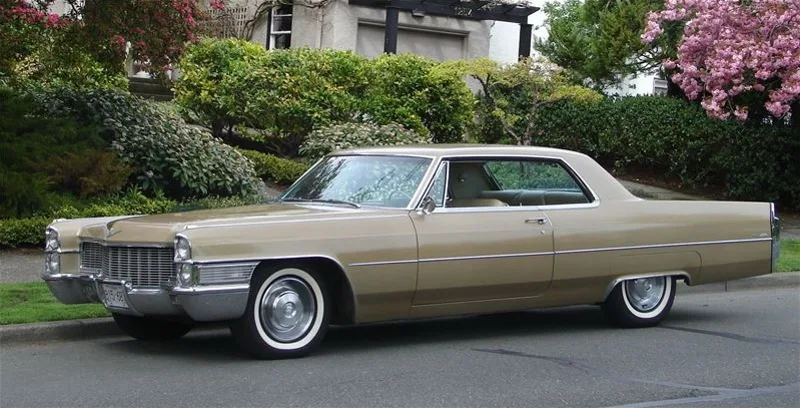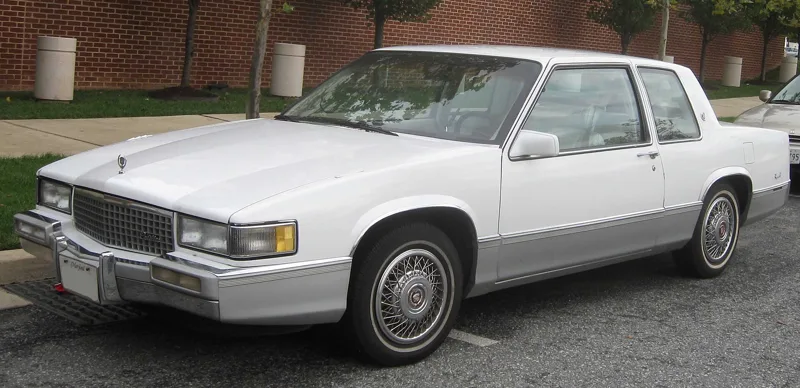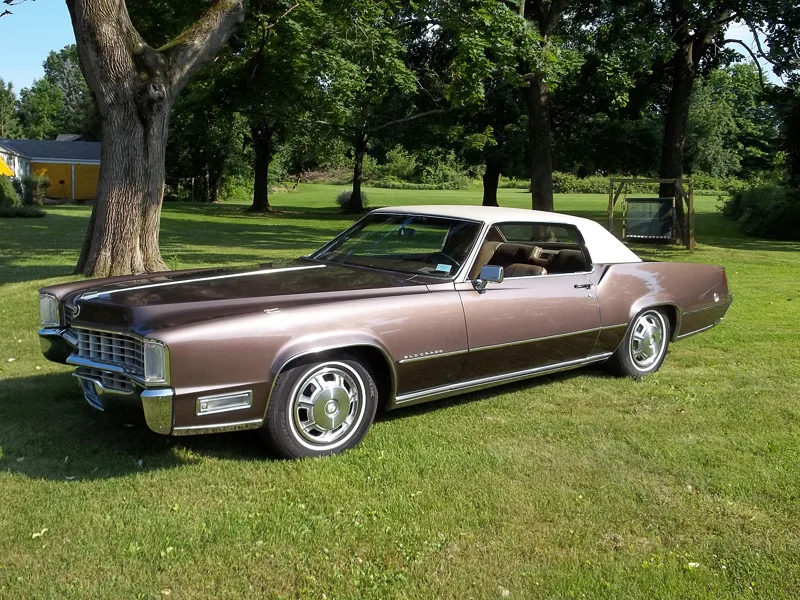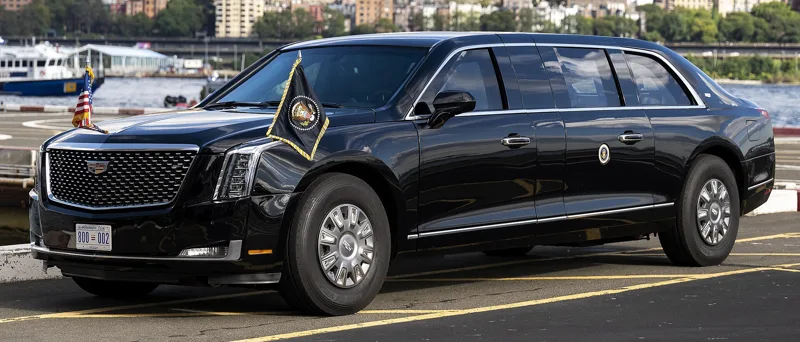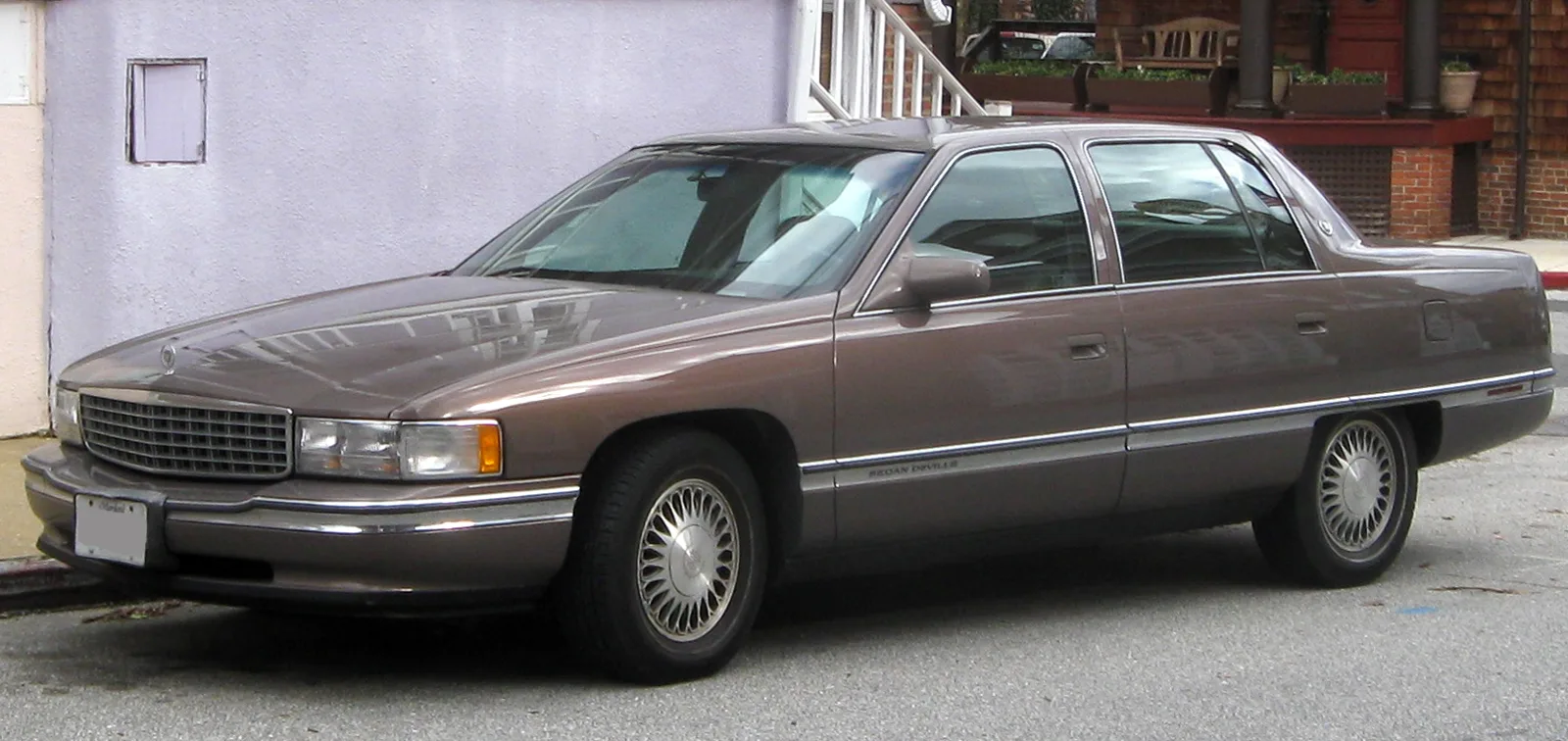
The sedan-only DeVille that moved to the K-body platform in 1994, gained Northstar engines in 1996 and was refreshed for 1997.
The Cadillac DeVille from 1994 to 1999 was a full-size front-drive saloon built in Detroit. It used a 4.9-litre V8 at first, switched to Northstar engines in 1996 and was facelifted for 1997.
The Cadillac DeVille of 1994 to 1999 was a full-size sedan from the American brand, a General Motors division. From the 1994 model year it was sold only as a saloon, moved to the new front-wheel-drive K-body platform and returned to Detroit for assembly.
Over those six years the car gained Northstar engines, the OnStar emergency system and a facelift.
What changed when the DeVille became sedan only in 1994?
The Coupe DeVille was dropped from the 1994 model year, leaving the saloon as the only DeVille. The car switched to a front-drive K-body platform, and assembly came back to Detroit.
In the Cadillac hierarchy the DeVille sat between the entry-level 62 series, Calais and Seville, and the top-class 75 series Eldorado. Only the Sedan DeVille was produced in the period covered here.
A front-drive sedan that dropped its coupe, gained Northstar V8s and kept building about 100,000 a year.
How big was the 1994 Sedan DeVille?
The new saloon kept the wheelbase of the previous model year, 113.8 in (2,891 mm), yet it grew a little longer overall. Its body was slim and streamlined, with a strong front bumper, and chrome trim ran back along the sides in a moulding that carried the Sedan DeVille name on the doors.
Large block headlights had side sections that lit the corners. The flush-fitted windscreen and side glass cut drag and reduced noise, helped by double door seals and extra soundproofing of the bulkhead and floor.
How safe was the DeVille in its crash design?
The body was designed to meet crash standards, including side impact. A high-strength steel frame housed the passengers, with deformable zones at the front and rear. In a frontal crash the engine mounts broke and the engine dropped away from the cabin.
Reinforced door locks and safety beams guarded the occupants against side impacts. Two front airbags came as standard and protected all three front passengers. The model scored well in passive safety assessment by the US safety body NHTSA.
What was the interior of the 1994 DeVille like?
A fully digital instrument panel showed the speed in large central figures. A digital fuel gauge sat to the left of the speedometer, and the odometer to the right, with trip and total readings. Two on-board computer screens flanked the panel.
The separate front seats were powered, with buttons on the door moving them fore and aft, up and down and tilting the cushion. Seatback adjustment was manual unless an electric drive was added for a fee, and seat heating could be ordered. A third passenger could sit at the front, using a lap belt built for that purpose.
The standard stereo had a radio and cassette player. Upgrade systems added eleven speakers, and a six-disc CD changer could go in the boot. A key fob opened the doors and boot remotely, switched on the cabin light and controlled the alarm if fitted. Indicators above the rear window confirmed that the tail lights worked, and the interior mirror dimmed itself against headlights behind. From the 1995 model year a compass was added to that mirror, and a sunroof also became available.
What engine and running gear did the 1994-1995 car use?
The transverse V8 was an overhead-valve unit of 4.9 litres (299 cu in) producing 200 PS (197 hp; 147 kW). The engine carried over unchanged, although its mounts and exhaust were revised to cut vibration and noise. It drove through a four-speed 4T60-E automatic with overdrive.
The front used MacPherson struts and the rear had independent coil springs on two transverse arms and a subframe. Each wheel had an electronic system that changed the stiffness continuously, and the rack-and-pinion steering also adjusted with road speed. Anti-lock brakes were standard, and traction control was an option. The car rode on 15-inch cast aluminium wheels in three designs.
What did the Deville Concours add?
The Concours was the hotter version. It had an all-aluminium overhead-camshaft V8 of the Northstar family, with 4.6 litres (281 cu in) and 275 PS (271 hp; 202 kW). Each cylinder head carried two chain-driven camshafts and four valves per cylinder, and the engine used sequential fuel injection into a plastic intake manifold.
The Concours had tuned electronic suspension, stability control as standard, a Cadillac emblem on the grille and 16-inch cast wheels. Its interior had leather trim and a dashboard with a wood-effect finish.
What changed for the 1996 model year?
From 1996 every DeVille used a Northstar engine. The Sedan took the 275 PS (271 hp; 202 kW) version, while the Concours had 300 PS (296 hp; 221 kW). Both were matched to a four-speed 4T80-E automatic whose fluid was sealed for the life of the car.
A steering angle sensor was added to the chassis control, and both models used 16-inch wheels in a new design with a large central emblem. A towing package allowed a trailer of 1,360 kg (3,000 lb), with extra wiring, an oil cooler and a larger radiator. The Concours alone had electronically controlled shock absorbers and a steering system whose ratio changed with speed.
Cadillac fitted OnStar emergency communications for the first time on the corporation's cars. When the airbags deployed, the system alerted an operator and called the emergency services. The steering wheel now carried climate paddles on the left and audio controls on the right, a rain sensor came as standard, and a 12-disc CD changer could be fitted. Buyers could also add a cellular phone that worked through the standard audio system, allowing calls while driving.
How did the 1997 facelift change the DeVille?
For 1997 the car received a new bonnet with a higher centre, a new radiator grille, a new front bumper and new wings. The rear wings were reshaped to uncover the wheels fully, and the front doors now read simply Deville. The body was strengthened for rigidity, noise and vibration, and all models gained new front airbags plus additional side airbags.
The D'Elegance returned to the catalogue in place of the Fleetwood. It had a gold-coloured bonnet ornament, a Cadillac emblem on the rear panel and a leather cabin with wood-trimmed dashboard and doors. Its cabin included the options ordered on the standard model, such as two-driver memory for seat, mirror and radio settings and two-zone climate control. The name D'Elegance also sat on the rear wings, beside the Deville lettering on the front doors.
The Concours kept its grille emblem and carried fog lights built into the front bumper. Its dashboard now had analogue gauges, and the gear lever moved between the seats, which left room for only five occupants.
How did the DeVille fare in safety tests after 1996?
The 1996 model was heavier and failed the passive safety test. For 1997 the reinforced body passed the safety tests, including a side-impact test that had only just been introduced.
What are the Cadillac DeVille specifications from 1994 to 1999?
| Specification | Detail |
|---|---|
| Wheelbase | 113.8 in (2,891 mm) |
| Layout | Front-wheel drive, K-body platform |
| 1994-1995 engine | 4.9-litre (299 cu in) V8, 200 PS (197 hp; 147 kW) |
| Concours engine, 1994-1995 | 4.6-litre (281 cu in) Northstar V8, 275 PS (271 hp; 202 kW) |
| Northstar, 1996 on | Sedan 275 PS (271 hp; 202 kW); Concours 300 PS (296 hp; 221 kW) |
| Transmission | 4T60-E (1994-1995), 4T80-E (1996 on) |
| Towing package, 1996 | 1,360 kg (3,000 lb) |
How many DeVilles were built each year?
The 1994 model year saw 120,352 cars built, counting the Sedan DeVille and the Concours together. The 1995 figure was 100,066 cars.
Output was 100,251 cars in 1996, then 99,601 in 1997, 111,030 in 1998 and 112,253 in 1999. Across 1995 to 1999 the yearly range ran from 99,601 to 112,253 cars, and 1999 was the highest figure after the 1994 model year.