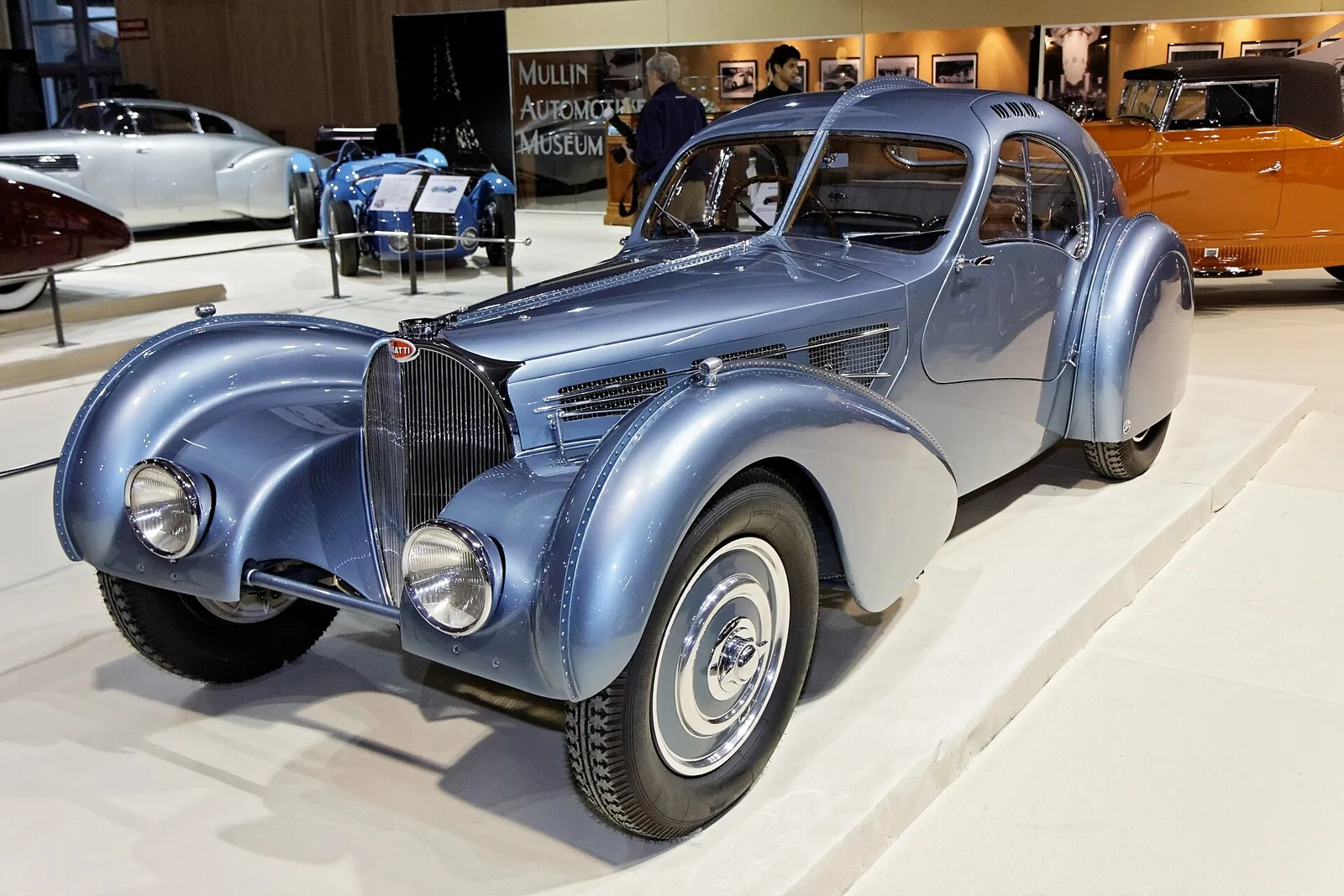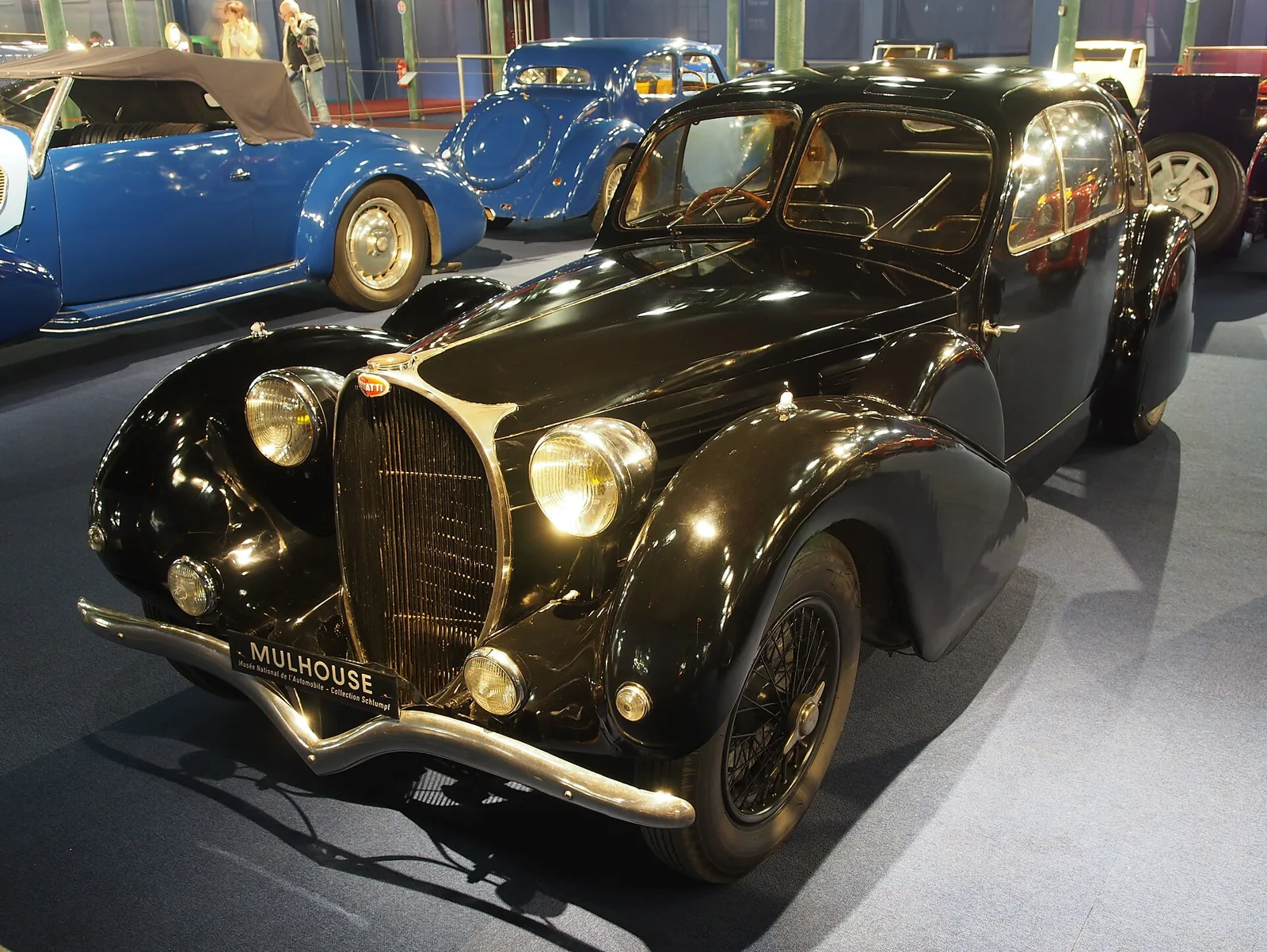
A late-1930s prototype meant to succeed the Type 57, with an enlarged straight-eight, a Gangloff coach body and a story cut short by war.
The Type 64 existed as a prototype for a Type 57 successor, and only one example was completed at the works. It carried an enlarged 4,432 cc straight-eight and a coach body from Carrosserie Gangloff in Colmar, and war halted development in 1939.
Meant to replace the Type 57, the Bugatti Type 64 was a late-1930s prototype. Only one car was fully assembled at the factory, with an enlarged straight-eight and a coach body by Gangloff in Colmar. Work ended when Jean Bugatti died in August 1939 and war broke out weeks later.
The surviving car belongs to the Cite de l'Automobile in Mulhouse, and the story behind it reaches into the company's troubled final prewar years.
Why was the Type 64 developed?
Jean Bugatti started work on a successor to the Type 57 in January 1937. The Type 57 had been introduced in 1933 and had been a success, but by the late 1930s a replacement was urgently needed. The Type 64 served as the testbed for that car.
Jean had been in a difficult position since 1936, when he became managing director in turbulent circumstances, effectively succeeding his father, Ettore Bugatti. He was about 30 years old at the time. He also led the small design office, contributed drawings and supervised the body department. When Bartolomeo Costantini left, he took over the works racing team as well.
A Bugatti built to succeed the Type 57, cut short by Jean Bugatti's death and the war.
How close was Bugatti to collapse?
By the summer of 1939 the firm was in poor shape. By early August it was, in effect, on the brink of insolvency, after banks recalled the loans they had made to the firm. Developing a new car under those pressures was a heavy load for one man.
Jean may have hoped to develop the Type 50 B straight-eight to about 4.5 litres, or to build an entirely new engine of the same size. Neither was ready when the Type 64 was built, so the tried 3.3-litre unit was modified instead.
How were the chassis and body made?
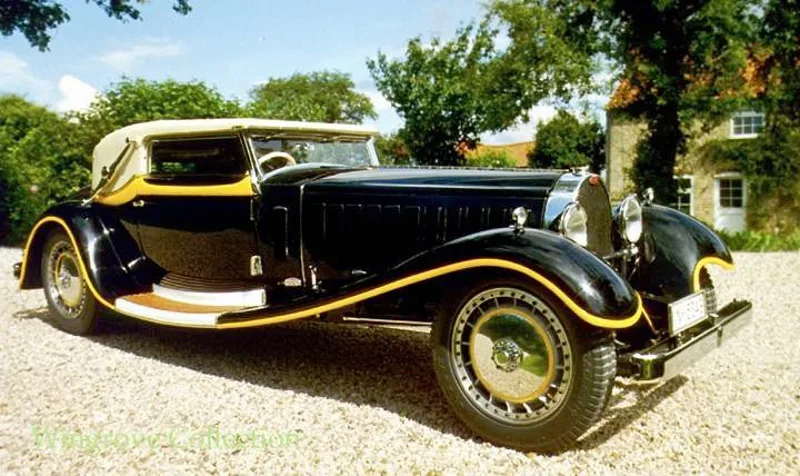
Two chassis are documented. One was built in 1938 and bodied in 1939 as chassis 64101, while by one account chassis 64102 only received its own body in 2012 or 2013. The coach on 64101 was built by Carrosserie Gangloff in Colmar to a design by Jean Bugatti.
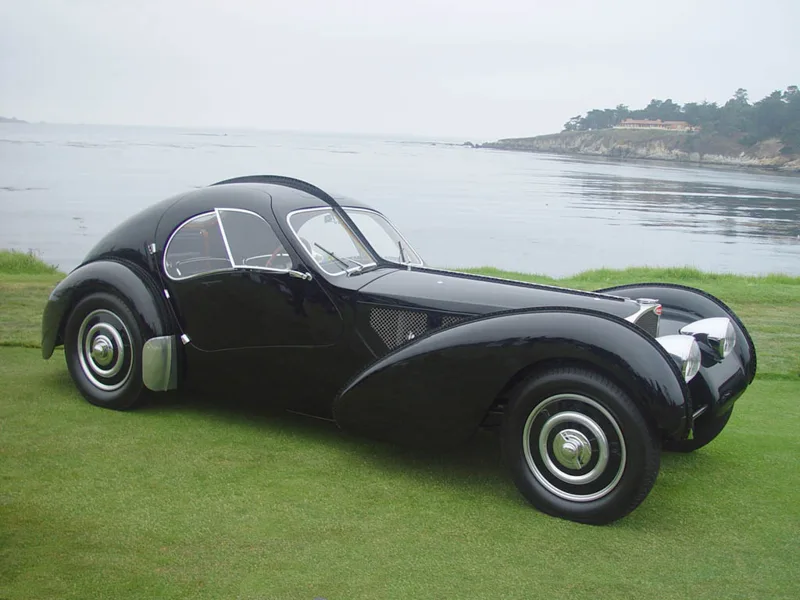
The body followed design number 1091, dated 25 May 1938. Jean also drew a saloon, design number 1093 of 14 January 1939, and may have experimented with a gullwing coupe, which a design dated 25 March 1938 suggests. The body of 64101 is black today, although contemporary photographs show the car in a very light colour.
What engine did the Type 64 use?
The only fully built car had its Type 57 straight-eight opened out. The original 3,257 cc (198.8 cu in) became 4,432 cc (270.5 cu in) because the bore grew from 72 mm to 84 mm while the 100 mm stroke stayed the same. Output is reported as 180 PS (132 kW; 178 hp) in one account.
The engine was a light-alloy in-line eight with twin overhead camshafts, a development of the earlier Type 49 unit. In typical Bugatti fashion it had monobloc construction, with no removable cylinder head. The layout was increasingly outdated and impractical, and it brought very high maintenance costs.
Each cylinder had one inlet and one exhaust valve. Bevel gears at the rear of the block drove the camshafts rather than spur gears, and the combustion chambers were hemispherical. The three-valve layout that Bugatti had pursued for years had not appeared since the Type 49.
How was the car transmitted and stopped?
The Type 64 used the four-speed preselector gearbox that was usual for its class. Cotal supplied it, as it did for most French luxury cars. Engine and gearbox were bolted together, and a propeller shaft and differential drove the rear wheels.
Hydraulic drum brakes by Lockheed slowed the four-seater, which could reach 180 km/h (112 mph).
What was the chassis like?
The ladder frame used side members, each made from two opposed U-sections joined by rivets, so the members were hollow. This was a departure for Bugatti, which had not built frames this way before. The box frame also swept outward, which gained more interior room and earned the name fish-belly frame.
A welded box frame was joined to a floor platform, and the front wheels hung on wishbones with quarter-elliptic springs. At the back sat a pendulum axle controlled by trailing struts, with a transverse leaf spring. Every wheel carried a hydraulic damper and a hydraulically operated drum brake, and the differential was bolted to the frame.
Why did the front axle divide father and son?
Ettore and Jean disagreed about the front axle. Jean had hoped to fit independent front suspension to the Type 57 already, yet Ettore had prohibited testing of it. Ettore's own robust and light rigid axle of the 1920s had been highly praised, though by the Type 64 era it had become obsolete.
Even so, the Type 64 kept rigid axles at both ends, a choice that was already out of date.
Were other bodies designed for the Type 64?
Jean Bugatti also designed a Type 57 body as a design study. The car was built, and a restored example exists, though it no longer sits on its first chassis. Several clues suggest it matches works design number 1089 of 25 March 1939, and it currently sits on chassis 57625.
The original chassis of that design study had telescopic shock absorbers and hydraulic brakes, which were used from late 1938 at the earliest. Weight figures vary between accounts, with one putting the car at 1,265 kg (2,789 lb) and another at 1,300 kg (2,866 lb).
Specifications
| Item | Detail |
|---|---|
| Type | Prototype four-seater |
| Engine | 4,432 cc (270.5 cu in) straight-eight, enlarged from 3,257 cc (198.8 cu in) |
| Bore and stroke | 84 mm and 100 mm |
| Output | 180 PS (132 kW; 178 hp) by one account |
| Top speed | 180 km/h (112 mph) |
| Gearbox | Four-speed preselector by Cotal |
| Brakes | Hydraulic drum brakes by Lockheed |
| Kerb weight | 1,265 kg (2,789 lb) in one account, 1,300 kg (2,866 lb) in another |
| Length, chassis 64101 | About 410 cm (161.4 in) |
| Width, chassis 64101 | About 155 cm (61.0 in) |
Where are the Type 64 chassis now?
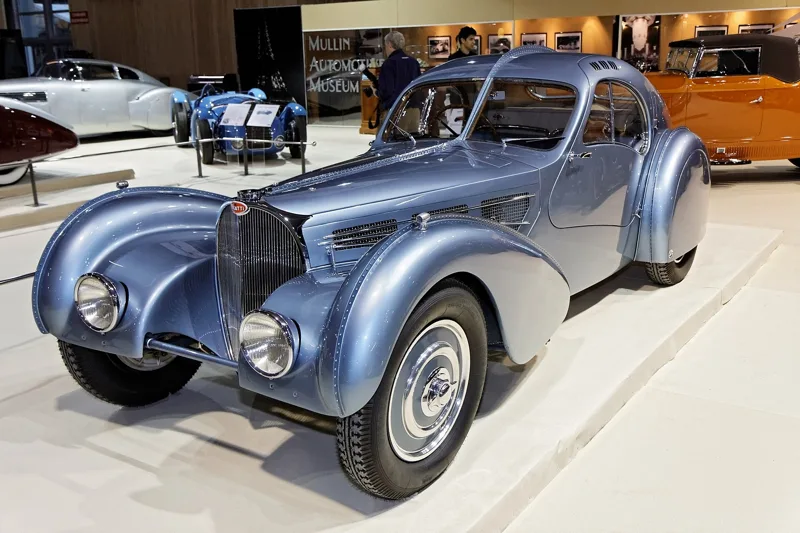
Chassis 64101 is in the Cite de l'Automobile in Mulhausen, where it was restored to run again in 2009. Chassis 64103 is an exhibit at the Mullin Automotive Museum in Oxnard, California. Chassis 64104 survives without an engine in Mulhausen, and chassis 64105 belongs to Bugatti specialist and author Robert Jarraud.
What happened to chassis 64101 after 1940?
The fully roadworthy car went to Bordeaux in 1940 with the evacuation of the Molsheim works. Afterwards it was used only now and then, for guests or as a stand-in management car. It was parked, probably in the late 1940s, with a little over 20,000 km (12,427 mi) showing, and that apparently was not a deliberate act.
Hans and Fritz Schlumpf probably acquired it in 1964, when they bought the Molsheim works and its inventory. After the textile entrepreneurs and car collectors became insolvent, it joined the collection of the Cite de l'Automobile. It stood for years in the big exhibition hall, little noticed. A full restoration is not planned, so that as much of the original substance as possible survives.
What became of chassis 64102 and 64103?
Two more chassis were built, yet neither was fitted with an engine in the works. Both stayed in Bugatti hands until 1960, when they were sold to Jean de Dobbeleer, a Bugatti dealer in Brussels. Chassis 64102 later got a Type 57 engine, and M. Jean Bats built its new body.
After de Dobbeleer resold chassis 64103, it changed hands several times. An original Type 64 engine turned up in a Type 59, and the engine was later acquired, reaching a correct drivetrain in the late 1960s. The chassis was shown as a rolling chassis at the 2002 Pebble Beach Concours d'Elegance, and Peter Mullin is said to have bought it the following year.
From 2012 an American design college used chassis 64103 as a teaching project, and it received a specially made body.