The experimental Moskvich 3-5 family of the early 1970s, which tried to fill the gap between the Moskvich-412 and the Volga.
Experimental Moskvich cars for the middle class between the small car and the Volga, the AZLK 3-5 series was built in small numbers in the early 1970s. Its engines ran from 1.5 to 1.8 litres, and series production never began.
The AZLK 3-5 series was a family of experimental Moskvich cars, built in small numbers at the MZMA / AZLK plant in Moscow during the first half of the 1970s. Its designers aimed at the middle-size class between the Moskvich-412 and the Volga, with series production planned for about 1973 to 1975. None of the prototypes reached the market.
Why did Moskvich need a replacement for the 408 and 412?
The Moskvich-408 was a transitional model: it had a new body but kept an old side-valve engine, which developed a respectable 50 hp for those times. Updating the 408 led to the restyled 408IE and 412IE models, built from 1969. The 412IE was seen at the plant as a temporary model, because its body and chassis still went back to the 408, and it needed replacing in the near future to stay competitive on export markets, and work on a completely new car began in spring 1967.
Further development of promising Moskviches was carried out within the C-series. The 3-5 designation originally showed the year the model was meant to reach series production, about 1973 to 1975.
Through the 1950s and 1960s the Moscow Small Cars Plant changed its models every four to five years. By the end of the sixties up to 55% of its output was exported to many countries, including Western Europe. The workforce included a team of young and creative designers and engineers.
The Moskvich-403 of 1963 was a transitional model with the 407 engine, and the Moskvich-408 followed in 1964 with a fresh body. The 408 kept an engine whose roots went back to the 1930s, and that engine badly needed replacing. A new all-aluminium 1.5-litre engine, drawn up from the early sixties as the base for versions of 1.5 to 2 litres, entered the Moskvich-412 in 1967. Because the plant was already overloaded, production of that engine was moved to the Ufa aero-engine plant, a decision whose later consequences were hard to foresee.
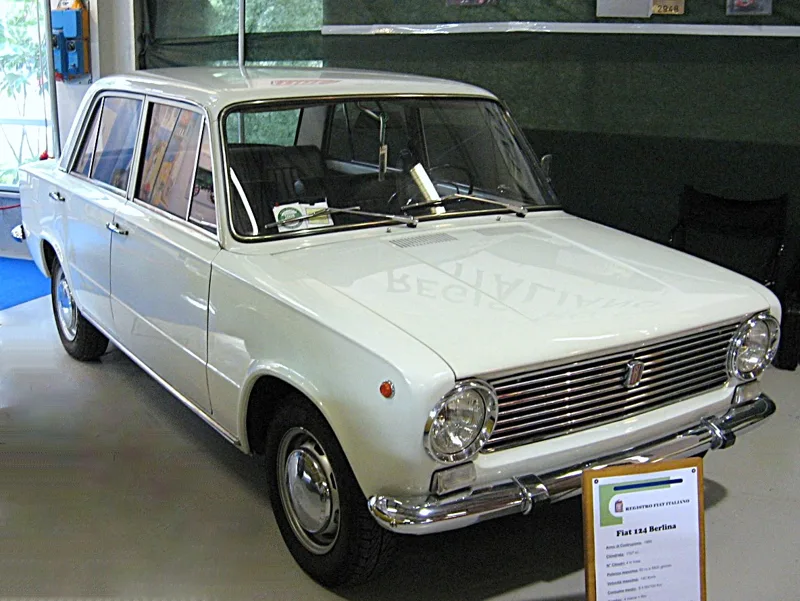
A licence deal with Fiat had also been signed for a mass-production plant at Togliatti to build a version of the Fiat 124. That car sat in the same class as the M-412, but it had a more modern body and chassis, and in consumer terms it was objectively better than the Moskvich.
A Moskvich family built to fill the gap between the small car and the Volga, halted before series production.
What class was the 3-5 designed for?
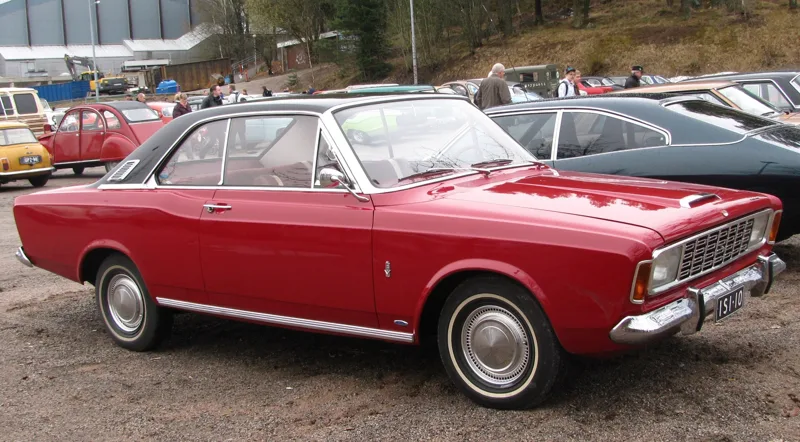
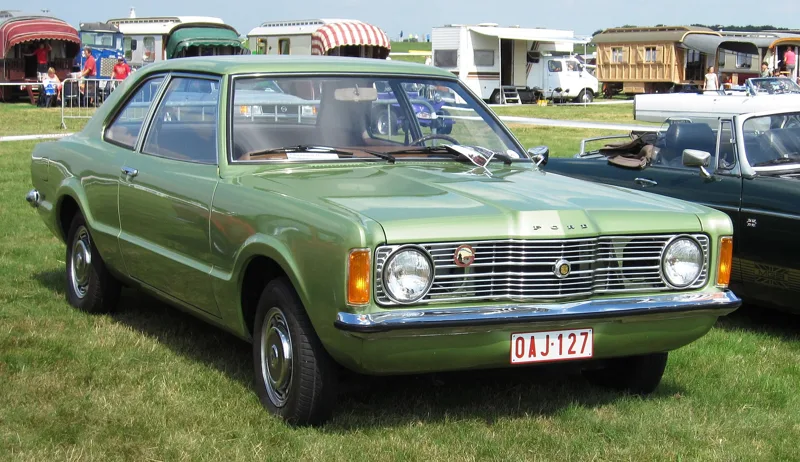
The 3-5 targeted the gap between the small Moskvich and the medium-sized Volga, roughly the European medium class, segment D. West German makers filled that space with the Ford Taunus and Opel Rekord, and the British Ford Zephyr was another example. In Western Europe these were called large family cars, and they carried five adults comfortably on the long trips that were growing in number worldwide and in the USSR.
Small Soviet cars were about four metres long with engines of 1.2 to 1.5 litres, while the Volga was about five metres with 2.5 litres. The 3-5 was meant to sit between them, combining the economy of a small car with reasonable space and comfort. Cars of that class kept the relative economy, low running costs and compactness typical of small cars compared with the Volga class. Work on the new car began at the MZMA in spring 1967, keeping the main styling features of the Moskvich-412IE. It was not a straight replacement for the 412 but a step into a class new to Soviet car making.
The planned engines were four unified capacities, from 1.5 to 1.8 litres (91.5 to 109.8 cu in), giving 75 to 103 PS (55 to 76 kW; 74 to 102 hp). The 1.6 and 1.7 litre sizes (97.6 and 103.7 cu in) filled the range between them. They were based on the 412 engine, and part of the output was to have an automatic transmission.
What were the first prototypes like?
The first cars of the series were saloon prototypes from 3-5-1 to 3-5-3, measuring 4,333 mm long, 1,660 mm wide and 1,420 mm high (170.6 x 65.4 x 55.9 in), on a 2,525 mm (99.4 in) wheelbase. The saloon prototypes had a 1.7-litre (103.7 cu in) engine with 96 PS (71 kW; 95 hp).
The estate version, the 3-5-3U, carried state index 2145 and measured 4,400 x 1,615 x 1,386 mm. The 3-5-4 was developed further from the saloon and could be told apart by its large-cell radiator grille and trim details. It used a 1.5-litre (91.5 cu in) engine producing 81 PS (60 kW; 80 hp).
The shape echoed a Moskvich-408 that was 200 mm longer and 100 mm wider, because keeping the 408's character was part of the brief. Chief designer Alexander Andronov wanted exactly that. Designer Igor Andreyevich Zaitsev later recalled the disagreement, which led to his temporary departure from AZLK.
The running prototype assembled by 1970 is judged today to have been out of date when it was built. Fundamentally new ideas were clearly needed.
How did the 3-5-5 and 3-5-6 differ?
The 3-5-5, finished in silver metallic in 1972, kept the earlier overall dimensions with a new and more harmonious body that was partly reminiscent of the BMW 5 Series E12. The 3-5-6, built only by early 1974, had a completely new interior, a Borg-Warner automatic gearbox and a different body treatment.
The 3-5-5 kept the main overall dimensions of the 3-5-2. It still carried Moskvich signatures: a stiffening rib on the side, the shape of the front wings, the rear panel, Moskvich-412 headlamps and a chequered radiator grille. These details marked continuity between generations. Its rear suspension was to be a dependent lever-and-spring design, and it was to use larger-capacity units of 1.6, 1.7 and 1.8 litres, with an upgraded gearbox.
The cabin was inherited from the 3-5-4 prototype. The 3-5-5 offered a roomy interior, a large boot with the spare wheel placed upright, curved side windows and door handles designed to be safe in an accident.
The 3-5-6 used a seating mock-up in its development, a first in Soviet practice. Its running prototype was light green metallic and had a 1.8-litre (109.8 cu in) engine with two Zenith carburettors, giving 103 PS (76 kW; 102 hp).
Some design features of the 3-5-5 were carried into the Moskvich-412N, which was developed in parallel and put into production from early 1976.
Why was the 3-5 programme halted?
Former chief designer Alexander Andronov, who left the plant in 1972, said work was stopped on the insistence of director Valentin Kolomnikov. Kolomnikov was expecting a transfer to the ministry and did not want responsibility for putting a fundamentally new model into production. Viktor Zaitsev, who disagreed, argued that the cars were crude and out of date.
Zaitsev added that the world car industry had moved far ahead while the work went on. Whatever the reason, a new series of promising Moskviches began in 1975.
What came after the 3-5 cars?
The first car of the new project, taken to running prototypes, was initially listed as 3-5-8 and was soon renamed C-1. The 3-5-6 first sat in the collection of the Moskvich joint-stock company museum, and it now belongs to the Moscow Transport Museum on Rogozhsky Val.
AZLK 3-5 specifications
| Specification | Detail |
|---|---|
| Saloon | 4,333 x 1,660 x 1,420 mm (170.6 x 65.4 x 55.9 in) |
| Estate (3-5-3U) | 4,400 x 1,615 x 1,386 mm |
| Wheelbase | 2,525 mm (99.4 in) |
| Planned engines | 1.5, 1.6, 1.7 and 1.8 litres; 75-103 PS (55-76 kW; 74-102 hp) |
| Saloon prototypes 3-5-1 to 3-5-3 | 1.7 litres (103.7 cu in), 96 PS (71 kW; 95 hp) |
| 3-5-4 | 1.5 litres (91.5 cu in), 81 PS (60 kW; 80 hp) |
| 3-5-6 | 1.8 litres (109.8 cu in), two Zenith carburettors, 103 PS (76 kW; 102 hp) |
| Transmission | Borg-Warner automatic on the 3-5-6 |
| Planned series | 1973-1975 |