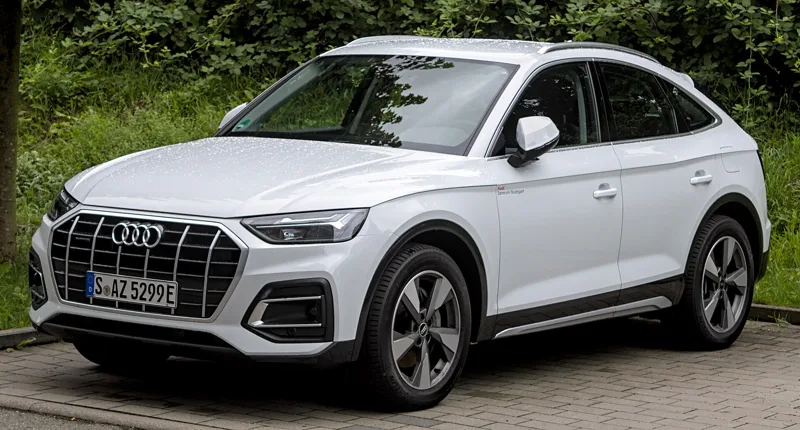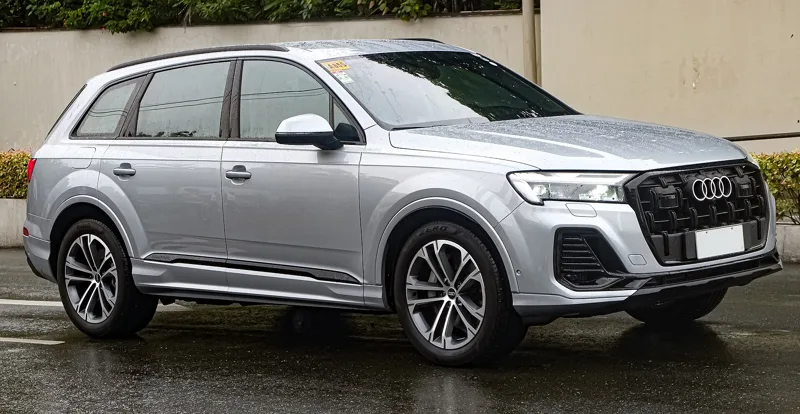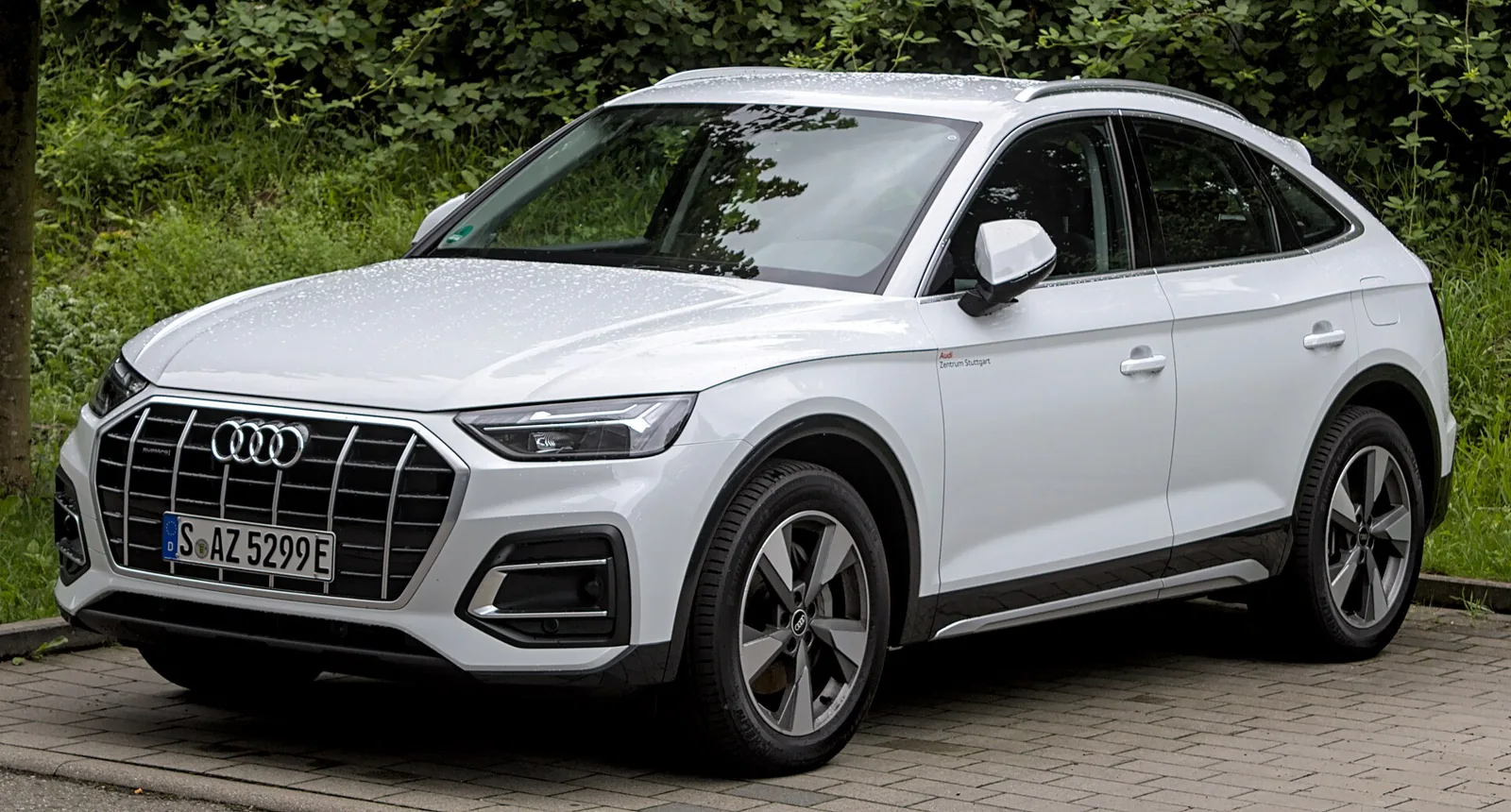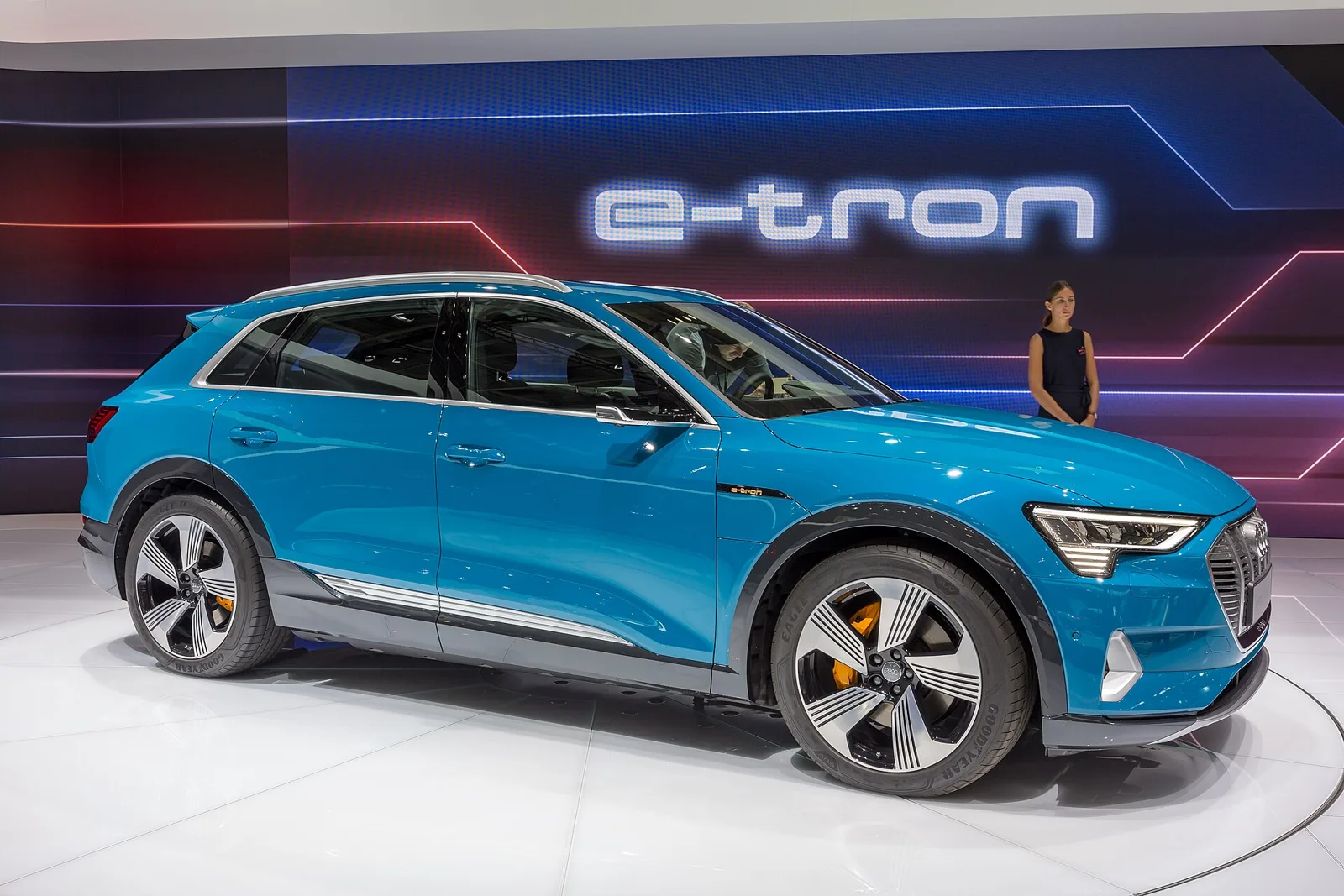
From the first e-tron in 2019 to the 2022 facelift and the Sportback coupe, a mid-size electric crossover with 106 kWh of usable battery.
The Audi Q8 e-tron is a battery electric mid-size luxury crossover that Audi built from 2019 to 2025. It began as the Audi e-tron and was renamed in 2022 after a facelift. It used a 106 kWh usable battery and dual motors, and Audi set production to end by February 2025.
Audi's first battery electric mass-production car reached customers in 2019 as the e-tron, a mid-size luxury crossover. A coupe-style Sportback followed in 2020, and a 2022 facelift renamed the model the Q8 e-tron. Audi confirmed in October 2024 that production would end by February 2025.
Where did the Audi Q8 e-tron come from?
Audi launched this electric crossover as the e-tron in 2019 and renamed it in 2022 after a facelift. The Q8 e-tron offers 106 kWh of usable capacity from a 114 kWh pack, and Audi had scheduled the end of production for February 2025.
The design grew out of the e-tron quattro concept first shown at Frankfurt in 2015. Audi unveiled the finished car in San Francisco on 17 September 2018, showed it at the Paris show later that year, and began first deliveries in May 2019.
The model was Audi's first battery electric mass-production car. Audi later added a coupe-style Sportback body, which entered production in 2020, and the facelift was revealed on 9 November 2022 under the Q8 e-tron name. That name is unrelated to the existing Audi Q8.
Audi's first battery electric mass-production car, from the 2019 e-tron to the 2022 Q8 facelift and the Sportback coupe.
How did early customers and markets respond to the e-tron?
Demand outran supply in the first year. Reports in April 2019 put waiting lists at six to seven months, and the first German customer received his car in March 2019. Some Norwegian buyers were told their cars would arrive up to six months late unless they paid for a far more expensive Fast Track car.
Norway became the car's strongest market. The e-tron outsold every other car and truck there in October 2019, then ranked third in November of that year. It finished 2020 as that country's top-selling vehicle, ahead of the Tesla Model 3.
Elsewhere the car performed well. It was the second most registered car of any kind in the Netherlands in December 2019, and the New Zealand government began buying e-trons as official cars in 2020.
What battery and range does the Q8 e-tron have?
A 114 kWh pack gives the 55 and SQ8 variants 106 kWh of usable energy, while the 50 model is fitted with a smaller pack. The earlier e-tron had a 95 kWh pack with 86.5 kWh usable, and an even earlier figure for its usable capacity was 83.6 kWh.
The first car was rated at 204 miles (328 km) on the EPA cycle, rising to 222 miles (357 km) in the updated version. The facelifted Q8 e-tron reached 285 miles (459 km) on the EPA cycle, while the facelifted Sportback manages 296 to 300 miles (476 to 480 km), depending on the variant.
Energy recuperation contributes about 30% to the range on average. Regeneration works both when the driver lifts off the accelerator and when the brake pedal is pressed. Temperature control holds the pack between 23 and 35 degrees Celsius, and individual modules can be swapped out.
How quick is the Audi Q8 e-tron?
The quattro all-electric system uses one motor on each axle. With boost engaged, the pair together deliver 408 PS (300 kW; 402 hp) and 490 lb-ft (664 N-m) of torque, and 100 km/h arrives in 5.7 seconds. Outside boost mode the combined peak is 265 kW (360 PS; 355 hp).
Without boost, the car still reaches 100 km/h in 6.6 seconds, and its maximum is 200 km/h (120 mph). The front motor supplies 125 kW (170 PS; 168 hp) and the rear 140 kW (190 PS; 188 hp), with the rear unit providing the bigger share of the torque.
Aerodynamics help the car's efficiency. With the virtual side mirrors fitted, the drag coefficient is 0.27. Its height of 1,616 mm (63.6 in) puts it 43 mm (1.7 in) under the Audi Q5.
How does the Q8 e-tron perform in cold weather?
At temperatures between -6.5 and -4.5 degrees Celsius, with cabin heating running, the e-tron managed 331 kilometres (206 miles) in real driving. In spring and summer, with heating or air conditioning running, the same car covered 370 kilometres (230 miles), a drop of 10.5%.
Those tests ran at 90 km/h, and the winter test car ran on wheels that were more aerodynamic than the summer car's. The real winter drop could therefore be slightly higher than the test figure suggests.
Five rival electric vehicles, among them a 2017 Tesla Model S 75D, were checked at roughly -6.7 degrees Celsius with cabin heating on. Every one lost at least 30% of its range, averaging 41% against a warm run with heating off.
In summer driving the e-tron is less efficient than the Tesla Model X per kilowatt-hour. At 13 to 15 degrees Celsius with high-speed highway driving, its efficiency was about 12.4% worse than the Model X, and in slightly below-freezing conditions the gap narrowed to about 8.6%.
How fast can the Q8 e-tron charge?
Zero to 80% can be reached in roughly half an hour on a 150 kW DC fast charger. On a 175 kW unit, the car sustained an effective 150 kW for most of the session, up to roughly 80%. At that pace, about 10 minutes adds 100 kilometres (62 miles) of range.
Audi of America quotes a more conservative 87 kilometres (54 miles) gained in 10 minutes from a 150 kW unit. At 90% the charging rate falls to around 82 kW, and it stays above 50 kW until the battery is full.
At home in Europe, the basic 11 kW wallbox needs 8.5 hours for a full charge, and an optional 22 kW unit cuts that in half. In the US, Audi supplies a 40A 9.6 kW J1772 charger, although a third-party 48-amp unit can deliver 11 kW.
The 2022 facelift raised the charging speed to 170 kW, or 150 kW on the low-end variant, alongside the larger battery.
What is the Sportback version?
The Sportback is the coupe-style body of the e-tron, with a sloping rear roofline that echoes rivals such as BMW's X6 and Mercedes' GLE Coupe. Audi went after those combustion-engined rivals with a battery-only car. It entered production in early 2020, and it reached Europe and the US that year.
The Sportback's public premiere took place at AutoMobility LA in November 2019. The Sportback matches the SUV's length and width, sits 1.3 cm (0.5 in) lower, and has a drag coefficient of 0.25 against 0.27. Its powertrain and battery are the same as the original car.
A 2020 Sportback reaches 218 miles (351 km) on the EPA cycle, beating the 2019 SUV because more of its battery is usable. Audi reduced the buffer that the battery management system holds back, and that change reached the SUV during its production run.
Cargo space is the trade-off. Measured by European standards, the Sportback has 615 L (21.7 cu ft) against 660 L (23.3 cu ft) for the SUV. American sources measure the original car at 821 L (29.0 cu ft), so the reduction is substantial on that count too.
What equipment and interior does the Q8 e-tron have?
The base kit comes with heated and ventilated front seats that adjust 12 ways, a glass panoramic roof and 20-inch alloys. On top of that, buyers could specify massage seats and power-closing doors, plus leather trim, 21-inch wheels and orange brake calipers.
Inside, the car matches the rest of Audi's range. Its main display measures 10.1 inches, a second touchscreen measures 8.6 inches, and Amazon Alexa handles voice commands. The Virtual Cockpit digital dash is included, while a head-up display and a Bang and Olufsen sound system are optional.
The e-tron was the second production car to offer virtual side mirrors. Cameras stand in for conventional mirrors and feed screens set into the door panels, each a high-contrast 7-inch OLED. An optional driver assistance pack brings sharper adaptive cruise, automatic parking and night vision.
Did the e-tron face production problems or a recall?
Supply shortages of batteries and motors led to delays and lower targets in April 2019 reports. Assembly plant hours were also planned to drop from 30 to 24 each week. Audi also paused production in February 2020 over battery supply, and output resumed in early May.
In early June 2019 Audi called back certain e-tron models because a water leak could short the high-voltage electronics, with fire a possible outcome in extreme cases.
Where was the Audi e-tron sold?
The e-tron and Sportback reached Australia in June 2020. In Pakistan the car launched in March 2020 and became the best-selling electric car there, as well as Audi's most successful model in that market. Malaysia introduced the Q8 e-tron on 17 May 2023, and India launched the facelift on 18 August 2023.
Customers in America began taking delivery early in 2019. Registrations in the United States reached 3,540 e-trons over the first three quarters of 2019, more than Germany's 2,997 but fewer than Norway's 3,824. Canada followed in late 2019, and Mexico launched the car for the 2021 model year.
What changed when the Q8 e-tron was facelifted?
The 2022 facelift gave the car its Q8 e-tron name, a larger battery of 114 kWh, and faster charging of up to 170 kW. The updated model is rated at 285 miles (459 km) of EPA range, up from 222 miles (357 km) for the earlier updated e-tron.
The name change came as Audi expanded its battery electric line-up, and the SQ8 e-tron is the performance version of the model.
Audi Q8 e-tron specifications at a glance
| Specification | Detail |
|---|---|
| Battery | 114 kWh pack, 106 kWh usable (55 and SQ8); 50 variant smaller |
| Earlier battery | 95 kWh pack, 86.5 kWh usable (original e-tron) |
| Standard output | 265 kW (360 PS; 355 hp) combined peak |
| Boost output | 300 kW (408 PS; 402 hp), 664 N-m (490 lb-ft) |
| 0-100 km/h | 5.7 seconds in boost mode; 6.6 seconds standard |
| Top speed | 200 km/h (120 mph) |
| EPA range | 204 miles (328 km) original; 222 miles (357 km) updated; 285 miles (459 km) facelift |
| DC charging | 150 kW; 170 kW from 2022 (150 kW low-end variant) |
| Drag coefficient | 0.27 with virtual mirrors; 0.25 Sportback |
| Height and boot | 1,616 mm (63.6 in) high; 660 litres (23 cu ft) boot |
| Production | First delivered May 2019; production to end by February 2025 |