The Bauhaus founder styled a few Adler Standard 6 and Standard 8 cars for Frankfurt's Adlerwerke. The designs drew worldwide attention, but almost no buyers.
Adler Gropius is the informal name for a few Adler Standard 6 and Standard 8 cars built by Adlerwerke of Frankfurt between 1930 and 1933, with bodies designed by Walter Gropius, founder of the Bauhaus. They were the only known automotive designs by Gropius. Estimates of the number built range from six to 27.
Walter Gropius, founder of the Bauhaus, designed the bodies of a small run of Adler cars between 1929 and 1933. The Frankfurt maker Adlerwerke fitted his shapes to its six- and eight-cylinder Standard chassis, and the cars were shown at Paris and Berlin shows. Buyers largely ignored them, so only a small number were ever built.
What was Adler trying to fix?
Adler's cars were technically strong but looked conventional, and by the early 1930s the company wanted a sharper brand identity to survive the slump. Its answers included a publicity drive, a search for more expressive bodywork and new front-drive models. The bodywork search led directly to Gropius.
Publicity came from Clarenore Stinnes's round-the-world trip, carried out between 1927 and 1929 in a production Standard 6. Production had already been widened from 1927, when the six-cylinder Standard 6, the eight-cylinder Standard 8 and the four-cylinder Favorit went into larger series. Those cars were closely related, so they could be built efficiently, and about 14,000 Favorits were made in four years despite the crisis. Even in hard years the eight-cylinder flagship sold 1,820 cars. The six-cylinder model reached about 21,000 units by 1933, which made it the most popular midsize car of its time.
Engineering novelty ran alongside the styling, and front-wheel-drive cars arrived from 1931 under Hans Gustav Rohr, the company's new designer.
Gropius gave the Adler range the bodies of a Bauhaus building, and buyers of 1930 were not ready for them.
Who was Walter Gropius before Adler?
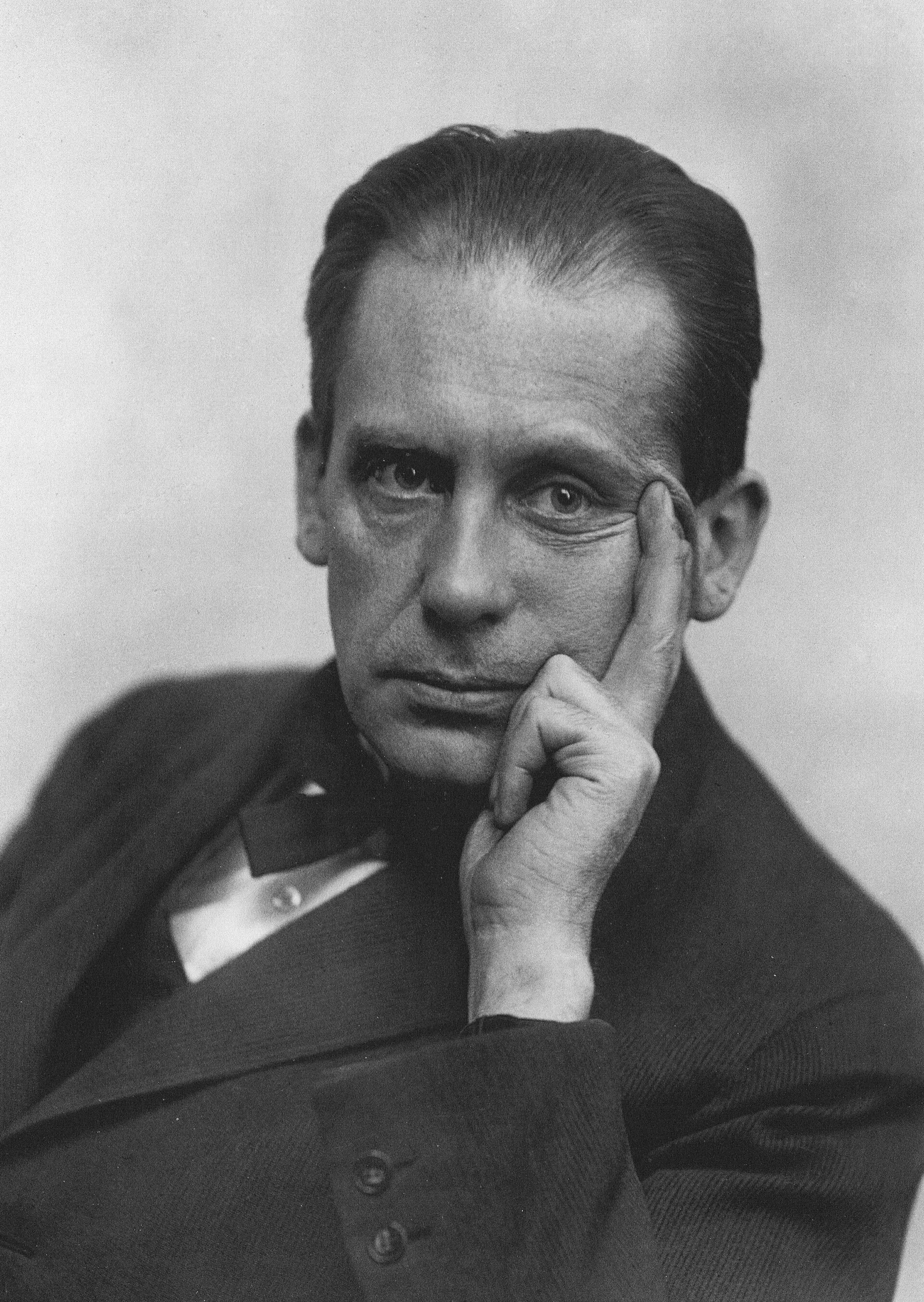
Gropius trained as an architect but left his studies in 1908 without a diploma. He then moved into industrial design, first in Peter Behrens's Berlin office, where he worked on products for AEG, and in 1910 he opened his own studio for product design and architecture. The Bauhaus, which he founded and first led, is what he is best remembered for.
Before his Adler work he had already produced striking schemes for large industrial firms. The Bauhaus itself was set up in Weimar in 1919 as an art school and was based in Dessau from 1925. In 1911 he built the Fagus factory at Alfeld (Leine), one of the first buildings of architectural modernism. Heritage protection has applied since 1946, and the site joined the UNESCO list in 2011.
He had also worked in Frankfurt, where his most important job was the Am Lindenbaum housing estate of 1929 to 1930, as one piece of the New Frankfurt urban planning scheme.
How did Gropius end up working for Adler?
He and the Kleyer family had been personal friends first. When the large housing jobs he had worked on, Siemensstadt in Berlin and the Lindenbaum estate in Frankfurt, were complete, lucrative new commissions dried up in the late 1920s. He accepted Adler's offer to chair its body-design advisory board from 1929 to 1933.
In that role he designed entirely new bodies for Adler's large cars. He also created the company's new logo, a sharply simplified eagle with spread wings. It first appeared on the exhibition cars and reached every production model from 1932.
What did the Gropius bodies look like?
The bodies carried the forms Gropius favoured in his buildings: straight lines, clear horizontal and vertical divisions, even curves, smooth surfaces, cubic shapes and large windows for the period. The chrome trim was cut back to a few large parts, with a sharp separation between functional areas.
Running boards stayed visually apart from the wings, and the tool and battery boxes sat on them. Doors were particularly wide and hung on sturdy external hinges, and the passenger compartments were long and wide. Some cars even had reclining seats, unusual for the time.
The bumpers were one-piece and sturdy for their era, with a central rubber strip running round the rear to the wings. The radiator was tall, narrow and upright, with fine vertical bars or a perforated pattern of 16 holes across and 24 in height. The old triangular brand badge was removed from the top of the grille, and some cars wore very large chrome headlamps and chrome wheel covers.
Other car designers of the time were already moving to softer transitions between body parts, while Gropius kept his components clearly distinct.
Which models did Gropius design?
Gropius produced six models for Adler, drawn from three body variants on the Standard 6 and Standard 8 chassis. Those documented best through exhibitions and photographs were a Standard 6 four-door saloon, a Standard 6 two-door cabriolet, a Standard 8 Pullman saloon and a Standard 8 cabriolet.
- Standard 6 A four-door saloon, seating four to five, 12/50 PS, type 12 N. It is a "four-window saloon", with two side windows a side.
- Standard 6 A two-door cabriolet, 12/50 PS, type 12 N, with room for four to five, given as a "two-window cabriolet".
- Standard 8 four-door Pullman saloon, seating six to seven, 15/80 PS, type 15 N, called "six-window saloon", with three side windows a side.
- Standard 8 two-door cabriolet, 15/80 PS, type 15 N, seating four or five. Alongside a version with front-hinged doors there was a special version with doors hinged on the A and B pillars, which could open at the front or conventionally at the back.
The four-window saloon was a deliberate choice. Its larger doors made entry easier and cut production costs, and it set the car apart from the Standard 8 top model. Many buyers, however, read it as a downgrade of the smaller Standard 6 saloon. The production bodies from Ambi-Budd, by contrast, were meant to have six windows.
Three body makers appear in the records. Ambi-Budd of Berlin-Johannisthal was to make the series bodies, the Berlin carriage works Jos. Neuss was responsible for individual exhibition vehicles, and, in Oswald's count, Karmann of Osnabrueck built the cabriolets.
Specifications of the two chassis
| Specification | Standard 6 A | Standard 8 |
|---|---|---|
| Engine | Six-cylinder in-line, just over 2.9 litres (177 cu in) | Eight-cylinder in-line, under 3.9 litres (238 cu in) |
| Output | 50 PS (37 kW; 49 hp) | 80 PS (59 kW; 79 hp) |
| Wheelbase | 2,840 mm (111.8 in) | 3,325 mm (130.9 in) |
| Track, front and rear | 1,350 mm (53.1 in) | 1,440 mm (56.7 in) |
| Length | 4,270 mm (168.1 in) | 4,750 mm (187.0 in) |
| Width | 1,650 mm (65.0 in) | 1,770 mm (69.7 in) |
| Height | 1,825 mm (71.9 in) | 1,880 mm (74.0 in) |
| Chassis weight | 950 kg (2,094 lb) | 1,300 kg (2,866 lb) |
| Complete car | 1,300 kg (2,866 lb) | 1,800 kg (3,968 lb) as a saloon |
| Top speed | - | 105 km/h (65 mph) |
The Standard 8 was larger in every dimension, and its chassis was technically identical to the smaller car's. The Pullman saloon on a Standard 8 chassis, one of the last built, is listed at 5.20 metres (17.1 ft) long, which conflicts with the table figure.
Why did the cars not sell?
Customers did not take to the designs. The models won worldwide attention, but the economic crisis of 1929 to 1932 and buyers' loyalty to conventional bodies meant that hardly any serious buyers came forward. Even in 1933, when the car industry began to recover, interest stayed away.
Buyers wanted lower bodies with early hints of streamlining, especially in the Adler range. The publicity outlasted the sales: the designs still get mentioned in print. Series production of the Gropius bodies, which the Berlin body works Ambi-Budd in Johannisthal was to have carried out, never went ahead because of the reserved customer response.
Critics were less generous. Werner Oswald called the designs historically interesting but not trend-setting, and more recent books sometimes dub the cars the Bauhaus on wheels.
Where were the Gropius cars shown?
The debut took place in early October 1930 at the Paris Motor Show, then among the most important car fairs in the world. A further showing followed in spring 1931 at Berlin's 22nd International Motor Show. The Standard 8 was shown once more in February 1933, between 11 and 23 February, at the 23rd Berlin show that combined cars and motorcycles. That show came in the first year of a strong upswing for the car industry.
Newspapers and illustrated magazines carried the designs, which made the Adlerwerke name known across the globe. Gropius wanted a plain, purposeful shape that would age slowly rather than date quickly.
How many Gropius Adlers were built?
Nobody has settled the number. The historian Werner Oswald counts only six passenger cars, while a 2015 article by the journalist Thomas Wagner names two saloons and about 23 cabriolets. A further 2019 account, whose author had links to the Adler Motor Veteran Club, counts 27 vehicles. Those counts differ by more than fourfold, so no single figure can be trusted.
Tracing them is hard. Adlerwerke was heavily damaged in the Second World War and afterwards gave up car building. Ambi-Budd's Berlin works were taken apart and wound up by Soviet troops after the war, and the Neuss carriage works, which built some exhibition vehicles, had passed to Erdmann & Rossi as early as 1933.
Oswald's tally consists of three Neuss saloons, one on a Standard 6 A chassis and two on Standard 8 chassis, plus three Karmann cabriolets, all on Standard 8 chassis from Osnabrueck.
What survives today?
As of 2019 no Adler Gropius car is known to have survived. Their whereabouts are unclear. They may have been requisitioned in the Second World War, perhaps as command cars or stripped for spares for the roughly 6,400 Kubelwagen Adler built.
One original radiator grille has survived, on display in the Frankfurt exhibition about Modern on the Main, 1919-1933, held at the Museum Angewandte Kunst. Collectors occasionally turn up special fittings such as door handles.
Since 2019 the White Elephant has been rebuilt to original specification. The reconstruction is run by the head of the Adler Motor Veteran Club, backed by the Institute of Vehicle Technology at Cologne's technical university. Its basis is a surviving original Standard 8 chassis, one of the rare cars of that model.
Individual cars and their plates
A four-door Standard 8 saloon of 1931, with a Gropius body built by Neuss, was registered in the Prussian province of Hesse-Nassau with the plate IT 0426. It was finished in one dark colour, with a tall grille of many vertical chrome bars and doors that ran in opposite directions, the fronts hinged at the front edge and the rears at the back edge.
A two-door Standard 8 cabriolet of 1931, with a Karmann body, was registered in the same province as IT 0423. Its wings, running boards and black folding roof contrasted with the lighter body, and its large front-hinged doors made extra rear side windows unnecessary.
A cabriolet of this kind was used by the Gropius couple until at least 1933. For a time it was registered in Berlin under the official plate IA 85337.
One Pullman saloon, with its unusual length and light paintwork for a representative car of the period, was nicknamed White Elephant. Its wings recalled the helmet hats of women's fashion.
Similar designs by other architects
Le Corbusier designed bodies with a similar concept for the French maker Aeroplanes G. Voisin under Gabriel Voisin. Those too were commercial failures.