A British driver who raced cars before the war, flew reconnaissance Spitfires and Typhoons, and in 1951 became one of the earliest recorded British trans women to have gender-affirming surgery.
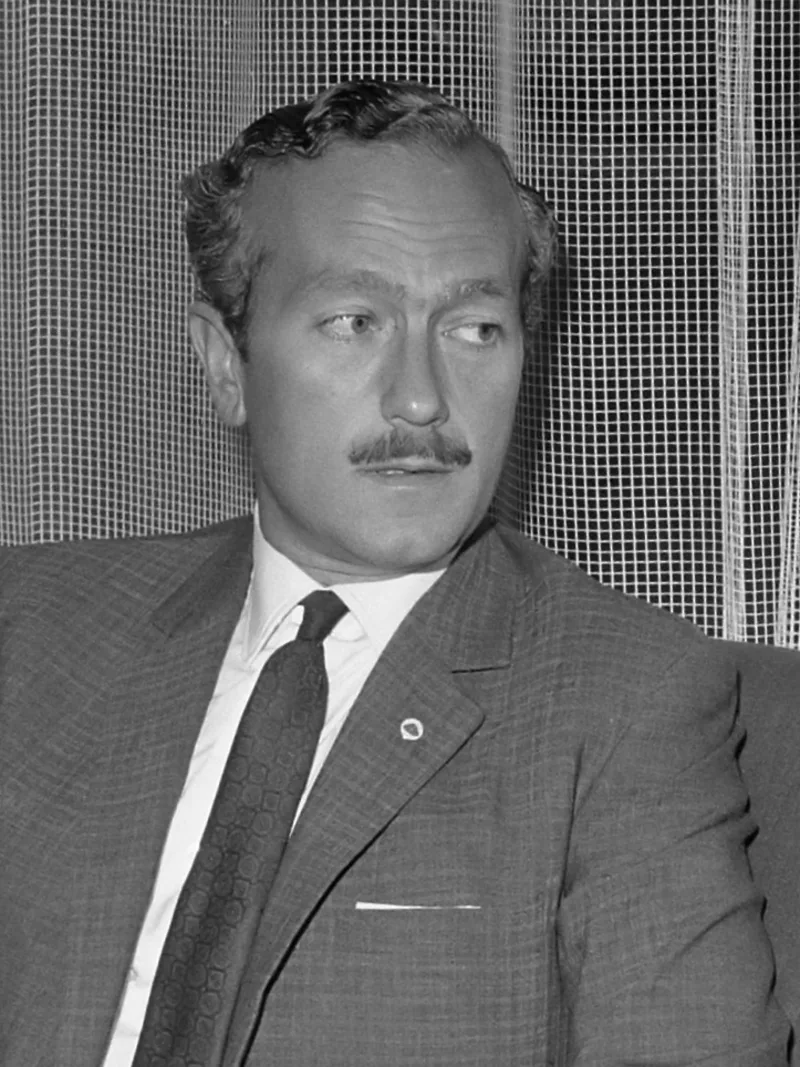
Roberta Cowell was a British racing driver before the Second World War and an RAF pilot during it, flying reconnaissance Spitfires and Typhoons. She was forced down and captured in 1944. In 1951 she had gender-affirming surgery, one of the earliest recorded in Britain, and she died in 2011.
Roberta Cowell is remembered for three things: fast cars before the Second World War, a flying career that ended in captivity, and a 1951 operation that made her one of the earliest recorded British trans women to have gender-affirming surgery. She largely withdrew from public life in later decades and died in October 2011.
How did Roberta Cowell start in motor racing?
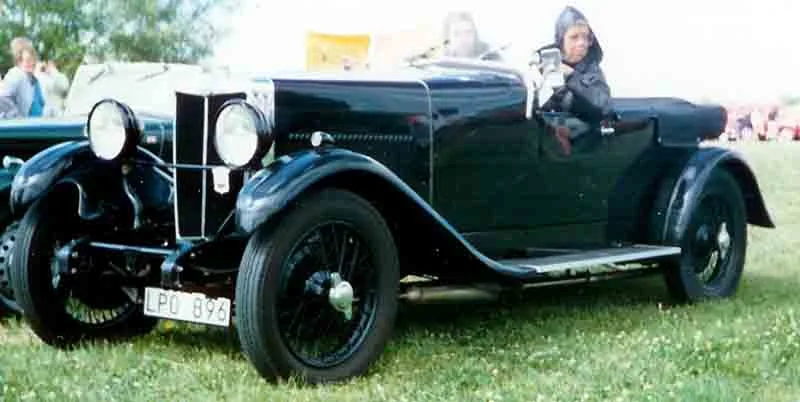
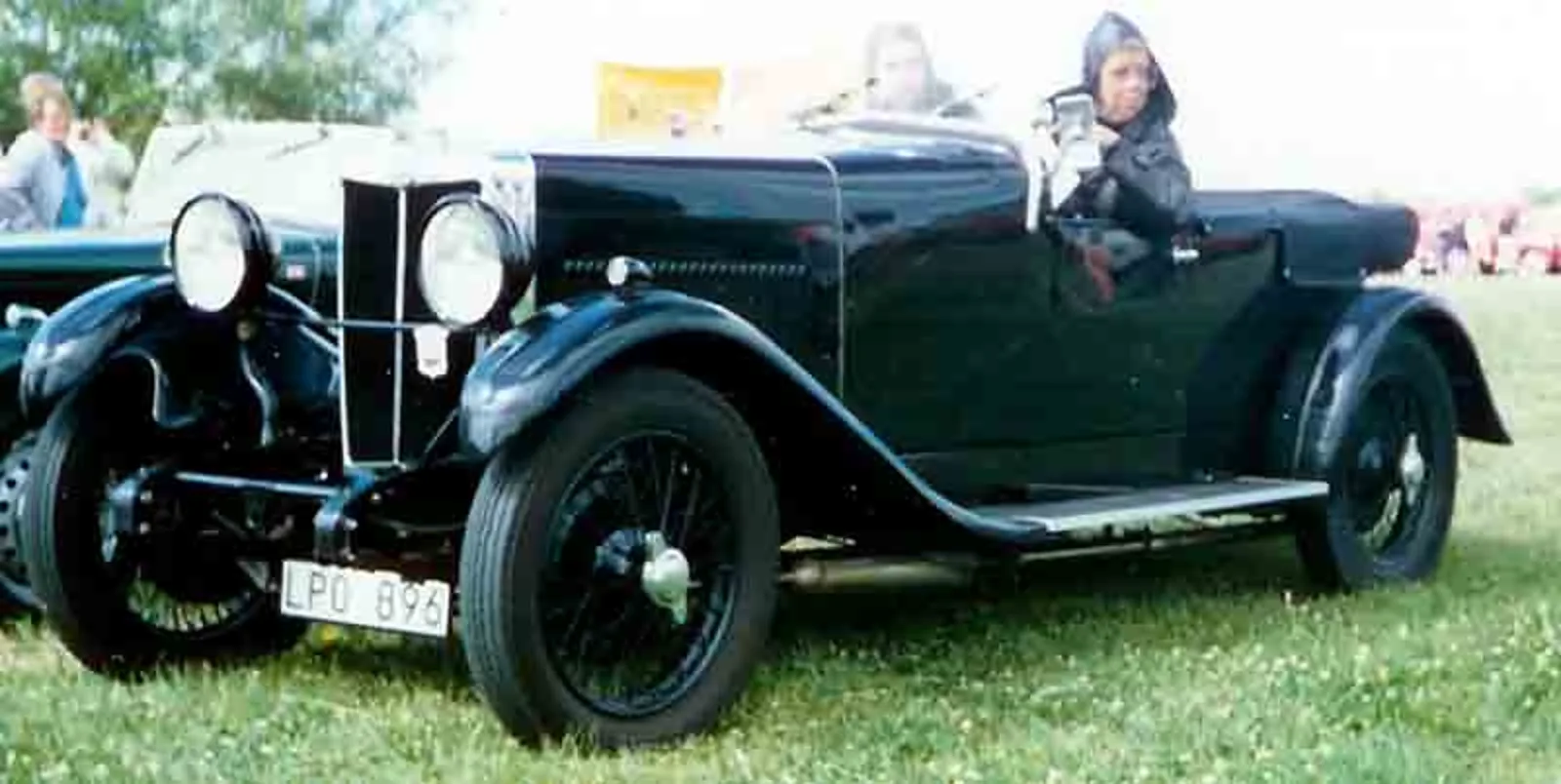
Cowell was born in Croydon in 1918 and attended Whitgift School, where she joined the motor club. In 1936 she won the class at the Land's End Speed Trial, driving a Riley. By 1939 she held three cars and had competed in the Antwerp Grand Prix.
Her early interests ran to mechanics as well as motor sport. She was an enthusiastic member of the school club and, before leaving school, went through Belgium, Germany and Austria alongside a school friend. Photography and filmmaking were pastimes that once landed her in trouble.
While filming in Germany she was briefly detained over footage of a group of Nazis drilling. Her release came when she agreed to destroy the film, though she swapped in unused stock and kept the real footage.
Leaving school at sixteen, she took an apprenticeship at General Aircraft Limited, working on aircraft. She then began RAF training, but airsickness brought that to an early end. In 1936 she also began engineering studies at University College London.
Her first hands-on experience of racing came at Brooklands. Dressed in mechanic's overalls, she slipped into the servicing area and offered their services to drivers and mechanics who needed a hand.
A motor racer who became a wartime pilot and prisoner, and later one of the earliest recorded British trans women to have gender-affirming surgery.
What was Cowell's Second World War service?
Cowell received a commission in the Royal Army Service Corps in December 1940 and moved to the RAF in January 1942 as a pilot officer. By mid-1944 she was flying Spitfire PR XI reconnaissance aircraft with No. 4 Squadron. Her flying ended in captivity after she was forced down in Germany in November 1944.
Her first posting was to a front-line Spitfire squadron, and afterwards she spent a brief period teaching other pilots. By June 1944 she was back on operations with No. 4 Squadron, an aerial reconnaissance unit that flew the Spitfire PR XI, a version of the fighter fitted with cameras and no guns.
Only days before D-Day, on 4 June 1944, her Spitfire's oxygen supply failed at 9,400 m (31,000 feet) over France. She blacked out, yet the aircraft flew on alone for roughly an hour under enemy flak. Regaining her senses at low altitude, she brought the machine home to the squadron base at Gatwick.
By October 1944 the unit had moved to Deurne, close to Antwerp, and it had Typhoon FR IBs alongside its Spitfires. On 18 November 1944 she was one of two Typhoons on a low-level mission near Bocholt, Germany, when flak knocked out her engine and holed her wing.
Flying too low to bail out, she jettisoned the canopy and glided the aircraft into a successful crash landing. She radioed her companion to say she was unhurt, and German troops then captured her.
She tried to escape twice, believing her chances were best while still near the front. Both attempts failed. She spent several weeks in solitary confinement at a centre where captured Allied airmen were questioned, and then she was sent to Stalag Luft I.
She remained a prisoner for around five months. Inside the camp she taught classes in automotive engineering to fellow inmates. Food grew scarce towards the end of the war, and she lost 50 pounds (23 kg) in weight.
The Red Army reached the camp on the night of 30 April 1945. The German guards had withdrawn westwards, and the prisoners had refused to leave when the evacuation was first ordered. Commonwealth personnel left for home on American aircraft between 12 and 14 May.
How did Cowell's life develop after the war?
After demobilisation Cowell tried several business ventures. In 1946 she set up her own motor-racing team, and she took part in events across Europe, among them the Brighton Speed Trials and the Rouen-Les-Essarts Grand Prix. Her autobiography describes this period as one of great distress, marked by clinical depression.
Her marriage was unhappy. In June 1941 she had married Diana Carpenter, another engineering student at University College London with an interest in motor racing. They had two daughters, born in 1942 and 1944.
By 1948 the couple had separated, and the divorce was not made absolute until 1952. The children went to live with relatives, and Cowell continued to suffer from depression afterwards.
She first consulted a leading Freudian psychiatrist, but she found his help unsatisfying. A second psychiatrist, whose approach was less orthodox, led her to conclude that the feminine side of her nature had been repressed for much of her life.
She also became acquainted with Michael Dillon, a British physician. He had written Self: A Study in Endocrinology and Ethics in 1946, arguing that people should be free to change gender and have the body they wanted.
Watching the film Mine Own Executioner brought on flashbacks, since its hero is brought down by flak while flying a Spitfire.
How did Cowell come to have gender-affirming surgery?
Cowell was on heavy oestrogen treatment by 1950 but was still living as a man. Her friend Michael Dillon carried out an orchiectomy on her in secret, because the procedure was illegal in Britain at the time. The vaginoplasty itself was on 15 May 1951.
Keeping it quiet was vital: under so-called mayhem statutes in Britain the procedure was outlawed, and no surgeon would do it in public. Cowell then consulted a private Harley Street gynaecologist, who gave her a document describing her as intersex.
That document allowed a new birth certificate to be issued with the female sex recorded, and the name on it was changed on 17 May 1951. A second signed statement, from the Canadian doctor Charles Dusseau, supported the change.
The operation itself was performed by Sir Harold Gillies, widely described as the father of plastic surgery, with the American surgeon Ralph Millard assisting. Gillies had previously operated on Dillon, and the surgical approach drew on his experience of treating soldiers' blast injuries.
How did the press respond to the 1954 news?
News of her gender reassignment broke in March 1954 and attracted worldwide interest. Picture Post paid around 8,000 pounds (about 190,000 pounds in 2025) for her story, and her biography earned a further 1,500 pounds (35,700 pounds in 2025). Some British reporting questioned whether a sex change had really taken place.
The Sydney Daily Telegraph reported that same month that British press coverage was sceptical. The medical experts it consulted had cast doubt on the claim, and Dusseau said the certificate was not intended to show that Cowell had fully become a female physically.
The Daily Telegraph also reported that one British doctor had received 456 requests for similar operations in a single week.
In the United States, press stories about Christine Jorgensen in 1952 had already introduced readers to the idea of sex change. Coverage often confused sexual orientation with gender identity, so Cowell's story did not fit the familiar pattern. Reports repeatedly stressed her marriage, her children, her wartime service and her motor racing.
What happened to Cowell in later life?
Cowell's business ventures had failed by 1954, and her income fell away. In 1957 she won the Shelsley Walsh Speed Hill Climb, and in 1958 she was declared bankrupt with debts of 12,580 pounds. She largely left the public eye afterwards, and she died in October 2011.
Her Leacroft of Egham racing car engineering firm and a clothing company had both stopped trading by 1954. Her legal gender change ended any chance of continuing in Grand Prix racing.
In November 1958 she bought a former RAF de Havilland Mosquito, G-AOSS, with a South Atlantic record attempt in mind. A lack of suitable engines doomed the plan. Her debts of 12,580 pounds, roughly 256,100 pounds in 2025 terms, pushed her into bankruptcy that same year.
The Mosquito had decayed into a wreck by 1959 and was broken up the following year. Money stayed tight, and she found work hard to come by. She remained active in British motor racing into the 1970s and kept flying, logging more than 1,600 hours as a pilot.
In a 1972 interview with Michael Bateman of the Sunday Times, she described her chromosomes and her transition, and she made remarks about other trans women that are not repeated here. The interview came while she was working on a second biography, which never appeared.
From the 1990s her home was sheltered accommodation in Hampton, London, though she still owned and drove powerful cars.
How did Cowell's death and recognition unfold?
Cowell died on 11 October 2011. Her funeral drew just six mourners, and it was not publicised, at her own request. Her death was not reported until 2013, and The New York Times later published an obituary on 5 June 2020.
The Independent published a profile of her in October 2013, two years after her death, which brought her life to a wider audience.
What were Cowell's main milestones?
Cowell's milestones include a class win at Land's End in 1936, her capture in 1944 and the Shelsley Walsh hill climb in 1957. The table lists these milestones in date order.
| Date | Milestone |
|---|---|
| 8 April 1918 | Born in Croydon, London |
| 1936 | Class win at Land's End in a Riley |
| 1939 | Owns three cars; competes at Antwerp |
| 24 January 1942 | Moves to the RAF as a pilot officer (temporary) |
| 18 November 1944 | Typhoon forced down near Bocholt; captured |
| 15 May 1951 | Vaginoplasty by Sir Harold Gillies |
| 1957 | Wins the Shelsley Walsh hill climb |
| 11 October 2011 | Dies |