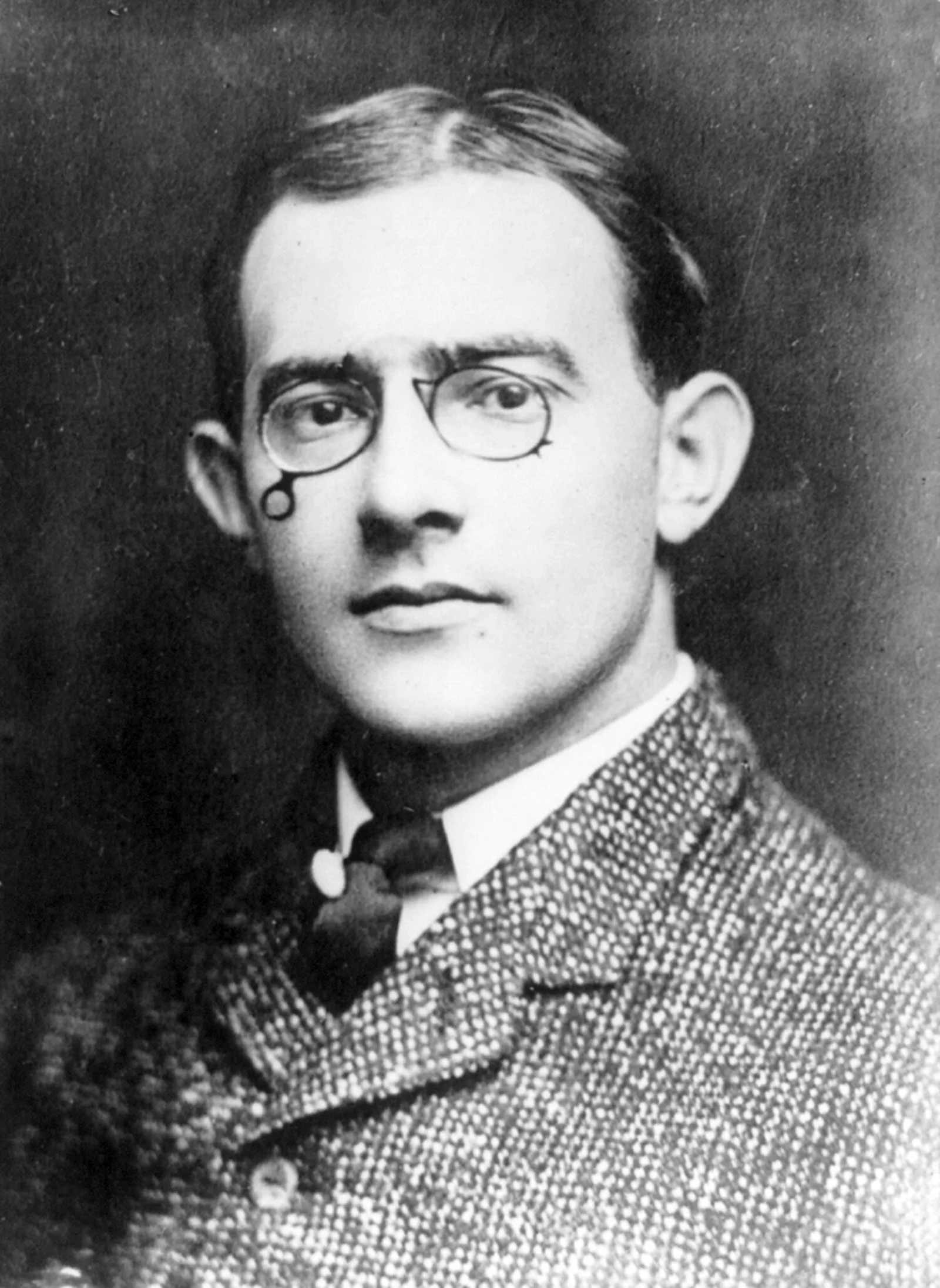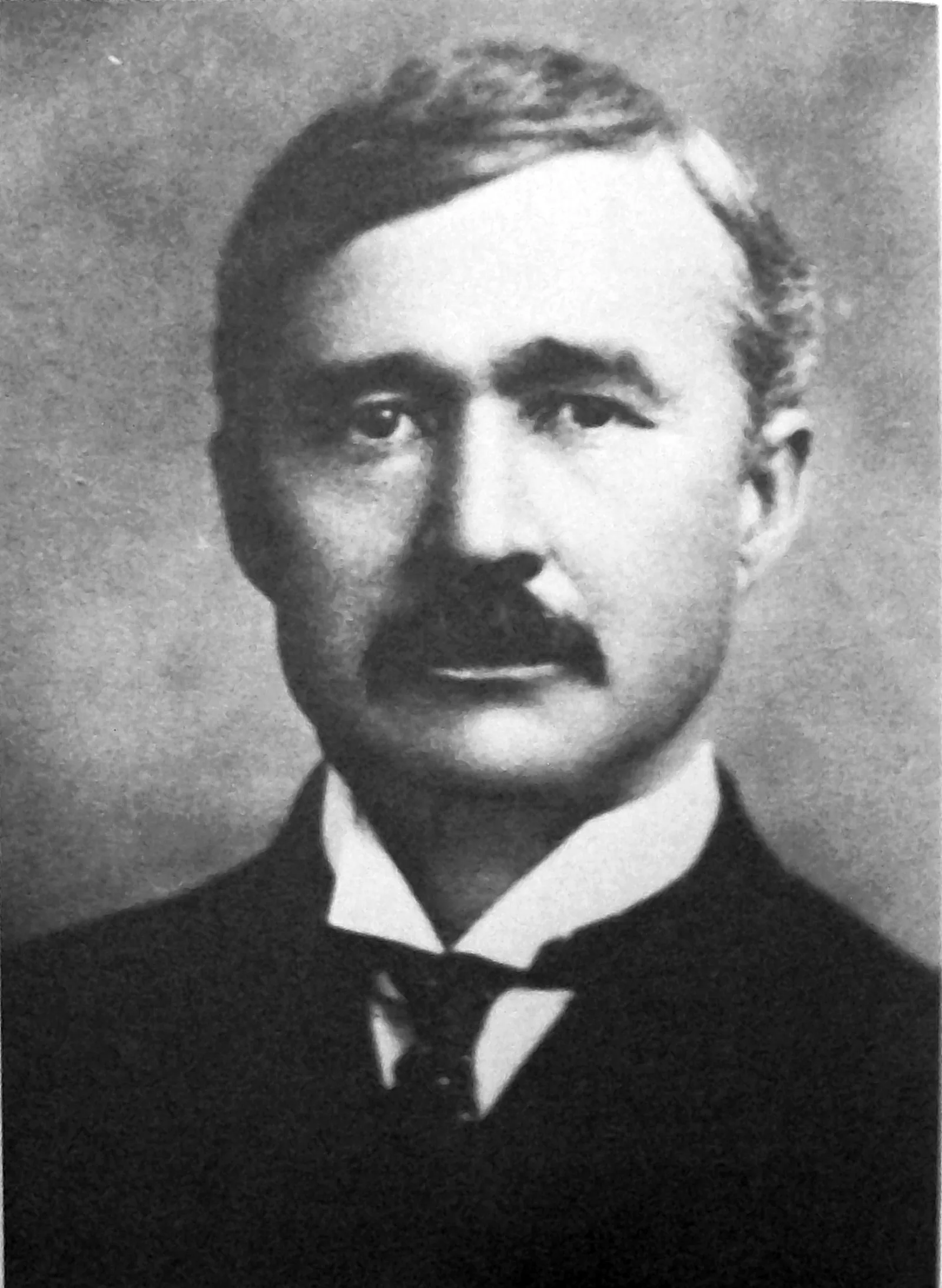
A gas pipeline engineer who built an early American car, co-founded a motor company and later patented stellite, a metal that resists corrosion.
Elwood Haynes, born in Indiana in 1857, built the Pioneer, a gasoline car road tested in 1894. He co-founded Haynes-Apperson, patented stellite and helped develop stainless steel before his car company collapsed in 1925.
Elwood Haynes was an American inventor, metallurgist and automotive pioneer who built one of the earliest gasoline cars in the United States. He ran a Kokomo, Indiana, motor company and helped found the first American car maker to turn a profit, while also developing stellite and a form of stainless steel. His career moved from natural gas pipelines to motorcars to alloys, and each change drew on skills from the one before.
Where did Elwood Haynes grow up?
Haynes arrived on October 14, 1857, in Portland, Indiana, as the fifth of ten siblings. His family had English roots, and his parents were both Presbyterians and outspoken prohibitionists who raised their children to avoid liquor. His paternal grandfather, a gunsmith and mechanic, taught him something about metal.
At twelve he built a vehicle from scrap railroad car parts and ran it on the county's tracks, until the local railroad foreman seized and destroyed it. By fifteen he had built a smelting furnace and was working with copper, bronze and iron. His family called him Wood because he spent so much time in the forest cataloguing plants, insects and animals.
A gas engineer who built a pioneering car, lost a fortune when his company fell and still left alloys that remain in use.
What did Haynes study and where?
Haynes left school after the eighth grade with no clear career in mind, and he worked as a church custodian and on the railroad before returning to school at nineteen. He then enrolled at the Worcester Technical Institute in Massachusetts in September 1878, paying his way by cleaning and guarding the local public library at night. During one stretch he lived in the library itself when boarding rates rose beyond his means.
His graduation thesis, The effects of Tungsten on Iron and Steel, set out the principles behind his two greatest metallurgical advances. He finished his course in 1881 and placed fourteenth of twenty-one graduates. A later spell at Johns Hopkins University in Baltimore was cut short in 1885 when his mother died, and he returned home to teach chemistry at a normal school in Indiana.
How did Haynes help the natural gas industry?
Haynes built his early reputation during the gas boom in eastern Indiana. He worked as superintendent for the Portland Natural Gas and Oil Company from 1886, and he invented a device that measured how much gas a well was pumping. A local newspaper called him the only infallible authority on natural gas in eastern Indiana.
In 1890 the Indiana Natural Gas and Oil Company hired him as field superintendent. The company was building a line of more than 150 miles (240 km) from eastern Indiana to Chicago, which would be the first long-distance natural gas pipeline in the United States. Moisture in the gas froze in cold weather and stopped the flow, so Haynes designed a refrigeration device that condensed and removed the moisture before it entered the lines. That meant the pipeline could run through the whole year.
He also turned against waste. Haynes calculated that flambeaus, the open flames used to show gas was flowing, were burning a large share of the supply, and he advised the company to put them out. He later filed lawsuits against rules that regulated pressure, and the Indiana Supreme Court struck those rules down in 1896. The waste that followed meant the field's wells began to run dry by 1905.
How was the Pioneer car built?
Haynes began planning a motor vehicle around 1891, first considering steam and then electric power before settling on the internal combustion engine after seeing a gasoline engine at the 1893 Chicago World's Fair. He ordered a one-horsepower two-cycle marine engine from the Sintz Gas Engine Company for $225. When he first ran it in a carriage built in his kitchen, the vibration wrecked the carriage and damaged the floor, and his wife ended the kitchen experiments.
He moved the work to the Riverside Machine Works run by Elmer Apperson, where he paid the brothers Elmer and Edgar to help after hours. The new vehicle used a steel harness and a front axle that could swivel, and it weighed about 820 pounds. Haynes tested tyre traction by towing a loaded wagon with a horse, and he drove the Pioneer for the first time on July 4, 1894, on Pumpkinvine Pike.
The first run went at 7 mph (11 km/h) for 1.5 miles (2.4 km) before he turned the car around. Smithsonian records describe it as the second gasoline vehicle to be road tested successfully in the United States, and it came two years before Henry Ford's Quadricycle. He built a second car, the Pioneer II, in 1895 for the Chicago Times-Herald race, but a policeman's objection and a sharp curb put him out of the event.
What did Haynes-Apperson achieve?
Haynes-Apperson was formed as a partnership with Elmer and Edgar Apperson and became one of the first commercial car makers in the country. Its founders adopted the motto America's First Car and kept it for the company's whole life. That advertising claim drew a dispute from the Duryea company, and the argument ended when Duryea's firm went bankrupt in 1898.
The company incorporated on May 5, 1898, with $25,000 of capital from Portland and Kokomo businessmen, and it moved into a large factory at Kokomo later that year. Output grew from five cars in 1898 to thirty in 1899, 192 in 1900 and 240 in 1901. By 1902 two shifts totalling more than 350 workers were needed to keep the plant at capacity, and sales that year topped $400,000.
| Year | Milestone | Figure from the record |
|---|---|---|
| 1898 | Haynes-Apperson incorporated | $25,000 capital; five cars built |
| 1899 | Production rises | Thirty cars built |
| 1900 | Production rises again | 192 cars built |
| 1901 | Long Island Non-Stop endurance race | First place for a Haynes car, 240 cars built |
| 1902 | Sales and workforce peak at Kokomo | More than $400,000 in sales |
| 1905 | Renamed Haynes Automobile Company | Model L sells over 4,300 units |
| 1910 | Standard roof, windshield, headlights and speedometer | More than 1,000 autos built |
| 1922 | Peak year before the slide | Nearly 6,000 cars sold |
A long-distance run in 1901 helped the company win publicity. A Haynes car took first place in the Long Island Non-Stop endurance race. Earlier the firm also sold a car to Dr. Ashley A. Webber of New York, who wanted proof of endurance. Haynes and Edgar Apperson drove it from Kokomo to his home, the first time a car had covered more than 1,000 miles, and the trip took over a month.
Why did the Apperson partnership end?
The Apperson brothers left in 1902 after disagreements that were never fully made public, probably over money and design. Haynes wanted luxury cars for wealthy buyers, while the Appersons preferred utilitarian vehicles for businesses. Losing them forced Haynes to leave his job at Indiana Gas, and he handed daily management to Victor Minich in 1903.
He moved his attention to metals and to fuel research, publishing a 1906 paper on impurities in gasoline. He recommended cutting the sulfur content to improve engine performance. The company became the Haynes Automobile Company in 1905, and he launched a series of publicity campaigns.
How did the Haynes Automobile Company decline?
The firm reached a high point in the early 1910s, with a fully equipped luxury model and steady growth. A devastating fire in the factory in 1911 killed one employee and slowed recovery until 1913. Haynes's 1914 cross-country drive kept the brand in the news, and many towns hailed him as the Father of the Automobile.
The post-war slump hit hard. Sales slipped from a peak of nearly 6,000 cars in 1922 to 4,300 in 1923 and 1,500 in 1924. Competition was fierce, and the company lacked the dealer networks that Ford and General Motors used to survive hard times. Haynes used his own savings to rescue the firm in 1921 and was the main buyer of its bonds, but the company was forced into bankruptcy in October 1924 and liquidated in 1925.
What did stellite and stainless steel become?
Stellite came out of his search for corrosion-resistant metals for car parts. He mixed tungsten with chromium, steel and iron to produce alloys that stayed strong at high temperatures and resisted rust. He patented his first version in 1907, completed the final version in 1912, and the patent was issued on June 20 of that year. He founded the Haynes Stellite Company in Kokomo that September.
Stainless steel came from a second attempt. The Patent Office first rejected Haynes's application for an alloy it said was not new, so he resubmitted with a sample that showed the stainless result. The patent was granted. He later said he had invented stainless steel because his wife disliked polishing their silver, and he made the first set of stainless silverware for her. Harry Brearley of England had independently produced an identical alloy, and the two later pooled their work.
The stellite business grew quickly during the First World War, with government contracts for aircraft and ammunition casings. In 1916 alone the company recorded $1.3 million in sales, and that year made Haynes a millionaire. Haynes sold the company to Union Carbide on April 10, 1920, in exchange for 25,000 shares valued at $2 million, and the Haynes name lives on today in the company now called Haynes International.
What role did prohibition play in his life?
Haynes was an avid supporter of prohibition, and he helped the movement's Indiana leader Frank Hanly with both time and money. He donated to the Prohibition Party and even gave it an automobile nicknamed the Prohibition Flyer. In 1916 he stood as a prohibition candidate for the United States Senate and lost heavily, receiving 15,598 votes out of nearly one million cast.
He was also a critic of the Ku Klux Klan in Indiana. He ridiculed its violent and illegal methods in letters to fellow prohibitionists and accused its members of hypocrisy for supporting anti-prohibition Democrats. Liquor sales were banned in Indiana by a 1918 law that took effect in 1919, and afterwards he joined the Republican Party and became far less political.
How did Haynes spend his later years?
Haynes became a generous philanthropist as he grew older. He gave regularly to the Presbyterian church and to Worcester Institute, where he had studied, and he helped fund a Young Men's Christian Association in Kokomo. He served two one-year terms as national president of the YMCA beginning in 1919, and in 1920 he was appointed to the Indiana State Board of Education.
He received a gold medal from the National Automobile Chamber of Commerce in January 1925 alongside the Apperson brothers and other pioneers. He then caught influenza on the return journey, and it developed into congestive heart failure. He died on April 13, 1925, in Kokomo and was buried at the city's Memorial Park cemetery. His estate had shrunk considerably with the collapse of his car company, and his wife lived in the mansion until her death in 1933.
What is Haynes remembered for today?
Historians recall Haynes as a trailblazer of the American car and as the designer of an early model feasible for mass production. He is also credited with helping drive the growth of Indiana's natural gas industry, and his alloys are still in use. Stellite remains important because it withstands high temperatures, and it has been used in American spacecraft.
His Kokomo mansion was converted into the Elwood Haynes Museum, which has been open to the public since 1967 and displays many of his inventions and automobiles. The Pioneer itself was given to the United States Government in 1910 and is held by the Smithsonian Institution. In 1944 a Liberty ship was named in his honour, and in July 2015 he was inducted into the Automotive Hall of Fame in Detroit.