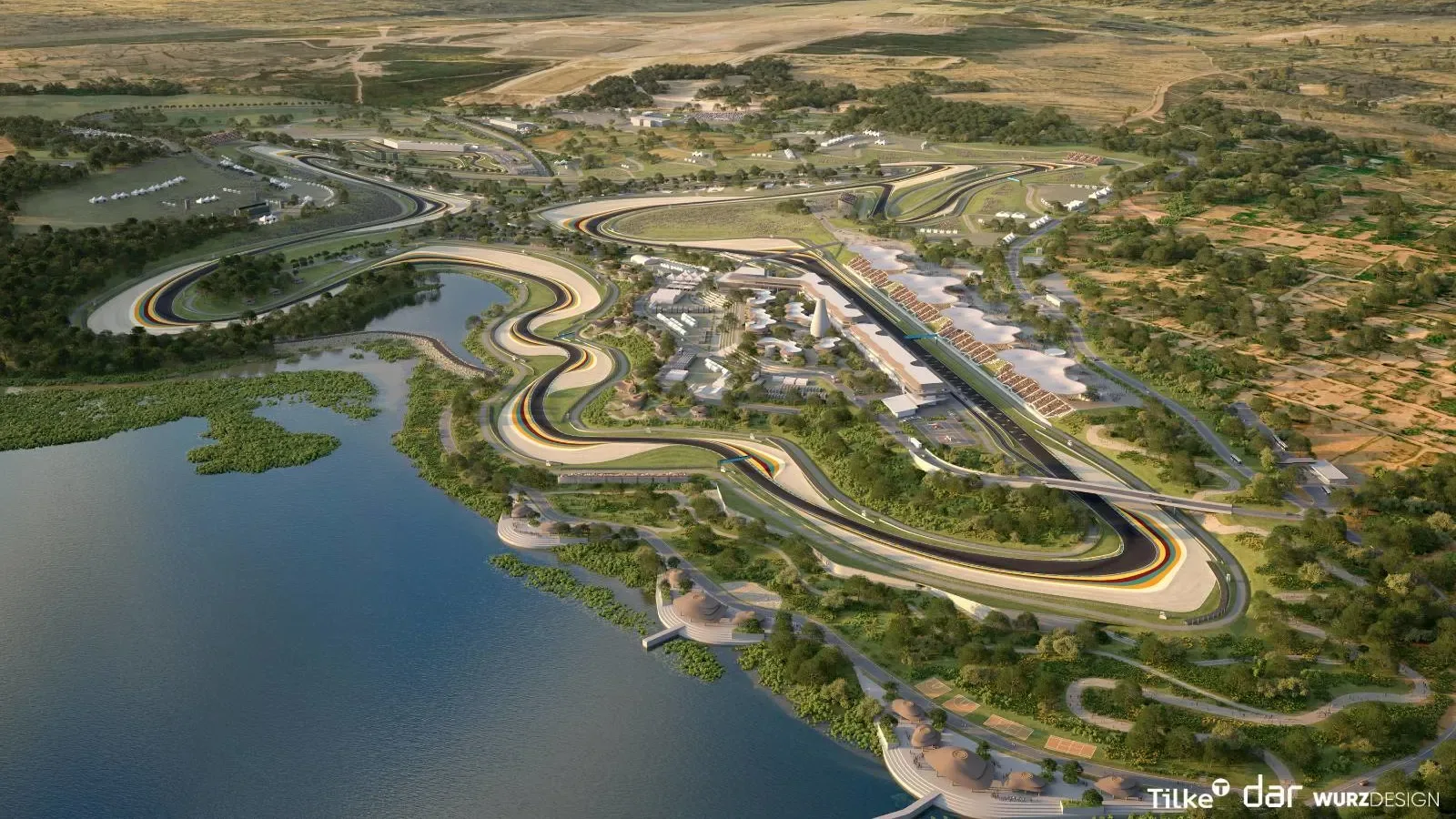
The race will be held at Bugesera from the early 2030s, on a circuit being designed by Tilke Engineering and Wurz Designs.
Rwanda has struck a 10-year agreement to stage an African Grand Prix at Bugesera, with the race expected from the early 2030s. The planned circuit is 6km with 17 corners, and the race would be the sport's first on the continent since 1993. Rwandan officials say the project is meant to support tourism and investment.
Formula 1 is coming back to Africa, with the first race expected in the early 2030s. Under a 10-year agreement, Rwanda will host the event at Bugesera, a site near Kigali's new international airport, which is expected to open in early 2028.
Only two African countries have hosted a world championship race before. Morocco's Ain-Daib road course had a one-off round in 1958, while South Africa staged 23 races, most famously at Kyalami, before its final Grand Prix in 1993.
Why Rwanda
Formula 1 has wanted to return to Africa for some time, but finding a location with long-term viability was the hard part. The sport says Rwanda now offers that platform.
Rwanda has built its sporting profile in recent years. Kigali hosted the FIA Awards in 2024, and in 2025 it hosted the UCI Cycling World Championships over a full week, becoming the first African nation to stage them. The Grand Prix adds another major event to that list.
Stefano Domenicali, Formula 1's president and chief executive, said the day would be remembered as one of the most important in the sport's history. He called it a landmark for a championship that will then race on every inhabited continent.
The circuit
The track will be a 6km anti-clockwise layout with 17 corners and 197 metres of elevation change per lap. Carsten Tilke of Tilke Engineering and former F1 driver Alex Wurz of Wurz Designs are designing it, and the full layout has not yet been released. Wurz says he has driven thousands of laps in the simulator.
Wurz said the landscape did much of the design work. Two hills with a lake below them gave the layout its shape, and he described the site as the obvious choice once the team had seen it.
The city sits at around 1,500 metres, which puts the circuit among the highest on the calendar. Mexico City, at 2,200 metres, is higher still. Thinner air means less aerodynamic grip, so the designers are using camber changes and factoring the effect into their simulations.
Tilke said the designers wanted overtaking points and several strategy options, so that both qualifying and the race work. He wants spectators close to the action, and described the layout as a roller coaster. Wurz expects a drivers' track that becomes a classic straight away.
A project for the whole continent
The wider investment includes paddock buildings in Rwandan architecture with a red dirt look, a multi-purpose venue for concerts and other major events, a karting facility for grassroots racing, a centre for driving experiences, and off-road tracks.
Jean-Guy Afrika, chief executive of the Rwanda Development Board, said the name African Grand Prix was chosen because it makes it easier to approach partners across the continent. He added that Rwanda was not the only bidder for the race, and expects more African rounds to follow the first one.
Formula 1 says new venues of this kind typically generate in excess of 100 million pounds for the host nation each year in economic impact. The figure is based on data from previous new race locations.
President Paul Kagame said African athletes have long added commercial value to top leagues while the continent received little in return, and that partnerships like this one aim to change that. He acknowledged that Rwanda is a small country, but said sport can help develop both the nation and the wider continent.