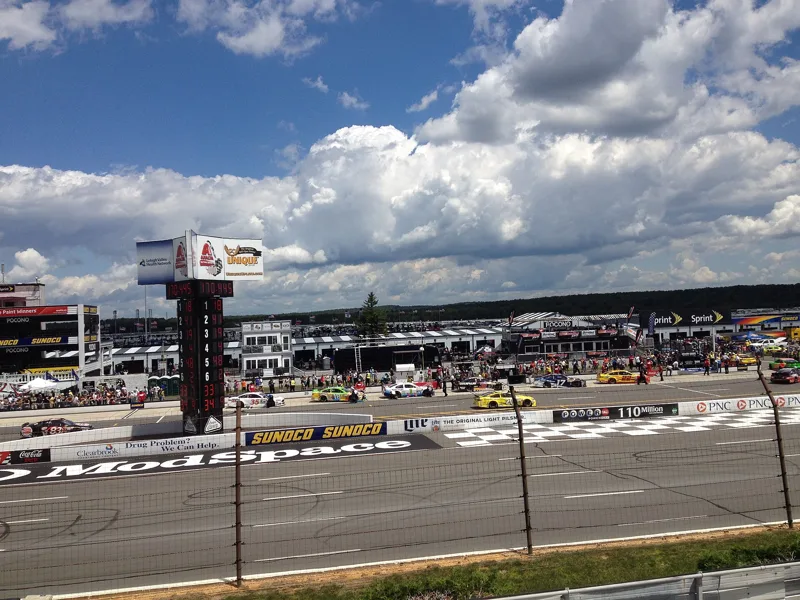
ESPN and Turner left after 2014, NBC Sports arrived with a nine-year deal, and the broadcasts added leaderboards, letterboxing, augmented reality and all-driver races.
NASCAR's broadcast partners changed across the 2010s as ESPN and Turner left after the 2014 season. NBC Sports and Fox took the remaining races under a deal running to 2024, and the broadcasts added leaderboards, letterboxing, augmented reality and all-driver telecasts.
NASCAR's television story in the 2010s is largely a story of contracts. ESPN and Turner's long relationships ended after 2014, Fox kept its share, and NBC Sports arrived in 2015 with a nine-year deal covering the final 20 Cup races each season. The broadcasts changed shape along the way, with new graphics, new presenters and experiments such as all-driver race telecasts.
When did NASCAR's TV deals change in the 2010s?
The biggest change came on 23 July 2013, when NASCAR announced a nine-year deal with NBC Sports. From 2015 NBC covered the final 20 Cup races of each season, along with the final 19 Xfinity races and digital rights, succeeding ESPN and Turner Sports in those roles. Fox kept its own portion of the schedule.
Fox had already set its own position. It extended its deal in October 2012 through 2022, and on 1 August 2013 it added two more years, taking the deal through 2024. That addition gave Fox the first 16 Cup races and the first 14 Xfinity events, and it matched the term of NBC's contract.
The money was large. The figure reported for NBC was 50% above the $2.7 billion that ESPN and Turner had paid together before. That gap told the industry how much the sport's rights had grown, and it set the terms for the rest of the decade.
By the end of the decade, the people calling the race were often the people who had driven it.
Which networks carried NASCAR races before and after 2015?
ESPN had carried the back half of the Cup season from 2007, and Turner's TBS and TNT carried NASCAR for 31 years. Turner's final NASCAR broadcast was the Camping World RV Sales 301 at New Hampshire on 13 July 2014. ESPN's last came at Homestead on 16 November 2014, when the Ford EcoBoost 400 closed its run.
The final ESPN broadcast was a quiet farewell for some of its announcers. Allen Bestwick, who had called ESPN's Cup races since 2011, worked his last NASCAR broadcast on network television that day. He had covered the sport for 29 years and went on to cover IndyCar for ABC and ESPN from 2015 to 2018.
Ken Squier, who had been Turner's lap-by-lap voice from 1983 through 1998, closed the pre-race show at New Hampshire. Turner's first NASCAR race, at Atlanta in 1983, had aired on TBS, and Squier had called Turner's races from that first season until 1998.
NBC's new coverage opened in February 2014 with NASCAR America, a nightly news and analysis show on NBCSN, plus the Toyota 120 from Phoenix shown on mun2. Jeff Burton was the first name confirmed for NBC's NASCAR team, on 3 December 2013, and Rick Allen signed a multi-year contract as lead announcer on 4 December 2013.
How did the 2015 split of races work?
Fox covered the first half of the Cup season in 2015 and NBC covered the second half, including the Chase. Fox retained the Daytona 500 outright, and NBC took the Coke Zero 400 outright, which broke with the earlier alternating arrangement. That gave each network a clear identity for the season's two Daytona races.
In February 2015, NBC agreed to carry 39 races from regional circuits, including the K&N Pro Series East and West and both Whelen Modified Tours, on NBCSN. The first race aired under the deal was the Hart to Heart Breast Cancer Foundation 150 at New Smyrna Speedway, shown on 19 February 2015. It was also the debut year for the renamed Fox Sports Racing service covering Canada and the Caribbean.
The 2013 deal also gave NBC Spanish-language rights through Telemundo and mun2, now Universo, along with digital rights, and the package also covered the Hall of Fame induction ceremony and the post-season awards banquets.
What changed on screen for NASCAR broadcasts?
Fox's on-screen ticker gave way to a leaderboard sidebar in 2014, and viewers complained that it covered too much of the picture. Fox reworked it into a horizontal graphic with three columns of three drivers before the Daytona 500. TNT moved to a 16:9 letterbox format on 9 June 2013. Viewers also criticised the layout during the events leading up to the Daytona 500, such as the Sprint Unlimited and the ARCA race.
Fox brought back a vertical leaderboard in 2018. Its first version was an opaque sidebar across the left side of the screen, which squeezed race footage into a window of roughly 4:3, and the design was criticised again before Daytona. By the 500 the opaque panel had gone, and the leaderboard had been made slightly translucent.
The Fox leaderboard was not the only graphic that changed. On TNT, the lap counter and the network logo moved to the upper right-hand corner from the 2013 Party at the Poconos 400 onward. TNT was the last of the three partners to move to a widescreen presentation, and its standard definition feed began airing a letterboxed version of the high definition picture.
Augmented reality also arrived. NBC introduced the GhostCar in replays in 2018, and Fox used it live during Daytona 500 qualifying in 2019. The feature overlaid a previous driver's qualifying lap onto live footage of another car, and it came back once NASCAR dropped multi-car qualifying in favour of single-car runs later that year.
Music and presentation changed as well. Fox's telecasts used the NFL on Fox theme from the 2011 Budweiser Shootout onward, and Dierks Bentley's Sideways was phased out by the 2013 Sprint Unlimited. NBC's 2015 opening song was Blake Shelton's Bringing Back the Sunshine, and from 2018 its opening became a cover of Tom Petty's Runnin' Down a Dream by ZZ Ward.
Did NASCAR try all-driver broadcasts?
Fox used active drivers to call an Xfinity race at Pocono on 10 June 2017, the first national sporting event covered by currently active athletes. The experiment returned at Talladega on 28 April 2018 and at Charlotte on 25 May 2019, and drivers covered the booth, pit road and studio in each case.
At Pocono in 2017, Kevin Harvick called the race lap-by-lap, with Joey Logano and Clint Bowyer as analysts. Erik Jones, Ryan Blaney and Ricky Stenhouse Jr. worked pit road, while Danica Patrick and Denny Hamlin hosted from the Hollywood Hotel studio. The presenters covered all three perspectives during the race.
The 2018 and 2019 versions followed the same pattern. At Talladega, Brad Keselowski joined Ricky Stenhouse Jr. in the Hollywood Hotel while Bubba Wallace replaced Stenhouse as a pit road reporter. At Charlotte in 2019, Chad Knaus joined Keselowski and Stenhouse in the studio, while Erik Jones, Ryan Blaney and Bubba Wallace kept their roles.
How did the Olympics change NASCAR's TV schedule?
NBC moved some races to other NBCUniversal channels in Summer Olympic years, which fell in 2016, 2020 and 2024. In 2016, CNBC took Sprint Cup and Xfinity qualifying plus one Xfinity race, while USA Network aired two Xfinity races and a single Sprint Cup event. The Cup Series took two weeks off in 2020.
In 2016 the Cheez-It 355 at Watkins Glen aired on USA Network because of NBC's Olympic coverage. In Canada, TSN televised every race under the name NASCAR on TSN, including the Daytona 500 qualifying races and the exhibition events, and in Latin America most races went out on Fox Sports 3.
Who filled in when the regular announcers were away?
Fox used stand-ins when its regular announcers were unavailable. John Roberts hosted the 2012 Budweiser Shootout and Daytona 500 while Chris Myers was on bereavement leave, Michael Waltrip covered for Darrell Waltrip at the 2014 Sprint Unlimited, and Jeff Gordon replaced Larry McReynolds in the booth in 2016.
Phil Parsons filled the role for Daytona 500 practice and pole qualifying, and Darrell Waltrip returned for the Budweiser Duels. McReynolds moved into the role of rules and technical analyst, replacing Andy Petree.
Who called NASCAR races on the new networks?
NBC's first team included Jeff Burton, confirmed on 3 December 2013, and Rick Allen, signed as lead announcer on 4 December 2013. Steve Letarte, who had been Earnhardt's crew chief at Hendrick Motorsports, joined the broadcast team, and Earnhardt himself joined NBC's team for 2018, a move announced on 24 July 2017.
NBC Sports' Jeff Behnke said the line-up would bring a relevance that the sport had not seen in a long time, citing the recent involvement of Jeff Burton and Steve Letarte in NASCAR before they moved into broadcasting.
The presenters changed too. Krista Voda hosted NBC's pre-race show in 2018 alongside Dale Jarrett, Kyle Petty and Rutledge Wood. In 2019 Danielle Trotta took the presenter's chair for NBC's Victory Lap programme after selected Cup events, and Jamie McMurray joined Fox's booth as the new voice of its NASCAR team that year.
Earlier in the decade ESPN had already changed its booth. Marty Reid became the lead broadcaster for most of its NASCAR races in 2010, moving Jerry Punch to pit road, and Allen Bestwick became the lead voice on Sprint Cup races in 2011.
How did the 2010 ESPN arrangement work?
In 2010 ESPN carried fourteen of the seventeen races under the new arrangement, and ABC kept only three. The change followed NASCAR's standardised start times, which pushed Chase races onto ESPN. Many of those races then ran on ESPN2 at 1:00 PM ET, which forced viewers to switch channels before the start.
Showtime also added a weekly highlight show, Inside NASCAR, with 38 episodes planned for the season and Chris Myers as host. The shows taped at the NASCAR Hall of Fame's Studio 43, with Randy Pemberton and Michael Waltrip from SPEED and Brad Daugherty from ESPN joining the panel. Fans and sponsors complained that the move put the sport's biggest races on cable. Nationwide Series races were often delayed by college football and tennis, and in 2011 an agreement let ESPN stream all NASCAR programming on WatchESPN.
The start times also moved. NASCAR shifted Chase races to 2:00 PM ET the following year, and to 3:00 PM ET for the final three races. Martinsville kept a 1:30 PM ET start because the track lacked lights, and late-afternoon shadows from the grandstands fell across the track.
Network rights at a glance, 2007 to 2024
| Period | Broadcasters | Coverage |
|---|---|---|
| 2007 to 2014 | Fox, TNT, ESPN and ABC | Fox the first 13 Cup races, TNT six summer races, ESPN and ABC the rest |
| 2010 | ESPN and ABC | ESPN carried fourteen of the seventeen races; ABC kept three |
| 2013 | NBC Sports announced | Deal announced 23 July 2013, covering the final 20 Cup races |
| 2015 to 2024 | Fox and NBC Sports | Fox keeps the first 16 Cup races; NBC covers the final 20 |
The decade closed with two networks sharing the sport and both willing to try new presentation. NBC had 20 races a year to fill, and the all-driver broadcasts showed how far the networks were prepared to go to make the picture feel different.