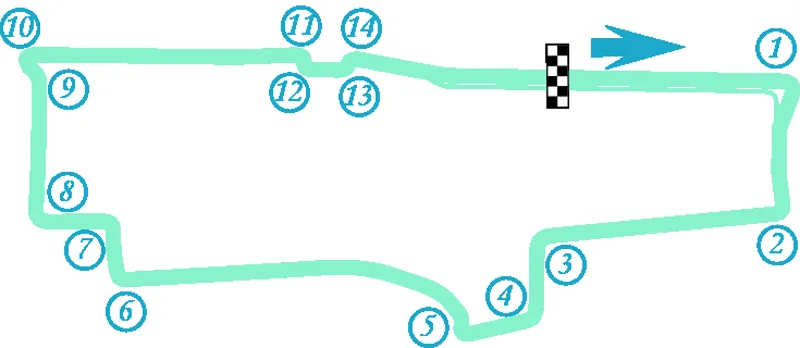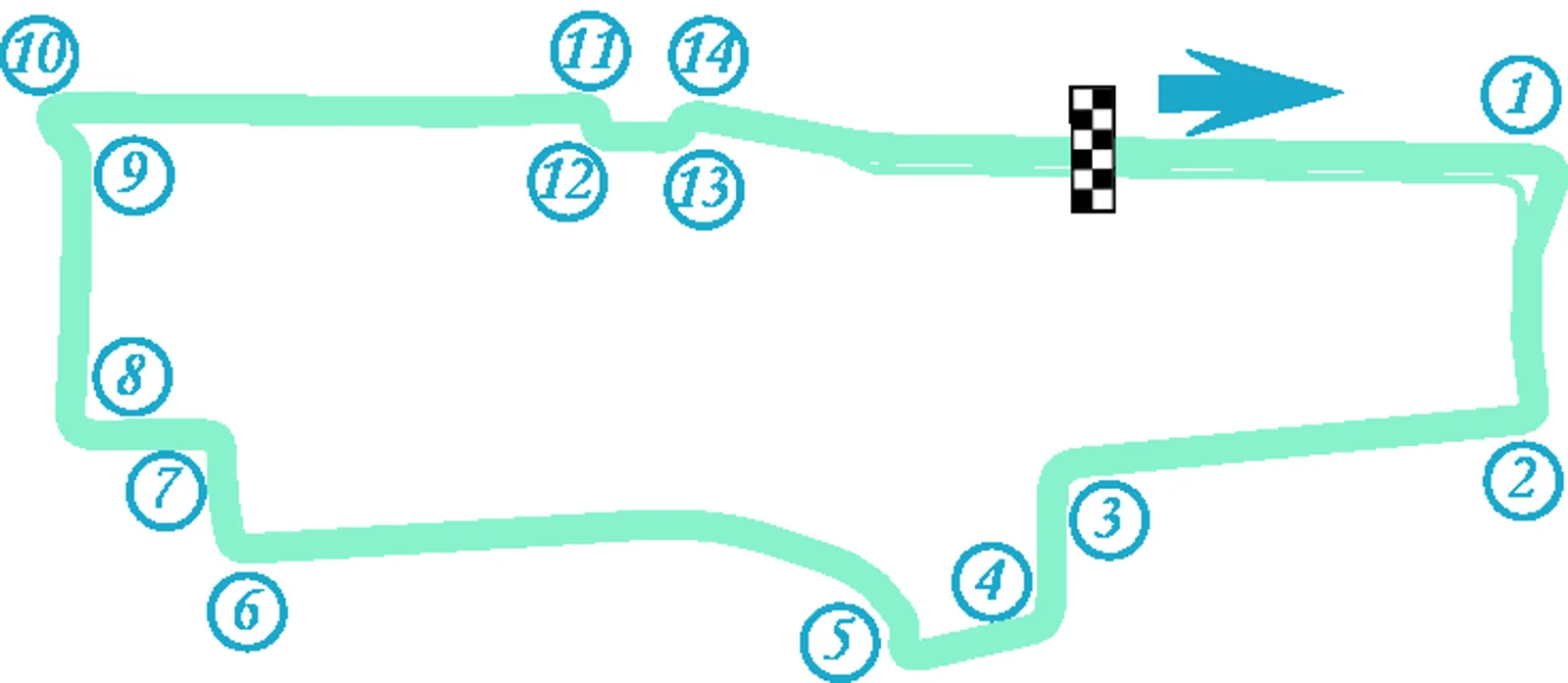
The 2017 Formula E double header on the Montreal Street Circuit, where two different winners shared the weekend and the title was settled.
Montreal's 2017 Formula E double header produced two different winners on the Montreal Street Circuit. Di Grassi took the opening race, Vergne won the second, and di Grassi clinched the title by 24 points over Buemi, with 45,000 spectators watching the weekend.
Montreal staged a two-race Formula E weekend in July 2017, and its results settled the championship. Lucas di Grassi won the opener from pole, Jean-Eric Vergne took the second race, and di Grassi finished the season as champion ahead of Sebastien Buemi.
What was the 2017 Montreal ePrix?
The 2017 Montreal ePrix was a Formula E double header that ran on 29 and 30 July 2017 on a city street circuit in Quebec. It formed the 11th and 12th rounds of the 2016-17 championship and was the only time the event was staged, drawing a crowd of 45,000 across the weekend.
The weekend consisted of two races on the same course. The first ran 35 laps and the second 37, and each carried its own grid, pole position and points. Pole earned three points, and the fastest lap in a race earned one more.
The event arrived at a tense point in the season. Buemi topped the standings on 157 points, ten clear of di Grassi, and Felix Rosenqvist was 43 points behind di Grassi in third. Up to 59 points were still on offer, so di Grassi could take the title by winning both races while Buemi scored little.
Two races, two winners and a championship settled on the final weekend, all on a single Montreal street circuit.
Why did Formula E come to Montreal?
Montreal's mayor, Denis Coderre, opened talks with the FIA in September 2014 and preferred a city-centre track to the Circuit Gilles Villeneuve. Work started in January 2016, and the deal was a six-year contract with a renewal option that could be taken up once half the term had passed.
Coderre travelled to Miami in March 2015 to meet the executive director of the series. Two months later he said informal agreements had been reached with the promoters, which made it possible for racing to take place on the city's streets.
The FIA's World Motor Sport Council placed the round on the 2016-17 calendar in September 2016 as a double header. Organisers expected 60,000 people across the two days, and grandstand and paddock work started on 15 July, a fortnight ahead of the opener.
What was the Montreal circuit like?
The Montreal Street Circuit was a 14-turn layout of 2.75 km (1.71 mi) in the city. Its first pictures were released on 21 October 2016, and its elevation changes set it apart from the flat circuits on which most Formula E rounds were held.
Patrick Carpentier, a former driver who acted as race ambassador, thought the best overtaking would come into the first turn. Di Grassi called the track possibly one of the best in Formula E history, and Rosenqvist said its elevation made it look fantastic, a view that made the layout popular with the drivers.
Not everyone was pleased. Residents complained that access to the area was limited, and critics questioned whether a private event should be allowed to use public roads and pavements in the way it did.
The circuit's life was short. Its foundations were dismantled ten days after the final race. Formula One had raced at the Circuit Gilles Villeneuve intermittently since 1978, so the city was familiar with big motor racing, but the Formula E title had never before been decided anywhere other than Battersea Park in London.
How did qualifying set the grid for race one?
Di Grassi took pole for race one with 1 minute 22.869 seconds, his third of the season. Buemi was 0.196 seconds slower and would have started on the front row, but a battery change after his practice crash cost him ten places on the grid.
Practice had already shown how slippery the surface was. Di Grassi set the session's best at 1 minute 22.451 seconds using 200 kW (270 hp), but several drivers locked their tyres, slid onto the run-off areas and dust caused further trouble. Buemi crashed into the exit wall of the Bus Stop chicane in the second session, which ended with five minutes left.
The damage to Buemi's car was severe, so e.Dams-Renault's mechanics spent five hours building a new car around a spare monocoque. The team then had to deal with the aftermath, which included the penalty that shaped the grid.
Qualifying ran for an hour in four groups of five cars, with six minutes on track for each group. Each driver was limited to two timed laps, and the fastest five then contested Super Pole, one timed lap each, running in reverse order from fifth to first. Group qualifying placed the first five overall into Super Pole, where di Grassi's lap held the top spot.
How did the first race unfold?
Di Grassi led every lap of the 35-lap opener, claiming his second win of the year and the sixth of his career. Vergne was second and Sarrazin third, after a race disrupted by a collision, a safety car period and a change of cars that most drivers made under yellow.
Di Grassi made a clean start from pole and held off Sarrazin at the first corner. Buemi, who had fallen to 16th after contact with Frijns in the second turn, began a steady climb through the field while the leaders settled into their pace.
On lap 14 Duval and Heidfeld collided. Heidfeld's front-right suspension was damaged, and he stopped at the side of the track. A full course yellow allowed marshals to clear the car, and most drivers used the period to make the mandatory change into a second car.
Buemi and Abt were the first to enter the pit lane in an attempt to gain an alternative strategy. Buemi clipped Abt on the way out, and Abt then ran into the rear of Buemi's car at the pit exit, which prompted a furious radio message from Buemi.
Lopez spun into the turn eight wall on lap 24, and the safety car was deployed to recover his car. The safety car came in at the close of lap 29, and di Grassi used his Fan Boost to pull clear of Vergne, who had been closing in on him.
Late on, Rosenqvist hit the wall as he left the chicane, with left-rear suspension damage and a bent steering arm. Buemi took fourth as a result. Duval set the race's fastest lap, 1 minute 24.536 seconds on lap 19, and earned a single championship point for it.
Di Grassi held the lead to the flag. Vergne crossed the line three-tenths of a second back in second, with teammate Sarrazin third and Buemi fourth on the road.
How did the second race unfold?
Rosenqvist claimed pole for race two in 1 minute 22.344 seconds, his third this year. Vergne started third, but he won the 37-lap race from that position and recorded a first Formula E win, coming after eight podium finishes across the previous three seasons.
Rosenqvist held the lead through the first corner as Bird and Vergne battled behind him. Frijns hit the rear corner of Buemi's car as the field bunched up, which tore away Buemi's right rear wheel guard. Officials signalled Buemi with a black flag bearing an orange disc, and he rejoined in 19th after a short stop.
Prost had been demoted twenty places on the grid after a car bay fire during race one, changing his battery and inverter. He did not take the full penalty, but he began in the pit lane, and ten seconds were added to his race.
The mandatory change into second cars began on lap 18. Rosenqvist pitted on the next lap, while Vergne, Lopez and the two Audi drivers stayed out for an extra lap to avoid running in the turbulent air of other cars.
On lap 29 Vergne passed Rosenqvist, who had been lifting and coasting, and he then pulled away on the higher top speed of his car. Prost set the fastest lap of 1 minute 23.444 seconds on the lap before he pitted with a mechanical problem.
Four lead changes among three drivers made the race a contest of strategy as well as pace. Rosenqvist led more laps than anyone, with 25 in total, while Vergne led for 11 across two spells. Rosenqvist finished second, eight-tenths of a second behind, and Lopez took third after Bird and he collided and swapped places on track.
Vergne's first win in any category since 2011 came in Formula Renault 3.5 at Paul Ricard, and it lifted him to fifth in the Drivers' Championship.
| Race | Laps | Pole | Winner | Second | Third |
|---|---|---|---|---|---|
| Race one | 35 | Lucas di Grassi | Lucas di Grassi | Jean-Eric Vergne | Stephane Sarrazin |
| Race two | 37 | Felix Rosenqvist | Jean-Eric Vergne | Felix Rosenqvist | Jose Maria Lopez |
Why was Buemi disqualified from race one?
Sebastien Buemi finished fourth on track, but post-race scrutiny found that his second car was below the minimum weight of 880 kg (1,940 lb). The team had reportedly added 4 kg (8.8 lb) to allow for any variation in the car's weight, and it chose not to appeal the penalty.
The weighing was complicated by the lack of time after the car was rebuilt following the practice crash. Jean-Paul Driot, e.Dams-Renault's team principal, could not explain why the car fell short, and the team's attempt to have the battery weighed separately did not change the outcome.
The after-race atmosphere turned hostile. Buemi confronted Felix da Costa and Frijns in the pit lane and accused Abt of hitting him deliberately, before calling Audi's team dirty in press remarks. He apologised to his team and to the two rivals ten days later on Twitter.
How did the championship finish?
Di Grassi won the title with 181 points, finishing 24 points ahead of Buemi. He became the third champion in Formula E history and the second Brazilian to win the title after Piquet in the 2014-15 season.
After race one di Grassi had moved into the lead on 175 points, and Buemi had fallen to second, 18 points behind. Rosenqvist was the best rookie in the standings, finishing third on 127 points, and Bird took fourth with Vergne fifth.
In the Teams' Championship e.Dams-Renault secured a third consecutive title with 268 points. Audi finished 20 points behind them, Mahindra trailed by a further 33 points in third, and Virgin took fourth on 190 points with Techeetah fifth on 156.
Di Grassi described the title as the result of a journey that began three seasons earlier. He had entered the weekend as the outsider, ten points back, and had kept his nerve despite losing race wins to disqualifications in earlier seasons.
What became of the Montreal ePrix?
The Montreal ePrix did not return. Coderre had said the race could not be held anywhere else in the city, but he later conceded that the 2018 edition was at risk of relocation because of nearby construction.
The new mayor, Valerie Plante, cancelled the future Montreal events in December, citing rising costs for taxpayers. The double header therefore remained the only running of the event in the city.
The track left little physical trace. Its foundations were removed ten days after the final race, and the weekend is remembered for its close racing, the disqualification and a championship that was decided on the final weekend.