A Polish team founded in 2010 as a single-seater operation, backed by a bakery group, that grew into a Le Mans winner with three victories since 2023.
Founded in 2010 in Poland, Inter Europol Competition races in endurance events and is backed by the Inter Europol SA bakery group. It made its Le Mans debut in 2019 and has won the 24 Hours of Le Mans in 2023, 2025 and 2026.
Inter Europol Competition is a Polish endurance racing team, often called Turbo Piekarze or Turbo Bakers after its owner and sponsor, the bakery producer Inter Europol SA. Founded in 2010, it grew from single-seater racing into a major sports car team, and it has won the 24 Hours of Le Mans three times since 2023.
What is Inter Europol Competition?
The team is a Polish endurance racing operation that competes in the 24 Hours of Le Mans, the IMSA SportsCar Championship, the European Le Mans Series, the Asian Le Mans Series and the Le Mans Cup. Its name reflects its owner, the bakery group Inter Europol SA, which has backed the team since its early years.
Since 2023 the team has become one of the most successful sports car racing teams in its class. It has scored three Le Mans victories and several class podiums, along with class championships in IMSA and runner-up places in the World Endurance Championship and the European Le Mans Series.
A bakery-backed Polish team that started in single-seaters and ended up winning the 24 Hours of Le Mans.
How did the team start?
The team was founded in 2010 out of a cooperation between Maurycy Kochanski's Kochanski Motorsport and Michael Keese Motorsport. Their shared project began in junior single-seater categories and later moved into Formula Renault events.
At the end of 2010 Kochanski ran into financial problems, and his share passed to Wojciech Smiechowski, the father of driver Jakub Smiechowski and the owner of the Inter Europol SA bakery. The new squad took the name Inter Europol Competition, after the company behind it.
Who drove the early single-seaters?
Inter Europol started as a single-seater team and raced in the Formula Renault 2.0 Northern European Cup from 2010 to 2016. The team's best overall result in that series was 12th, taken by Jakub Smiechowski in 2011.
The team began a six-year effort in BOSS GP in 2014. Jakub Smiechowski won that year's title and finished as runner-up in 2015, which set the stage for the move into endurance racing.
When did the team move into endurance racing?
In 2016 the team entered both the ELMS and the V de V series for the first time, taking its first steps in endurance racing. Its maiden LMP3 campaign in the ELMS, with Jakub Smiechowski and Jens Petersen in a Ligier JS P3, brought 10th place overall.
The V de V effort was more successful. Smiechowski and Martin Hippe claimed the championship of that series in 2016, which gave the team an early taste of title success.
How did the 2017 and 2018 seasons go?
In 2017 the team ran a single LMP3 car, number 13, and scored its maiden ELMS podium at the 4 Hours of Castellet. Hippe became the regular ELMS driver in that car, and the team finished fifth in the general LMP3 standings.
In 2018 two Ligier JS P3 cars took part. Hippe and Smiechowski won the race at Portimao and finished runners-up in the LMP3 championship. The team's V de V run ended in the same year, with Paul Scheuschner finishing third in the general standings.
When did the team first race at Le Mans?
In 2019 the team branched out into the Asian Le Mans Series with Hippe and Smiechowski in a number 13 Ligier. The team won the overall title, which earned an invitation to the 2019 24 Hours of Le Mans.
The team stepped up to LMP2 in the European Le Mans Series in 2019 by buying a Ligier JS P217. The LMP2 effort did not bring good results, and the team finished 17th in the overall classification after frequent lineup changes.
The Le Mans debut came in June 2019. Jakub Smiechowski, Nigel Moore and James Winslow drove the JS P217 and finished 45th overall and 16th in LMP2, after a series of technical issues.
How did the World Endurance Championship years go?
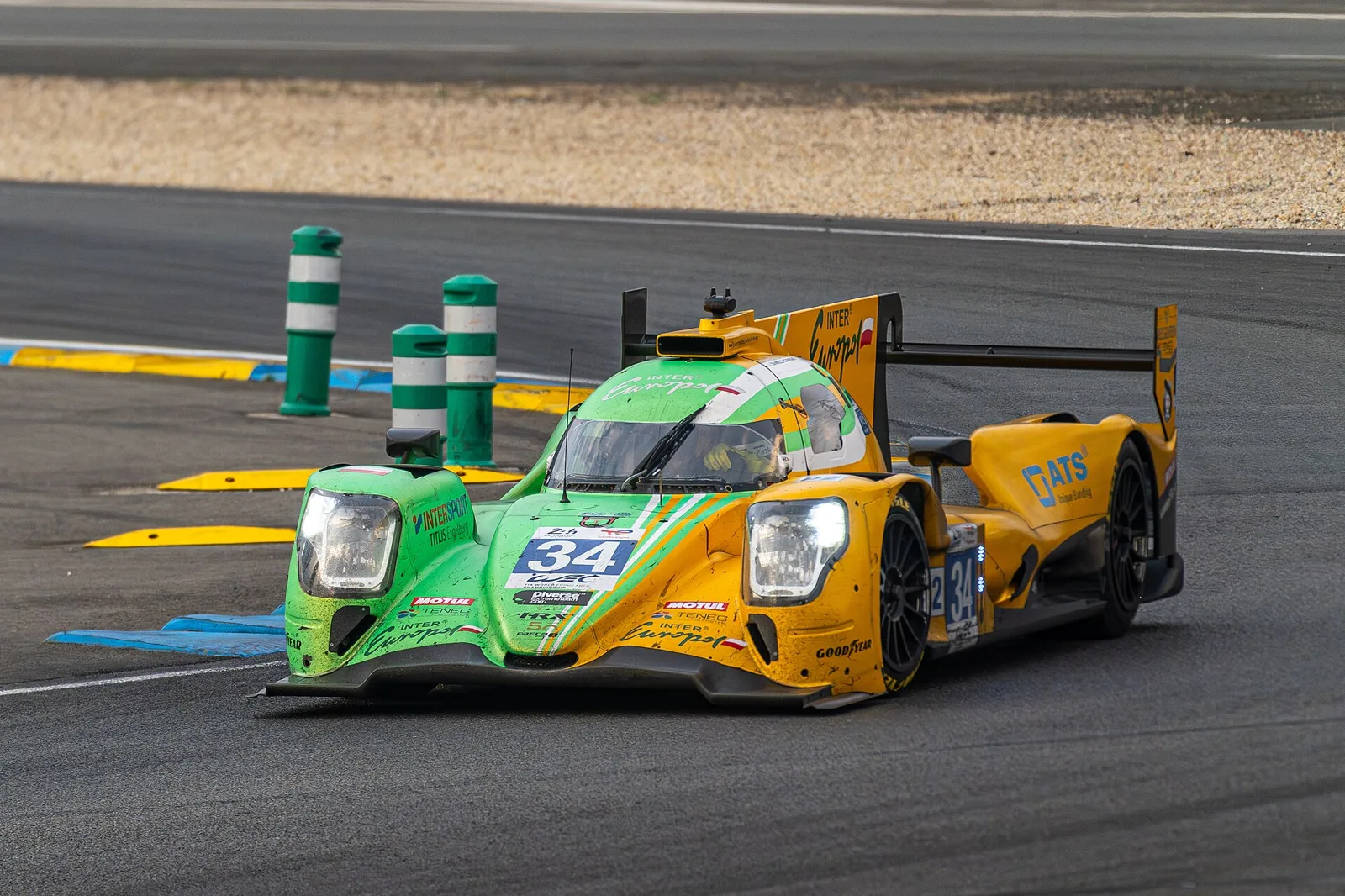
The team moved up to the World Endurance Championship for the 2021 season with a single Oreca 07, with Car 34 driven by Jakub Smiechowski, Renger van der Zande, Alex Brundle and Louis Deletraz. Those names were a clear step up from the team's earlier programmes.
In their first WEC season the team finished fifth in four of six races, and its worst result was ninth at the 6 Hours of Bahrain. The debut season ended 5th in the standings, and the 2021 Le Mans entry finished 5th in LMP2 and 10th overall.
The 2022 WEC season went poorly. The team scored 20 points and finished 11th in the standings, and its Le Mans cars finished 13th and 14th in class after problems that included staff turnover and the departure of its technical director.
How did the team win Le Mans in 2023?
The high point of the 2023 season was victory at the 24 Hours of Le Mans. Smiechowski, Fabio Scherer and Albert Costa drove the winning car, and Costa was the team's fastest driver in the race. The team had run a second car, number 32, but that crew ended its race during the night.
The result was challenged after the race. Louis Deletraz, who finished second, accused the team of breaching the technical regulations. About a month later the organisers upheld the result, relying on a review by technical officials from the FIA and ACO, who judged every car legal.
The 2023 WEC season ended with the team as runners-up, with 114 points. That season was also the end of the team's three-year stint in the WEC, which followed the removal of the LMP2 class from the series.
What did the 2024 IMSA and ELMS seasons deliver?
In 2024 the team partnered with the American PR1/Mathiasen Motorsports team for its IMSA programme, which handled the day-to-day running of the car. Nick Boulle, Tom Dillmann and Jakub Smiechowski were among the drivers, and the project won the IMSA LMP2 championship in its debut year.
The IMSA team won at Canadian Tire Motorsport Park and finished on the podium at Watkins Glen and Indianapolis. In the European Le Mans Series, the team won its first LMP2 race at Circuit Paul Ricard, and it finished second overall in the LMP2 standings.
At the 2024 24 Hours of Le Mans the team finished second, 18 seconds behind United Autosports. Clement Novalak lost a front wheel in the fourth hour and returned to the pits on three wheels, but he brought the car home in second.
How did 2025 go for Inter Europol?
In 2025 the team ran one LMP2 car in IMSA under a standalone effort, managed from a new base in the United States. It won the 12 Hours of Sebring in the final minutes of the race and finished third overall in the series.
The team's 2025 Le Mans entry led the race from the morning and won, its second Le Mans victory. A drive-through penalty came 34 minutes before the finish, but a suspension failure in a rival car restored the lead, and the team finished nearly two minutes ahead. In the European Le Mans Series it finished second overall with five second places in six races.
How did 2026 unfold?
The team's 2026 season began with a double entry at the 24 Hours of Daytona, which brought a double podium in LMP2. The full-season car, number 43, finished second, and the team went on to finish IMSA as runners-up, missing the title by less than a second.
At the 2026 24 Hours of Le Mans the number 43 car successfully defended its 2025 victory, while the number 343 car finished second. The European Le Mans Series was the weakest part of the campaign, with no podium at Imola, although car number 43 finished fifth with 59 points.
What are the team's plans for the top class?
Inter Europol has been planning to compete in the top class of endurance racing since 2021. Industry reports in January 2026 said a WEC Hypercar entry from 2027, built with Honda, was in prospect. In June 2026 the team director said that deal had fallen apart.
Instead the team will compete in the next-generation LMP2 class in 2028, switching to the Ligier JS P228 model. It will return to the Ligier LMP2 partnership after seven years of using the Oreca 07.
What are the team's key results at a glance?
| Year | Series | Driver or car | Result |
|---|---|---|---|
| 2014 | BOSS GP | Jakub Smiechowski | Championship title |
| 2016 | V de V | Jakub Smiechowski and Martin Hippe | Series championship |
| 2017 | ELMS | Car 13 | Maiden ELMS podium at the 4 Hours of Castellet |
| 2019 | Asian Le Mans Series | Car 13 | Overall victory and Le Mans invitation |
| 2019 | 24 Hours of Le Mans | Jakub Smiechowski, Nigel Moore and James Winslow | 45th overall, debut |
| 2021 | World Endurance Championship | Car 34 | 5th in the standings in debut season |
| 2023 | 24 Hours of Le Mans | Smiechowski, Scherer and Costa | Overall victory |
| 2024 | IMSA SportsCar Championship | PR1/Mathiasen with the team | LMP2 championship in debut year |
| 2024 | 24 Hours of Le Mans | Car 43 | Second overall, 18 seconds behind |
| 2025 | 24 Hours of Le Mans | Car 43 | Overall victory, second Le Mans win |
| 2025 | IMSA SportsCar Championship | Car 43 | Win at Sebring and third overall |
| 2026 | 24 Hours of Le Mans | Car 43 and car 343 | Car 43 won, car 343 second |
Why does Inter Europol Competition matter?
Inter Europol Competition matters because it shows how a small Polish team, backed by a bakery group, grew from single-seaters to Le Mans winners. Its path ran through BOSS GP, the Asian and European Le Mans series and the WEC before its victories.
The team's record also shows how a sponsor's name can become a nickname. Turbo Bakers is the name fans use, and it reflects a long-term commitment from the owner to a team that has risen steadily through the sports car ranks.