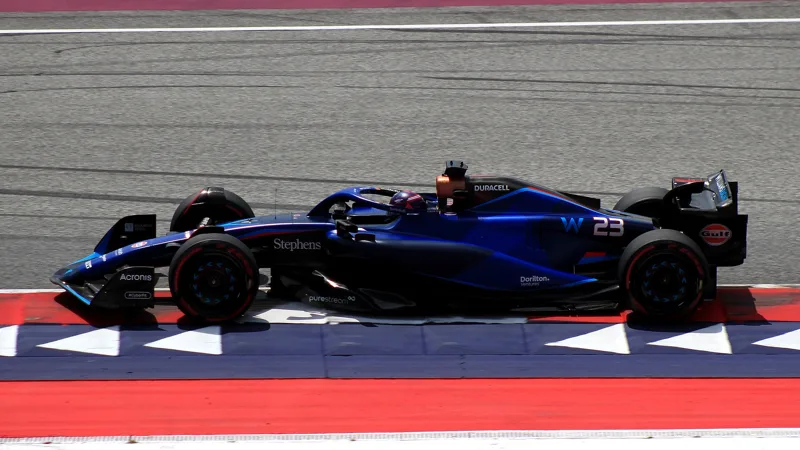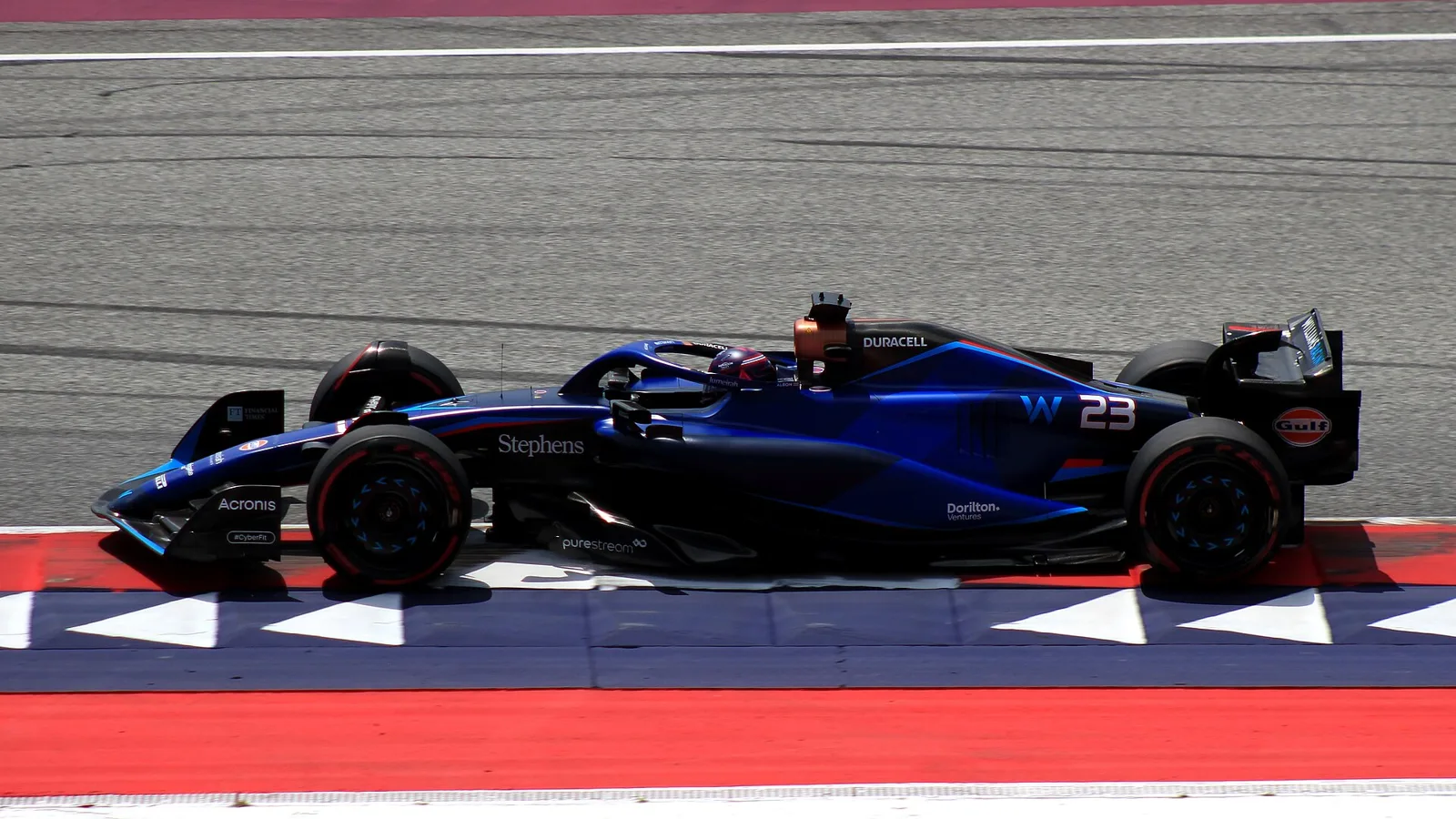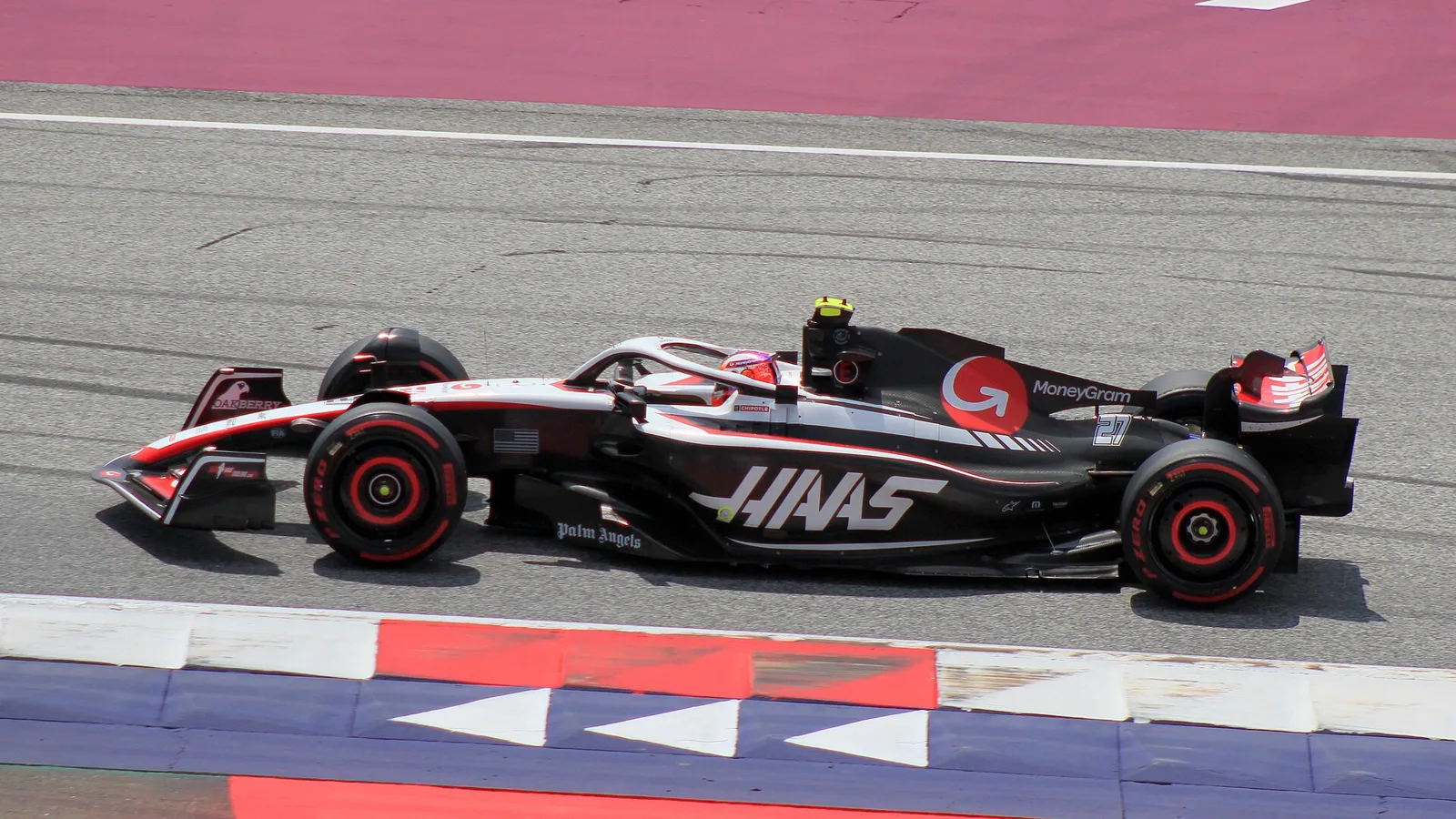
Fast over one lap but hard on its tyres, the VF-23 gave Hulkenberg and Magnussen a season that ended last in the constructors' table with 12 points.
The VF-23 was Haas's 2023 Formula One car, driven by Kevin Magnussen and Nico Hulkenberg. It qualified well but struggled with tyre wear in races, and the team finished the year tenth and last among constructors overall with 12 points.
The Haas VF-23 was the team's race car for the 2023 Formula One season, and it was the first 2023 design the FIA approved for racing. Kevin Magnussen and Nico Hulkenberg drove it, and the car's qualifying pace was often impressive. Race-day tyre wear, however, undid much of that work, and the team finished the year last in the constructors' standings.
What was the Haas VF-23 built to do?
The VF-23 was Haas F1 Team's contender for the 2023 Formula One season. By December 2022 it had become the first 2023 car cleared under FIA homologation, which allowed it to race. Its strengths and weaknesses would define the team's year.
A livery reveal on 31 January 2023 introduced the car to fans. The team had already changed title sponsors more than once, and the new scheme reflected a fresh partnership with MoneyGram, its third title backer after Rich Energy and Uralkali.
Strong qualifying pace, but race-day tyre wear kept the VF-23 at the foot of the standings.
Who drove the VF-23?
Kevin Magnussen drove for Haas for a second consecutive year, having raced for the team from 2017 to 2020 before returning. Nico Hulkenberg came back to Formula One full time in 2023, after 3 years without a regular race contract.
The two drivers produced contrasting seasons, and both had to work with a car that rewarded one-lap speed more than race pace. Hulkenberg scored six of the team's first seven points and posted eight Q3 appearances across the year. Magnussen's best grid slot came at Miami, where he qualified 4th, a higher start than he had managed since his 2022 pole in Sao Paulo.
What did the livery say about the team?
The VF-23 ran in red, white and black, the key colours of MoneyGram and of the Haas team itself. It was the first predominantly dark colour scheme Haas had used on a car since the VF-19.
The MoneyGram agreement surfaced first at the 2022 race in the United States. A separate partnership with Chipotle Mexican Grill was announced on 16 February 2023, and its logo appeared on the nose and side of the car at the three American rounds: Miami, Austin and Las Vegas.
How did the first ten races go?
After ten rounds the team sat eighth on 11 points, tied with Williams but trailing on countback. Hulkenberg had 9 points and sat 14th in the drivers' standings, while Magnussen had 2 points and was 18th.
The opener in Bahrain set the pattern. Magnussen started 17th and came home 13th, while Hulkenberg, who had qualified 10th, took 15th after a 15-second penalty for track limit violations. In Jeddah Hulkenberg was 12th, while Magnussen's 10th place brought Haas its first point of 2023.
Australia was the most dramatic early round. Hulkenberg ran in the top ten and battled Lando Norris, while Magnussen hit the wall late on, retired and triggered a red flag. When the race was stopped again Hulkenberg was running fourth, but the cars had not gone far enough for a fresh restart order, so he was placed back to 7th. Haas protested the decision, and the protest was rejected.
Azerbaijan was a weak weekend, with Magnussen 13th and Hulkenberg 17th in the main race. Miami was better for Magnussen, who qualified 4th and finished 10th to score a point, but Hulkenberg crashed in first practice, qualified 12th and finished 15th. After five races Haas sat seventh with 8 points.
| Round | Hulkenberg | Magnussen |
|---|---|---|
| Bahrain | 15th | 13th |
| Saudi Arabia | 12th | 10th, first team point |
| Australia | 7th after the restart | Retired after hitting the wall |
| Miami | 15th | 10th, a point |
| Monaco | 17th after a penalty | Retired on lap 70 |
| Canada | 15th | 17th |
| Singapore | 13th | 10th, his first point since Miami |
| Austin | 11th after disqualifications | 14th |
| Las Vegas | Retired with engine failure | 13th |
| Abu Dhabi | 15th | 20th, a lap down |
Which weekends showed the car's pace?
Qualifying was where the VF-23 looked strongest. Magnussen's 4th place at Miami was his best grid slot of the season, and Hulkenberg started 2nd in Canada before a red flag infringement cut him to 5th. Those flashes of speed rarely carried through to the finish.
Singapore put Magnussen 6th and Hulkenberg 9th on the grid, and in Qatar Hulkenberg was 7th for the sprint. In Austria Hulkenberg took 4th for the sprint, and Magnussen's 10th place gave the team its first double Q3 appearance of the season.
How did the middle of the season unfold?
The middle of the year was the hardest stretch for the car. Between Hungary and Monza the team scored nothing, and by the Italian round both drivers had slipped a lap back and were out of the points.
Monaco was a disaster. Magnussen qualified 17th and retired on lap 70 after hitting the wall at Rascasse during a late rain shower. Hulkenberg collided with Logan Sargeant and was penalised to 17th. Spain had better qualifying, with Hulkenberg 8th, but his tyres faded and he finished 15th while Magnussen was knocked out in Q1.
In Canada Hulkenberg qualified second, but a red flag infringement sent him to 5th, and tyre wear dropped him to 15th again. Magnussen was pushed down the escape road at turn 2 after Nyck de Vries locked up, which ended his points chance and left him 17th.
Austria offered promise. Hulkenberg qualified 8th, ran second for a few laps in the sprint and then slipped to sixth, earning the first points he had scored since Australia. In the main race his engine failed, while Magnussen finished 18th after a five second penalty for track limits. At Silverstone Magnussen qualified 19th after an engine problem but gained a place when Valtteri Bottas was disqualified. Neither driver scored, as Magnussen retired with another engine failure and Hulkenberg finished 13th.
Hungary brought Hulkenberg 14th and Magnussen 17th. At Spa, Hulkenberg qualified last after a hydraulic issue, and the sprint went wrong when a front jack problem stopped him setting a time. Magnussen finished 15th in the main race while Hulkenberg was last of the runners in 18th.
The Dutch round gave Hulkenberg 12th and Magnussen 16th. Monza left both drivers a lap behind, with Hulkenberg 17th and Magnussen 18th, and the team held eighth only on countback over Alfa Romeo.
Why did results slide after Singapore?
Singapore briefly offered a high point, with Magnussen 10th and his first point since Miami. Qatar then left Haas ninth, six points ahead of AlphaTauri, as the car's rhythm ebbed away in the closing rounds.
Singapore qualifying was the best of the season, with Magnussen 6th and Hulkenberg 9th. Hulkenberg then finished 13th after a failed double stack, while Magnussen gained from George Russell's late crash on the final lap. Japan was quiet, with Magnussen spun around by Sergio Perez and finishing 15th, and Hulkenberg 14th.
In Qatar Hulkenberg qualified 16th and Magnussen 19th. The sprint offered a glimpse of pace, with Hulkenberg 7th on the grid, but Esteban Ocon collided with him, damaged his suspension and forced him out. In the main race Magnussen finished 14th and Hulkenberg 16th, and Alfa Romeo's double points finish pushed them behind.
How did the final rounds go?
The closing races brought a string of setbacks. Upgrades in Austin did not deliver, Mexico City and Brazil ended without points, and the team dropped to last. Haas finished four points behind Alfa Romeo, which had been its target for the ninth place in the standings.
Haas bought upgrades for its home race in Austin, but Hulkenberg qualified 16th and Magnussen 14th. Both cars started from the pit lane in the main race. Magnussen drove to 16th and Hulkenberg finished 13th, but both moved up two places once Hamilton and Leclerc were excluded over plank wear, leaving Magnussen 14th and Hulkenberg 11th.
In Mexico City Magnussen qualified 17th, then damaged his rear suspension, which later failed and sent him into the wall at turn 9. Hulkenberg held tenth for much of the race before fading to 13th without points. Daniel Ricciardo's seventh place let AlphaTauri overtake Haas, which dropped the team to 10th and last.
In Brazil Hulkenberg qualified 11th and Magnussen 14th. The main race was a disaster: Hulkenberg was caught between Magnussen and Alex Albon, and Albon spun into Magnussen, sending both cars heavily into the wall. Hulkenberg recovered to 12th without scoring, which kept the team in last place.
At the first Las Vegas Grand Prix Magnussen qualified 9th and finished 13th, while Hulkenberg retired with an engine failure. In the season finale at Abu Dhabi Hulkenberg qualified 8th and finished 15th, while Magnussen qualified 17th and crossed the line 20th, a lap down.
Why did tyre wear dominate the races?
High tyre wear was the root cause of the VF-23's struggles, because it turned strong qualifying into weak Sunday results. Tyre fade forced extra stops, cost time, and left drivers vulnerable on the straights. Spain and Canada showed the pattern most clearly.
In Spain Hulkenberg qualified 8th, but his tyres wore out and dropped him to 15th at the flag. Canada repeated the story, with his tyres giving way again and sending him down to 15th after he had started from the front row.
The sitting-duck problem was real. When the rear tyres were in trouble, drivers had no answer to rivals on the straights. The Austrian sprint and Qatar's sprint showed that the car could still hold a fast pace over short runs, which made the race-day drop harder to accept.
What was the season's final verdict?
The season total was 12 points, which left Haas at the foot of the constructors' table, a clear sign that race pace lagged behind qualifying. Hulkenberg's 7th place at the Australian Grand Prix was the team's best result, and he finished 16th in the drivers' standings with 9 points. Magnussen was 19th with 3 points, compared with 25 the previous season. For Hulkenberg, a 16th place in his first full season back after years on the sidelines was a respectable return, even if the car never let him fight higher up.
The Austin upgrades were meant to tackle the problem, but they did not work, and the team went back to the older specification. By the Sao Paulo Grand Prix the team had to accept that it would finish last for the second time in three seasons.
What happened to the VF-23 afterwards?
The VF-23 returned to the track in a closed session at Circuito de Jerez in January 2025. Haas drivers Esteban Ocon and Oliver Bearman took part, as did Ritomo Miyata, a driver from the Toyota Gazoo Racing programme, as part of the working relationship between Toyota and Haas on technical matters.
Former Haas driver Romain Grosjean was announced in September 2025 to take the wheel of the VF-23, a return to Formula One machinery after his 2020 crash. The car's later use is a small footnote in its story, but it kept the VF-23 running on track.