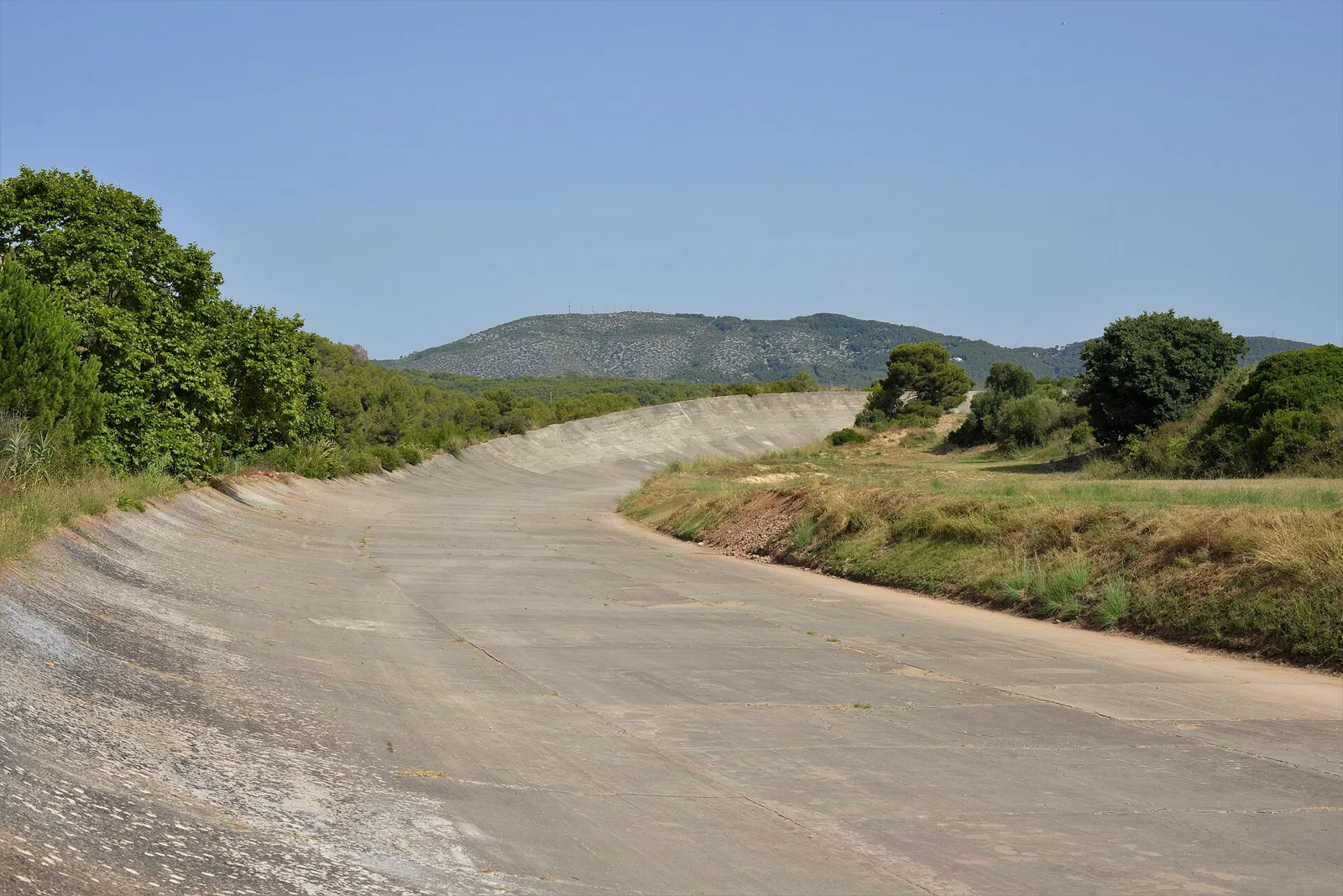
A banked track near Barcelona, built in 300 days, raced for only a few seasons and now a film backdrop, a car advertising location and a planned equestrian centre.
The Sitges-Terramar circuit, completed in 1923 in only 300 days, was among the first purpose-built racetracks in the world. Racing there was brief, a poultry farm later occupied the site, and an approved plan now aims to reopen it for equestrian and motoring use.
The Autodromo de Sitges-Terramar stood in Rocamar, within Sant Pere de Ribes near Sitges in Catalonia. It opened in 1923 after a build time of 300 days and was among the first purpose-built racetracks anywhere, yet it saw little racing after its first season.
Today the banked oval plays a different role. Car advertisements have been shot on its banking, television productions have used it and part of the site once housed a chicken farm. Plans to reopen it for horses and motoring have since been approved. This article traces its origins, its brief racing life, the decades of decline and the modern records.
Who built the Autodromo and why?
The circuit was one of the services in Terramar, a seaside garden city promoted by the industrialist Francesc Armengol. Its builders aimed to tap a rising enthusiasm for motoring in the early twentieth century, and the track was designed by Jaume Mestres i Fossas.
Terramar was a planned development of villas and public buildings on the Catalan coast, inspired by Nice and the French Riviera. It is regarded as one of the finest expressions of the Noucentisme movement in Catalonia, which prized order, urbanity and a turn back to classical forms. It had a seafront promenade, large green spaces and a range of services. Among them were a hotel, a casino that never got built, a golf club added later and the Autodromo.
The development had a cultural side as well. Josep Carbonell i Gener published the magazine Terramar between 1919 and 1921, and later titles such as Monitor in 1921 and The Friend of the Arts, which ran from 1926 to 1929, carried the same spirit forward.
Armengol was the managing director of the development during its first years and a driving force behind the circuit. He wanted a track that answered the growing public appetite for motoring, and the Mas Clot site, covering 25 hectares, was chosen for it.
The land deed, recorded before a notary in Vilanova i la Geltru, described a rural property of houses, vineyards, woods and winemaking equipment. The plans added two smaller runways, one for horses and one for motorcycles, a football pitch and a landing strip for light aircraft, which was expected to become a golf course later.
The works were presented on 17 September 1922 to a gathering of officials and local figures from Sitges, Sant Pere de Ribes and Barcelona. The king, Alfonso XIII, had been asked to attend but sent a delegate, Miguel Primo de Rivera, the Captain General of Catalonia.
The honorary committee was headed by the Duke of Alba, who led the Royal Automobile Club of Spain. The board was led by Joan Pich i Pon, who sat in parliament in 1919 and 1920 and went on to lead Barcelona city council in 1935, and the director was Frederic Fric Armengue.
A 1923 banked circuit near Barcelona that was raced for only a few seasons, then became a poultry farm and a film location.
How did the opening race go?
The circuit opened on 28 October 1923 in heavy rain. Albert Divo won the inaugural race in a Sunbeam, averaging 142 km/h over the distance, and he collected five trophies on the day.
The opening ceremony was attended by the infant Alfonso de Borbon, representing the royal house, and it drew thousands of visitors to Sitges and the circuit despite the downpour. The first race was for 2-litre Grand Prix cars.
Divo beat Count Louis Zborowski in a Miller, and the winning speed was 96.91 mph (155.96 km/h). The race took 2 hours, 48 minutes and 5 seconds, and the trophies he took included the King's Cup and the Italian Ambassador's Cup, plus awards from the Omnia, the RACE and the Liceu Circle.
The celebrations were not matched by finances. Overruns in construction left the builders short, and when they seized the gate receipts the organisers had nothing to pay the drivers. No prize money was paid, and the circuit was barred from hosting international races again.
Drivers also questioned the design of the banking, complaining that the transition from straight to bank and back again was poorly handled. Motorcycle races followed over the next few days, keeping the venue busy beyond its car programme.
Club racing carried on in 1925 under the Catalan Automobile Club and the Penya Rhin, though with modest results. In the same year a Bugatti was shown for the first time during one of the Penya Rhin meetings.
The Spanish Motorcycle Championship, staged by a Catalan club in May 1925, was attended by the king and by Primo de Rivera, then head of government. A Sitges Prize was held in December 1926, and motorcycle tournaments in the 250, 350 and 500 cc classes were convened again in the spring of 1927, with a second Penya Rhin edition in the spring of 1929.
Why did the Autodromo fall silent?
The company that built the track could not raise enough capital to meet its costs. In 1929 the state seized the estates, and the following year a Czechoslovak racer, Edgar de Morawitz, took over the property with plans to revive it.
Morawitz put a piston factory for the Champion brand inside the enclosure, and parts for another marque were made there too. Speed trials, a contest pitting a car against a small aircraft and acrobatic flying kept the place busy in 1931, and an Easter Cup was staged in 1932.
Between November 1933 and 1936 no races took place, and a car show planned for May 1936 never happened. The Civil War broke out two months later and halted all activity, and during the conflict the site served as a military recruitment centre.
Once fighting ended, economic conditions ruled out a revival. Cars had become too fast for the circuit's steep slopes, which had been dangerous enough even before speeds rose.
What became of the circuit after the war?
The owners changed several times after the war, and the site gradually turned to agriculture. Poultry farms moved in, and the lorries that served them damaged the surface.
Morawitz died in 1945, and after his widow and children let the estate go, it passed to Dolors de Nadal de Llinas. A succession of owners followed, including Miquel Soler and Elias in 1949, Margarida de Udaeta and Gil in 1952 and Maria Teresa Lloret Teisseire in 1956.
Occasional events still took place, among them a leg of the Catalan cycling tour in 1954, a car session of the same tour in 1955 and a motorcycle contest held by local clubs in 1955.
Inside the track, poultry farms replaced racing, and the constant traffic of lorries carrying poultry goods wore away at the track. Use of the site for poultry continued into the 1980s.
In the 1990s the Canadian Peter Schomer rediscovered the place and proposed a motorsport resort there. Meanwhile, carnival floats for a local society were built under the tiers until the council moved that work to the Pruelles Industrial Park in 2001.
How did the circuit return to motoring use?
Car makers and filmmakers began using the old banking once it had been tidied up. Several well-known drivers have tested there, and filming has produced the circuit's best-known lap record.
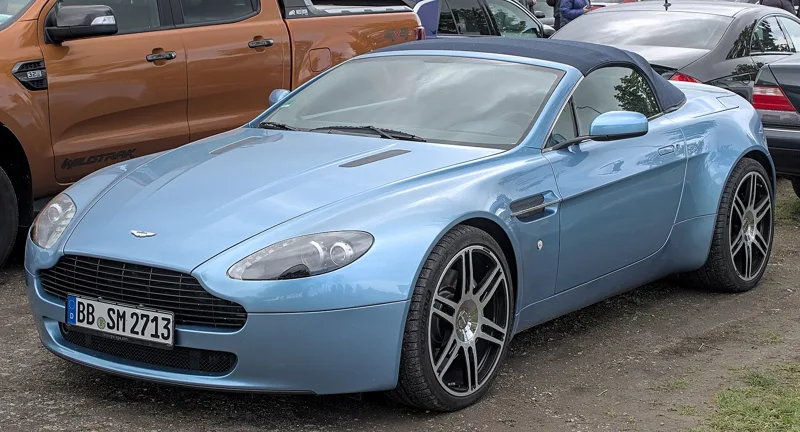
In 2009 the track was cleaned and lightly adapted, which opened it to corporate tests, vehicle launches and film work. Former Formula One driver Marc Gene tested there in 2005, while former rally champion Carlos Sainz and former MotoGP champion Jorge Lorenzo followed in 2013, and car makers including Seat, Peugeot and Aston Martin used it for events.
In 2012 Carlos Sainz Snr posted a lap of 0:42.600 in an Audi R8 LMS while shooting a promotional film for Red Bull, and that time stood as the benchmark for years.
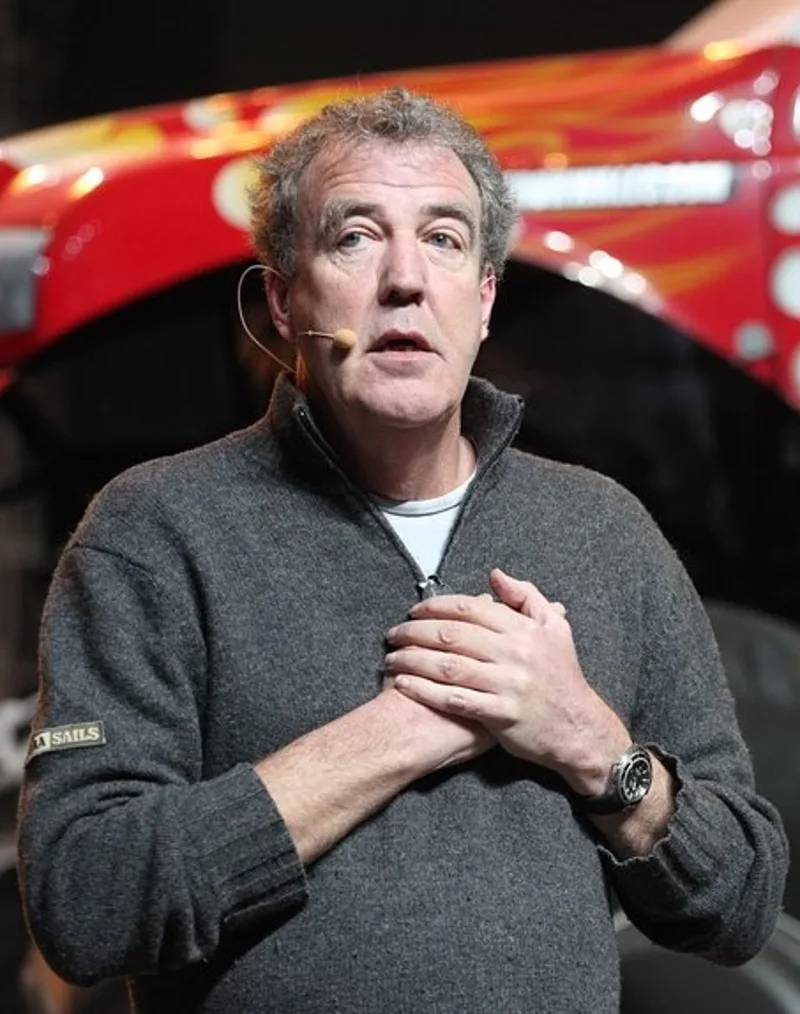
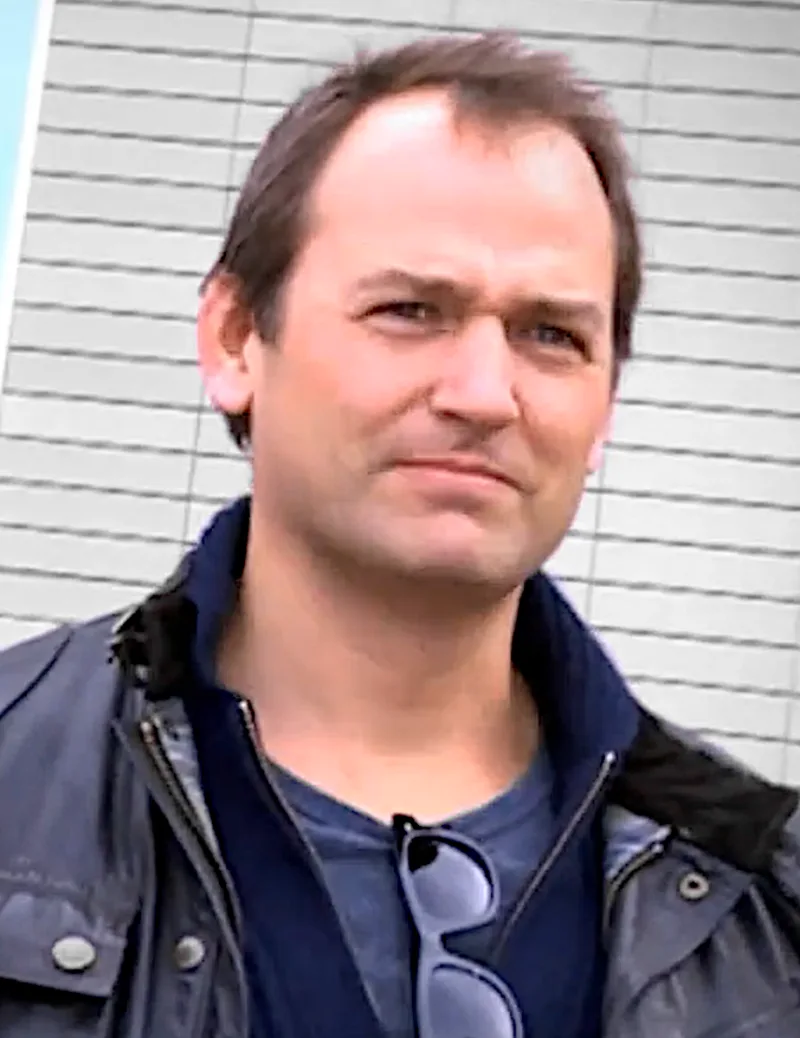
The banking also drew the presenters of The Grand Tour. In 2018 Jeremy Clarkson, James May and Richard Hammond visited on a trip to Spain and were rattled by its steep profile, with Clarkson and May swearing at the gradient and Hammond making squeaking noises.
The record fell in 2026. Jonas Skovby, a professional stunt and supermoto rider, lapped the circuit in 41.888 seconds while filming a promotional video for a Stark motorcycle, beating Sainz's time.
What are the key figures for the Autodromo?
| Measure | Figure |
|---|---|
| Location | Rocamar, Sant Pere de Ribes, near Sitges, Catalonia |
| Built | 1923, within 300 days |
| Cost | 4 million pesetas |
| Site | 25 hectares at Mas Clot |
| Opening ceremony | 28 October 1923 |
| Winning speed, opening race | 96.91 mph (155.96 km/h), Albert Divo, Sunbeam |
| Lap record, 2012 | Carlos Sainz Snr, 0:42.600, Audi R8 LMS |
| Lap record, 2026 | Jonas Skovby, 41.888 seconds |
| Planned reopening site | 65 hectares, 5.3 buildable, 14.4 green |
What does the reopening plan involve?
The Grand Prix group, a horse-events company, proposed reopening the site in 2016, and the plan was approved by the local council and the regional government of Catalonia after four years of work. As of 2022 the reopening was scheduled for 2023.
The approval came only after technicians from several administrations, from urban planning to environmental protection, had reviewed the scheme and suggested changes, so the final plan reflects a long process of revision rather than a single decision.
The plan adapts the facilities for equestrian events of international standing and keeps the track available for motoring tests. It was prepared with input from urban planners, environmentalists, architects and naturalists, and it respects the local landscape.
Of the 65 hectares, only 5.3 are for building and 14.4 are reserved as green space. The remainder covers the equestrian area, the track, the tiers and access routes. The developers gave up 40% of the building land and pledged to clean up the nearby riverbed.
Once open, entry would be free. Visitors could watch equestrian activity, which would peak in autumn and winter, when the sport is idle in central and northern Europe. More than 500 people visited the site in 2021, even during the pandemic.